
Review · SPAIN
Mérida: Roman Theatre E-ticket with Audio Tour
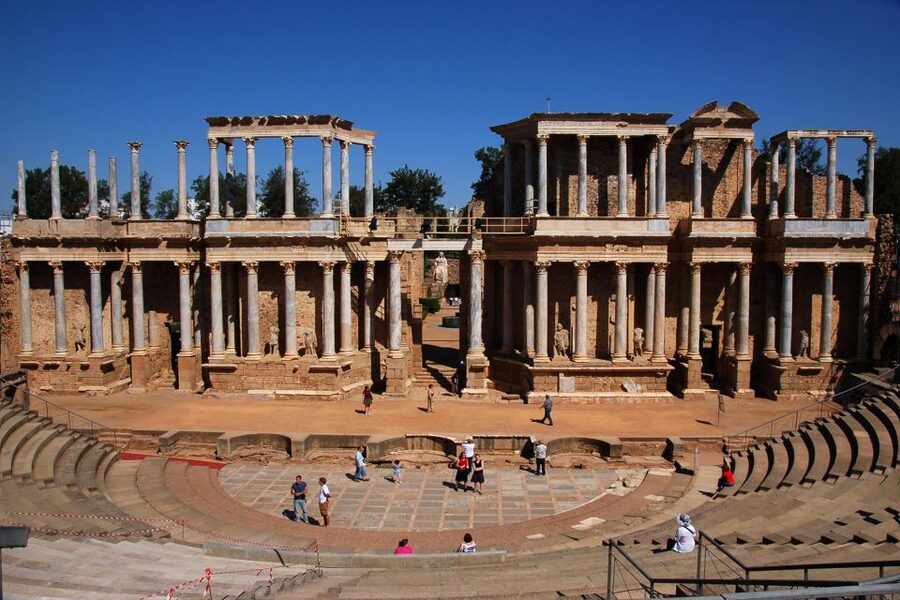
Mérida’s Roman Theatre is the star, but the real pleasure is seeing how one ancient city unfolds across several sites. With one ticket and an English audio tour, you can move from the theatre to the Temple of Diana, Moorish Alcazaba, Saint Eulalia’s Crypt, and the Roman Circus at your own pace. The theatre’s restored stage and columns give you the clearest picture of Roman public life, while the audio stories help connect scattered ruins into one story.
I like two things here: the audio tour gives directions before each explanation, so you know where to look, and the content works offline, saving phone data. I also like that the route includes more than the headline monument, especially the House of the Amphitheatre, Morerías, and the Mithraeum House. The drawback is important: there is no live guide, and one visitor could not access the audio, so download everything before you arrive and check that it works.
Key points to know before you go
- The Roman Theatre is the main event: Its stage, seating, and monumental setting make it Mérida’s essential ancient site.
- The route covers ten major sights: You can visit the Amphitheatre, Temple of Diana, Alcazaba, Crypt, Roman Circus, and several archaeological sites.
- The audio tour is self-guided: English narration, text, and maps are downloaded to your Android or iOS phone.
- The route begins at Plaza Margarita Xirgu: The easiest approach is a six-minute walk from Mérida Belloso bus station.
- The tour ends at the Roman Circus: Plan for a one-way walk rather than returning to the theatre.
- The $32 price buys flexibility: It makes more sense for adults who plan to visit several sites than for someone interested only in the theatre.
Why Mérida’s Roman Theatre deserves your first look
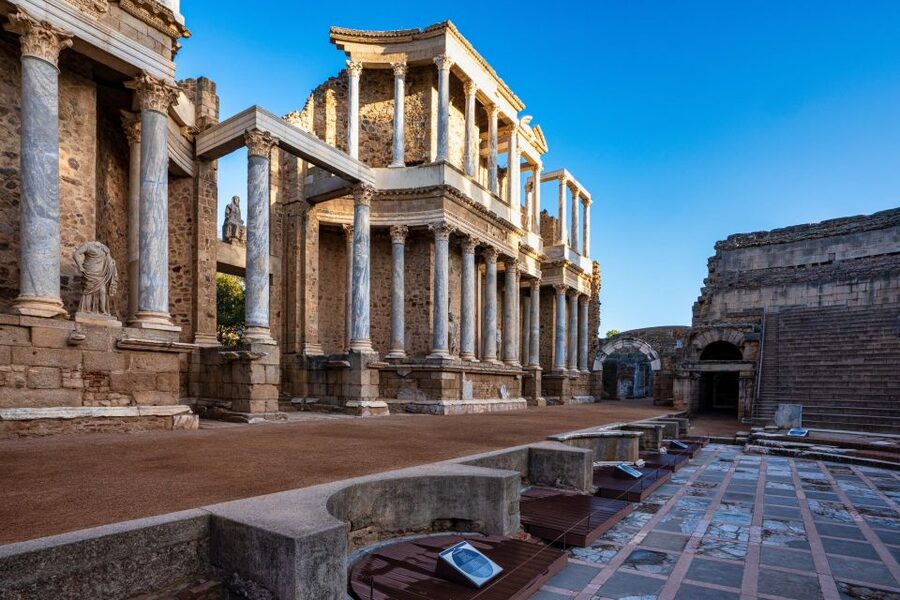
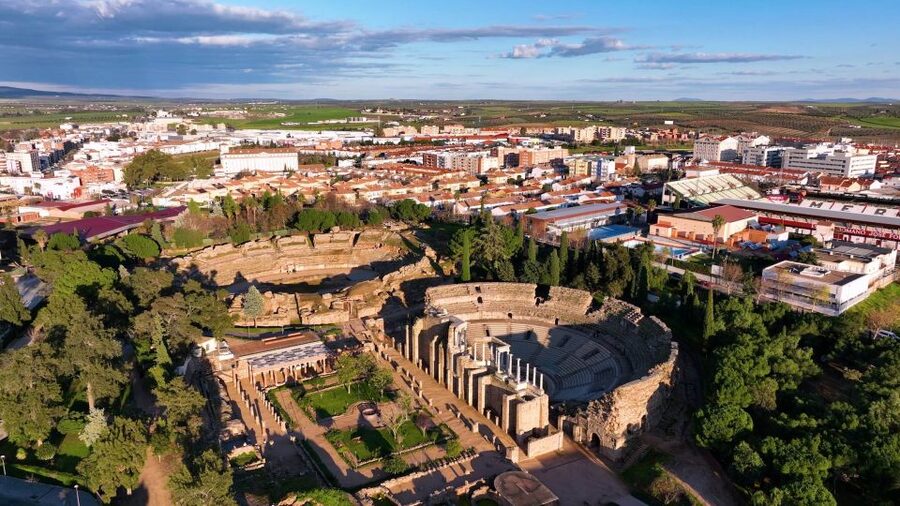
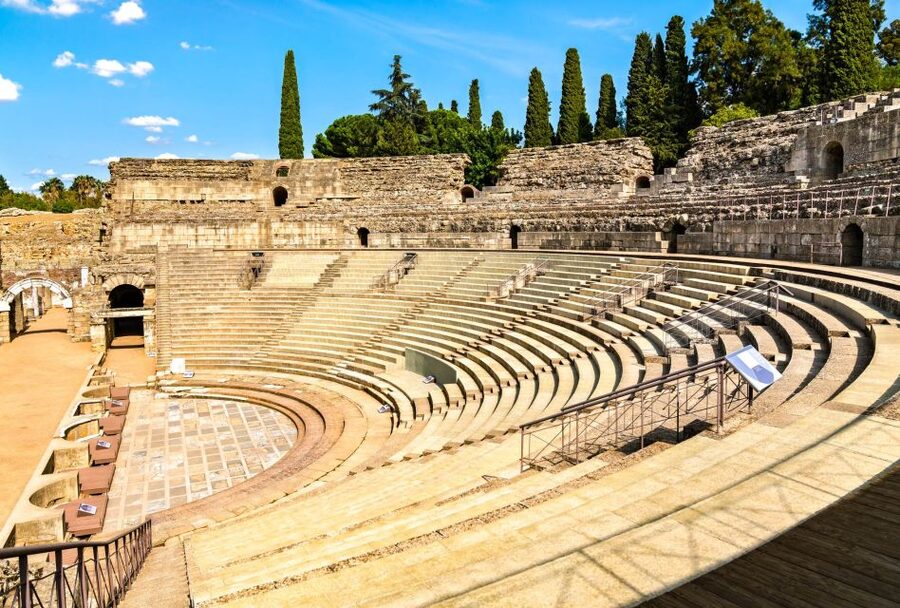
Mérida was founded as Augusta Emerita in 25 BC, and the Roman Theatre remains its most powerful reminder of the city’s former importance. You enter at Plaza Margarita Xirgu, where the theatre and nearby Amphitheatre form the natural starting point for the visit.
The theatre is not a quick photo stop. Take time to look from the seating area toward the stage, then turn around and study how the auditorium wraps around the performance space. The tall columns and statues behind the stage give the site its grand Roman character. The audio tour helps by telling you where to stand and what to notice before providing the historical explanation.
That simple order matters. A self-guided tour can easily become a walk past stones with names attached. Directions first, information second, give you a better chance of matching the story to the structure in front of you.
The audio content is written as short stories rather than long academic lectures. That suits a large archaeological complex, especially if you are visiting in warm weather or with children who have limited patience for dates and emperors. You can pause, replay, or return to the narration later.
More Smartphone Audio Tours in Spain
- Cordoba: Mosque-Cathedral E-Ticket with Audio Guide
★ 4.1 · 2,895 reviews - Palma: Caves of Genova Ticket & Digital Audio Guide
★ 3.9 · 820 reviews - Madrid: Archaeological Museum E-Ticket and Audio Guide
★ 4.3 · 115 reviews
The Amphitheatre and House of the Amphitheatre
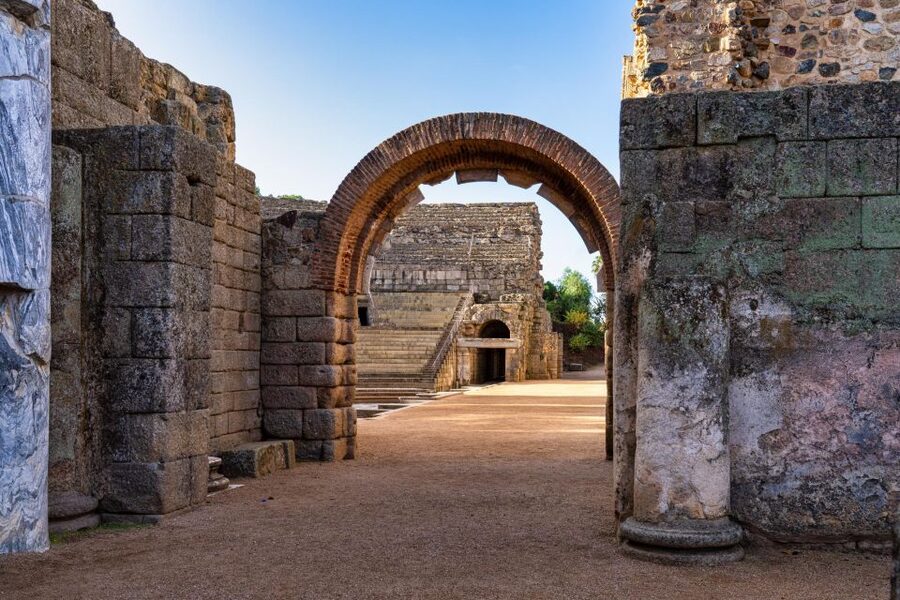
The nearby Amphitheatre adds a different mood. The Roman Theatre was built for performance, while the Amphitheatre was designed for spectacles in an oval arena. The audio tour explains the distinction and helps you understand how these buildings served different parts of Roman public life.
The House of the Amphitheatre gives you a closer look at domestic and residential remains connected with the ancient city. Here, the attraction is less about one dramatic monument and more about seeing how ordinary spaces fit beside grand public buildings.
I would give these sites proper time rather than rushing straight from the theatre to the next stop. The theatre gives you the grand view. The Amphitheatre and house help fill in the daily setting around it.
The walking route is spread across Mérida, so comfortable shoes are sensible. There is no transport included, and the audio tour is not a bus tour or guided group. You walk between the sites yourself, using the downloaded map and the city streets.
The Diana Temple and Mérida’s changing city center
The Temple of Diana is one of Mérida’s most memorable sights because its surviving columns rise in the middle of the modern city. It is a useful stop for understanding how ancient structures were reused and absorbed into later buildings.
The temple is not presented as an isolated ruin far from daily life. You see Roman columns within the present-day urban setting, which makes the connection between old and new especially clear. The audio narration adds context about the monument and its place in Mérida’s Roman center.
This is also a good point to appreciate the freedom of a self-guided format. You can stop for a closer look, take photographs, or replay a section without holding up a group. The trade-off is that nobody is there to answer a question or adjust the pace for you.
The tour’s audio, text, and maps can be used offline after download. That is useful in Spain if you want to avoid roaming charges, but it also means preparation is part of the experience. Download the app and content before reaching the entrance, not while standing in the sun with a ticket screen waiting to load.
Morerías and the layers beneath Mérida
The Archaeological Site of Morerías shows how different periods occupy the same city. Roman foundations and later remains help explain Mérida as a place that continued to change after Roman rule ended.
This is where the tour’s broader theme becomes most useful. Mérida is not only about Roman grandeur. The city also carries Visigoth and Moorish chapters, and the route lets you see those periods as part of a long sequence rather than as separate attractions.
The audio tour is designed to point out uncommon details and short historical stories. That approach works well at Morerías, where the remains may require more explanation than the theatre’s obvious columns and seating.
You should expect some variation in how easy each site is to read. The headline monuments make sense at a glance. Archaeological areas need patience, good footwear, and careful listening. If you prefer a quick checklist of famous sights, this part may feel slower. If you want to understand how cities are built over earlier cities, it is valuable.
Same sights, a different narrator:
- Barcelona: Sagrada Familia Entry Ticket with Audio Guide
★ 4.6 · 105,312 reviews - Barcelona: Casa Batlló Entry with Self-Audioguide Tour
★ 4.7 · 25,359 reviews - Granada: Alhambra Entry Ticket with Audio Guide
★ 4.1 · 5,950 reviews - Casa Batllo Admission Ticket with Intelligent Audio Guide
★ 4.5 · 3,168 reviews
Saint Eulalia’s Crypt and the Mithraeum House
Saint Eulalia’s Crypt takes you below the modern church into an area connected with Mérida’s religious past. It adds an important change of setting after the open-air Roman monuments. The audio explains the site’s place in the city’s later story and helps connect Roman remains with the strength of Visigoth culture.
The Mithraeum House offers another glimpse into ancient religious life. Its name points to the cult of Mithras, a Roman mystery religion, and the remains help show that public temples were not the only sacred spaces in the city.
These two stops reward close listening. Their importance may not be as instantly clear as the theatre or temple, but they widen your view of Mérida. You are not simply following one Roman building style. You are seeing how belief, power, and architecture shifted over time.
Parts of Mérida’s historic sites are wheelchair accessible, though the information does not promise full access at every location. If you need step-free access throughout, confirm the conditions before booking.
The Alcazaba and the Moorish chapter
The Alcazaba brings the Islamic period into the route. This fortress adds Moorish artistry and military architecture to a visit that begins with Roman entertainment buildings.
For me, this is one of the best reasons to choose the full historic-sites ticket rather than buying access only for the theatre. The Alcazaba changes the scale and subject of the day. Instead of viewing Mérida as a preserved Roman stage set, you see a city shaped by several cultures.
The audio tour gives you a way to move through that change without needing a specialist guide. It explains what you are seeing and keeps the chronology moving. Still, remember that the narration is in English only. If you want Spanish or another language, this particular package will not provide it.
Because the tour is valid for one day, plan your route with daylight, opening times, and your own walking pace in mind. The supplied information does not give a fixed tour length or a detailed timetable. You can use the audio before or after your visit, but the admission itself is tied to the one-day validity shown when you check availability.
Walking to the Roman Circus
The route ends at the Roman Circus on Avenida de Juan Carlos I. This final stop gives you a sense of the scale needed for chariot racing and other large public events.
Ending here makes practical sense if you follow the route in order, but it also means you should think about your return plans. The experience does not include transportation, hotel pickup, or drop-off. You finish at the Circus rather than back at the Roman Theatre.
The Circus is a fitting close because it shifts your attention from buildings and interiors to length and open space. You can better appreciate the size of Roman public entertainment after seeing the theatre and Amphitheatre earlier in the day.
Do not treat the ending as a minor extra. If you are tired, hot, or traveling with young children, the one-way route may feel long. Wear comfortable shoes, bring sunscreen and a hat, and carry water even though food and drinks are not included.
What the $32 price really buys
At $32 per adult, this is not the cheapest way to see one monument. It becomes more reasonable when you plan to visit several of the included sites across the day.
The ticket includes adult admission to the Roman Theatre and the city’s historic sites, plus skip-the-line service and the self-guided audio tour. The value comes from combining entry and explanation in one package. You are paying for the freedom to set your own pace, not for personal attention.
The audio tour can be reused before or after your visit. You might listen to an introduction in advance, use the directions on-site, then replay a section later when you want to remember a particular building.
There are two limits to keep in mind. First, the booking is made per device, not per participant. If two people want separate phones and separate audio access, plan accordingly. Second, free and reduced tickets can be obtained on-site, but they do not receive skip-the-line privileges. Children under 13 receive free admission to the monumental sites, so a family should calculate the price carefully before buying adult tickets for everyone.
Downloading the audio tour without trouble
After booking, you receive an email with instructions and an activation link. Check your spam folder if the message does not appear.
You need:
- An Android phone version 5.0 or later, or an iPhone that meets the stated compatibility requirements
- Around 100 to 150 MB of storage
- A fully charged phone
- Headphones
- The app and tour content downloaded before arrival
The app does not work with Windows phones, iPhone 5 or 5C, older iPod Touch models, older iPads, or the first iPad Mini. Those limits matter, especially if you are relying on an older spare device.
One visitor was unable to access the audio and also found the included monuments unclear on the ticket details. You can reduce that risk by activating the tour at home, opening several audio tracks, and checking that the offline map loads before leaving your hotel.
There is no live guide named for this experience. Clio Muse Tours provides the app-based content, but your phone is doing the guiding. That suits independent visitors who like control, but it is not the right choice if you want conversation, spontaneous questions, or someone to manage the route.
Who should book this Mérida experience?
I would recommend it to an adult who wants a structured way to see Mérida without joining a group. It also suits independent visitors who prefer short audio stories, offline maps, and the ability to stop when a site catches their attention.
It is a good fit for anyone interested in the meeting of Roman, Visigoth, and Moorish culture. The Roman Theatre will satisfy the classic-monument wish, while Morerías, the Crypt, Alcazaba, and Mithraeum House provide the wider context.
I would think twice if you only want the theatre, need a live guide, or are not comfortable downloading apps. I would also be cautious about booking for a group if everyone expects individual audio access, since the purchase is per device.
Should you book it?
Book this experience if you want to spend a full day connecting Mérida’s major archaeological sites and you are happy to guide yourself. The $32 price is easier to justify when you use the theatre, Amphitheatre, Temple of Diana, Crypt, Morerías, Alcazaba, Mithraeum House, Columbarios, and Roman Circus rather than stopping after the first monument.
Skip it if your priority is personal guidance or if you cannot prepare your phone in advance. For the right visitor, the combination of skip-the-line entry, offline narration, and a route ending at the Roman Circus gives Mérida a clear shape without forcing you into someone else’s schedule.
FAQ
Where does the audio tour begin?
It begins at the entrance to the Roman Theatre at Plaza Margarita Xirgu, s/n, in Mérida.
Where does the tour end?
The route ends at the Roman Circus of Mérida on Avenida de Juan Carlos I.
How do I reach the Roman Theatre?
The easiest route is to go to Mérida Belloso bus station and walk about six minutes, or roughly 550 meters, to the theatre.
Is there a live guide?
No. This is a self-guided audio tour on your smartphone.
What language is the audio tour in?
The audio guide is available in English.
Do I need a smartphone?
Yes. You need a compatible Android or iOS smartphone. A smartphone and headphones are not included.
Can I use the audio tour offline?
Yes. The downloaded content includes text, audio narration, and maps, so you can avoid roaming charges.
How much storage does the app require?
You need approximately 100 to 150 MB of free space on your phone.
Are children admitted free?
Children under 13 receive free admission to the monumental sites. Free and reduced tickets do not include skip-the-line privileges and can be obtained on-site.
Is the tour wheelchair accessible?
Mérida’s Roman Theatre and other historic sites are partly wheelchair accessible. The information does not state that every part of the route is fully accessible.
New audio tours around Spain
- Entrance to the Alhambra and Generalife with Audio Guide★ 3.5 · 38 reviews
- Alhambra Ticket with Audio Guide in Granada★ 3.5 · 151 reviews
- Montsacopa: An audio tour in the Volcano in the Centre of the City★ 4.5 · 3 reviews
- Mosque-Cathedral of Córdoba E-Ticket with Audio Guide★ 3.5 · 15 reviews
- Cádiz TukTuk Tour with Audio Guide★ 5.0 · 4 reviews
- Vejer de la Frontera: The White Pearl of Andalusia Audio Guide★ 5.0 · 2 reviews
- Bilbao Scavenger Hunt and Highlights Self Guided Audio Tour★ 4.5 · 4 reviews
- Self-Guided Audio Tour-The Surrealist Barcelona of Dalí and Gaudí★ 3.5 · 8 reviews
Spain Audio Tours, compared.
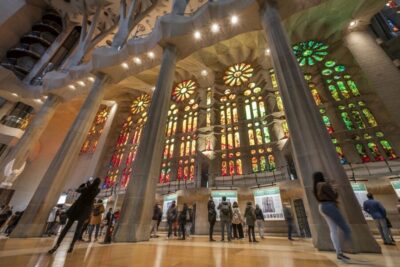
Barcelona: Sagrada Familia Entry Ticket with Audio Guide
Read our review →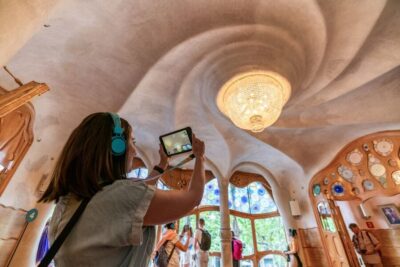
Barcelona: Casa Batlló Entry with Self-Audioguide Tour
Read our review →
Granada: Alhambra Entry Ticket with Audio Guide
Read our review →
Casa Batllo Admission Ticket with Intelligent Audio Guide
Read our review →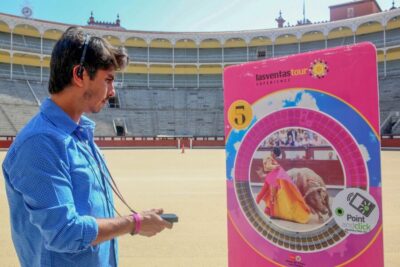
Madrid: Las Ventas Bullring Tour with Audio Guide
Read our review →
Cordoba: Mosque-Cathedral E-Ticket with Audio Guide
Read our review →
Nerja: Caves of Nerja Entry Ticket with Audio Guide
Read our review →
Madrid: Prado Museum Ticket with In-App Audio Guide
Read our review →Browse the lists this tour appears in