
Review · ROME
National Gallery of Modern Art Ticket & Rome App Audioguide
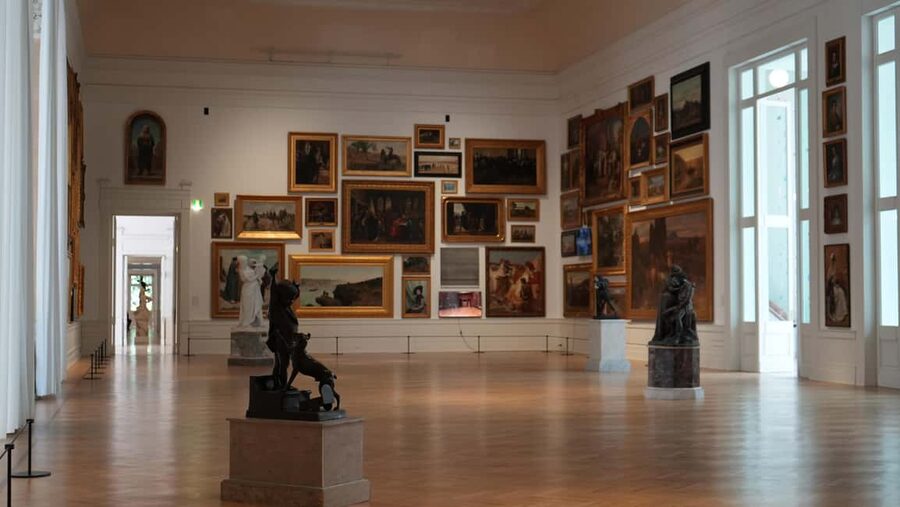
Rome’s National Gallery of Modern Art gives you a large, varied look at Italian and international art in one visit. You can move from 19th-century painting on the ground floor to 20th-century works upstairs, with Monet, Van Gogh, Canova, and Joseph Kosuth among the names connected to the collection.
I like the skip-the-ticket-line entry, especially if you have limited time in Rome. I also like the sheer range: paintings, sculpture, drawings, and installations fill nearly 20,000 works, so you are not locked into one style or period. The main drawback is the museum’s size and sometimes unclear layout. You may need patience to find a work or understand the best order for your visit.
Key points to know
- Nearly 20,000 works: Expect a broad collection of Italian and foreign art rather than a small, tightly focused gallery.
- Two main art periods: The ground floor centers on 19th-century art, while the top floor moves into 20th-century work.
- Famous names: Look for connections to Claude Monet, Vincent Van Gogh, Antonio Canova, and Joseph Kosuth.
- Skip the ticket line: You enter with your official ticket instead of waiting to purchase one at the museum.
- Rome app included: The package includes a digital app audioguide for the city of Rome, not a live guide inside the museum.
- Plan around Monday: The museum is closed on Mondays, and large bags must go to the cloakroom.
Entering Rome’s National Gallery of Modern Art
This experience is simple by design. You receive access to the National Gallery of Modern Art in Rome, then enter the museum with your official ticket. The ticket lets you skip the ticket line, which is useful when you want to spend your time with the art rather than at a sales desk.
The ticket is valid for one day. That gives you a full day in which to visit, but it does not turn the museum into a guided tour. You decide how long to stay, which rooms to see, and how closely to study each work.
The museum is wheelchair accessible. You can also take photographs, but flash photography is not allowed. Food and drinks cannot enter the galleries, and large bags or backpacks must be left at the cloakroom. Pack light if you can. It makes moving through a large museum much easier.
The museum is closed on Mondays, so check the opening day before you book. The activity page says to check availability for starting times, which means you should pay attention to the time offered when you select your date.
More Museum Audio Tours in Italy
- Rome: Borghese Gallery Skip-the-Line Ticket & Audioguide
★ 4.3 · 4,318 reviews - Rome: Borghese Gallery Ticket + Audioguide or Guided Tour
★ 4.6 · 3,219 reviews - Rome: Borghese Gallery Skip-the-Line Tickets with Audioguide
★ 4.6 · 2,562 reviews
Ground-floor art from Monet to Van Gogh
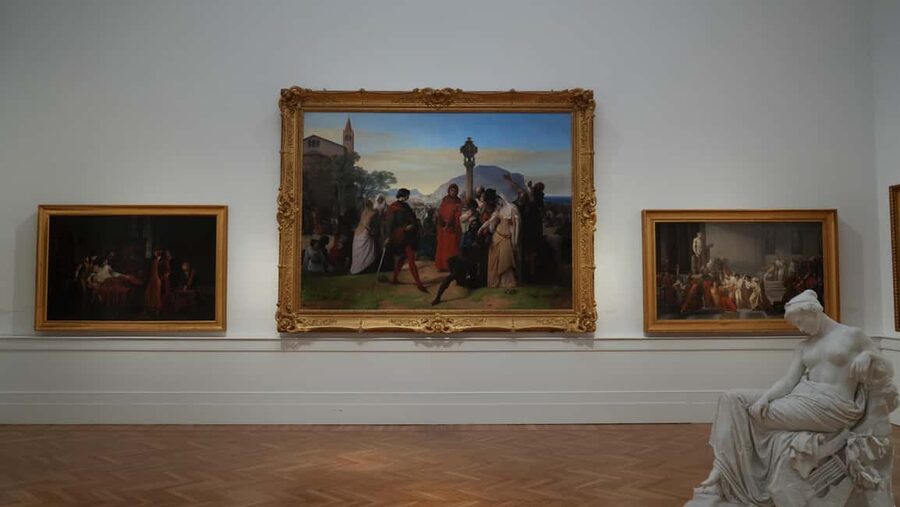
Start on the ground floor, where the collection presents 19th-century art. This is the part of the visit most likely to appeal to you if you enjoy the shift away from strict academic painting toward Impressionism and other modern approaches.
Claude Monet and Vincent Van Gogh are the headline names given for this level. Their presence gives the visit a familiar entry point, but the gallery is not limited to two artists. You will also find Italian and foreign paintings, along with sculpture and other forms of art.
I like beginning here because it gives you a clear sense of change. You can consider how artists handled color, light, form, and subject matter differently as the 19th century moved toward modern art. The museum’s large collection lets you make those comparisons without visiting several separate institutions.
Do not expect every work to be labeled in a way that instantly tells you where to go next. Finding the name of an artist or a particular piece may take some effort. If you care about specific paintings, allow extra time for orientation rather than rushing from room to room.
The scale of some works is another reason to slow down. A large museum is useful for large paintings and sculptures, since they need room around them. You can stand back and see how a work fills the space instead of viewing it shoulder to shoulder with other pieces.
The upper floor and 20th-century experiments
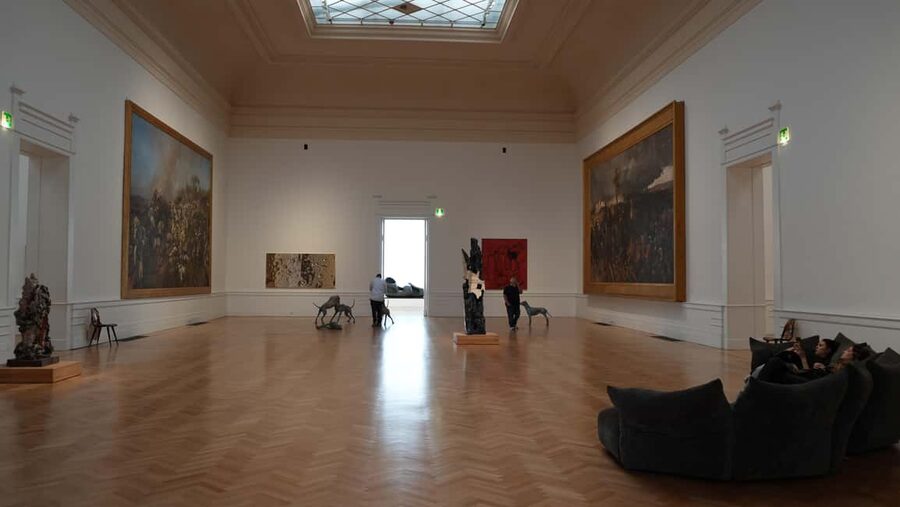
The top floor shifts the focus to 20th-century art. Here you can expect a less predictable visit, with movements and ideas ranging from Futurism and Surrealism to later forms of installation and conceptual art.
Antonio Canova and Joseph Kosuth are among the artists associated with the upper-floor collection. That pairing alone suggests the range of the museum. Canova represents a very different artistic language from Kosuth, and the change from sculpture to conceptual work can make the visit feel like several art museums in one building.
I recommend taking this floor at a slower pace than you might first expect. Modern art often asks you to look at materials, arrangement, and ideas, not just subject matter. A sculpture or installation may take more time to understand than a painting with a recognizable scene.
You may also encounter works that leave you unsure what you are meant to notice. That is part of the point, but it can be frustrating when labels are hard to find. The lack of a clearly marked route and incomplete artist information for some works can make independent exploration feel like a small hunt.
That weakness matters most if you want a polished educational visit. You will have the freedom to wander, but not necessarily the steady explanation you would receive from a live museum guide.
A broad collection rather than a quick highlight reel
Nearly 20,000 works is an impressive number, but it also changes how you should plan the visit. You are not likely to take in everything in one pass. Instead, treat the ticket as permission to make your own selection.
I would set a modest goal. Choose a few artists, periods, or types of work that interest you, then allow time for pieces you did not expect to enjoy. A strict attempt to see all the major works can turn the museum into a checklist.
The collection includes drawings, paintings, sculptures, and installations. That variety helps if your interests are mixed. You can move from a painting-heavy section to three-dimensional work, then pause with a more unusual installation.
It also means the museum suits different people in the same group. One person can focus on Impressionist painting, while another looks for modern sculpture or conceptual art. You do not need to agree on one artistic period to have a worthwhile visit.
The tradeoff is that a large collection can feel less focused. If you prefer a small museum with a clear story and easy navigation, this experience may require more effort. The building’s generous scale is helpful for big works, but it can also make your route less obvious.
More Museum Audio Tours in Rome
- Rome: Borghese Gallery Skip the line ticket and Audioguide
★ 4.3 · 1,535 reviews - Rome: Borghese Gallery Ticket and Optional Audio Guide
★ 4.3 · 902 reviews - Borghese Gallery, Home to Canova’s Art – Entry with Audioguide
★ 4.0 · 884 reviews - Rome: Borghese Gallery Skip-the-Line Ticket & Audioguide
★ 4.0 · 768 reviews
What the Rome app audioguide actually adds
The package includes a digital app audioguide of Rome. This is an important detail because the included audio support is not described as a live guide or a dedicated museum tour.
You should think of it as an extra Rome resource rather than the main way to understand the gallery. Inside the museum, you will still be exploring independently. If you want detailed commentary on every painting, sculpture, and installation, this ticket does not promise that.
The app may be useful if you are also spending time around Rome and want city information beyond the museum. It adds value for someone building a wider sightseeing day, though its usefulness depends on how much you want an audio guide during the rest of your visit.
The museum ticket itself costs 15 EUR. The remaining amount in the roughly $20 price covers the digital Rome audioguide and GetYourGuide services. That breakdown helps you judge the deal clearly. You are not paying $20 solely for museum admission, and the app may matter more to some people than to others.
If you already have another Rome audio app, the package may feel less valuable. If you want skip-the-line entry and do not have a city guide, the added app can make the price easier to justify.
Is the skip-the-line price worth it?
At about $20 per person, the price is moderate for a Rome museum visit, especially when you value time. The base museum admission is 15 EUR, while the rest pays for the city audioguide and booking service.
The key question is not simply the ticket price. It is how much you value avoiding the ticket queue and having an advance purchase in hand. Buying ahead gives you a clearer plan, and it removes one task from the day.
That convenience has real value in Rome, where a day can fill quickly. You can arrive, enter with your official ticket, and get to the galleries without stopping to negotiate museum admission.
Still, this is not the best deal for everyone. You may prefer buying the museum ticket directly if you do not need the Rome app or skip-the-line service. The activity is also non-refundable, so you should be certain about your date before paying.
The strongest value comes for a first-time Rome visitor with limited time, a fixed sightseeing schedule, and an interest in modern art. The weaker value comes for someone who wants only the lowest possible admission cost.
How long should you allow?
The activity is valid for one day, but no fixed visit length is given. That flexibility lets you match the museum to your own schedule.
I would avoid treating it as a quick stop between major ancient sites. Nearly 20,000 works spread over two main floors can easily demand more attention than a short gap in your itinerary allows. Even if you only choose highlights, the change from 19th-century paintings to 20th-century art deserves time.
Your pace will depend on how closely you read labels and how much you enjoy installations. Someone looking mainly for Monet, Van Gogh, or Canova may finish sooner. Someone interested in comparing Futurism, Surrealism, and conceptual art will want longer.
The large galleries can also make a short visit feel rushed. Give yourself time to stand back from big works, find the next room, and pause when something catches your eye.
Who will enjoy this museum most?
I would recommend this ticket to you if you enjoy variety and prefer exploring at your own pace. It works particularly well for people who want more than Rome’s ancient monuments and Renaissance churches.
Art fans will appreciate the mix of Italian and foreign artists. People with only a passing interest in modern art may still enjoy the famous names and the change in style from floor to floor.
It is also a good fit for independent visitors. You are not joining a group, following a guide, or keeping pace with strangers. You can spend five minutes with one piece or move on quickly.
Families and mixed-interest groups may find the variety helpful, but the scale can test younger visitors’ patience. Since food and drinks are not allowed in the galleries, plan your museum stop with that rule in mind.
This is less suitable if you need a tightly organized route with constant explanation. The museum’s signage and artwork labels may not always provide an easy path, so you need to be comfortable making your own way.
Practical tips for a smoother visit
Buy ahead if skipping the ticket line matters to you. The advance ticket is also useful for a fixed Rome schedule, though remember that the purchase is non-refundable.
Check the day carefully, since the museum is closed on Mondays. Also check the assigned availability and starting time before you finalize the booking.
Bring as little as possible. Food and drinks are not allowed, and large bags or backpacks must go to the cloakroom. A light bag will make your visit simpler.
Use the ground floor to get into the collection through 19th-century art. Then move upstairs for the 20th-century works, including the more experimental material.
Keep your phone ready for the Rome app audioguide, but do not expect a live guide to explain the museum. If you want a detailed explanation of particular works, check what information is available in the galleries as you go.
Photography is allowed without flash. That lets you record a few memorable works, but keep the focus on looking rather than photographing every room.
Should you book this National Gallery ticket?
Book it if you want a convenient, self-guided visit to one of Rome’s major modern art collections, especially if skipping the ticket line will help your schedule. The mix of Monet, Van Gogh, Canova, Kosuth, Italian art, foreign art, sculpture, and installations gives you plenty to explore.
Think twice if you want a live guide, a perfectly marked route, or the lowest possible admission price. The museum can feel large and a little hard to navigate, and the included audioguide is for Rome rather than a dedicated gallery tour.
For an independent art lover, the ticket offers a practical way into a wide-ranging museum. Pack light, avoid Monday, allow plenty of time, and accept that finding your way through the collection is part of the visit.
FAQ
Where is this experience located?
It takes place at Rome’s National Gallery of Modern Art in Lazio, Italy.
How much does the experience cost?
The listed price is about $20 per person. The museum ticket itself costs 15 EUR, with the remaining amount covering the Rome digital app audioguide and GetYourGuide services.
How long is the ticket valid?
The ticket is valid for one day.
Does the ticket include skip-the-line access?
Yes. It includes access that lets you skip the ticket line.
Is this a guided museum tour?
No. A guided tour is not included. The package includes museum admission and a digital app audioguide for the city of Rome.
What artists can I see?
The collection includes works associated with Claude Monet, Vincent Van Gogh, Antonio Canova, Joseph Kosuth, and other Italian and foreign artists.
What type of art is on display?
You can see drawings, paintings, sculptures, installations, and other works covering periods and movements from Neoclassicism and Impressionism to Futurism and Surrealism.
Is the museum wheelchair accessible?
Yes. The museum is wheelchair accessible.
Can I take photographs inside?
Yes, photography is allowed, but flash photography is not permitted.
Is the museum open on Mondays?
No. The museum is closed on Mondays. Food and drinks are also not allowed inside the galleries, and large bags or backpacks must be left at the cloakroom.
New audio tours around Rome
- Rome: St. Peter’s Basilica and Dome Entry + Audio Guide★ 4.5 · 13 reviews
- St. Peter’s Basilica: Hosted Entrance & Digital Audioguide★ 4.1 · 35 reviews
- Sorrento & Pompeii Day Trip from Rome Audio Guide Tour★ 4.2 · 50 reviews
- Rome:St. Peter’s Basilica Hosted Entry + Official Audioguide★ 3.4 · 10 reviews
- Colosseum, Roman Forum, Palatine Hill access and AudioGuide★ 4.7 · 12 reviews
- Rome+Jubilee Audioguide – TravelMate app for your smartphone★ 4.2 · 38 reviews
- Rome:Ostia Antica Skip-the-line Ticket & Audioguide★ 4.3 · 11 reviews
- Rome: Vatican Museums & Sistine Chapel Entry with Audio App★ 4.3 · 240 reviews
Rome Audio Tours, compared.
Rome: Colosseum & Forum with Audio Guide App -Optional Arena
Read our review →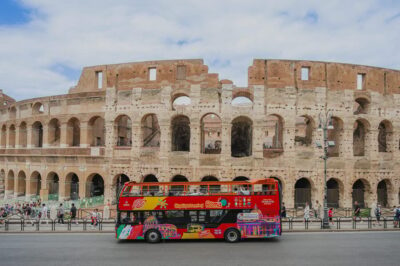
Rome: City Sightseeing Hop-on Hop-off Bus with Audioguide
Read our review →
Rome: St. Peter’s Basilica & Dome Entry Ticket & Audio Tour
Read our review →
Colosseum, Roman Forum & Palatine Hill with Audioguide App
Read our review →
Vatican & Sistine Chapel Ticket with Optional Audio Guide
Read our review →
Rome: Castel Sant’Angelo Entry Ticket & Digital Audioguide
Read our review →
Rome: Castel Sant’Angelo Entry Ticket & Audio App
Read our review →
Rome: Hop-on Hop-off Sightseeing Bus Tour with Audioguide
Read our review →Browse the lists this tour appears in