Review · ITALY
Pompeii: Entry Ticket with Audio Guide
Pompeii is not a tidy collection of ruins behind glass. It is a full Roman city, with streets, bakeries, temples, theaters, baths, villas, and election notices still spread across a vast site. Walking through it, you can picture ordinary life before Vesuvius buried the city in AD 79. I especially like the freedom to set your own pace and the useful audio guide, which helps turn weathered walls into homes, shops, and public spaces. The Villa of the Mysteries is another strong reason to choose the Pompeii+ ticket. The main catch is scale: even six or eight hours may not be enough, and ticket collection can be confusing if you join the wrong line.
At $40 per person, this is a sensible choice if you want reserved admission without committing to a fixed group tour. I like that you can use a phone-based guide or collect a physical device, but you need an ID for the latter, and you must return it to the same desk. Bring water, a hat, sturdy shoes, and patience for uneven ground.
Key points to know before you go

- Pompeii is much bigger than it looks: Plan at least several hours, and accept that a single day may not cover every region.
- Choose the ticket carefully: Pompeii Express covers the ancient city only. Pompeii+ adds Villa of the Mysteries, Villa of Diomedes, and Villa Regina in Boscoreale.
- Collect tickets at the right place: Show your phone voucher at Porta Marina Superiore or Piazza Esedra, but the audio guide desk near Porta Marina Superiore may be the most useful stop.
- The audio guide adds context: It explains daily life, buildings, and Roman customs, while its map helps you find your way.
- Bring official identification: An ID is required as a deposit for the physical audio guide.
- Expect heat and heavy walking: Comfortable shoes, shade, water, and a food break can make the difference between a good visit and a tiring one.
Why Pompeii is worth giving a full day
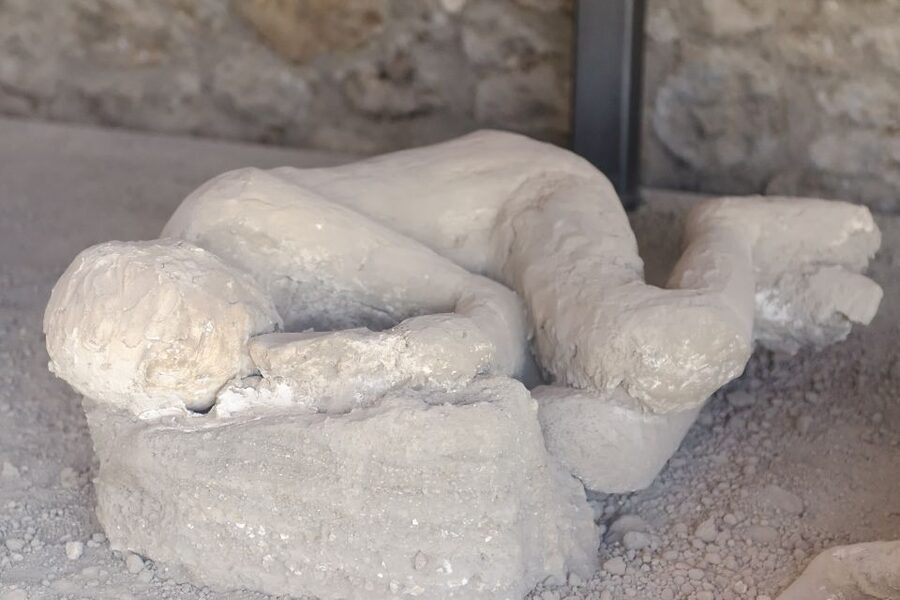
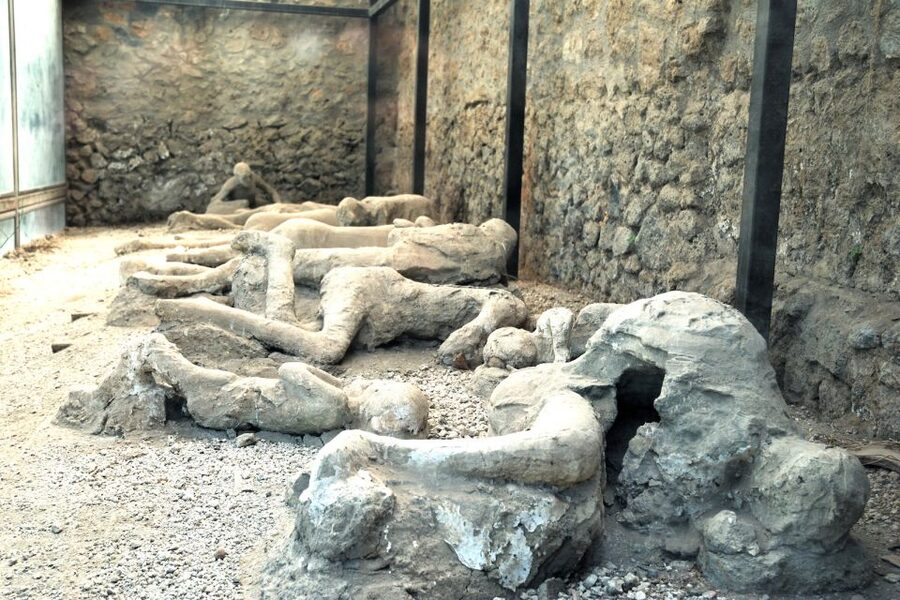
The famous eruption is only the beginning of the story. Pompeii was a working Roman city of about 11,000 people, with homes, shops, religious buildings, entertainment venues, and public services. Volcanic ash buried it suddenly on the morning of August 24, AD 79, preserving details that usually vanish from ancient sites.
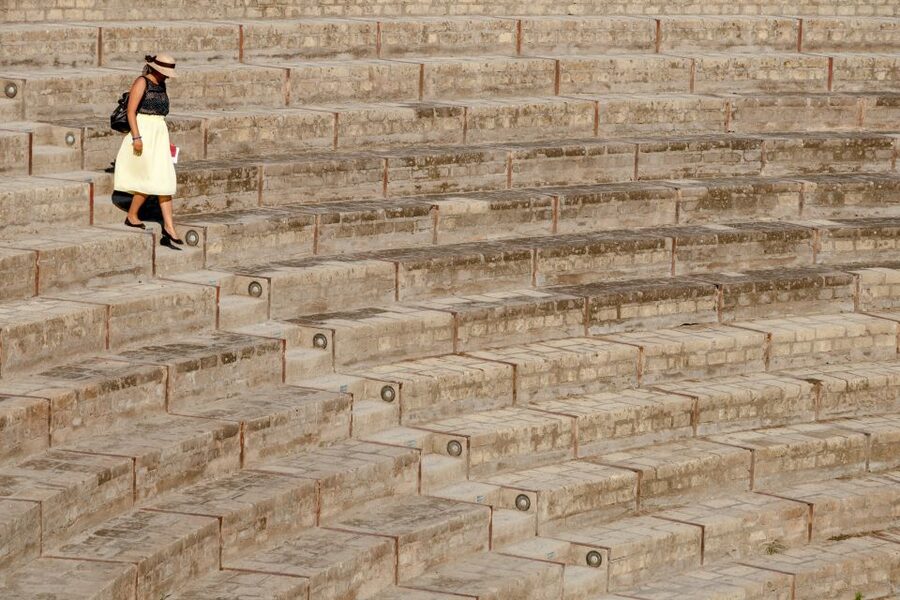
That detail is what makes the visit so powerful. You are not simply looking at foundations. You can walk along streets marked by ancient buildings, see mosaics in bathhouses, study frescoes in villas, and stand inside an amphitheater where crowds once gathered. The city feels like a place rather than a collection of disconnected monuments.
I recommend thinking of Pompeii as an open-air city visit, not a quick attraction. The site is large enough that you may cover only part of it in two or three hours. Even with a full day, you might miss an entire region. That is not a flaw in the ticket, but it is important when planning your time.
More audio tours around Italy:
- Rome: Pantheon Fast-Track Ticket and Official Audioguide
★ 4.5 · 27,353 reviews - Rome: Colosseum & Forum with Audio Guide App -Optional Arena
★ 4.2 · 24,770 reviews - Florence: Timed Entry to Michelangelo’s David + Audio App
★ 4.6 · 19,496 reviews
Choosing between Pompeii Express and Pompeii+
The basic Pompeii Express ticket includes the ancient city of Pompeii. This is enough to see the central streets, temples, theaters, baths, villas, shops, and amphitheater. If your schedule is tight, or if this is your first visit and you want the main site without extra travel, it is the simpler option.
Pompeii+ includes the ancient city plus several suburban locations:
- Villa of the Mysteries
- Villa of Diomedes
- Villa Regina in Boscoreale
- The Antiquarium at Boscoreale
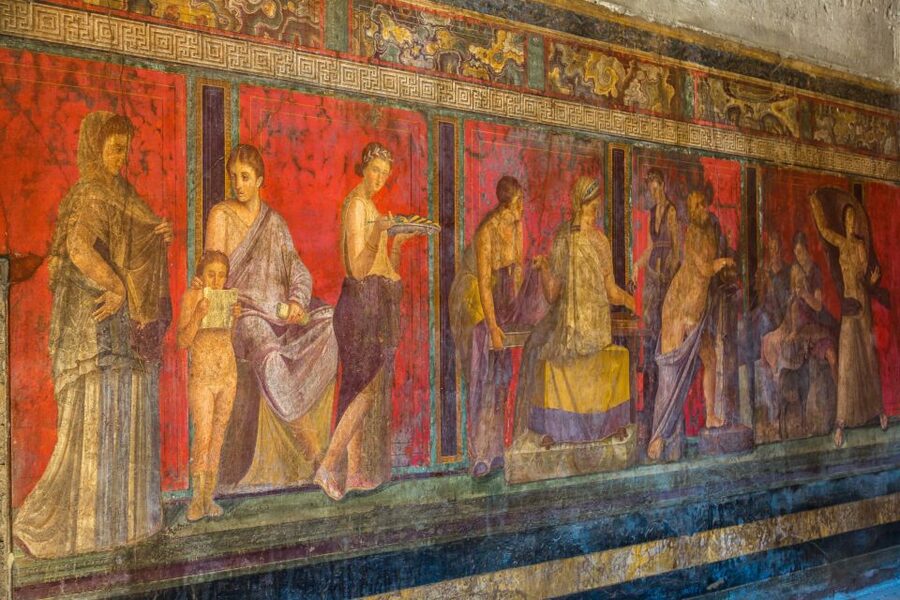
The Villa of the Mysteries is the prize here. Its frescoes are among the most memorable sights around Pompeii, and the villa gives you a clearer sense of Roman private life beyond the crowded city center. One visitor who chose the Plus option specifically appreciated having access to this well-preserved building and its intact frescoes.
Pompeii+ asks more of your schedule. The last entry is 3:30 p.m. from November 1 through March 31, and 5:30 p.m. from April 1 through October 31. If you arrive late, the extra locations may not be realistic. Check your route and available time before paying more for the Plus option.
At $40, the ticket offers good value if you use much of the day. It is less satisfying if you arrive with only two hours, since you will pay for access to a huge archaeological area but see only a fraction of it. Families, history fans, and anyone visiting from Naples or the Amalfi Coast should try to protect a generous block of time.
Collecting your ticket without losing time
Your phone voucher is not necessarily the final entrance ticket. Show it at the Porta Marina Superiore or Piazza Esedra ticket office. The exact lines can be confusing, and some people have been sent between different counters before finding the correct one.
If you have chosen the physical audio guide, go to the official audio guide desk beside the ticket office at Porta Marina Superiore, at Via Villa dei Misteri n. 2. You will need a valid passport, identity card, or other accepted ID. The ID is held as a deposit while you use the device.
A useful practical point: several visitors found that the audio guide kiosk was also the best place to collect their entry tickets, so they avoided the longer general ticket queue. Signage and directions are not always as clear as they could be, though, so ask staff directly if you are unsure.
The physical guide must be returned to the same official desk after your visit. That return trip is a small nuisance, especially if you finish at the opposite end of the archaeological area. Plan your route so you are not racing back at closing time.
The digital guide is delivered through instructions with your booking confirmation. It works on your phone and is available in English, German, French, Italian, and Spanish for the digital version. The stated audio guide language selection also includes Chinese, Japanese, Portuguese, and Russian. Bring headphones if you want to use your phone privately. Headphones are not included, and Bluetooth headphones do not work with the physical audio guide device.
What the audio guide adds
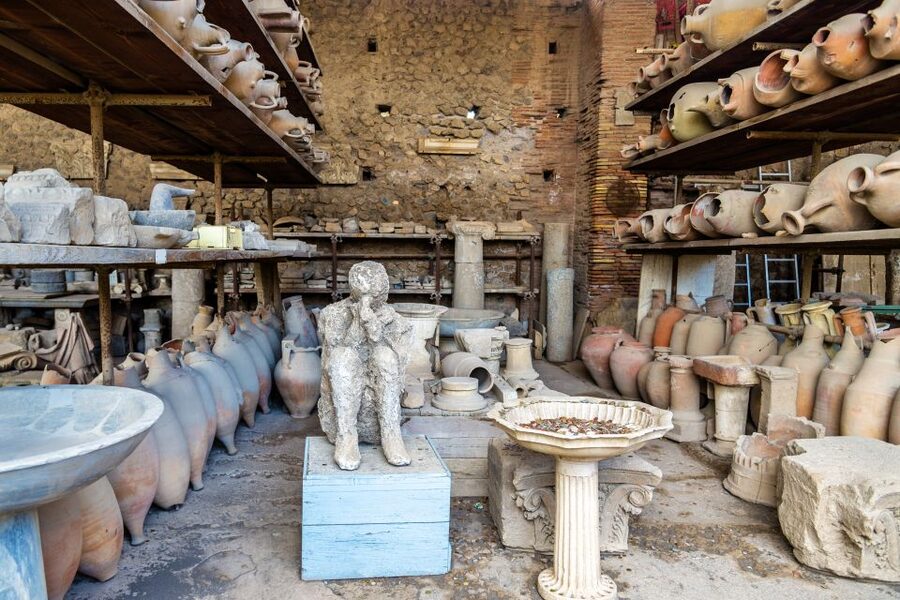
You can walk through Pompeii without a guide, but the audio commentary makes the ruins easier to read. A wall becomes part of a house. A raised platform becomes a public building. A mosaic becomes evidence of taste, wealth, or daily use rather than just a pretty pattern.
The guide covers practical subjects such as Roman meals, public baths, religious buildings, entertainment, and household life. It also points out the temples of Venus, Apollo, and Jupiter, the House of the Faun, the amphitheater, and the Villa of the Mysteries.
The map function is especially useful. Pompeii is not always intuitive, and it is easy to walk past a major building or lose track of which streets you have already seen. The guide helps you orient yourself, though the many separate audio snippets can feel awkward at first. Some explanations may not line up perfectly with what you are looking at, particularly if a building is closed or access has changed.
The phone guide has one clear weakness: it uses your battery. A physical device is a useful backup if your phone is dying, but you still need to collect and return it at the official desk. If you use your own phone, download or prepare the guide before walking far into the site and consider carrying a power bank.
Same sights, a different narrator:
- Rome: City Sightseeing Hop-on Hop-off Bus with Audioguide
★ 4.0 · 16,045 reviews - Venice: La Fenice Opera House Entry Ticket with Audio Guide
★ 4.6 · 11,742 reviews - Rome: Colosseum, Forum, Palatine Hill Entry & Audioguide App
★ 4.4 · 10,957 reviews - Rome: St. Peter’s Basilica & Dome Entry Ticket & Audio Tour
★ 4.2 · 7,537 reviews
A practical route through the ancient city

Begin with the main streets and get your bearings before chasing individual houses. Pompeii’s paved roads give you an immediate sense of how the city functioned. Look for the raised stepping stones and worn surfaces, then follow the audio guide toward the major public buildings.
The temples of Venus, Apollo, and Jupiter show the religious side of city life. Even when columns and walls are incomplete, their locations help you understand how public space was organized. The Temple of Jupiter also gives you the kind of broad view that makes Vesuvius feel like a constant part of the city’s story.
The public baths are another highlight. Their mosaics and rooms explain more than a lecture about Roman engineering. You can see how bathing was part of social life, not simply a private wash. The audio commentary is useful here because it describes how the different rooms worked.
The House of the Faun is one of the best stops for imagining wealthy domestic life. Its scale and decoration contrast with smaller homes nearby. The site’s villas also show that Pompeii was not socially uniform. Some residents lived simply, while others filled their homes with gardens, frescoes, and elaborate mosaics.
Make time for the theaters and amphitheater. The theater spaces help you picture music, drama, and public gatherings, while the amphitheater shows the size of the crowds Pompeii could accommodate. These buildings are more memorable when you pause rather than simply photograph them and move on.
The market area gives a different view of the city. This is where the audio guide can be particularly helpful, explaining how Romans bought food and handled everyday errands. Such details make Pompeii feel less like a disaster site and more like a normal city interrupted.
The Villa of the Mysteries and the outer sites
The Villa of the Mysteries is often the reason to pay for Pompeii+. Its frescoed rooms are a major draw, and the villa offers a quieter counterpoint to the central streets. The paintings are still vivid enough to show how much color and decoration Roman interiors once had.
The extra locations also change the rhythm of the day. Villa of Diomedes adds another suburban residence, while Villa Regina in Boscoreale and its Antiquarium broaden the picture beyond the main urban center. These sites are useful if you want to understand the area around Pompeii rather than only the central city.
Do not choose Pompeii+ automatically if you have limited time. The ancient city alone can fill a day, and the suburban villas require attention to opening times and travel planning. Choose the Plus ticket when you have a full schedule and a specific interest in Roman villas and frescoes.
Heat, walking, food, and the physical side of the visit

Pompeii is physically demanding. The ground can be uneven, the roads are hard on feet, and there is a great deal of walking between major sights. One six-hour visit involved more than 22,000 steps, which gives you a useful idea of the scale.
Wear comfortable sports shoes with good support. Avoid impractical footwear, since ancient paving is not gentle on ankles. Quick-drying clothing, a hat, and a small umbrella for shade can help during warm months.
Bring plenty of water and a few snacks. There is a cafe on site, and it offers fresh food and cold drinks, but a sandwich or cereal bar in your bag gives you more control over timing. Take breaks in shaded areas when you find them. In summer, the open streets can feel exposed, and there is not always shade beside the building you want to study.
Free luggage storage is available, which is helpful if you are arriving by train or moving between hotels. The site is wheelchair accessible, though uneven ancient surfaces can still make some areas harder to navigate. Toilets are available around the grounds, and a map helps you locate them.
Timing your visit from Naples, Sorrento, or the Amalfi Coast

This experience works well as a day trip from Naples, Sorrento, or the Amalfi Coast, provided you allow enough time for transport and the archaeological site itself. One person found the train from Sorrento easy, then explored independently after collecting the ticket.
Avoid building your plan around a rushed two-hour stop. That can work for a quick introduction, especially with children, but you will leave many areas unseen. Three hours lets you cover a reasonable selection of highlights. Five to eight hours gives you room to follow the audio guide, stop for food, and explore without constantly checking the time.
Arriving around 10 a.m. and staying until late afternoon still may not be enough for every region. That is normal. Pick a few priorities before entering, then allow time for unplanned discoveries.
If you arrive late in the day, pay close attention to the final entry times for Pompeii+. A late arrival may leave you enough time for the ancient city but not the suburban villas.
Who should book this Pompeii ticket?

I would choose this option if you want independence, clear admission arrangements, and more context than you get from wandering alone. It suits couples, families with older children, independent sightseers, and anyone who dislikes being tied to a guide’s pace.
It is also a good fit if you already have transport arranged from Naples or Sorrento. The ticket does not include a guided tour, so you control the route and the length of each stop. That freedom is valuable at a site where one person may want to study frescoes while another prefers the streets and public buildings.
A guided tour may suit you better if you want every major sight explained in a fixed order or if you have only a short window. The audio guide is useful, but it cannot answer questions or adjust the route when a building is closed. The independent format also requires you to manage your own map, battery, water, and timing.
Should you book it?
Yes, if you can give Pompeii at least half a day and want to explore at your own pace. The reserved ticket reduces the stress of buying admission on arrival, while the audio guide gives enough explanation to make the ruins meaningful. For a first visit, I would choose Pompeii+ only if you have time for the Villa of the Mysteries and the suburban sites.
Book the basic option if your schedule is tight, and spend the saved time seeing the central city properly. Bring ID, start at the correct ticket or audio guide desk, wear serious walking shoes, and treat the visit as a full-day outing rather than a quick stop. Pompeii rewards patience, and the scale is part of what makes it unforgettable.
FAQ
What does the Pompeii Express ticket include?
Pompeii Express includes entry to the ancient city of Pompeii. It does not include the suburban villas, including the Villa of the Mysteries.
What does the Pompeii+ ticket include?
Pompeii+ includes the ancient city of Pompeii, the Villa of the Mysteries, Villa of Diomedes, Villa Regina in Boscoreale, and the Antiquarium in Boscoreale.
Is an audio guide included?
A digital audio guide is available with the booking, with instructions sent in your confirmation. A physical audio guide is available if you select that option.
Where do I collect the physical audio guide?
Collect it at the official audio guide desk beside the ticket office at Porta Marina Superiore, inside the Pompeii archaeological site, at Via Villa dei Misteri n. 2.
Do I need identification to rent the audio guide?
Yes. A valid ID is required as a deposit for the physical audio guide device. Bring your passport or identity card.
Can I use Bluetooth headphones with the physical audio guide?
No. Bluetooth headphones do not work with the physical audio guide device. Headphones are not included.
When is the last entry for Pompeii+?
The last entry is 3:30 p.m. from November 1 through March 31, and 5:30 p.m. from April 1 through October 31.
Is Pompeii wheelchair accessible?
Yes, the activity is listed as wheelchair accessible. Ancient paths can still be uneven, so allow extra time around difficult surfaces.
New audio tours around Italy
- Lecce Walking Tour with Audio and Written Guide by a Local★ 4.0 · 38 reviews
- Private Audio Guided Walking Tour in Lecce★ 4.0 · 7 reviews
- Private Audio Guided Walking Tour in Como★ 3.0 · 3 reviews
- Como Walking Tour with Audio and Written Guide by a Local★ 4.5 · 30 reviews
- Finance and Nobility: Explore medieval Genoa on a self-guided audio tour★ 4.5 · 7 reviews
- Genova Walking Tour with Audio and Written Guide by a Local★ 4.5 · 33 reviews
- Udine Walking Tour with Audio and Written Guide by a Local★ 4.0 · 2 reviews
- Florence: Uffizi Gallery Timed Entry Ticket with Audio★ 3.0 · 3 reviews
Italy Audio Tours, compared.

Rome: Pantheon Fast-Track Ticket and Official Audioguide
Read our review →
Rome: Colosseum & Forum with Audio Guide App -Optional Arena
Read our review →
Florence: Timed Entry to Michelangelo’s David + Audio App
Read our review →
Rome: City Sightseeing Hop-on Hop-off Bus with Audioguide
Read our review →
Venice: La Fenice Opera House Entry Ticket with Audio Guide
Read our review →
Rome: Colosseum, Forum, Palatine Hill Entry & Audioguide App
Read our review →
Rome: St. Peter’s Basilica & Dome Entry Ticket & Audio Tour
Read our review →