Review · ITALY
Agrigento – Valley of the Temples – audio guide
Agrigento’s Valley of the Temples is easier to appreciate when you know what you are looking at. This $4.70 self-guided audio tour gives you an introduction and 11 location-based stops about the ancient Greek temples, their deities, religious rites, myths, and legends. Your phone points you toward the next site, so you can walk without constantly checking a map.
I like the low price and the freedom to visit on your own schedule. I also like that the guide works for 365 days and can be used before your visit, which gives you time to prepare. The main drawback is depth: some descriptions are short, and one listener found that the information added little beyond what was already posted at the site.
Key points at a glance
- Eleven geolocated stops: Your phone helps direct you to the main points of interest along the visit.
- Five language choices: Listen in English, Italian, French, Spanish, or German.
- Useful preparation tool: Start listening before you arrive so the temples are easier to place in context.
- A very low-cost option: At $4.70 per person, it costs far less than many private guiding options.
- No entrance ticket included: You must arrange admission to the archaeological area separately.
- Bring practical gear: Comfortable or light shoes and a hat matter on a sunny walk.
A low-cost guide for a famous Greek archaeological site

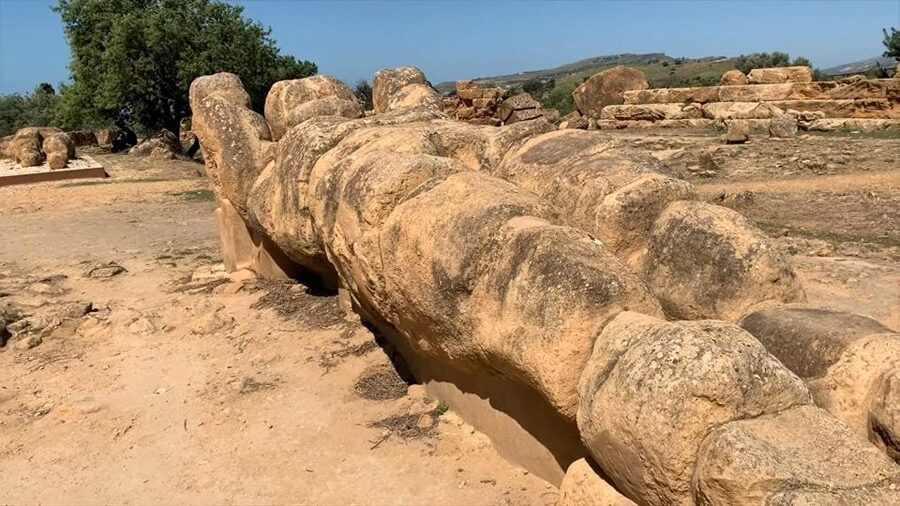
The Valley of the Temples is the sort of place where a little background changes the visit. A columned temple can look like a grand ruin at first glance, but the story becomes more interesting when you understand which deity it honored, how religious rites worked, and what role the ancient city played.
This audio guide is designed to give you that basic framework without requiring a scheduled tour. You download the ITGUIDES app, enter the code supplied after purchase, and listen on your own phone. There is no guide waiting at a meeting point, no group to keep up with, and no fixed start time.
The cost is the strongest part of the offer. For $4.70, you receive an introduction plus 11 descriptions. That makes sense for independent visitors who want more than a silent walk but do not need a private historian beside them.
You should set your expectations correctly. This is not a long-form lecture series. The descriptions are intended to be practical and easy to follow while you walk. Some listeners found the explanations clear and useful, especially the references to customs, myths, and legends. Others found them too brief, with one estimate putting several stops at about a minute each.
More audio tours around Italy:
- Rome: Pantheon Fast-Track Ticket and Official Audioguide
★ 4.5 · 27,353 reviews - Rome: Colosseum & Forum with Audio Guide App -Optional Arena
★ 4.2 · 24,770 reviews - Florence: Timed Entry to Michelangelo’s David + Audio App
★ 4.6 · 19,496 reviews
Before you arrive, prepare the app over Wi-Fi
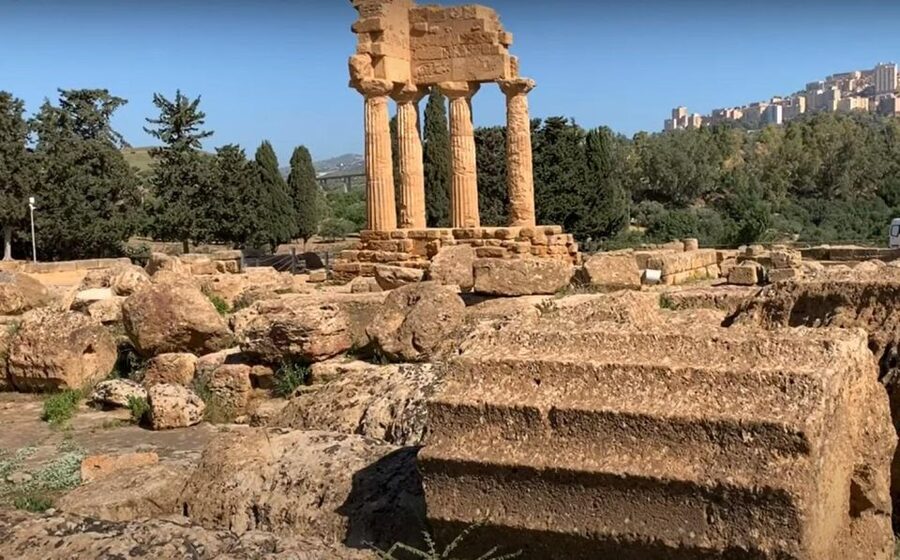
The most important practical step is downloading all the content before reaching the archaeological area. The instructions specifically recommend using a good data connection or Wi-Fi. That is sensible because the guide relies on your smartphone, its map, and location-based content.
Install the ITGUIDES app, redeem the code, and check that the audio and illustrations are available before you leave your accommodation. You can also begin with the general introduction at home. This is a useful feature because you will arrive knowing the broad story rather than trying to learn everything while walking in the sun.
The guide is valid for 365 days and does not expire after one use. That gives you room to change your plans or return to the site later. It is also helpful if your first visit is rushed and you want to review the material before another walk.
Keep your phone charged. The supplied information does not promise a power bank or on-site technical support, so your phone is the key piece of equipment. Earphones may also make the audio easier to hear, especially if other people are nearby.
The opening introduction gives the site a frame
Start with the general introduction before reaching the first point of interest. This section explains the history of one of the world’s best-known archaeological areas and prepares you for the subjects covered along the route.
That opening matters because the Valley of the Temples is not simply a row of old buildings. The audio guide connects the remains with Greek religious life, the gods, ceremonies, customs, and traditional stories. Even a short introduction can help you listen for the difference between an architectural fact and a religious belief.
The introduction is also a good test of the guide’s style. If you want detailed academic discussion, you may find it light. If you want a clear starting point before seeing the monuments, it should do the job.
Eleven points of interest, guided by your phone

The route includes 11 descriptions of points of interest. The supplied information does not name each stop, so I would not expect a detailed temple-by-temple plan before booking. Instead, think of it as a general audio route that supports the main sights you encounter.
The geolocation is the most useful part. Your phone indicates the relevant place as you move around, helping you match the description to the ruin in front of you. This can save time and reduce the common problem of standing among several monuments and wondering which one the guide is discussing.
The map function also helps with orientation. One useful comment specifically noted that the online map made it easier to find the way around the grounds. That matters in a large archaeological area, where the experience involves walking between several points rather than entering one compact building.
At each stop, expect a short recording rather than a long talk. The best use is to listen, look closely at the remains, and then continue at your own pace. You can pause, replay, or skip ahead according to your interest.
The content covers more than dates and names. It includes deities, rites, customs, myths, legends, and other curiosities. That human side is valuable because religious sites make more sense when you understand how people used them, not only when they were built.
Still, the short format has limits. A one-minute explanation can identify the most important point, but it cannot explain every debate, reconstruction, or historical detail. If you want dense archaeological analysis, a specialist guide or a longer written resource would be a better match.
Same sights, a different narrator:
- Rome: City Sightseeing Hop-on Hop-off Bus with Audioguide
★ 4.0 · 16,045 reviews - Pompeii: Entry Ticket with Audio Guide
★ 4.1 · 13,491 reviews - Venice: La Fenice Opera House Entry Ticket with Audio Guide
★ 4.6 · 11,742 reviews - Rome: Colosseum, Forum, Palatine Hill Entry & Audioguide App
★ 4.4 · 10,957 reviews
Why the geolocation feature is worth the small fee
Many audio guides are little more than a list of tracks. You select a number, press play, and hope you have found the right monument. This one uses geolocation to direct you toward the appropriate site.
That feature is especially useful if you are visiting independently. You do not need to arrange a meeting with a guide, wait for a group, or follow someone else’s walking speed. You can stop for photographs, spend longer at the places that interest you, and move on when the explanation is finished.
The map is not a substitute for good preparation. Download the content first, and take a few minutes to understand how the app marks the stops. If your phone has trouble with location services, the written map and the numbered descriptions become more important.
The guide also includes photos and illustrations. These can help you connect a ruined structure with how it may have looked or functioned. The supplied details do not promise reconstructions of every temple, so treat the illustrations as support material rather than a full visual restoration.
Choose your language before you set out

The guide is offered in English, Italian, French, Spanish, and German. The recordings are described as mother-tongue recordings, which is useful if you prefer hearing a natural version of your chosen language rather than reading translated text.
Select the language that lets you absorb the most while walking. You do not want to spend the visit translating complicated historical terms on a small screen. If you are visiting with family or friends who speak different languages, each person can use the guide on their own smartphone, provided each person has access to the purchased content.
The information does not specify whether transcripts are included, so do not assume you will have a full written version of every recording. The main product is the audio guide, supported by photos, illustrations, and the map.
Walking conditions: shoes, sun, and your own pace
This is a walking visit through an archaeological area, not a seated museum audio tour. Light or comfortable shoes are a smart choice. A hat is also useful when the sun is strong.
The exact walking time is not given. Do not confuse the 365-day validity with a 365-day activity duration. You can use the guide during that validity period, but the length of your visit depends on how long you spend at each point and how much time you allow for photographs and pauses.
A sunset visit can be appealing, particularly if the weather is comfortable and you want softer light for the temples. Check the site’s opening arrangements separately because the audio guide does not include admission or control access to the area.
The guide gives you freedom, but it does not provide transport, a taxi, or an escort. One poor experience connected with trying to arrange a taxi, so plan your arrival and departure rather than assuming transport will appear when you finish.
What the $4.70 price really buys
At $4.70 per person, this is a budget add-on rather than a full guided excursion. There is no entrance ticket, transport, personal guide, or group service included. You are paying for the app content, the 11 audio descriptions, the introduction, the language choice, and the location-based route.
That is good value if your alternative is walking around with no explanation. It is also good value if you have already paid for admission and want a simple way to add context without committing to a longer tour.
The value is weaker for visitors who already plan to read every information panel or who prefer detailed archaeological discussion. One listener felt the guide repeated information available at the site. That criticism is fair: the audio guide is meant to organize and explain the visit, not guarantee information that cannot be found elsewhere.
I would judge the price by how much help you want. If you need only a basic orientation and a few useful stories, the cost is modest. If you expect a richly detailed lecture at every temple, spend more on a specialist option if one is available.
Who will get the most from this audio guide

I would choose this guide for independent visitors who want structure without a scheduled group. It suits first-time visitors, couples, and families who prefer to pause often and set their own pace.
It is also useful if the ticket office does not clearly explain the available guiding choices. Having the app ready means you are not left inside the archaeological area trying to find an explanation after admission.
The guide is a good match for:
- Visitors who want a low-cost alternative to a private guide
- People who like using their own smartphone
- Anyone who values a map and location prompts
- Visitors who want myths, legends, and religious customs alongside basic history
- People visiting in one of the five listed languages
- Anyone who may return within the 365-day validity period
I would be more cautious if you need extensive detail, printed text, or personal answers to questions. The app cannot respond to your questions or adjust its explanation to your interests.
Booking, cancellation, and simple logistics
There is no meeting point because this is entirely self-guided. You can begin before reaching Agrigento, then continue at the archaeological area once the location-based stops are available.
The price does not include entry to the Valley of the Temples. Arrange that separately and check the site’s current admission details before setting out.
You can cancel up to 24 hours in advance for a full refund, and the booking option allows you to reserve now and pay later. Availability information may show starting times even though the audio guide itself is not a timed group activity, so read the booking details carefully.
The safest routine is simple: purchase the guide, redeem the code, download the content over Wi-Fi, check the language, charge your phone, and bring comfortable shoes and a hat.
Should you book it?
Book this audio guide if you want a cheap, flexible way to add context to the Valley of the Temples. The geolocated map, five language choices, short recordings, and 365-day validity make it a practical companion for an independent visit.
Skip it if you want a full archaeological lesson or a guide who can answer questions in person. At $4.70, it is easy to justify as a basic orientation tool, but its brief descriptions will not satisfy every history enthusiast.
For most visitors, the sensible approach is to download it before arriving, listen to the introduction in advance, and use the 11 stops selectively. That way, the guide supports the monuments without taking over the walk.
FAQ
Is entry to the Valley of the Temples included?
No. The audio guide price does not include the entrance ticket.
Is there a meeting point?
No. This is a self-guided activity, so there is no meeting point.
How do I use the audio guide?
Download the ITGUIDES app on your smartphone and enter the code provided at the time of purchase.
Should I download the content before visiting?
Yes. It is highly recommended that you download all content over Wi-Fi or with a good data connection before arriving.
How many audio stops are included?
The guide includes an introduction and descriptions for 11 points of interest.
Which languages are available?
You can use the guide in English, Italian, French, Spanish, or German.
Does the audio guide expire?
No. The audio guide does not expire, and the activity is listed as valid for 365 days.
Can I cancel for a refund?
Yes. You can cancel up to 24 hours in advance for a full refund.
New audio tours around Italy
- Lecce Walking Tour with Audio and Written Guide by a Local★ 4.0 · 38 reviews
- Private Audio Guided Walking Tour in Lecce★ 4.0 · 7 reviews
- Private Audio Guided Walking Tour in Como★ 3.0 · 3 reviews
- Como Walking Tour with Audio and Written Guide by a Local★ 4.5 · 30 reviews
- Finance and Nobility: Explore medieval Genoa on a self-guided audio tour★ 4.5 · 7 reviews
- Genova Walking Tour with Audio and Written Guide by a Local★ 4.5 · 33 reviews
- Udine Walking Tour with Audio and Written Guide by a Local★ 4.0 · 2 reviews
- Florence: Uffizi Gallery Timed Entry Ticket with Audio★ 3.0 · 3 reviews
Italy Audio Tours, compared.

Rome: Pantheon Fast-Track Ticket and Official Audioguide
Read our review →
Rome: Colosseum & Forum with Audio Guide App -Optional Arena
Read our review →
Florence: Timed Entry to Michelangelo’s David + Audio App
Read our review →
Rome: City Sightseeing Hop-on Hop-off Bus with Audioguide
Read our review →

Venice: La Fenice Opera House Entry Ticket with Audio Guide
Read our review →
Rome: Colosseum, Forum, Palatine Hill Entry & Audioguide App
Read our review →