Review · ITALY
Agrigento: Valley of the Temples Entry Ticket & Audio Guide
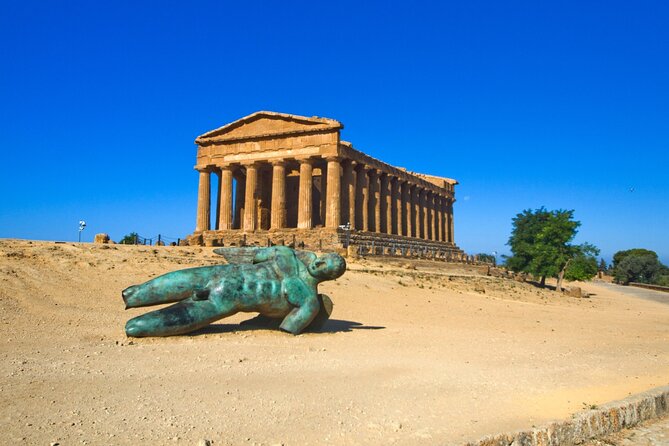
The best thing about this experience is the setting: ancient Greek temples spread across 1,300 hectares above the Strait of Sicily, with olive trees, old walls, and centuries of ruins lining the route. You can move at your own pace rather than follow a guide’s fixed rhythm. I especially like the included Temple of Concordia and the separate entrance, which can save time at a busy archaeological site. The audio guide comes in eight languages, too.
The weak point is the audio guide itself. It is a phone app, and several stops have short explanations that may add little beyond the park’s signs. You must bring your own device and headphones, and locating the correct audio stop can take some fussing. For the site alone, this is a strong-value ticket. For deep interpretation, a live guide may suit you better.
Key points at a glance
- Ancient Akragas in one broad archaeological park: Walk among Doric temples, fortifications, agoras, Christian burial grounds, and the Olympieion.
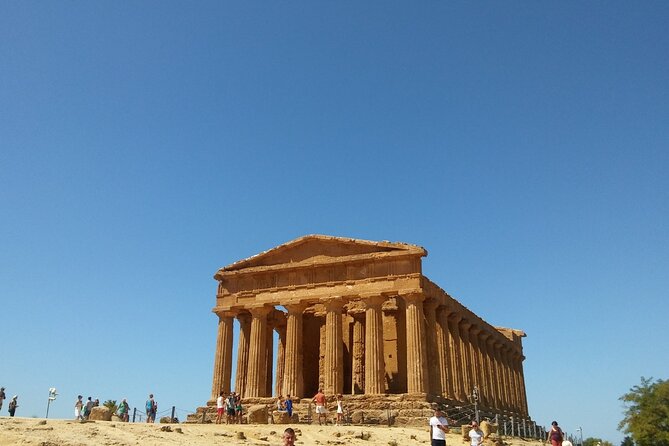
- The Temple of Concordia is the visual star: Its preserved form gives you the clearest sense of the skill behind Greek temple design.
- A self-guided visit takes about 2 to 3 hours: You can pause for photographs and move on when your interest shifts.
- The audio guide is practical but basic: It works through your phone and offers short sections at selected temples.
- Kolymbethra Gardens is not included: Add €6 if you want to visit this separate part of the site.
- The ticket costs about $17 per person: That is reasonable for entry to a UNESCO-listed archaeological park, especially if you already prefer exploring without a guide.
Why Agrigento’s Valley of the Temples matters
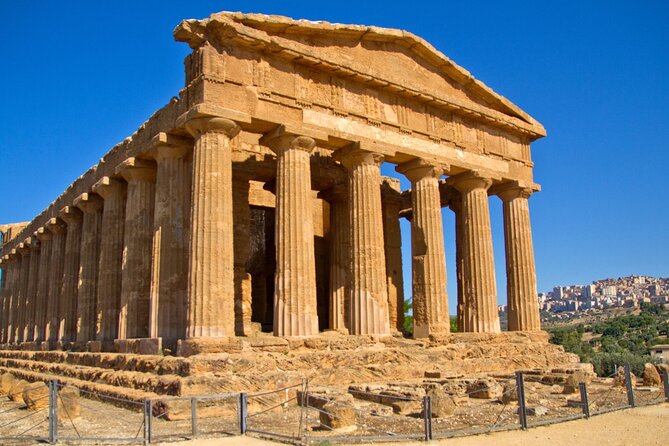
The Valley of the Temples is not a single monument with a quick photo stop. It is a large archaeological park beside the Strait of Sicily, where the remains of ancient Akragas sit among roads, walls, burial areas, and sacred buildings.
That scale changes the visit. You are not simply walking up to one famous temple, taking a picture, and leaving. You follow a route through different periods of use, from Greek religious buildings to later Christian burial sites. The ruins help you see how one place can change purpose across centuries.
The name Valley of the Temples can also mislead you. Much of the route runs along a broad ridge and open archaeological area, rather than through a narrow valley. Wear comfortable shoes, bring water, and plan for steady walking. The park is large enough that a hurried visit can feel more like a checklist than an encounter with the site.
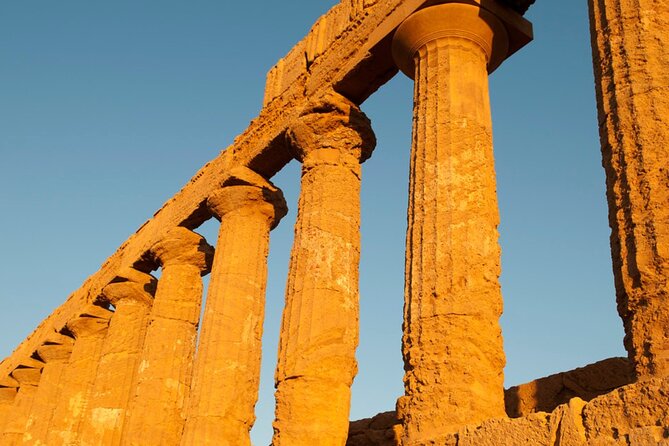
The experience is most rewarding when you allow time to look at the details: the Doric columns, fragments of walls, ancient fortifications, and the olive trees that remain among the ruins. You get both the grand view and the small signs of daily life around a major ancient center.
More audio tours around Italy:
- Rome: Pantheon Fast-Track Ticket and Official Audioguide
★ 4.5 · 27,353 reviews - Rome: Colosseum & Forum with Audio Guide App -Optional Arena
★ 4.2 · 24,770 reviews - Florence: Timed Entry to Michelangelo’s David + Audio App
★ 4.6 · 19,496 reviews
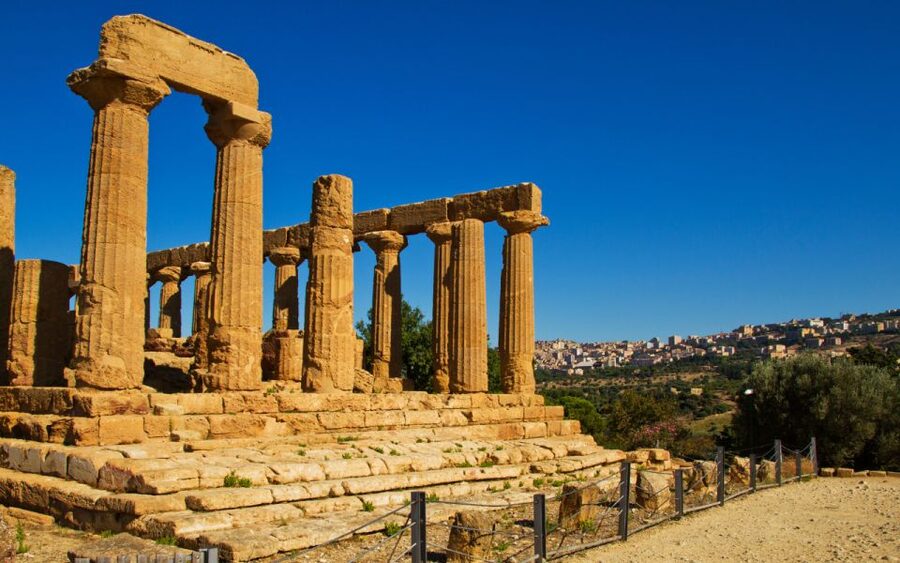
Starting at the Temple of Hera
The route begins at the Temple of Hera, giving you an immediate sense of the site’s scale. From here, the path leads through a sequence of remains rather than presenting every attraction in one compact cluster.
The Temple of Hera is a useful opening point because it places you inside the ancient sacred zone at once. You can look across the archaeological park and see how the temples relate to the surrounding terrain. The audio guide can provide background as you go, but do not expect a long lecture at every stop.
A self-guided route gives you control here. You can stop to take photographs, read the signs, or simply look across the site without holding up a group. If the audio app struggles to identify your location, the signs around the park still help you follow the route.
Fortifications, agoras, and the early Christian Necropolis
The route is valuable because it includes more than temples. Ancient fortifications reveal the defensive side of Akragas, while the agoras point to public and civic activity. These remains make the park feel like part of a city rather than a row of isolated religious monuments.
The early Christian Necropolis adds another layer. Burial areas can seem less immediately impressive than a columned temple, but they show how the site continued to matter after the Greek period. You are seeing changing beliefs and uses in the same physical setting.
This is where the audio guide could be most useful. A short explanation can help you understand why a wall, open area, or line of tombs belongs in the story. At the same time, the available commentary is not always extensive. If you want detailed discussion of each period, you may find the included app too thin.
The Temple of Concordia and the main photo stop

The Temple of Concordia is the high point for many people. Its surviving structure gives you a clear view of the proportions and order of a Doric temple, and it is the place where the ancient site feels most complete.
Take time to walk around it rather than viewing it only from the approach. From different angles, you can compare the surviving columns, walls, and raised position with the more fragmentary ruins nearby. The contrast helps you understand how much has been lost elsewhere.
The temple also makes the ticket worthwhile on its own, especially if you have limited time in Agrigento. You can reach the site, see one of Sicily’s major ancient monuments, and continue through the park without committing to a full-day archaeological tour.
Sunset can be a beautiful time to visit, according to the booking information and visitor experience attached to this activity. The warm light changes the appearance of the stone and gives the open site a calmer mood. Check the closing schedule carefully, since the park is open until 7:00 pm and requires visitors to exit by 8:00 pm. Do not arrive so late that you have to rush through the final temples.
Same sights, a different narrator:
- Rome: City Sightseeing Hop-on Hop-off Bus with Audioguide
★ 4.0 · 16,045 reviews - Pompeii: Entry Ticket with Audio Guide
★ 4.1 · 13,491 reviews - Venice: La Fenice Opera House Entry Ticket with Audio Guide
★ 4.6 · 11,742 reviews - Rome: Colosseum, Forum, Palatine Hill Entry & Audioguide App
★ 4.4 · 10,957 reviews
Heracles, Zeus, and the Olympieion
After the Temple of Concordia, the route continues toward the remains associated with Heracles and the monumental Temple of Zeus. These structures are less complete, but their scale gives you another way to read the ancient city.
At the Temple of Heracles, you see the difference between a site with substantial surviving elements and one preserved mainly through fragments. The contrast is useful. It keeps the visit from becoming a parade of identical columns and helps you notice how archaeologists reconstruct a building’s former size from partial remains.
The Temple of Zeus, or Olympieion, is especially important for its ambition. The remains suggest a monumental project, and the open area around it allows you to grasp the intended scale. This is one of the points where a short audio explanation may feel insufficient. The ruins need context, and the app may only give you a brief stop rather than a full account.
Even so, the route works well for independent visitors. You can linger at the sections that interest you and move quickly through those that do not. Families and mixed-interest groups may find this easier than a live tour, since everyone can set a different pace.
How useful is the audio guide?
The audio guide is delivered through a mobile app and is available in English, French, German, Italian, Spanish, Chinese, Korean, and Japanese. You scan the QR code on your voucher to download it before arrival.
That last point matters. Do not wait until you are standing at the entrance with a weak signal or a nearly empty phone. The ticket instructions say to download the audio guide before you arrive. Bring a charged smartphone and your own headphones, since neither a device nor headphones are provided.
The app is best treated as a light introduction rather than a private archaeologist. Some temple explanations last only about a minute, and finding the exact location for each stop can be awkward. You may also need to leave the app to take photographs, then return to it and find your place again.
I would use the guide selectively. Listen at the Temple of Hera, Concordia, and Zeus, then rely on the signs and your own observation for the rest. If you want a detailed explanation of construction, religious practice, political life, and later reuse, book a proper live guide instead.
The audio guide still has value for its price. It gives you a basic narrative in your preferred language without forcing you into a fixed group schedule. Just do not assume that an app automatically provides the same depth as a person who can answer questions and point out details in front of you.
What the $17 ticket buys you
At about $17 per person, this is a fair deal for entry to the Valley of the Temples, especially when you want independence. The ticket also includes the Treasures of Italy exhibition, adding an indoor cultural stop to the outdoor ruins.
The separate entrance may help you get into the park more directly. You show the mobile e-ticket to staff at the entrance, and the voucher is delivered for download within 24 hours before the travel date. It is also sent through WhatsApp by Vox City.
The value depends on how you use the audio portion. If you see the purchase as a park ticket with a basic phone guide, the price makes sense. If you are paying mainly for expert commentary, it may disappoint.
Kolymbethra Gardens requires an additional €6 ticket. That garden is not part of this package, so budget for it separately if you want to include it. The extra charge is easy to miss when comparing options, but it matters if you are trying to keep the day inexpensive.
A live guide generally offers more interpretation, but this ticket has a clear advantage for people who prefer freedom. You can stop under the olive trees, take your time at Concordia, or move on without waiting for a group.
Timing your 2 to 3-hour visit
The stated visit length is 2 to 3 hours. That is enough for the main temples and a general look at the wider site, but your pace will determine how much detail you absorb.
For a focused visit, allow at least two hours for the principal route. Listen to the key audio stops, pause at Concordia, and spend a little time at the early Christian Necropolis and Olympieion. If you want photographs, a slower walk, and the Treasures of Italy exhibition, use the longer end of the suggested time.
The park opens at 8:30 am and closes at 7:00 pm, with exit required by 8:00 pm. Early morning can help you avoid the hottest part of the day, while late afternoon may give you softer light. Sunset visits can be especially appealing, but allow enough time to reach the exit before closing.
Do not treat the whole area as a quick stop between other appointments. The 1,300-hectare park has enough ground to cover that rushing will leave you with photographs but little sense of the place.
The extra Naples sightseeing app
The package information also includes access to a sightseeing app with self-guided walking routes in Naples. That is separate from the Agrigento archaeological visit, so it should be viewed as a bonus for a wider Italy itinerary rather than part of the temple experience.
If you are also spending time in Naples, the app may give you additional routes to follow at your own pace. If Agrigento is your only destination, this extra feature will not change the value of the Valley of the Temples ticket.
The main experience remains the archaeological park, not the Naples material. Keep that distinction in mind when comparing this option with other Agrigento tickets.
Who will enjoy this ticket most?
I would choose this experience if you want to see the main temples without joining a fixed guided group. It suits independent visitors, couples, families with mixed interests, and anyone who likes stopping for photographs or moving quickly through less familiar sections.
It is also a good fit if you already know a little about Greek temples and mainly need entry plus a basic explanation. The eight language choices make the app practical for international visitors, provided your phone is charged and the audio has been downloaded.
I would choose a live guide instead if this is a major cultural priority or if you want to understand the site beyond the labels. The brief audio clips may leave you asking for more, especially around the agoras, fortifications, and Olympieion.
The site can also suit visitors who want a memorable sunset setting. Just plan around the closing times, and do not mistake the open-air setting for an easy stroll. Comfortable shoes and water are sensible choices.
Booking details to know before you go
The meeting point can vary by the option booked, but the general instructions direct you to the Valley of the Temples entrance at 92100, Agrigento. You can show the e-ticket on your phone to the park staff.
Your e-tickets become available for download within 24 hours before the travel date and are also sent through WhatsApp. Since the audio guide depends on the QR code, save the voucher before leaving for the site.
Cancellation is flexible up to 24 hours before the activity for a full refund. A small-group option is available, but the core product described here is a self-guided entry experience.
Should you book the Valley of the Temples audio ticket?
Book it if your priority is easy entry and freedom to explore at a reasonable price. The temples of Hera, Concordia, Heracles, and Zeus, along with the fortifications, agoras, Necropolis, and Olympieion, give you plenty to see for two to three hours.
Book with realistic expectations about the audio. It is a convenient phone app, not a full guided lesson. Download it early, bring headphones, and use the park signs when the location markers are unclear.
If you want expert storytelling at every stop, pay for a proper guided tour instead. If you want the freedom to set your own pace and see one of Sicily’s most important ancient sites for about $17, this ticket is a sensible choice.
FAQ
How long does the Valley of the Temples visit take?
The suggested duration is 2 to 3 hours. The exact time depends on how long you spend at the temples, ruins, exhibition, and photo stops.
What does the ticket include?
It includes entry to the Valley of the Temples, the self-guided audio tour, and entry to the Treasures of Italy exhibition.
Is a live guide included?
No. This is a self-guided experience. A small-group option is available, but the ticket does not include a live guide.
Which languages are available for the audio guide?
The audio guide is available in English, French, German, Italian, Spanish, Chinese, Korean, and Japanese.
What should I bring?
Bring a charged smartphone and your own headphones. You should also scan the QR code on the voucher to download the audio guide before arriving.
Is Kolymbethra Gardens included?
No. Access to Kolymbethra Gardens requires a separate ticket costing €6.
When is the Valley of the Temples open?
The park is open daily from 8:30 am to 7:00 pm. Visitors must exit by 8:00 pm.
New audio tours around Italy
- Lecce Walking Tour with Audio and Written Guide by a Local★ 4.0 · 38 reviews
- Private Audio Guided Walking Tour in Lecce★ 4.0 · 7 reviews
- Private Audio Guided Walking Tour in Como★ 3.0 · 3 reviews
- Como Walking Tour with Audio and Written Guide by a Local★ 4.5 · 30 reviews
- Finance and Nobility: Explore medieval Genoa on a self-guided audio tour★ 4.5 · 7 reviews
- Genova Walking Tour with Audio and Written Guide by a Local★ 4.5 · 33 reviews
- Udine Walking Tour with Audio and Written Guide by a Local★ 4.0 · 2 reviews
- Florence: Uffizi Gallery Timed Entry Ticket with Audio★ 3.0 · 3 reviews
Italy Audio Tours, compared.
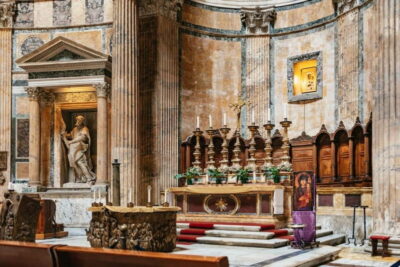
Rome: Pantheon Fast-Track Ticket and Official Audioguide
Read our review →
Rome: Colosseum & Forum with Audio Guide App -Optional Arena
Read our review →
Florence: Timed Entry to Michelangelo’s David + Audio App
Read our review →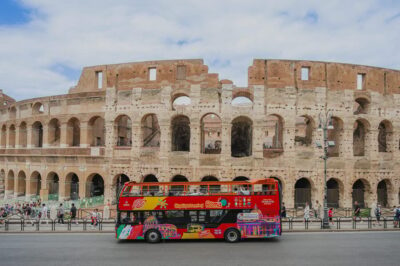
Rome: City Sightseeing Hop-on Hop-off Bus with Audioguide
Read our review →

Venice: La Fenice Opera House Entry Ticket with Audio Guide
Read our review →
Rome: Colosseum, Forum, Palatine Hill Entry & Audioguide App
Read our review →