

Review · ITALY
Alberobello Walking Tour with Audio and Written Guide by a Local
Alberobello’s cone-roofed trulli are far more interesting when you understand how they work. This self-guided walk takes you from the Trullo Church through the old districts and finishes at Trullo Sovrano, the town’s only two-story trullo.
I like the very low price and the freedom to stop for photos, food, or a second look without waiting for a group. The mix of audio, written text, local restaurant advice, and historical notes also gives you more than a simple map. The tradeoff is clear: you must use your own phone for directions, and the audio may sound computer-generated, with some Italian names pronounced poorly.
Key points to know before you book
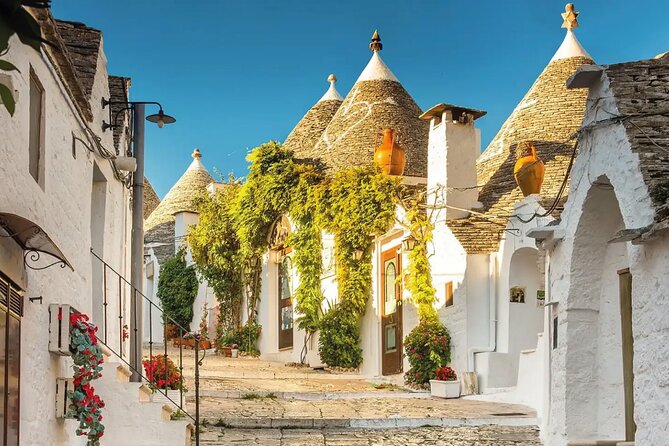
- A self-guided route through Alberobello’s main trulli districts, lasting about two to three hours.
- Eight main stops, including Rione Monti, Aia Piccola, Casa D’Amore, and Trullo Sovrano.
- Audio and written material in four languages: English, Italian, German, and Spanish.
- No in-person guide, so you set the pace and manage the route yourself.
- GPS may still be useful, since the guide does not always give clear turn-by-turn directions between stops.
- Excellent budget value at $7.21 per person, especially for families or small groups.
A low-cost way to understand Alberobello’s trulli

The appeal here is simple. You pay $7.21, download the digital guide, and walk through Alberobello with commentary in your pocket. The route links the town’s best-known trulli neighborhoods with several important churches and historic buildings.
This is not a guided group walk with a person leading from place to place. You will use your smartphone, internet connection, and possibly headphones. The material includes audio, written descriptions, monument tips, local food suggestions, and small historical details.
At this price, the experience works best as a structured introduction to Alberobello. You get a sensible path and context for what you see, but you also keep control of the day. You can pause the audio, linger in a lane, enter a shop, or stop for lunch without holding up anyone else.
The route is described as covering Alberobello and Locorotondo, but the supplied stops begin and end in Alberobello. No specific Locorotondo stop is included in the route, so you should not book this expecting a full walking tour of both towns.
More Audio Walking Tours in Italy
- Florence: 2.5 hour Audio Guided Walking Tour led by Host
★ 4.6 · 293 reviews - Verona Walking Tour with Audio and Written Guide by a Local
★ 4.5 · 157 reviews - Bologna Walking Tour with Audio and Written Guide
★ 4.5 · 132 reviews
Starting at the Trullo Church
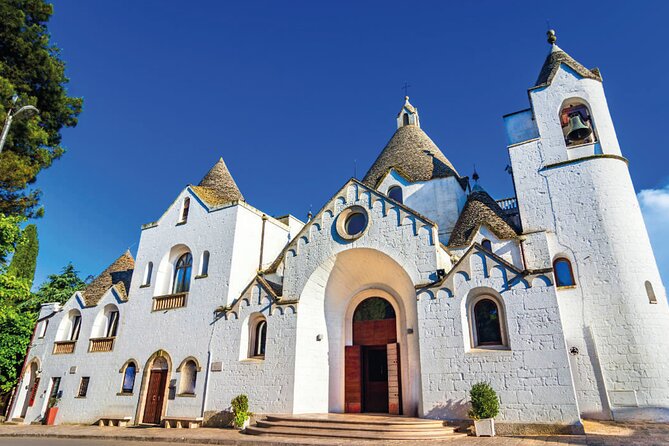
The walk begins at Chiesa Parrocchiale di Sant’Antonio da Padova, commonly called the Trullo Church, on Via Monte Pertica. It is a fitting starting point because the building borrows the visual language of the town’s traditional homes.
Built in 1926, the church served Alberobello’s growing population at a time when the town was modernizing. Until then, residents relied on the Mother Church in the upper part of town. The design keeps the pointed, conical forms associated with the trulli, turning a practical parish church into an architectural statement.
You get about 20 minutes of commentary here. Admission is free, and the stop gives you a useful introduction before you reach the denser old neighborhoods. If you want a human guide to explain the church’s details in real time, this format will feel limited. If you prefer to start quietly and get oriented, it is a good opening.
How trullo construction keeps homes cool

The next section explains what makes the trulli more than unusual-looking stone houses. Their walls and roofs use limestone blocks laid without mortar. The construction creates air spaces between the stones, helping the interiors stay cooler in summer and warmer in winter.
The conical roof is built from chiancarelle, flat limestone pieces arranged in narrowing circles. There are no supporting beams holding the cone in place. Each layer rests in a bracket-like pattern until the roof closes near the top.
This is one of the most useful parts of the audio because it changes the way you look at every roof afterward. Instead of seeing a row of charming cones, you begin noticing the practical building method. The commentary also explains how local materials and skilled labor shaped the town.
The explanation lasts about 20 minutes and requires no admission fee. You may want to read the written version as well as listen, especially if outdoor noise makes the audio difficult to follow.
Rione Monti, Alberobello’s largest trulli district
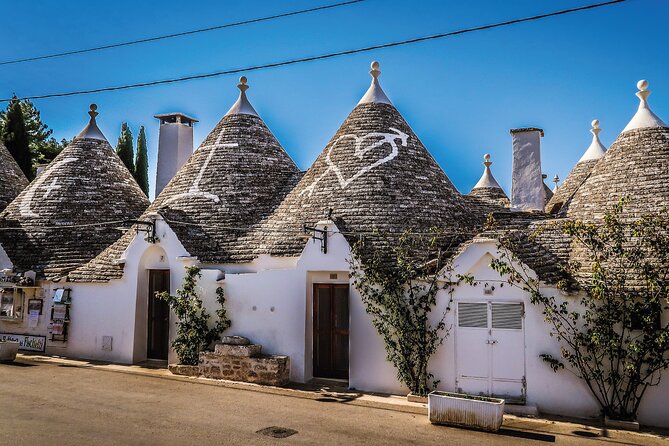
Rione Monti sits on the southern hill and contains more than 1,000 trulli spread across 15 streets. It is close to Largo Martellotta, an area associated with three cisterns dug in the 1800s to collect rainwater.
This is likely the most visually rewarding portion of the walk. The density of the trulli makes the district feel unlike an ordinary Italian town center. The commentary helps you connect the buildings to daily needs, water collection, insulation, and local construction.
Plan around 15 minutes for the formal stop, though you may naturally spend longer here taking photographs or looking at roof symbols and stonework. The guide gives you the information, but it does not always lead you cleanly from one point to the next. Keep your map or phone GPS ready.
That navigation issue matters. One audio stop may finish without a clear instruction to turn right, walk downhill, or continue along a particular street. You can still complete the route, but you may need to locate the next point yourself.
Same sights, a different narrator:
- Rome: Pantheon Fast-Track Ticket and Official Audioguide
★ 4.5 · 27,353 reviews - Rome: Colosseum & Forum with Audio Guide App -Optional Arena
★ 4.2 · 24,770 reviews - Florence: Timed Entry to Michelangelo’s David + Audio App
★ 4.6 · 19,496 reviews - Rome: City Sightseeing Hop-on Hop-off Bus with Audioguide
★ 4.0 · 16,045 reviews
The unusual double cone of Trullo Siamese

Trullo Siamese is one of Alberobello’s most distinctive buildings. Instead of one cone, it has two connected cones sharing a central wall. From outside, the gap between the roofs creates an unusual outline.
The building is thought to be among the oldest in Alberobello. Its form reflects the work of a skilled trullo maker who filled the recess between the two cones and gave the structure its distinctive shape.
This is a short 15-minute stop, but it is a good example of why an audio guide can add value. Without context, you might simply see an odd pair of roofs. With an explanation, the building becomes evidence of how local builders adapted a familiar form for a particular structure.
Do not expect a long museum-style presentation here. The material is concise and practical. If you want legends, personal stories, or detailed accounts of the people who lived in the house, you may find the treatment too basic.
Aia Piccola and the older side of town
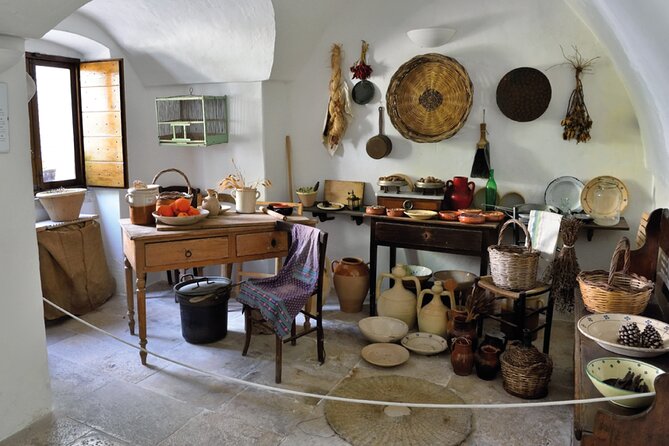
Aia Piccola is described as Alberobello’s oldest and most authentic neighborhood. Its name refers to the former agricultural work area of the town, where practical rural activity once shaped the district.
This part of the walk helps balance the more photographed streets of Rione Monti. The focus shifts from the town’s famous appearance to the way trulli functioned as homes and working spaces.
You have about 15 minutes of material here, but the route is best taken slowly. The written guide can be useful if you want to stop reading and simply look around. The audio lets you keep your phone in hand while walking, though headphones are helpful if you are sharing the route with others.
The lack of an in-person guide is more noticeable in Aia Piccola. A local guide could point out small changes in the stonework or explain how a particular building was used. This digital version gives you a foundation, but you must supply your own curiosity.
The Civic Museum and the story of local life
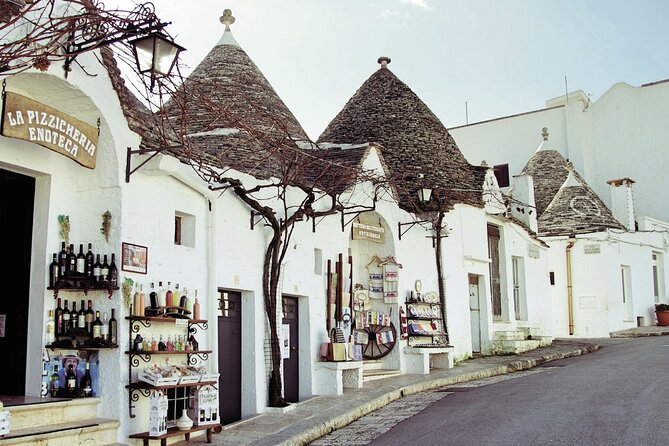
The route also points you toward the Civic Museum, housed in the former residence of doctor and intellectual Giacomo Pezzolla. The museum focuses on the culture and history of Alberobello and the surrounding area.
The supplied details do not specify an included museum admission or a timed museum visit. Treat this as an optional cultural stop rather than a guaranteed part of the paid experience. If you want more background on local life beyond the exterior of the trulli, this is the place to consider.
This is one of the useful features of the guide’s broader approach. It does not only send you from one photogenic roof to another. It also points toward local history and civic culture. Still, confirm opening details locally before arranging your day around an indoor visit.
Casa D’Amore and the end of an old building rule
Casa D’Amore dates from 1797 and is important because it was the first house in Alberobello built entirely with terracotta and mortar. Its construction followed a royal decree that allowed residents to build houses in this way.
That detail gives the walk a legal and political angle. The traditional dry-stone method was not simply an aesthetic choice. Building rules and royal decisions affected what people could construct and how the town developed.
The stop takes about 15 minutes and is free. It is also a useful reminder that Alberobello changed over time. The trulli may look timeless, but their construction reflects specific rules, materials, and local circumstances.
The Mother Church of Saints Cosma and Damiano
The Mother Church of Saints Cosma and Damiano sits in the historic center and is dedicated to Alberobello’s patron saints. It dates from 1784 and replaced a smaller chapel that could no longer hold the local congregation.
This 20-minute stop gives the route a change of scale. After so many small, tightly built trulli, the church offers a larger civic and religious focus. It also helps explain how the town served a growing population before and during its modernization.
Admission is free. The guide includes historical notes, but the delivery may not satisfy you if you prefer a warm, conversational storyteller. The audio has been described as computer-like, and Italian names can be mispronounced. That is a minor annoyance for basic orientation, but it can distract you if accurate pronunciation matters.
Finishing at Trullo Sovrano
The route ends at Trullo Sovrano on Piazza Sacramento. This is the only two-story trullo in Alberobello, making it an important final stop rather than just another cone-shaped house.
Built as a more complex home for a wealthy family, Trullo Sovrano shows how local builders pushed the traditional form beyond its simplest rural design. The upper level and larger structure reflect greater ambition and construction skill.
Admission is not included, so budget separately if you want to go inside. The tour finishes close to the building, which is convenient if you want to continue exploring the town on foot afterward.
The listed stop lasts about 15 minutes. I would treat that as the audio portion, not as a limit on your time at the building. Since this is the final point, you can decide if you want to pay for entry or simply finish with the exterior and nearby streets.
What the digital guide does well
The strongest feature is freedom at a bargain price. A family of five can spend far less than on a private walking tour, leaving more money for a meal or another activity. The low cost also makes it easier to accept the guide’s limits.
The written and audio formats serve different needs. Read the text when you want details at your own pace. Use the audio when you are walking and want your eyes free for the buildings around you.
The multilingual choices are useful: English, German, Spanish, and Italian are available in both text and audio. You can also listen through your phone’s speaker, though headphones will make the experience more private and easier to follow.
The route is also flexible. You can pause at a café, replay a section, or skip a stop. A fixed walking group cannot offer that kind of control.
Where the experience falls short
The main weakness is navigation. The guide identifies the points of interest, but the instructions between them may not always tell you exactly which way to walk. You should be comfortable using your phone’s map and GPS.
The audio style is another consideration. It may sound like a computer voice rather than a person from the area, and Italian names may be pronounced incorrectly. The information remains usable, but the delivery lacks the character you get from a skilled local guide.
The content also stays at an introductory level. You receive useful facts about buildings, construction, and local history, but not much in the way of dramatic anecdotes or personal stories about former residents. If you have taken several high-quality walking tours, you may find the commentary plain.
The maximum capacity is listed as 108 people, but this is a self-guided product, not one large group moving behind a guide. The number is best understood as a booking limit rather than a promise of a group size during your walk.
Timing, phone needs, and practical value
Allow two to three hours for the complete route, depending on how often you stop and how quickly you move between points. Add extra time if you want to visit the Civic Museum or enter Trullo Sovrano.
You need a smartphone with internet access to activate and use the guide. Read the voucher carefully for activation instructions, and charge your phone before starting. A portable charger is sensible, though it is not listed as a requirement.
The starting point is Chiesa Parrocchiale di Sant’Antonio da Padova on Via Monte Pertica. The finish is Trullo Sovrano at Piazza Sacramento. The stated operating window runs from May 12, 2024, through July 2, 2027, with availability listed every day from midnight to 11:30 p.m.
Service animals are allowed, and the activity is near public transportation. Most people can participate, but the route still involves walking through historic streets and managing your own phone.
Free cancellation is available if you cancel at least 24 hours before the start time. Cancellations or changes made within 24 hours are not refunded or accepted.
Should you book this Alberobello walking tour?
Book it if you want a cheap, flexible introduction to Alberobello and are happy to guide yourself between stops. It suits families, couples watching their budget, independent walkers, and anyone who wants information in a choice of four languages.
Skip it if you want a lively local storyteller, exact turn-by-turn directions, or detailed personal stories about the town’s residents. At $7.21, the shortcomings are fair. You are paying for a digital orientation, not a private guide.
For the best experience, download or activate the guide before setting out, bring headphones, keep GPS available, and allow more than the formal two to three hours if you plan to explore. Used that way, it is a practical way to understand the trulli without spending much.
FAQ
How much does the Alberobello walking tour cost?
The price is $7.21 per person. Group discounts are available.
How long does the walking tour take?
The estimated duration is two to three hours.
Is this a guided tour with a person?
No. It is a self-guided digital experience. You use the audio and written material on your smartphone.
What languages are available?
The written guide is available in English, German, Spanish, and Italian. The audio guide is also available in English, Spanish, Italian, and German.
Do I need a smartphone?
Yes. You need a smartphone with an internet connection to activate and use the digital guide.
Are headphones included?
No. You can listen through your smartphone speaker or use your own headphones.
Where does the tour start?
It starts at Chiesa Parrocchiale di Sant’Antonio da Padova, also called the Trullo Church, at Via Monte Pertica 18 in Alberobello.
Where does the tour finish?
The route finishes at Trullo Sovrano, Piazza Sacramento 10, Alberobello.
Is admission to Trullo Sovrano included?
No. Admission to Trullo Sovrano is not included. The other listed stops have free admission.
Can I cancel for a full refund?
Yes, if you cancel at least 24 hours before the experience start time. Cancellations within 24 hours are not refunded.
New audio tours around Italy
- Lecce Walking Tour with Audio and Written Guide by a Local★ 4.0 · 38 reviews
- Private Audio Guided Walking Tour in Lecce★ 4.0 · 7 reviews
- Private Audio Guided Walking Tour in Como★ 3.0 · 3 reviews
- Como Walking Tour with Audio and Written Guide by a Local★ 4.5 · 30 reviews
- Finance and Nobility: Explore medieval Genoa on a self-guided audio tour★ 4.5 · 7 reviews
- Genova Walking Tour with Audio and Written Guide by a Local★ 4.5 · 33 reviews
- Udine Walking Tour with Audio and Written Guide by a Local★ 4.0 · 2 reviews
- Florence: Uffizi Gallery Timed Entry Ticket with Audio★ 3.0 · 3 reviews
Italy Audio Tours, compared.
Rome: Pantheon Fast-Track Ticket and Official Audioguide
Read our review →
Rome: Colosseum & Forum with Audio Guide App -Optional Arena
Read our review →
Florence: Timed Entry to Michelangelo’s David + Audio App
Read our review →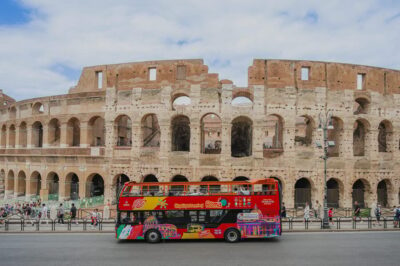
Rome: City Sightseeing Hop-on Hop-off Bus with Audioguide
Read our review →
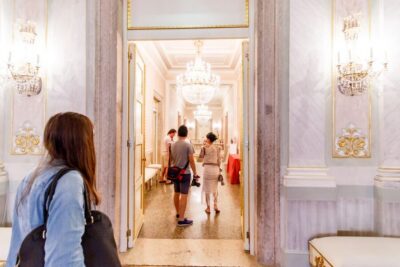
Venice: La Fenice Opera House Entry Ticket with Audio Guide
Read our review →
Rome: Colosseum, Forum, Palatine Hill Entry & Audioguide App
Read our review →
Rome: St. Peter’s Basilica & Dome Entry Ticket & Audio Tour
Read our review →Browse the lists this tour appears in