
Review · UK
Bath: Roman Baths Entry Ticket with Audio Guide
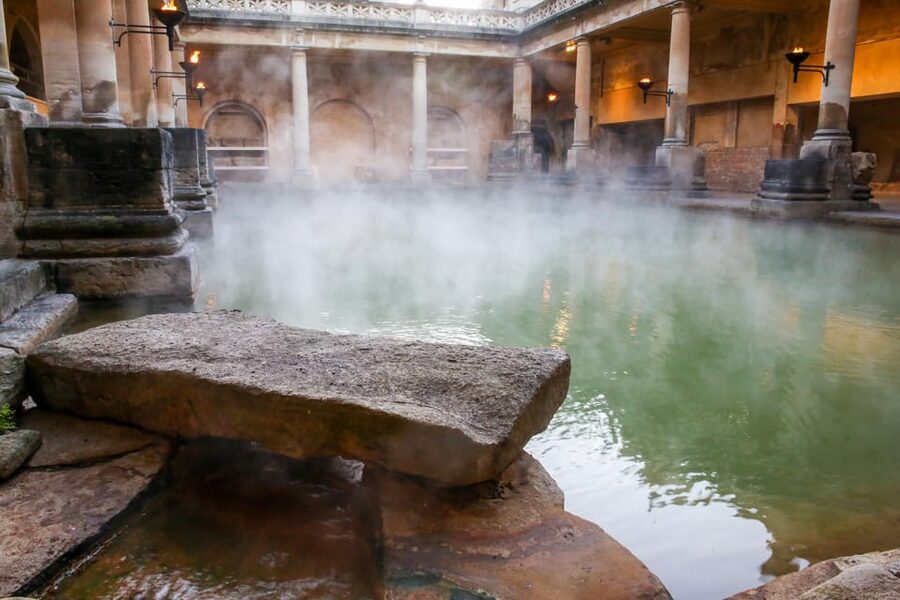
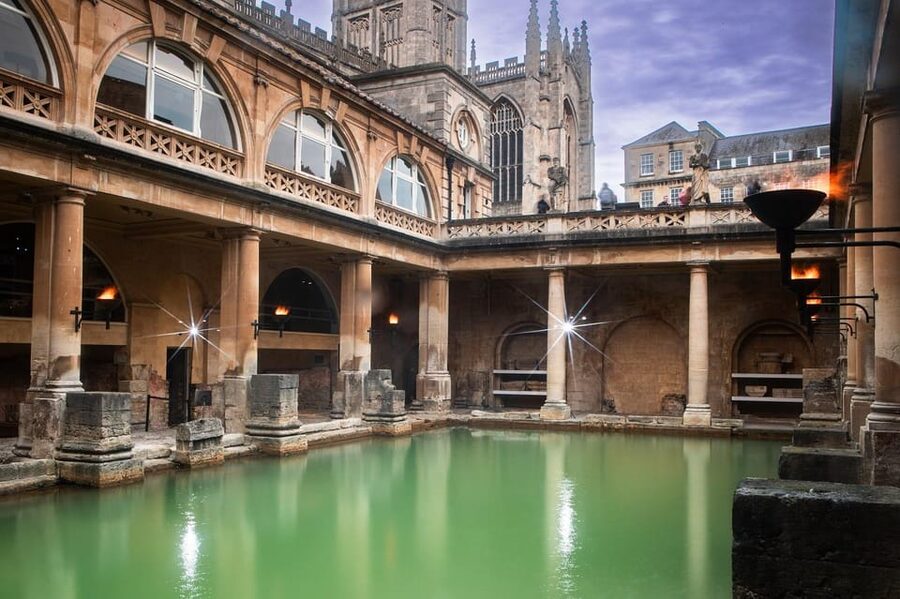
The Great Bath is the star here: a broad pool of steaming thermal water surrounded by Roman stonework and watched over by Bath’s later rooftops. You walk around the same ancient bathing complex where Roman Britons worshipped Sulis Minerva and sought relief from the natural hot springs. I especially like the excellent audio guide and the chance to see the site at your own pace. The main drawback is that the handheld guide must be carried throughout, and the entrance can still feel busy even with a ticket booked ahead.
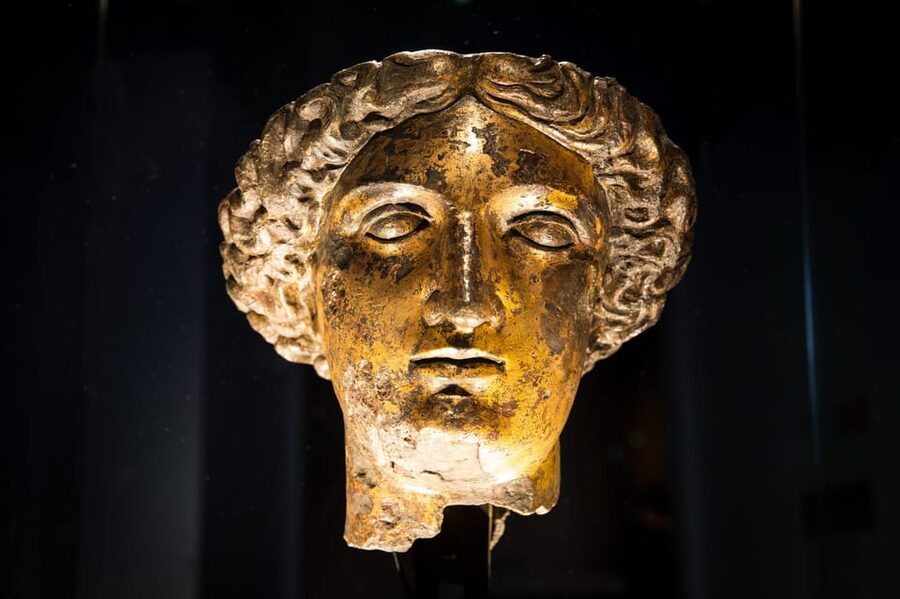
I also like how much more there is than the famous pool. The museum holds the gilt bronze head of Sulis Minerva, the puzzling Gorgon’s head, and everyday objects left by people who lived here. Plan to arrive early if you want quieter galleries, and allow at least two hours rather than treating this as a quick photo stop.
Key points to know before you go

- The Great Bath is only one part of the visit: You’ll also see temple remains, heated rooms, massage areas, saunas, plunge pools, and a circular bath.
- The audio guide does the heavy lifting: It is available in 12 languages, with a separate BSL video guide, and lets you move at your own speed.
- Early entry pays off: The museum can fill quickly, so the first available time is a smart choice for a calmer visit.
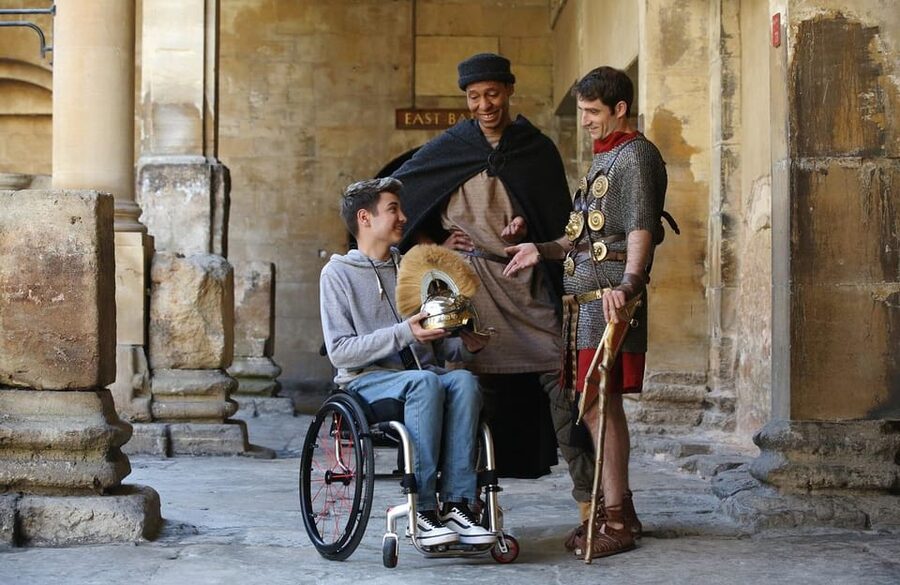
- The Roman characters add a human touch: Costumed interpreters answer questions about daily life in Roman Britain and pose for photos.
- The spa water is part of the ticket: You can sample the mineral-rich water at a dedicated drinking tap near the end.
- Bring only what you need: Pets, baby strollers, luggage, and large bags are not allowed inside.
Start with Sulis Minerva, not just the baths
It is easy to think of the Roman Baths as a single pool. In practice, your visit begins as a museum experience, then moves into the exposed bathing complex. That order works well because you first learn why the site mattered before seeing the water itself.
The Romans knew this place as Aquae Sulis. The hot spring was not simply a handy source of warm water. It was a sacred site linked to Sulis Minerva, a goddess combining the local Celtic deity Sulis with the Roman Minerva. People came to bathe, worship, ask for help, and leave offerings.
The museum gives you the setting through objects rather than long blocks of text alone. You’ll see possessions and offerings connected with the people of Roman Britain, which helps turn a grand monument into a place used by real men, women, and children.
The audio guide is especially useful here. It gives you a clear route and adds context as you move from display to display. I would not rush through the museum simply to reach the Great Bath. The objects explain what you are looking at later, and the site makes more sense once you understand its religious purpose.
More audio tours around the UK:
- London: Emirates Stadium Entry Ticket and Audio Guide
★ 4.7 · 5,513 reviews - Westminster Abbey Entrance Ticket Including Audio Guide
★ 4.0 · 661 reviews - London: British Museum Audio Tour & Priority Entrance Ticket
★ 4.5 · 631 reviews
The Gorgon’s head and the goddess in bronze
Two museum pieces deserve extra time.
The first is the Gorgon’s head, which once decorated the pediment of the temple. It was placed high above the approach to the sacred building, about 15 metres up, so anyone coming toward the temple would have seen its fierce face.
The interesting question is what the head actually represents. It may be the mythical Gorgon, a monster whose gaze could turn people to stone. It may instead be a water god. The uncertainty gives the object more appeal than a simple label would. You are looking at a symbol whose meaning is still open to interpretation.
The second major piece is the gilt bronze head of Sulis Minerva. This once belonged to the cult statue inside the temple. Its scale, fine workmanship, and bright metallic finish help you picture the goddess presiding over the sacred space.
These exhibits are valuable because the ruins alone can be hard to read. Walls, pavements, and pools show you the physical site, but the museum’s objects reveal its beliefs, rituals, and social life. Use the audio guide here rather than skimming the display labels. The extra explanation makes the collection much easier to understand.
Walking around the Great Bath
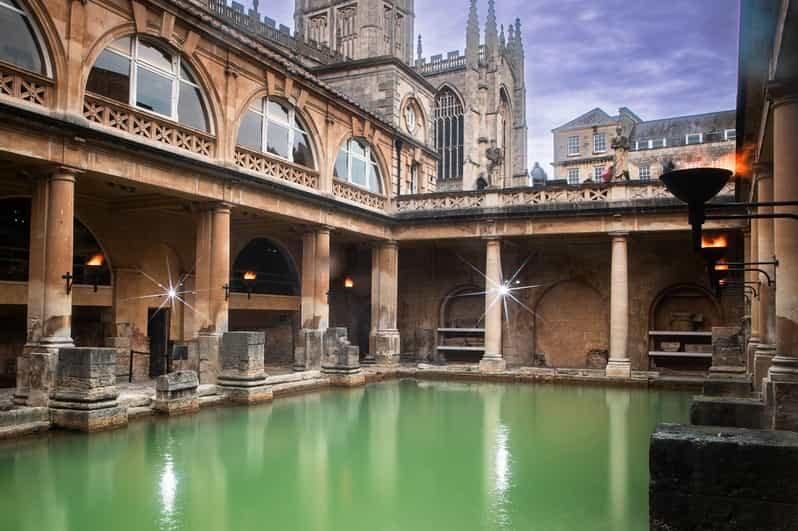
When you leave the museum and reach the Great Bath, the setting changes at once. The pool sits below street level, bordered by a stone walkway and surrounded by the remains of the bathing complex. Above you, Bath’s later buildings frame the open sky.
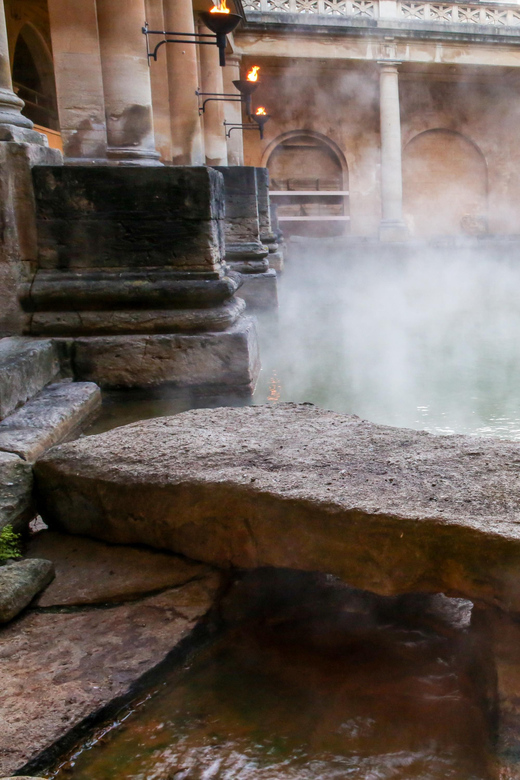
On a cold morning, steam may rise from the warm water. That is the moment many people picture when they imagine the Roman Baths, and it is as atmospheric as expected. You cannot bathe in this pool, but you can walk around it and see the greenish water surface close up.
The Great Bath was more than a decorative pool. It was part of a complex built around the hot spring, and it would have been a social and religious place as well as a bathing facility. The audio commentary helps explain how the water, temple, and bathing rooms fitted together.
Crowds are the main issue here. The walkway can feel tight when several groups stop for photos or listen to the same display. An early time slot gives you more room, though even then you should expect other people around the pool. The advantage of a self-guided visit is that you can pause, wait for a clearer view, or return to a favorite point without keeping up with a guide.
Heated rooms, massage areas, and the Roman sauna
After the Great Bath, follow the route through the rest of the complex. The East Baths show how varied Roman bathing could be. You’ll see heated rooms and areas linked with massage, giving you a better sense of the bathing routine beyond simply sitting in warm water.
The Roman Gym and ancient sauna, known as a laconicum, are another useful stop. The names can sound grand, but the value is in understanding the sequence of activities. Roman bathing involved moving between spaces with different temperatures and purposes. The audio guide explains these functions as you go.
The West Baths add plunge pools to the picture. These cooler pools would have provided contrast after time in the heated areas. You’ll also pass the Circular Bath, another reminder that the complex was not built around one pool alone.
This section rewards a slower pace. Some rooms are less visually dramatic than the Great Bath, but they show how carefully the complex was planned. If you only take photos of the main pool, you miss much of what makes the site interesting.
The route is marked and generally easy to follow. Arrows and numbered points on the audio guide help you keep your place. There are also seating spots along the way, which matter because the visit can take around two and a half hours if you listen to much of the commentary and stop often.
Same sights, a different narrator:
- Golden Tours York Hop-on Hop-off Open Top Bus Tour with Audio Guide
★ 4.5 · 468 reviews - Canterbury Cathedral: Entry Ticket with Audio Guide
★ 4.6 · 266 reviews - London: Churchill War Rooms Ticket & Political London Audio
★ 4.6 · 224 reviews - London Panoramic Open Top Bus Tour with Audio Guide
★ 4.0 · 209 reviews
Why the audio guide is worth using

The included audio guide is the main reason this ticket offers more than a simple walk through old ruins. It is available in English, Dutch, French, German, Italian, Japanese, Chinese, Korean, Polish, Russian, Portuguese, and Spanish. A handheld BSL video guide is also available.
The commentary is detailed but easy to follow. It covers the objects in the museum, explains the bathing rooms, and adds social details about Roman Britain. You are not tied to a guide’s pace, so you can stop the audio, look closely at a display, or move ahead if a room becomes crowded.
There is a children’s version as well. Families can use it to make the visit more approachable for younger listeners. Children from around eight may get the most from the experience, though the visual setting can appeal to younger children too.
The one practical weakness is the equipment. You hold the audio device as you walk, and after a long visit that can make your arm or shoulder ache. It also means your hands are not fully free for photos, bags, or helping a child. Headphones are not part of the stated experience, so pack lightly and expect to carry the unit.
Costumed Romans and visual displays

At some points, you may meet costumed Roman characters. They can answer questions about life in Roman Britain and pose for a photo. This is not a full guided tour, so do not expect one person to lead you through the whole site. Instead, treat the characters as helpful encounters along the route.
They are particularly useful for children and for anyone who wants to ask a question that the audio guide does not cover. A short conversation about clothing, work, worship, or bathing can make the ruins feel more personal.
The site also uses video projections to suggest how rooms may have looked and how people used them. These are subtle rather than flashy, and they help you read spaces that are now only partly preserved. I like this approach because it adds visual context without covering up the original stonework.
The mix of real objects, projected scenes, and audio commentary gives you several ways to understand the site. If you prefer a quiet archaeological visit, the extra presentation may feel slightly busy in places. For most people, though, it makes the route easier to follow.
Tasting the spa water
Near the end, you can sample the spa water at a dedicated drinking tap. The water contains more than 43 minerals and has drawn people to Bath for centuries because of its supposed healing qualities.
Keep your expectations sensible. This is a tasting, not a modern spa treatment, and the mineral content gives the water a distinctive character. It is a small part of the visit, but it connects the modern city with the ancient reason people came here in the first place.
The tasting also gives the experience a neat closing point. You have seen how the Romans used the spring, learned about the goddess linked to it, and then sampled the water yourself before leaving.
How long to allow and when to arrive

Your ticket is valid for one day, but the visit is tied to available entry times. Last entry is one hour before closing, so do not choose a late slot if you want to hear the commentary and see every section without rushing.
I would allow two hours at minimum. Two and a half hours is more comfortable if you listen carefully, stop at the museum exhibits, take photos, and use the seating areas. The visit is self-guided, so you can shorten it, but doing so means skipping much of the material that gives the ruins meaning.
Early morning is the best practical choice. The museum can become crowded quickly, and the Great Bath is more enjoyable when you have a little space around the walkway. Booking ahead can help secure the time you want, though having a ticket does not necessarily mean walking straight past every queue. Be prepared to join the entrance line if the site is managing everyone together.
The attraction is indoors and partly outdoors, so it works in most weather. The open Great Bath area feels especially atmospheric on a cold day when steam rises from the water, while the museum sections provide shelter when the weather turns wet.
Accessibility and what to carry
The Roman Baths are described as 90 percent accessible to wheelchair users, with elevators serving different levels. That makes the site possible for many people with mobility needs, though the historic building and multi-level route mean it is wise to allow extra time.
There are several places to sit, but the visit can still be tiring. If you have a leg problem or simply prefer a slower pace, plan for breaks rather than trying to finish quickly. The site does not provide a dedicated rest room for extended relaxation and refreshments, so the spa water tasting should not be treated as a café stop.
Baby strollers are not allowed, and neither are pets, luggage, or large bags. Bring only what you need for the visit. A light bag, phone, and perhaps a small bottle for later are more practical than heavy day-trip gear.
Is the $30.31 ticket good value?
At $30.31 per person, this is not a cheap quick attraction. It is also far more than an entrance to a single pool. You are paying for the museum, the exposed Roman complex, the audio guide, the visual presentations, the costumed characters when available, and the spa water tasting.
The value improves if you use the audio guide fully. A fast walk around the Great Bath alone can make the ticket feel expensive. A careful visit through the museum and every bathing section gives you a much fuller experience.
There is no included live guided tour, and an adult or children’s guidebook costs extra. That is worth noting if you prefer a human guide or want a printed souvenir. The audio guide does provide enough detail for most self-guided visitors, and many people will appreciate being able to pause and move at their own pace.
This is best for you if Roman history, archaeology, architecture, or Bath’s thermal springs are central to your visit. Families can use the children’s commentary, while older visitors may appreciate the seating and elevators. If you dislike handheld audio devices, have very limited mobility, or only have time for a short photo stop, the value is less convincing.
Should you book the Roman Baths entry ticket?
Yes, if you want Bath’s most important historic site explained rather than simply photographed. The Great Bath is memorable, but the museum objects, temple remains, heated rooms, and audio commentary give the visit its real weight.
Book an early time if possible, travel light, and allow two to two and a half hours. Use the children’s audio option for younger family members, pause often if you need to rest, and save time for the spa water tap.
Skip it only if you strongly prefer a live guide, cannot manage a handheld audio device, or have too little time to see more than the main pool. For most first visits to Bath, this is a well-organized way to understand why the city grew around its hot springs.
FAQ
How long is the Roman Baths ticket valid?
The ticket is valid for one day. You should check availability for the available entry times.
Is an audio guide included?
Yes. An audio guide is included with the entry ticket.
Which languages are available on the audio guide?
The guide is available in English, Dutch, French, German, Italian, Japanese, Chinese, Korean, Polish, Russian, Portuguese, and Spanish.
Is a BSL guide available?
Yes. A handheld BSL video guide is available as an alternative.
Is this a guided tour?
No. This is a self-guided visit with an audio guide. A live guided tour is not included.
Can I taste the spa water?
Yes. Spa water tasting from a dedicated drinking tap is included.
What are the main areas I will see?
You will see the Great Bath, the museum, temple remains, the East Baths, heated rooms, massage facilities, the Roman Gym, the laconicum sauna, the West Baths, plunge pools, and the Circular Bath.
Is the site wheelchair accessible?
The Roman Baths are 90 percent accessible to wheelchair users, and elevators are available to help reach different levels.
Are children’s audio materials available?
Yes. A children’s audio version is available, in addition to the main audio guide.
Can I bring luggage, a stroller, or a pet?
No. Pets, baby strollers, luggage, and large bags are not allowed.
New audio tours around the UK
- London Panoramic Open Top Bus Tour with Audio Guide★ 4.0 · 209 reviews
- London: British Museum Audio Guide & Small Group Entry★ 3.5 · 81 reviews
- London: National Gallery Audio Tour (No Entry Ticket)★ 3.5 · 11 reviews
- London’s Alternative History: A Self-Guided Audio Tour★ 5.0 · 4 reviews
- London: British Museum Audio Tour with Free Guaranteed Entry★ 3.0 · 30 reviews
- London: British Museum’s English Audio Tour with Free Reservation★ 3.0 · 15 reviews
- London: Churchill War Rooms Ticket & Political London Audio Tour★ 4.0 · 83 reviews
- Houses of Parliament Ticket & Political London Audio Guide★ 4.0 · 13 reviews
UK Audio Tours, compared.

London: Emirates Stadium Entry Ticket and Audio Guide
Read our review →
Westminster Abbey Entrance Ticket Including Audio Guide
Read our review →
London: British Museum Audio Tour & Priority Entrance Ticket
Read our review →
Golden Tours York Hop-on Hop-off Open Top Bus Tour with Audio Guide
Read our review →
Canterbury Cathedral: Entry Ticket with Audio Guide
Read our review →
London: Churchill War Rooms Ticket & Political London Audio
Read our review →
London Panoramic Open Top Bus Tour with Audio Guide
Read our review →
Browse the lists this tour appears in