
Review · USA
Baton Rouge Historic Downtown Self-Guided Audio Walking Tour
Baton Rouge’s story unfolds in a compact walk from the Old Governor’s Mansion to the tallest state capitol in the United States. Along the way, you hear how the city got its Red Stick name, what the Mississippi River meant to earlier communities, how Cajuns arrived from Canada, and why Baton Rouge mattered in the civil rights movement. The phone-guided format lets you explore at your own pace.
I especially like two things here: the directions use visible buildings and simple turns instead of compass points, and you can pause the audio for lunch or a museum visit. The main caution is the technology. Several people had trouble getting the WalknTours app or access code working, so you should set it up before reaching the starting point.
Key points to know before you go

- A short route with a wide range of history: In about one hour to one hour and 15 minutes, you cover government, Native history, the Mississippi River, Cajun culture, civil rights, and Huey Long.
- The Old Capitol is a free bonus: The castle-like building is one of the most memorable stops, and admission is free.
- Poor Boy Lloyd’s is built into the route: You can pause the audio, eat, and restart when you are ready.
- You finish at the tallest state capitol in the country: The tour ends at the newer Capitol, where you can enter afterward and take the elevator to the observation deck.
- It is private by design: Only your group takes part, with no scheduled guide or shared walking party.
- App preparation matters: The WalknTours app, booking code, and a charged smartphone are essential to the experience.
A simple walk through Baton Rouge’s story
This is not a long city march. The route concentrates on downtown, the riverfront, and the two major Capitol buildings. Each audio segment lasts only a few minutes, so the experience feels more like a sequence of short history talks than one long lecture.
That format suits Baton Rouge well. You move from place to place while the city itself supplies the backdrop. The tour also leaves room for your own pace. If you want to look closely at a building, stop for food, or take photos, you can pause the audio and resume it later.
The full route takes about 60 to 75 minutes, but the timing is not rigid. The listed stop times add up to roughly an hour, with the remaining time allowing for walking between locations and getting oriented. You should allow extra time if you plan to enter the museums or spend time at the riverfront.
More Audio Walking Tours in the USA
- Self Guided Classic Freedom Trail Location Aware (GPS) Walking Audio Tour
★ 4.5 · 258 reviews - Cape Cod & Provincetown Self-Guided Driving & Walking Audio Tour
★ 4.0 · 207 reviews - Santa Fe Historic Downtown Smart Phone Audio App Self Guided GPS Walking Tour
★ 4.5 · 112 reviews
Beginning at the Old Governor’s Mansion
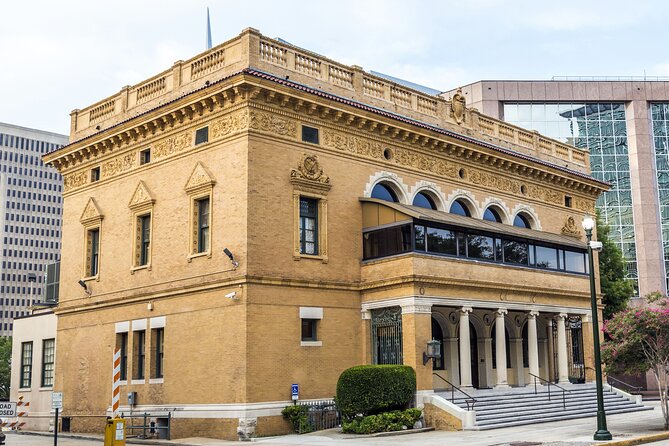
The walk starts at the Old Governor’s Mansion at 502 North Boulevard. The opening story introduces the mansion, Louisiana’s governors, and the setting for the downtown route.
Starting here gives you useful context before the tour moves toward the river and the state government buildings. You are not simply being sent from one attraction to the next. The audio begins with the people and political power that shaped Baton Rouge, then widens the story to include the river, migration, race, and the city’s growth.
Because this is self-guided, you should arrive with the app already installed and the access details handy. The provider’s instructions identify the WalknTours app, and the booking code is supplied with the ticket. App trouble was the most serious weakness reported for this experience, so do not wait until you are standing outside the mansion to begin downloading and testing everything.
The castle-like Old State Capitol
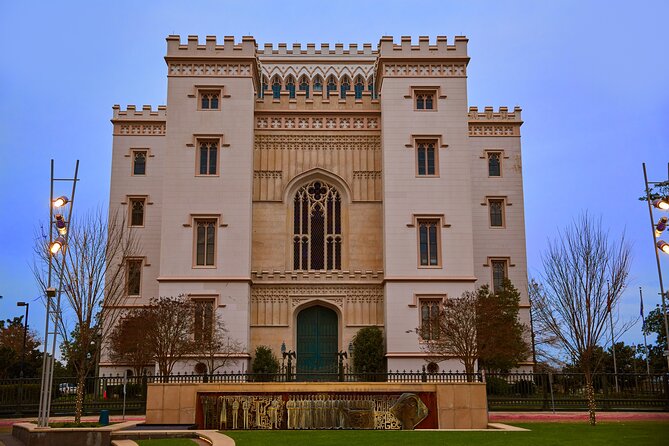
The first major stop is Louisiana’s Old State Capitol, a striking building that looks more like a medieval castle than a government office. The audio covers the building’s history and includes Mark Twain, whose observations add a literary touch to the stop.
You can enter for free, which improves the value of the tour. The audio portion takes about 10 minutes, but the building deserves more time if it is open and you want to look around. The tour itself is designed to work outdoors, so check the site when you arrive if you want to go inside.
This is one of the strongest moments in the route because the building is visually memorable and the story connects architecture with Louisiana politics. You get a clear sense of why Baton Rouge’s government center feels different from an ordinary downtown block.
Finding the Red Stick at Riverfront Plaza

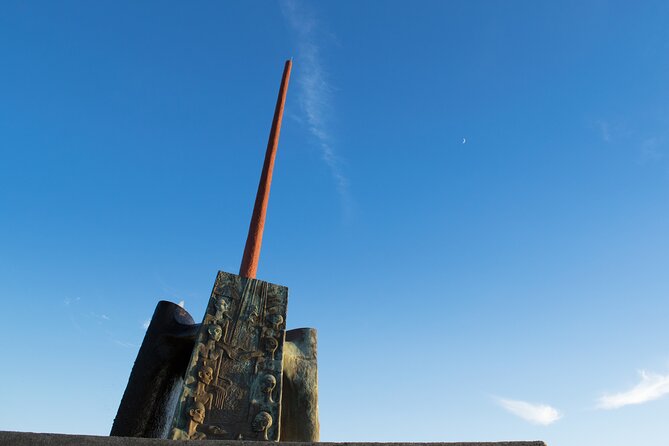
The route then heads to Riverfront Plaza and City Dock, where you find the red stick statue. Here, the audio explains how Baton Rouge received its name and introduces the people who lived in the area before the modern city developed.
This stop matters because the Red Stick name is not just a nickname on a sign. It gives you an entry point into the city’s older past and places the riverfront at the center of Baton Rouge’s identity.
Allow about 10 minutes. Look around as you listen, since the open riverfront setting helps connect the story to the geography. The tour does not require a guide to point out every detail, but the app’s basic directions are meant to keep you facing the right building or feature, which is easier than following abstract north and south instructions.
More History Audio Tours in the USA
- Savannah’s Historical District: A Self-Guided Audio Tour
★ 4.5 · 69 reviews - Salida History Audio Tour l A Self-Guided Wild West Experience
★ 5.0 · 41 reviews - Historic Bar Harbor Self-Guided Walking Audio Tour Guide
★ 4.5 · 38 reviews - Key West’s Old Town Treasures: A Self-Guided Audio Tour
★ 4.5 · 29 reviews
Mississippi River stories at Sing the River
At the Sing the River sculpture, the subject shifts toward the Mississippi River and the people who have lived along it. The stop takes about 10 minutes and provides a useful change of pace after the government buildings.
This part of the walk is less about a single interior attraction and more about place. The river has shaped transportation, settlement, trade, and daily life, and the sculpture gives the audio a physical focus. You can listen, look at the artwork, and take in the riverfront without rushing to the next stop.
The outdoor setup has a practical downside. Weather matters. One booking was lost to rain, although the customer service response was described as helpful. Bring weather protection and remember that the experience is entirely outside. There is no included food, drink, or admission, and the tour does not provide a shelter plan.
A planned food break at Poor Boy Lloyd’s
Poor Boy Lloyd’s is a brief stop, listed at about five minutes, but it can become the most useful pause on the route. The audio introduces Cajun food and explains how the Cajuns came to Louisiana from Canada.
You can stop here for lunch, pause the tour, and restart after eating. That flexibility is one of the best reasons to choose a self-guided walk instead of a fixed group departure. You do not have to listen while distracted by a meal, and you do not hold up a guide or fellow participants.
Keep in mind that food is not included. Poor Boy Lloyd’s is a stop along the route, not part of the ticket price. Opening hours can also affect your plans, especially on Sunday, when many restaurants and bars in downtown Baton Rouge may be closed. If this stop is important to you, check the day before you go.
The subject itself is worthwhile. Cajun culture is often reduced to food, but this stop gives you a migration story as well. You get a quick explanation of how people from Canada became part of Louisiana’s cultural mix, with the restaurant providing a natural setting for the conversation.
Baton Rouge and the civil rights movement
At 445 North Third Street, the tour turns to Baton Rouge’s civil rights story. The audio explains local events and how they helped inspire action beyond the city.
This is an important inclusion. A short downtown walk can easily focus only on old buildings, famous politicians, and river views. By including civil rights history, the tour makes Baton Rouge feel like a living American city with conflicts and changes that reached well beyond its borders.
The stop takes about five minutes, so do not expect a long museum-style presentation. Instead, treat it as a concise introduction and a reason to notice the street around you. If this subject is central to your interests, you may want to spend additional time researching or visiting related sites separately, but the tour gives you a useful place to begin.
Ending beside Huey Long’s Louisiana State Capitol
The final major stop is the Louisiana State Capitol, the tall modern building often associated with Huey Long. The audio explains how Long pushed for its construction and connects the building to Baton Rouge’s political story.
The contrast with the Old State Capitol is striking. One looks like a castle and the other rises vertically over the city. Seeing both on the same walk lets you compare different ideas of state power, architecture, and political ambition.
The newer Capitol is also where the tour ends, so the route has a clear finish rather than leaving you somewhere random downtown. Afterward, you can enter and take the elevator to the observation deck. Admission to the tour itself is not charged separately for this stop, but the tour price does not list any additional admission as included, so check current conditions before you go inside.
Give this final stop at least 10 minutes for the audio. Add more time if you plan to visit the building or go up to the observation deck. Ending here is especially convenient if you want to continue sightseeing on your own after the recorded portion is finished.
The extra downtown walking time
The itinerary also allows about 20 minutes for downtown stops and the river walk. This is where the tour feels less like a string of formal attractions and more like a city orientation.
You hear Baton Rouge’s story from its early beginnings to the present while moving through the downtown core. The exact pace depends on how quickly you walk and how long you spend at each location. You can take photos, read signs, and pause the audio without falling behind a group.
I like this flexibility for independent visitors. A scheduled tour can make you choose between listening and looking. Here, you control the rhythm. The tradeoff is that you must pay attention to the app and your surroundings, since there is no live guide correcting a wrong turn in person.
What the $9.75 price really buys you
At $9.75 per person, this is a low-cost way to add structure to a downtown visit. You are paying for the recorded route, directions, and a connected set of stories rather than for a guide, transportation, meals, or attraction entry.
The value is strongest if you want a quick introduction before exploring more of Baton Rouge on your own. The tour covers several subjects in a short time, and the free entry to the Old State Capitol adds a useful stop without increasing the ticket cost.
It is less valuable if you expect a personal guide, detailed conversation, or extensive time inside museums. The audio cannot answer follow-up questions, and you must manage the technology yourself. Still, the private format means you are not paying for a larger group experience you did not request.
The tour is usually booked around 13 days ahead, but there is no stated requirement that you book that far in advance. The price and private format make it suitable for a couple, family, or small group that wants a self-paced introduction without arranging a private human guide.
App setup, directions, and common snags
The tour uses a smartphone and the WalknTours app. You should download the correct app, locate the access code in your ticket, and open the tour before leaving for the starting point.
The directions are designed to be easy to follow. Instead of telling you to turn according to a compass direction, the app uses landmarks and instructions such as facing a building and turning. That is a real advantage in an unfamiliar downtown, especially if you are walking near open spaces where orientation can be confusing.
The weakness is that the system has no room for much uncertainty once you arrive. Some users reported a blank page, trouble entering the code, or failure to reach the audio. The provider responded by offering help and refunds in those cases, but that does not restore the sightseeing time you may have lost.
You can reduce the risk by doing three things:
- Install the WalknTours app before the tour day.
- Confirm that the code opens the Baton Rouge route.
- Charge your phone and bring a backup way to access the booking instructions.
The tour is offered in English. Service animals are allowed, public transportation is nearby, and most people can participate. Since this is an outdoor walking activity, you should still think about your own comfort with standing and walking for up to 75 minutes.
Parking, timing, and weather
Parking needs planning. A two-hour city street limit may not be enough if you arrive early, take the full walk, stop for lunch, and visit the Capitol afterward. Check the rules on the specific street or parking kiosk rather than assuming you can extend the time.
The stated operating window is daily from midnight to 11:30 p.m. That gives you broad scheduling freedom, but individual buildings, restaurants, and museums will have their own hours. The all-outdoor format also means you should choose a dry, comfortable time when possible.
Sunday deserves special attention. Downtown restaurants and bars may be closed, so do not count on Poor Boy Lloyd’s being available unless you confirm first. The route itself may still work, but the food break could become only an audio stop.
Free cancellation is available if you cancel at least 24 hours before the scheduled start time. Within 24 hours, the payment is not refunded, and changes are not accepted.
Who will like this Baton Rouge walk
I would recommend this tour to you if you enjoy history in short sections, prefer exploring without a group, and want to stop for food or photos whenever you choose. It works particularly well as a first look at downtown Baton Rouge because it links the major government buildings with the riverfront and several social history topics.
Families may like the flexible pace, especially if younger walkers need breaks. Couples and small groups can share one route without having to match a guide’s schedule. The low price also makes it an easy addition to a larger Louisiana trip.
You should think twice if your phone setup is unreliable, if you want a live person for questions, or if rain is likely. The audio cannot replace a guide who can adapt stories to your interests. It also cannot solve a dead battery or an incorrect app installation.
Should you book it?
Book this Baton Rouge walk if you want an inexpensive, private introduction to the city with clear landmark-based directions and the freedom to pause at Poor Boy Lloyd’s or continue at your own speed. The Old Capitol, Red Stick statue, riverfront sculpture, civil rights stop, and Huey Long’s Capitol give the hour a good range.
Skip it if you want a fully hosted tour or do not want to troubleshoot an app. For the best chance of a smooth outing, test the WalknTours app before arrival, plan parking carefully, and check the restaurant and building hours. With those details handled, the tour offers a practical way to connect Baton Rouge’s politics, people, food, river, and architecture in one compact walk.
FAQ
Where does the Baton Rouge audio walking tour start?
The tour starts at the Old Governor’s Mansion, located at 502 North Boulevard in Baton Rouge, Louisiana.
Where does the tour end?
The tour ends at the Louisiana State Capitol, the tallest state capitol building in the United States.
How long does the self-guided tour take?
The estimated duration is about one hour to one hour and 15 minutes.
Is admission to the attractions included?
The tour itself is an outdoor, app-based experience. No food, drinks, or general admission costs are included. The Old State Capitol is listed as free to enter.
Can I pause the audio for lunch?
Yes. You can pause the tour at Poor Boy Lloyd’s, eat, and restart the audio afterward.
What app and language does the tour use?
The experience uses the WalknTours smartphone app and is offered in English.
More Self-Guided Audio Tours in the USA
- Gettysburg Battlefield Self-Guided Driving Audio Tour
★ 4.5 · 910 reviews - Joshua Tree National Park Self-Guided Driving Audio Tour
★ 4.5 · 762 reviews - Ultimate Acadia National Park Self-Guided Driving Audio Tour
★ 4.0 · 521 reviews - Ultimate Lake Tahoe Self-Guided Driving Audio Tour
★ 4.5 · 435 reviews
New audio tours around the USA
- Beaches, Bites and Bavaria in Leavenworth: A Self-Guided Audio Tour★ 3.5 · 3 reviews
- Welcome to Fabulous Las Vegas Sign Self-Guided Audio Tour★ 5.0 · 2 reviews
- Las Vegas Day Trips: 3-Day Self-Guided Audio Tour★ 5.0 · 2 reviews
- Hoover Dam and Lake Mead Self-Guided Audio Tour★ 5.0 · 3 reviews
- Driving Lake Tahoe: A Self-Guided Audio Tour From Tahoe City to Incline Village★ 5.0 · 10 reviews
- Las Vegas Neon and Secrets: Self-Guided Audio Tour★ 5.0 · 3 reviews
- Ultimate La Jolla Self-Guided Driving & Walking Audio Tour Bundle★ 3.5 · 9 reviews
- Knoxville’s Country Music Heritage: A Self-Guided Audio Tour★ 3.0 · 2 reviews
USA Audio Tours, compared.

Los Angeles: Hop-On Hop-Off Bus Tour with Audio Guide
Read our review →
City Sightseeing Hop-On Hop-Off Bus Tour with Audio Guide
Read our review →
Medieval Torture Museum Ticket with Audio Guide and Ghost Hunting
Read our review →


San Francisco: Alcatraz, Ferry & Audio Tour w/ Night Option
Read our review →
Ultimate Acadia National Park Self-Guided Driving Audio Tour
Read our review →
Browse the lists this tour appears in