
Review · NORWAY
Bergen: Troll Museum Entry Ticket + audio guide
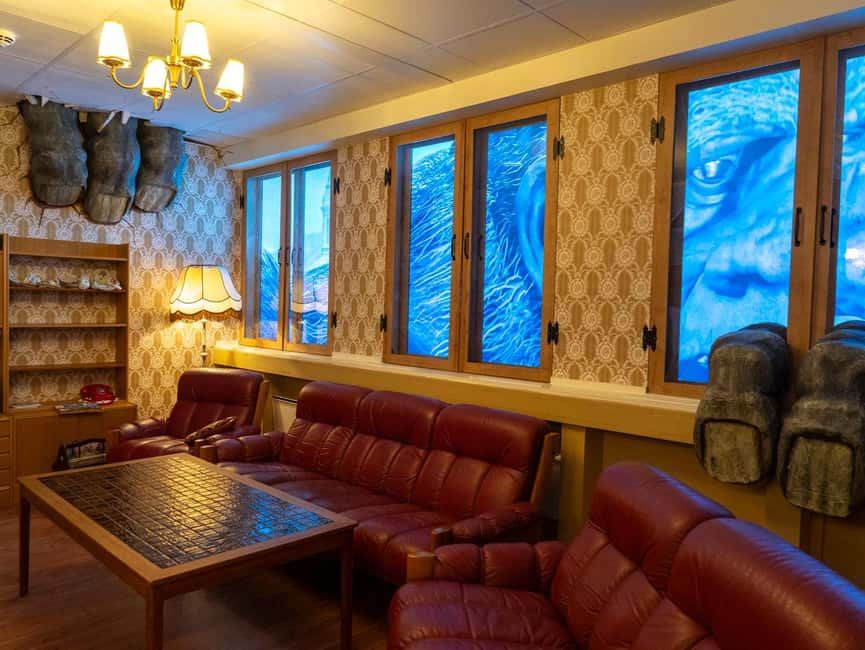
Bergen’s Troll Museum turns Norwegian folklore into a hands-on visit, with augmented reality art, moving images, sound, holographic effects, and stories about the creatures said to inhabit Norway’s mountains and fjords. It is more than a room of oversized troll figures. You’ll also find Norse mythology, fairy tales, Huldrefolket, and a look at how troll beliefs have changed over time.
I like the mix of old and new. Handmade art gives the museum a traditional feel, while tablets and interactive screens keep the experience lively. I also like the strong language support: the audio guide comes in 10 languages, and the touch screens and AR tablets offer 11.
The main thing to watch is time. The museum is open from 09:00 to 19:00, but allow at least 90 minutes if you want to read the displays, use the games room, and explore at an easy pace. Arriving only an hour to an hour and a half before closing may leave you rushing.
Key points to know before you go
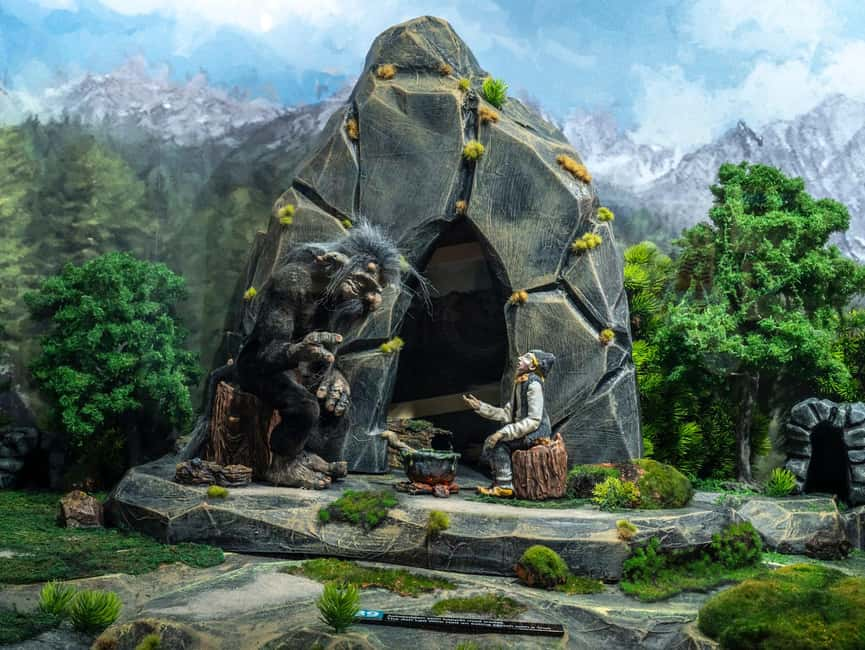
- Troll folklore gets a modern treatment: Handmade illustrations combine with AR, sound, holographic fans, and interactive displays.
- The visit goes beyond trolls: You’ll see Norse mythology, Norwegian fairy tales, Huldrefolket, and mysterious creatures from beneath the fjords.
- Your ticket includes language help: Audio commentary is offered in 10 languages, while touch screens and AR tablets support 11.
- Plan for more than a quick photo stop: The exhibits, games room, library, and creativity zones can easily fill 90 minutes or more.
- The museum is central and easy to fit into Bergen: It is located at Øvre Dreggsallmenningen 6 and opens daily from 09:00 to 19:00.
- It suits families and adults: The storytelling offers cultural context, while the games and digital features give children something active to do.
Why Bergen’s troll museum is different
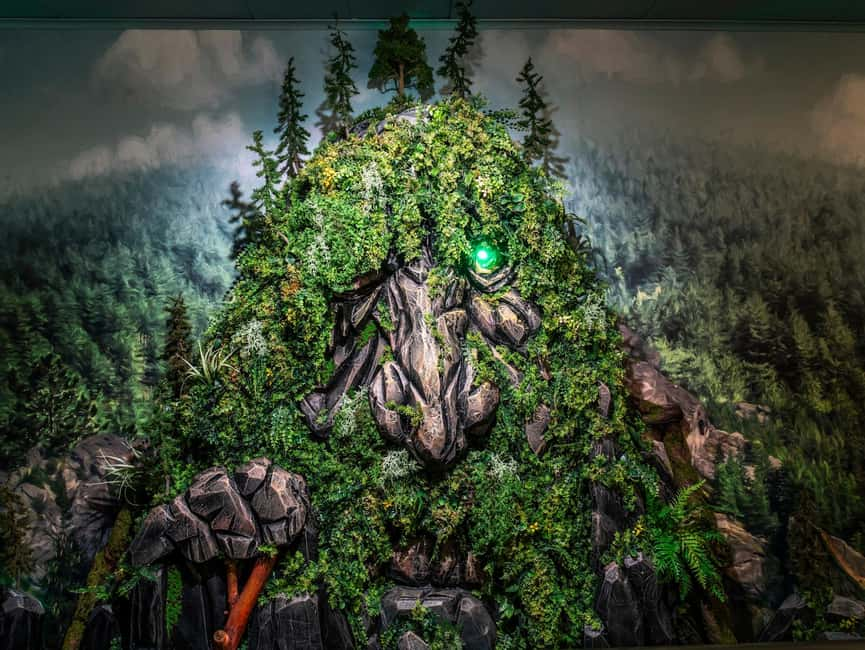
Many folklore museums rely on old objects, printed panels, and reconstructed rooms. This one takes a more theatrical route. You see handmade artwork, then use digital tools to add movement, sound, and extra details to the scene.
That approach works well for Norwegian folk tales because the stories themselves are visual and dramatic. A troll is not simply a carved figure. It belongs to a world of forests, caves, fjords, moonlit roads, and hidden people. The museum uses technology to suggest that wider world without requiring you to read a long academic explanation.
I would think of the museum as a cultural introduction rather than a formal study center. You get a clear, entertaining look at Norwegian beliefs and stories, but the experience is designed to keep you moving and curious.
The museum is also the only one in Bergen devoted entirely to trolls and fairy tales. That narrow focus gives the visit a clear identity. You know what you are coming for, and the displays stay on theme.
More Museum Audio Tours in the world:
- Florence: Uffizi Priority Ticket & Masterpieces Audio App
★ 4.2 · 6,402 reviews - Paris: Louvre Museum Hosted Entry and Mona Lisa Audioguide
★ 4.6 · 5,235 reviews - Venice: St. Mark Basilica Ticket, Audioguide+History Gallery
★ 3.9 · 4,780 reviews
Start with Norse mythology and the Viking view of the universe
The Norse mythology section provides the best starting point. Before you meet the museum’s trolls, you get a sense of the old Norse universe and the way Vikings understood the world around them.
This matters because trolls and other supernatural beings did not appear in isolation. They belong to a much larger set of beliefs about gods, nature, hidden forces, and the boundary between the human world and the unknown.
The displays explain what the universe looked like according to Norse tradition. That background helps you understand why mountains, water, darkness, and wild places play such a large role in Norwegian folklore.
You can use the information touch screens for extra detail. They support Norwegian, English, German, French, Italian, Spanish, Dutch, Polish, Russian, Portuguese, and Chinese. If you prefer listening, the audio guide is included with your ticket and is available in 10 languages.
I like this setup because you can choose your own pace. Read the main panels, listen to the audio, or use the digital displays for more information. You are not forced into one fixed route or one level of detail.
Meet the trolls in their natural habitats
The Hall of Trolls is the museum’s central attraction. Here, the creatures are shown in settings that suggest their natural habitats rather than as isolated cartoon characters.
That distinction is useful. Norwegian trolls have many forms in folklore, and the museum presents them as part of a larger belief system. You can consider how the idea of the troll has shifted over time, from a frightening being in a traditional tale to a familiar figure in books, films, souvenirs, and modern popular culture.
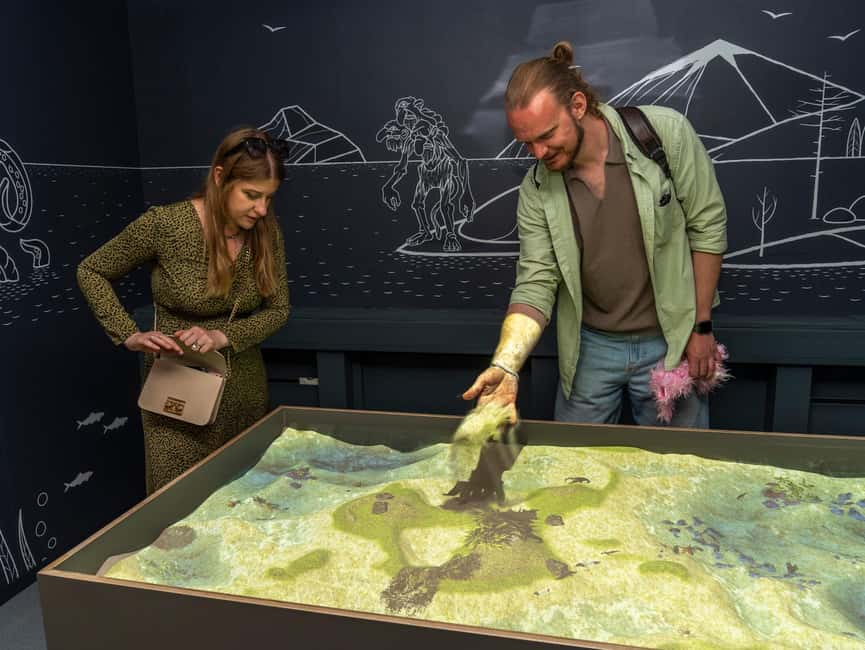
The digital effects add motion and sound to the art. The AR tablets let you view extra elements layered onto the physical displays. This means the experience changes depending on how closely you engage with the technology.
You should not expect every exhibit to be a large-scale ride or elaborate performance. The appeal is in the combination of artwork and digital additions. Some parts ask you to stop and look; others invite you to interact.
For adults, the Hall of Trolls gives the visit its cultural center. For children, it supplies the visual hook. That split audience is one reason the museum works well for families with different interests.
Read the fairy tales Norwegian families have shared
The fairy tale displays bring the museum closer to everyday storytelling. You can read stories that Norwegian parents have told their children for generations, then compare the traditional tales with the images and effects around them.
This is where the museum feels most connected to living culture. Folklore is not only an old belief system stored in books. It also survives through bedtime stories, illustrations, family traditions, and popular ideas about Norway.
The stories are presented in English and Norwegian at the exhibits. The library adds another layer, with fairy tale and mythology books in several languages. You can spend a few minutes browsing, or use it as a quieter break after the more active displays.
I would allow extra time here if you enjoy reading. A quick visit can give you the main idea, but the written stories reward a slower pace. If you arrive close to closing time, this is one part you may have to skim.
More audio tours around the world:
- Barcelona: Sagrada Familia Entry Ticket with Audio Guide
★ 4.6 · 105,312 reviews - Rome: Pantheon Fast-Track Ticket and Official Audioguide
★ 4.5 · 27,353 reviews - Barcelona: Casa Batlló Entry with Self-Audioguide Tour
★ 4.7 · 25,359 reviews - Rome: Colosseum & Forum with Audio Guide App -Optional Arena
★ 4.2 · 24,770 reviews
Look beneath the fjords in Hidden Beneath the Waves
Norwegian folklore is not limited to mountain trolls. The museum’s marine exhibit, Hidden Beneath the Waves, focuses on creatures associated with the depths of Norwegian fjords.
This section broadens the experience. Norway’s waterways are a major part of its geography and culture, so it makes sense that stories about mysterious beings would also come from the sea.
The exhibit asks you to consider who or what might live below the surface. It connects local geography with imagination without pretending that folklore is a factual wildlife guide.
The digital elements are especially suited to this theme. Sound, projected movement, and holographic effects can suggest a world that is difficult to see in ordinary life. You should expect an imaginative presentation rather than a scientific museum display.
Learn about Huldrefolket and hidden people
The dedicated Huldrefolket hall introduces another important part of Norwegian folk belief. The Huldrefolket are secretive beings associated with hidden places and a world alongside the human one.
This section helps prevent the visit from becoming only a search for funny-looking trolls. Norwegian folklore includes many kinds of supernatural beings, each with different roles and stories.
The museum explains who these beings are, where they live, and why they matter in Norwegian traditions. That context gives the visit more substance than a simple collection of fantasy figures.
You can also use the AR tablets here, with content available in 11 languages. If English is your main language, you will have no trouble following the displays. If you are visiting with children, the digital layer may help them stay interested while you take in the cultural details.
How the augmented reality and holograms work
The museum’s technology is there to expand the artwork, not replace it. You begin with a physical scene, then use an AR tablet or interactive display to reveal moving elements and sound.
The exact effect will depend on the exhibit, but the general idea is simple: look at the art through the device and see additional content placed over it. This makes the museum more active than a standard display where you only read a label and move on.
Holographic fans and other visual effects add to the sense of motion. These features may appeal most to children and visitors who enjoy digital installations. Adults who prefer quiet historical displays should know that this is a modern presentation, with technology used throughout.
The benefit is clear: complicated folklore can be made easier to grasp through pictures, sound, and movement. The tradeoff is that you may spend time waiting for a screen or handling a tablet instead of looking only at the handmade art.
Games, creativity zones, and the small library
The museum includes board games and creativity zones, giving you a break from the main exhibit route. These areas are particularly useful for families. Children can do something active while adults finish reading a panel or listening to the audio guide.
The games room also affects how long you should plan to stay. A short visit focused only on the main halls might take less time, but children may want to return to the games and creative activities.
The library offers a quieter change of pace. It contains fairy tale and mythology books in several languages, making it useful for anyone who wants to learn more after seeing the exhibits.
I would not treat these areas as optional filler. They help shape the museum’s family-friendly character. They also explain why arriving shortly before closing can be a mistake. The main displays may be possible to cover quickly, but the interactive parts encourage you to linger.
Is the $26 ticket good value?
At $26 per person, the ticket is not the cheapest short attraction in Bergen. Its value depends on how fully you use the museum.
You get entry, the audio guide, multilingual touch screens, and AR tablets without paying extra for each feature. If you spend around 90 minutes exploring the mythology, troll, marine, and Huldrefolket sections, the price is reasonable for a central indoor activity.
The ticket becomes stronger value for families because the games room and creativity zones give children more than a brief look at a display. Adults who enjoy folklore, illustration, and digital art may also find enough content to justify the cost.
If you only want a quick photo with a troll, the price may feel high. This is not a one-room attraction that you can understand in ten minutes. You are paying for a complete themed visit with several sections and interactive tools.
The ticket is valid for 90 days, so you have flexibility around your Bergen plans. You can also cancel up to 24 hours in advance for a full refund, and the reserve-now, pay-later option can help if your schedule is still shifting.
Practical details for planning your visit
The museum is at Øvre Dreggsallmenningen 6 in central Bergen. It is open every day from 09:00 to 19:00, with Norwegian and English used for the host or greeter service.
The museum is wheelchair accessible. The audio guide is included and supports Norwegian, English, German, French, Italian, Spanish, Dutch, Polish, Portuguese, and Russian. The information touch screens and AR tablets add Chinese to that list.
There is no fixed visit duration stated, so I would plan for at least 90 minutes. Add more time if you want to read the fairy tales, use the games room, explore the library, and try the interactive features rather than simply passing through.
A practical tip is to avoid arriving in the final hour if you can. The museum closes at 19:00, and the interactive sections can take longer than expected. Earlier in the day gives you room to pause without watching the clock.
Who will enjoy the Troll Museum most?
This is a strong choice for families looking for an indoor activity with something for both children and adults. The visual effects and games give younger visitors an active role, while the mythology and folklore sections provide cultural context for older visitors.
It also suits adults interested in Norwegian stories, Norse mythology, illustration, or digital art. You do not need prior knowledge of trolls or Viking beliefs. The displays are designed to introduce the subjects from the beginning.
I would be more cautious if you want a traditional museum filled with historic objects and long scholarly explanations. The Troll Museum uses art, storytelling, screens, AR, and sound. Its tone is accessible and playful rather than formal.
It is also a useful rainy-day stop in Bergen. The central location and daily opening hours make it easy to fit between other sightseeing plans, though I would not squeeze it into a very tight schedule.
Should you book the Troll Museum?
Book it if you want a lively introduction to Norwegian folklore and like museums that let you interact with the displays. The strongest reasons are the clear theme, the good language support, the mix of handmade art and modern technology, and the range of material beyond trolls.
Give yourself at least 90 minutes, and preferably more if you are with children or enjoy reading. The $26 price makes the most sense when you use the audio guide, AR tablets, games, and several exhibit halls.
Skip it if you are seeking a traditional historical museum or only have a few spare minutes. For families, mythology fans, and curious first-time visitors to Norway, it offers a focused and entertaining way to meet the stories behind the country’s famous trolls.
FAQ
Where is the Troll Museum in Bergen?
The museum is located at Øvre Dreggsallmenningen 6 in central Bergen.
What are the museum’s opening hours?
The Troll Museum is open every day from 09:00 to 19:00.
How long is the ticket valid?
The ticket is valid for 90 days. You should check availability for the available starting times.
What languages are available?
Exhibit texts are in English and Norwegian. The audio guide is available in Norwegian, English, German, French, Italian, Spanish, Dutch, Polish, Portuguese, and Russian. Touch screens and AR tablets also support Chinese.
Is the audio guide included?
Yes. The audio guide is included in the ticket price.
Is the museum wheelchair accessible?
Yes. The Troll Museum is wheelchair accessible.
Can I cancel my booking?
Yes. You can cancel up to 24 hours in advance for a full refund.
New audio tours around the world
- London Panoramic Open Top Bus Tour with Audio Guide★ 4.0 · 209 reviews
- London: British Museum Audio Guide & Small Group Entry★ 3.5 · 81 reviews
- London: National Gallery Audio Tour (No Entry Ticket)★ 3.5 · 11 reviews
- London’s Alternative History: A Self-Guided Audio Tour★ 5.0 · 4 reviews
- London: British Museum’s English Audio Tour with Free Reservation★ 3.0 · 15 reviews
- London: Churchill War Rooms Ticket & Political London Audio Tour★ 4.0 · 83 reviews
- London: British Museum Audio Tour with Free Guaranteed Entry★ 3.0 · 30 reviews
- Houses of Parliament Ticket & Political London Audio Guide★ 4.0 · 13 reviews
Norway Audio Tours, compared.

Oslo: Scenic Fjord Cruise with Audio Guide Commentary
Read our review →
Molde: Atlantic Ocean Road & Varden Audio Guide Bus Tour
Read our review →
Geiranger: Bus Tour with Multilingual Audio Guide
Read our review →
Ålesund: Ålesund and Surrounding Islands Audio Guide Tour
Read our review →
Åndalsnes – Trollstigen & Trollwall Audio Guid Bus Tour
Read our review →
Norwegian Coastal Cities: Smartphone Audio Guide App
Read our review →
Bergen in Your Pocket: Landmarks and Lore Audio Tour
Read our review →Browse the lists this tour appears in