
Review · ITALY
Brescia Walking Tour with Audio and Written Guide by a Local
Brescia’s best feature is the sheer range of sights packed into one walk. In about five hours, you move from medieval market lanes to grand Italian squares, two very different cathedrals, Roman ruins, a major museum, and a hilltop castle. The guide by local creator Matteo Colosio gives you the route, background, audio, text, images, and Google Maps links without tying you to a group.
I like the low price of $7.79 and the freedom to pause, replay, or skip sections. I also like the practical restaurant advice, which adds a local touch beyond dates and architectural labels. The main caution is depth: this is a compact self-guided introduction, not a live historian or a full museum guide, and some audio sections are very short.
Key points at a glance
- A five-hour route through 11 major stops, from Piazza del Mercato to Brescia Castle.
- Audio and written guidance in five languages: English, Spanish, Italian, German, and French.
- Google Maps links connect each stop, helping you follow the route on your own phone.
- Santa Giulia Museum and Capitolium admission are extra, so budget for those if you want to enter.
- Teatro Grande is viewed from outside, while the route gives more time to the museum and castle.
- Best for independent sightseers who want structure without a guide leading a group.
Why this Brescia walk is different
This experience is not a conventional walking tour with a guide waiting at the meeting point. You begin at Piazza del Mercato, download the digital material, and then follow the route at your own pace. The start and finish are in different places, so you should think of it as a one-way city walk rather than a loop back to the square.
That difference matters. You do not need to keep up with a group or listen while standing in one spot. You can stop for coffee, spend longer inside a church, replay a section, or take a break before continuing. The stated duration is about five hours, but your actual day can be shorter or longer depending on how much time you give Santa Giulia Museum and Brescia Castle.
The guide works through your smartphone and requires an internet connection. Audio plays through the phone speaker or your headphones. I would download or activate everything before setting off, then carry a power bank if your phone battery is not strong. The voucher contains the activation details, so read it carefully rather than assuming the guide will open automatically.
The route is available in English, Spanish, Italian, German, and French. That makes it useful for mixed-language couples or families, and the written text gives you a backup if a busy street makes audio hard to hear.
More Audio Walking Tours in Italy
- Florence: 2.5 hour Audio Guided Walking Tour led by Host
★ 4.6 · 293 reviews - Verona Walking Tour with Audio and Written Guide by a Local
★ 4.5 · 157 reviews - Bologna Walking Tour with Audio and Written Guide
★ 4.5 · 132 reviews
Piazza del Mercato and the story of Brescia
Piazza del Mercato is a sensible starting point because it introduces Brescia through an everyday city square rather than a grand monument. The opening section explains the city’s story and the origin of its nickname, giving you a basic frame before the architecture becomes more demanding.
You spend about 10 minutes here. That is enough for orientation, but not enough for a slow look at every detail. Use this stop to check that the audio works, confirm your map connection, and get comfortable with the format.
From here, the route moves toward Piazza della Vittoria. This square has distinctive architecture and gives the guide a chance to discuss roughly the last 200 years of Italian history. The unexpected hook is a rhinoceros, one of the odd details that helps keep the stop from becoming a dry lesson in urban planning.
Piazza della Vittoria takes about 20 minutes. I like this early stop because it broadens the story beyond ancient and medieval Brescia. You are not simply collecting old churches. You are also seeing how the modern city expressed itself through a large civic square and changing political ideas.
Piazza della Loggia and a difficult chapter
Piazza della Loggia is one of the route’s most important settings. Its Venetian architecture dates to the 15th century, and the square remains a central public place in Brescia. The guide also addresses one of the most serious attacks in Italian history, a subject that gives the square a painful modern meaning.
Allow about 15 minutes here. The short stop is useful for context, though anyone wanting a full account of the attack will need further reading or a separate source. This is one point where the digital guide’s concise format is both helpful and limited. It tells you why the place matters, but it is not designed as an extended historical lecture.
The audio and text format works well in a square like this. You can look at the buildings while listening, then pause the narration when you want to take photographs or simply watch city life continue around you.
Piazza Paolo VI and Brescia’s two cathedrals
Piazza Paolo VI, also called Piazza del Duomo, brings together several layers of Brescia in one compact setting. It is a lived-in square as well as an architectural one, with the old and new cathedrals facing the same public space.
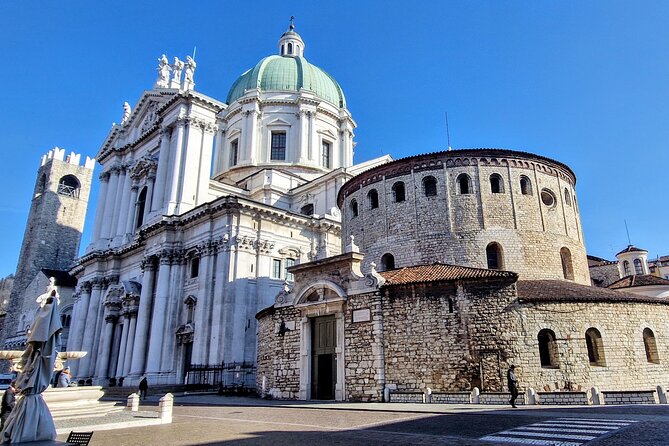
The guide gives this stop about 10 minutes, then spends around 20 minutes on the Duomo Vecchio. The old cathedral is especially unusual because of its circular plan, inspired by the Holy Sepulchre in Jerusalem. Construction began in the 11th century and took close to a century. Its rounded form makes it unlike the familiar rectangular church plan you may expect.
The Duomo Nuovo offers a sharp contrast. Brescians began building it in the 17th century as a larger, more modern cathedral, but the work took almost two centuries. Its facade uses huge columns and statues, while the interior brings together marble, frescoes, and gilding.
The route allows about 20 minutes for the new cathedral. That is enough for a first look, but you should not expect a detailed explanation of every chapel or artwork. If you are especially interested in church art, use the written guide as an introduction and then give yourself extra time on site.
These paired stops are among the strongest parts of the experience. You can see how religious architecture changed over hundreds of years without traveling across town. The guide gives you the basic story, while the buildings provide the visual comparison.
Same sights, a different narrator:
- Rome: Pantheon Fast-Track Ticket and Official Audioguide
★ 4.5 · 27,353 reviews - Rome: Colosseum & Forum with Audio Guide App -Optional Arena
★ 4.2 · 24,770 reviews - Florence: Timed Entry to Michelangelo’s David + Audio App
★ 4.6 · 19,496 reviews - Rome: City Sightseeing Hop-on Hop-off Bus with Audioguide
★ 4.0 · 16,045 reviews
Teatro Grande and the value of an outside view
Teatro Grande is one of Brescia’s major cultural buildings, associated with music and opera. The route gives it about 10 minutes, but the activity only includes an exterior visit.
That is worth knowing before booking. If you want to enter the theater, see its interior, or attend a performance, this experience does not include that. Still, the outside stop adds variety after the cathedrals. It also prevents the walk from becoming a string of churches and ancient ruins.
I would treat this as a quick orientation stop. Listen to the history, look at the building, and decide if you want to return later for a more focused visit.
Roman Brescia around the Forum
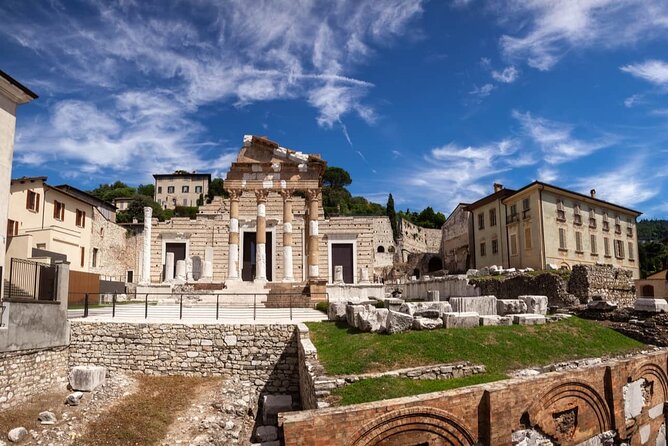
The route next reaches Tempio Capitolino and Piazza del Foro, where Brescia’s Roman identity becomes clear. The guide explains how Rome reshaped the city after Brescia became part of Roman territory in the 1st century BC. The street followed the line of the decumanus maximus, the main east-west artery in a Roman city.
This stop takes about 15 minutes. It is a good place to pay attention to the map and the street layout, because Roman planning can be easier to understand when you see how the modern route follows older lines.
The nearby Teatro Romano is given about 20 minutes. It was the largest theater in northern Italy after the one in Verona, which gives the site real regional importance. The Capitolium is close by, and the route links the two areas so you can see the Roman center as a connected zone rather than isolated ruins.
There is an important cost detail here. Capitolium admission is not included, even though the route itself brings you to the site. Plan to pay separately if you want to go inside. The itinerary describes the outdoor stops as free, but the included information specifically excludes the Capitolium ticket, so check the current admission terms before your visit.
Santa Giulia Museum deserves the extra time
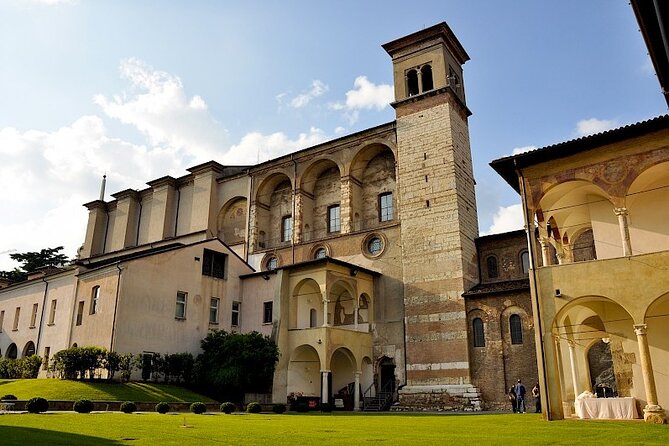
Santa Giulia Museum receives the longest scheduled stop, about one hour and 40 minutes. That tells you something about its scale. The museum covers roughly 14,000 square meters and traces Brescia from prehistoric times through the 18th century, with thousands of works connected to art, history, and religious life.
This is not a quick room-and-photo stop. If you enter, you will need time and energy after several hours on foot. The museum ticket is not included, so add that cost to the bargain price of the digital guide.
The guide can help you understand why Santa Giulia matters, but it should not be your only source if you want detailed information about the collections. A short audio segment may tell you what to look for, while the museum itself requires more time than a brief introduction can provide.
I would protect the full scheduled time here. It is the place where the route shifts from open squares and visible ruins to a large indoor collection. If museums are not your priority, you can shorten the stop. If they are, consider treating Santa Giulia as the center of your day and allowing extra time beyond the five-hour estimate.
Brescia Castle and the final city view
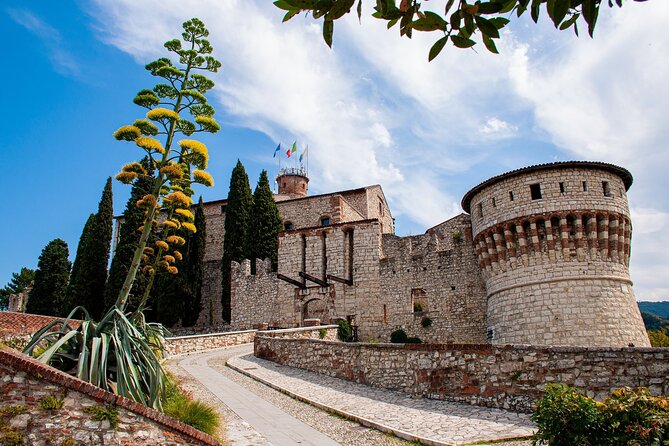
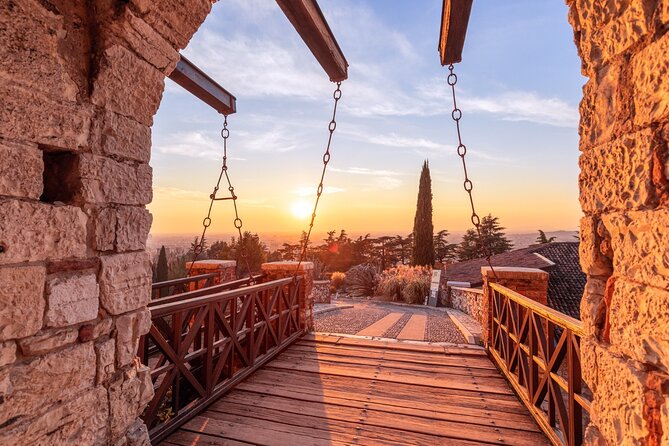
The final stop is Brescia Castle, which the route gives about one hour. The castle is widely treated as a symbol of the city, and the guide explains its story while leading you toward a broad view over Brescia.
This ending works well. After the dense streets and enclosed monuments, the castle gives you space and a different way to understand the city. You can look back toward the areas you have walked through and see how the urban center fits together.
Admission to the castle is listed as free. The route ends here rather than returning to Piazza del Mercato, so plan your next move from the hilltop. Since the activity does not provide a guided transfer back to the start, Google Maps remains useful after the tour as well.
The castle also gives you a natural place to decide if you want more sightseeing. You may have finished the planned route, but the city’s museums, churches, and restaurants can still fill the rest of your day.
What $7.79 really gets you
At $7.79 per person, this is inexpensive for a route that covers 11 stops and links them with maps, audio, written material, images, historical notes, curiosities, and restaurant suggestions. The strongest value is the structure. You do not have to research the order of sights or keep checking how to reach the next one.
The low price also explains the limits. You are paying for a digital guide, not personal attention. There is no live guide answering questions, adjusting the route to your interests, or adding spontaneous stories along the way. Some audio sections are reportedly as short as 30 seconds, and the information can feel general if you want detailed architectural or historical study.
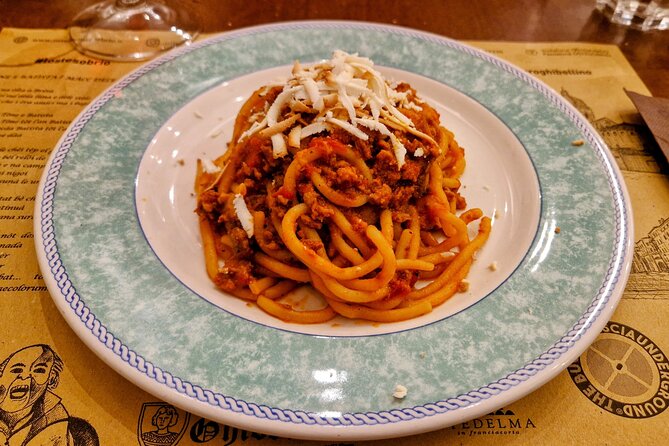
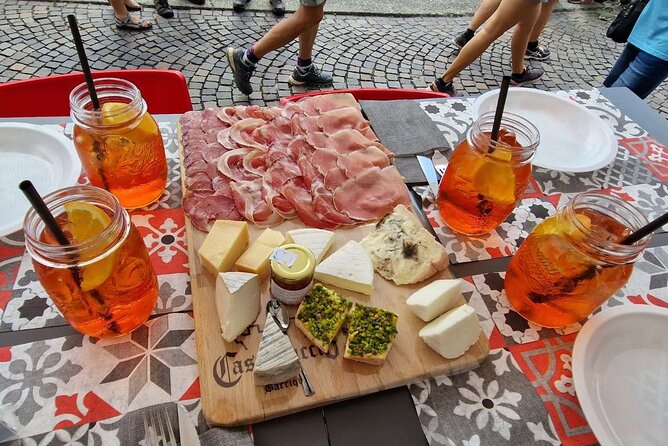
For me, the price makes sense if you see it as a useful city framework. It is less suitable if you expect a full professional guiding service. The restaurant recommendations add value, particularly if you want help choosing authentic local food without spending extra time researching every meal.
Group discounts are available, and the activity can accept up to 99 people, though each person uses the guide independently. The large maximum matters less here than it would on a live tour, since your experience does not depend on standing near a guide.
Who should book it
I would choose this for an independent visitor who likes a clear route but dislikes fixed schedules. It is also a good fit if you want to preview Brescia before a trip, since the written material and map links can help you decide how much time to give each sight.
You should also consider it if you are visiting in a mixed-language group. Five language options and both audio and text make the format flexible.
I would not choose it as my only source if you want detailed museum interpretation, a specialist account of Roman archaeology, or long explanations at every church. In those cases, use this as your city orientation and add dedicated guides for Santa Giulia, Capitolium, or the cathedrals.
Cancellation is free up to 24 hours before the start time. You need a smartphone with internet access, and the guide is designed for most participants, with service animals allowed and public transportation nearby.
Should you book this Brescia walking tour?
Book it if you want an affordable, self-guided route that brings together Brescia’s squares, cathedrals, Roman sites, museum, theater, and castle. The Google Maps connection and flexible audio are the best practical features, while Matteo Colosio’s local tips give the experience more personality than a bare map.
Skip it if you expect a live person, long commentary, or admission to every site. At this price, the guide is best understood as a well-organized introduction. Bring headphones, check the activation instructions, budget separately for Santa Giulia and Capitolium, and leave room to pause when a building deserves more than its scheduled minutes.
FAQ
Is this a guided walking tour with a person?
No. It is a self-guided digital experience with audio, written information, images, tips, and Google Maps links. Matteo Colosio is identified as the local creator, but he does not accompany you in person.
How long does the Brescia route take?
The planned route takes approximately five hours. Your timing may vary, especially at Santa Giulia Museum and Brescia Castle.
Where does the tour begin?
It begins at Piazza del Mercato in Brescia.
Where does the tour end?
It ends at Brescia Castle, in a different location from the starting point.
What languages are available?
The audio guide and written information are available in English, Spanish, Italian, German, and French.
Do I need a smartphone?
Yes. You need a smartphone with an internet connection to activate and use the digital guide.
Can I listen without headphones?
Yes. You can hear the audio through your smartphone’s speakers. Headphones are also supported.
Are museum tickets included?
No. The Santa Giulia Museum ticket is not included.
Is admission to the Capitolium included?
No. The Capitolium ticket is not included. Check the current admission details before entering.
Can I cancel for a refund?
Yes. You can cancel at least 24 hours before the experience start time for a full refund. Changes or cancellations made less than 24 hours in advance are not accepted for a refund.
New audio tours around Italy
- Lecce Walking Tour with Audio and Written Guide by a Local★ 4.0 · 38 reviews
- Private Audio Guided Walking Tour in Lecce★ 4.0 · 7 reviews
- Private Audio Guided Walking Tour in Como★ 3.0 · 3 reviews
- Como Walking Tour with Audio and Written Guide by a Local★ 4.5 · 30 reviews
- Finance and Nobility: Explore medieval Genoa on a self-guided audio tour★ 4.5 · 7 reviews
- Genova Walking Tour with Audio and Written Guide by a Local★ 4.5 · 33 reviews
- Udine Walking Tour with Audio and Written Guide by a Local★ 4.0 · 2 reviews
- Florence: Uffizi Gallery Timed Entry Ticket with Audio★ 3.0 · 3 reviews
Italy Audio Tours, compared.
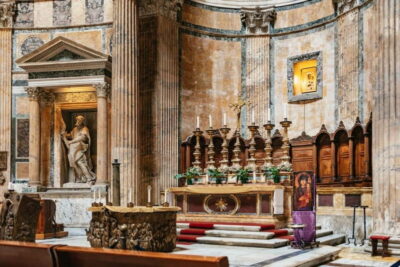
Rome: Pantheon Fast-Track Ticket and Official Audioguide
Read our review →
Rome: Colosseum & Forum with Audio Guide App -Optional Arena
Read our review →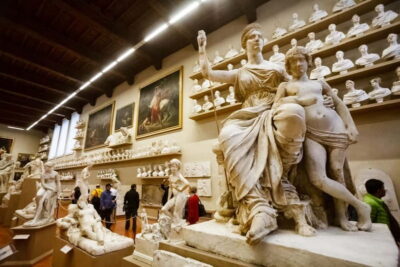
Florence: Timed Entry to Michelangelo’s David + Audio App
Read our review →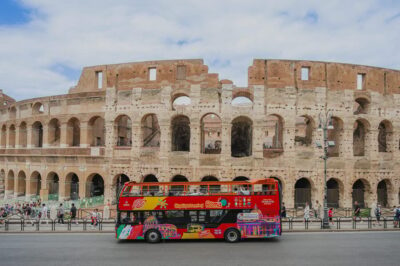
Rome: City Sightseeing Hop-on Hop-off Bus with Audioguide
Read our review →
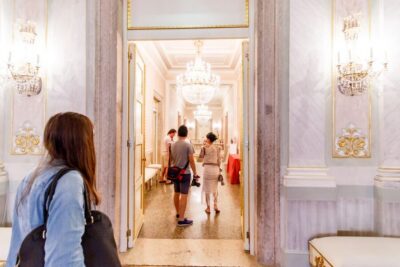
Venice: La Fenice Opera House Entry Ticket with Audio Guide
Read our review →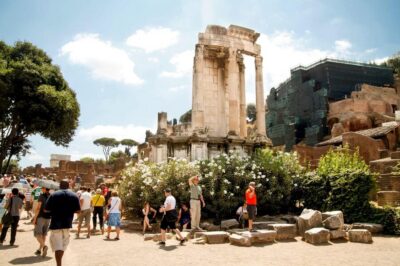
Rome: Colosseum, Forum, Palatine Hill Entry & Audioguide App
Read our review →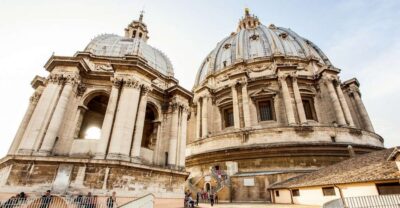
Rome: St. Peter’s Basilica & Dome Entry Ticket & Audio Tour
Read our review →Browse the lists this tour appears in