
Review · ITALY
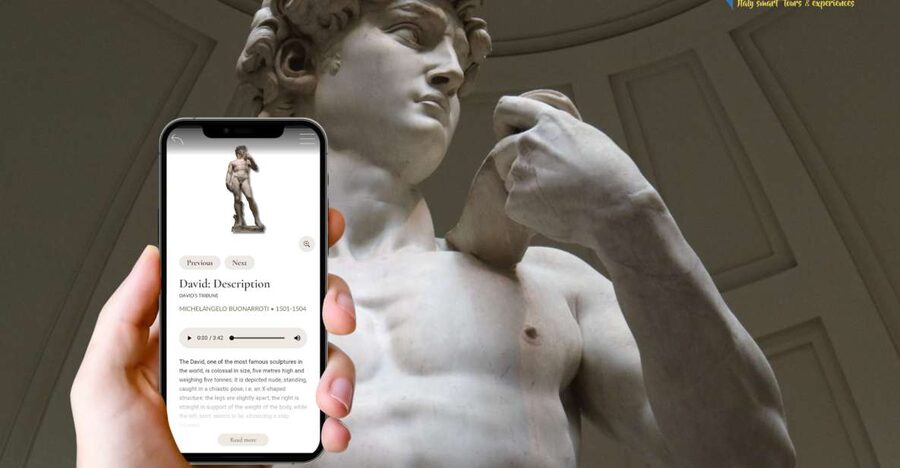
Florence: Michelangelo’s David Priority Ticket & Audio App
Florence’s Accademia Gallery is home to Michelangelo’s original David, and that one statue is worth planning around. This priority ticket gets you past the ticket-buying and pickup lines, then lets you explore the small museum at your own pace with a phone-based audio guide.
I like the timed entry, especially when Florence is busy, and I like having the freedom to pause, skip, or replay the audio. The main drawback is that the app can be awkward to download, particularly if your phone has weak service near the museum, and it is not a live guided tour.
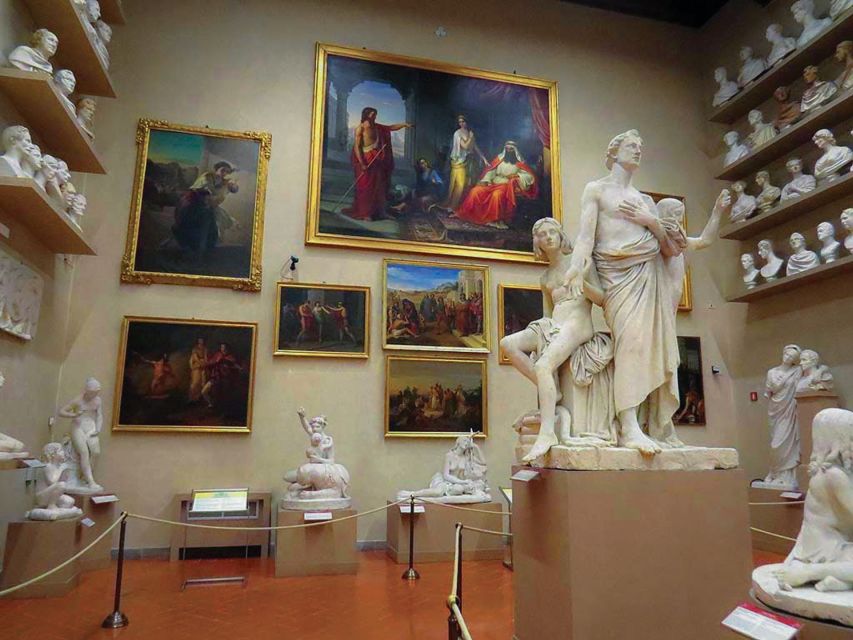
- David in the original gallery setting: See the famous marble figure up close, including details that photographs cannot show.
- A practical meeting point: Find the host at Via Ricasoli 57, opposite Carrefour Express, wearing a yellow vest and ACCORD badge.
- Self-guided pacing: Explore without being tied to a group or a guide’s schedule.
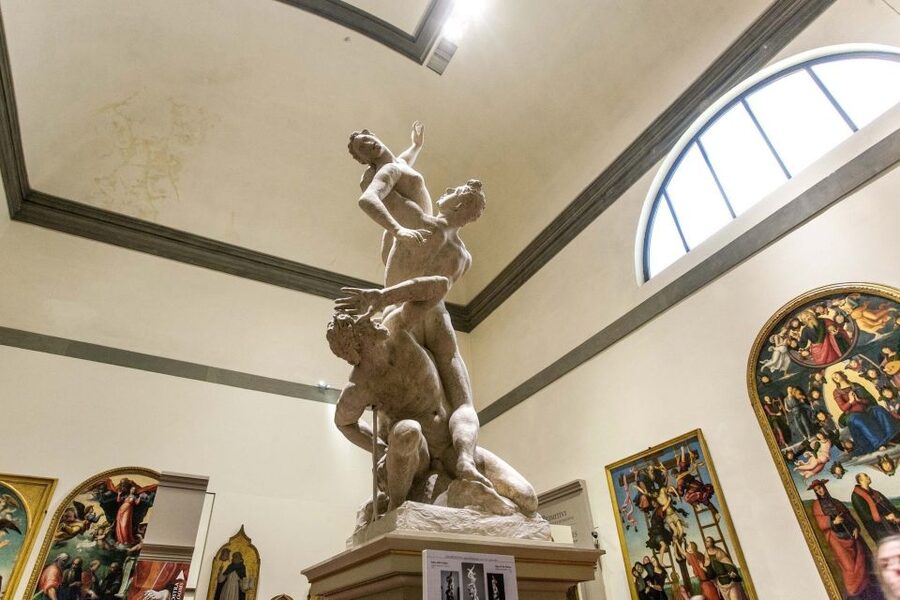
- More than David: See Michelangelo’s Prisoners and St. Matthew, along with works by Botticelli, Ghirlandaio, Gaddi, Orcagna, and Lippi.
- A surprising music collection: Visit the musical-instrument room, including a Stradivarius violin from the Medicean Quintet.
- Good value for a short visit: At $23 per person, the ticket is most useful when it saves you from a long queue or helps you fit the Accademia into a tight Florence schedule.
Why David deserves the first look
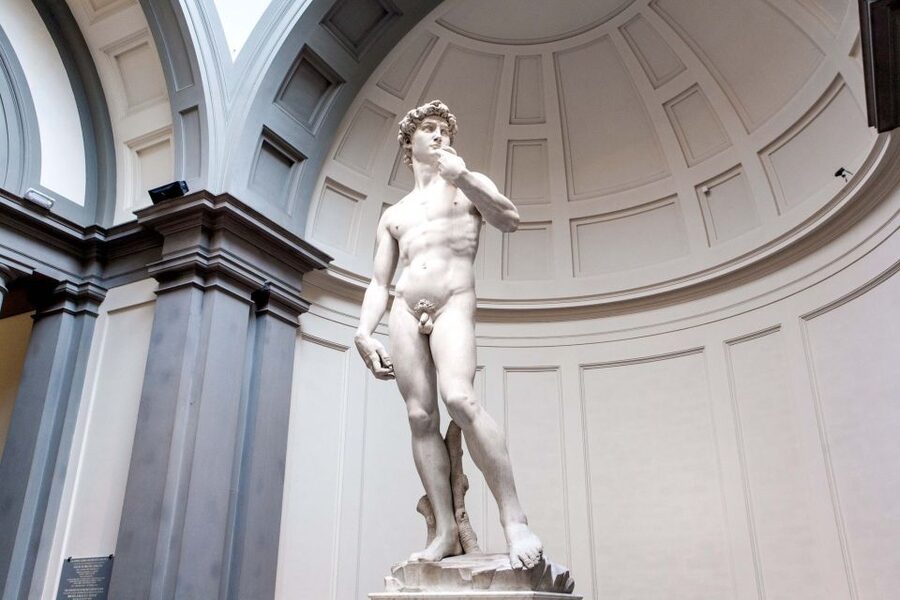
You enter the Accademia for one reason, then discover that the museum gives you several good reasons to stay. David is the centerpiece, placed where you can walk around him and watch the expression shift as you move across the room.
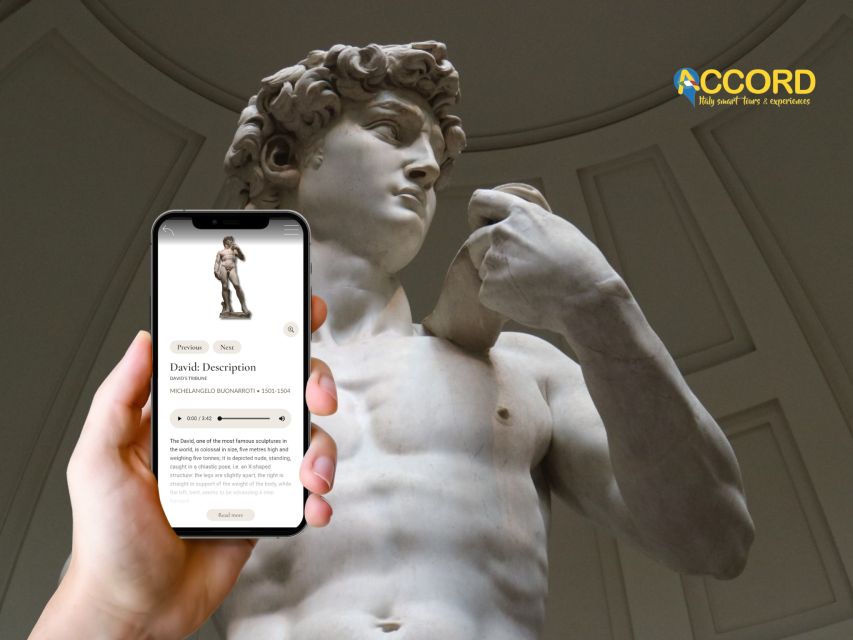
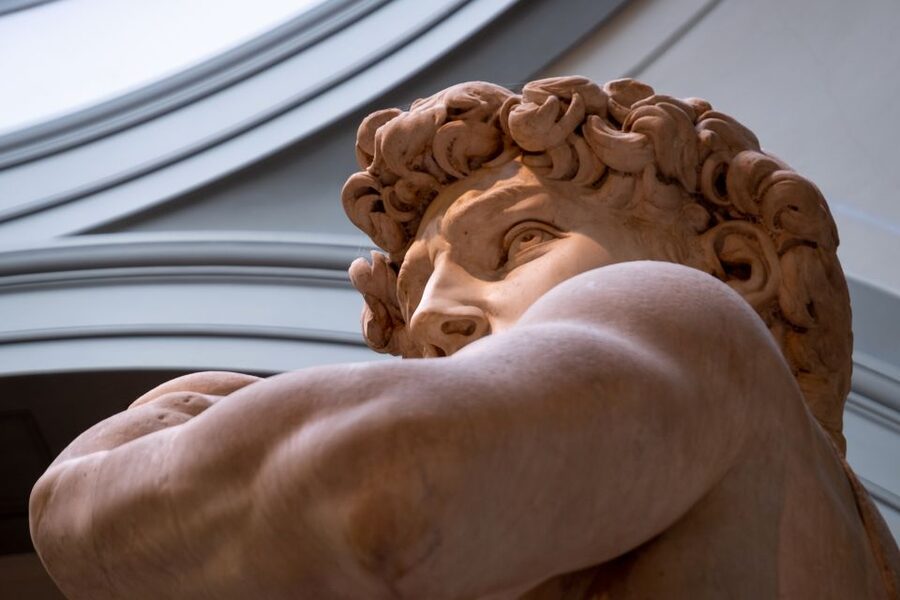
Michelangelo carved David from a single block of marble. The figure represents the biblical hero who defeats Goliath, but Florence saw more than a religious story in him. David became a symbol of the city’s independence and its defense of civil liberty during the medieval and Renaissance periods.
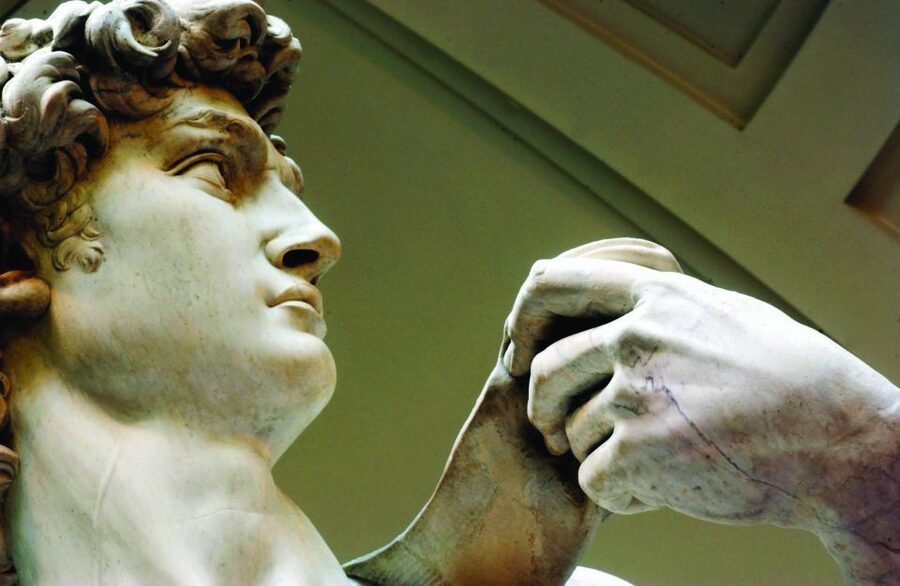
Take a slow circuit around the statue. You’ll notice the alert face, the oversized hands, the tension in the body, and the poised stance before the fight. In photographs, David can look familiar and almost ordinary. In person, the scale and surface detail make the work feel startlingly immediate.
The room can be busy, and the statue attracts nearly every visitor’s attention. The timed entry helps you get inside without first losing time at the ticket office, but it does not remove the museum’s security check or the crowd around David. At peak times, security may take about 10 to 15 minutes.
Meeting your host near Via Ricasoli 57
The meeting point is just a few steps from the Accademia entrance, at Via Ricasoli 57, directly in front of the Carrefour Express supermarket. Look for the assistant in a yellow vest with an ACCORD ID badge.
Arrive 15 minutes before your booked time. The host provides the reserved tickets and points you toward the correct entrance and security line. This small handoff matters because the regular ticket line can be long, and the Accademia entrance area is not the place to spend half your morning sorting out where to go.
The on-site staff speak English and Italian. Several visitors found the staff easy to locate and helpful with directions, including assistance with the audio app. One useful warning: do not rely on finding the host at the last possible minute. Arriving early gives you time to locate the yellow vest, collect your ticket, and deal with any phone problem.
Your reserved time is a priority entry, not a promise that you walk straight through every checkpoint. Everyone must pass security. You may also need to wait briefly for the museum to admit visitors at the scheduled time.
More Smartphone Audio Tours in Italy
- Rome: Colosseum & Forum with Audio Guide App -Optional Arena
★ 4.2 · 24,770 reviews - Florence: Timed Entry to Michelangelo’s David + Audio App
★ 4.6 · 19,496 reviews - Florence: Cathedral & Brunelleschi’s Dome Ticket & Audio App
★ 4.4 · 6,973 reviews
Download the audio app before you arrive
The audio guide is delivered through a mobile app rather than a traditional headset. Instructions arrive with your voucher, and a WhatsApp reminder is sent the day before with meeting information and app details.
Install the app at home or at your hotel using Wi-Fi. This is the single most useful preparation step. Some phones have trouble downloading it near the museum because mobile service is weak, and a few visitors needed help from the staff before the guide worked.
Bring your own headphones. They are not included. Charge your phone fully, since the app, photographs, and general phone use can use more battery than expected.
The audio guide is available in English, Italian, Spanish, German, French, Russian, Chinese, Japanese, Polish, Turkish, Portuguese, Dutch, Korean, Hungarian, Greek, Croatian, and Romanian. The host support itself is in English and Italian.
The app gives you a quiet, flexible way to look around. You can listen to a section while standing before a sculpture, pause it when the room gets crowded, and continue when you are ready. That suits visitors who dislike moving through a museum in a tight group.
There is a tradeoff. The audio content focuses on selected works, and some people find it less complete than a full museum tour. The instructions can also be easy to miss if you download the app in a hurry. Think of it as helpful context for the main sights, not a substitute for a private art historian.
Michelangelo’s Prisoners and St. Matthew
After David, make time for Michelangelo’s unfinished sculptures, often called the Prisoners. These twisting bodies were intended for the tomb of Pope Julius II, but that tomb was never completed.
Their unfinished surfaces make them especially interesting. You can see figures emerging from the stone rather than receiving the smooth final polish associated with David. The effect gives you a rare sense of sculpture as a process, not just a finished object.
Michelangelo’s St. Matthew is another important work to seek out. Like the Prisoners, it helps you compare the artist’s approach to figures that were not completed in the same final manner as David.
The audio guide can help explain why these sculptures look different from the polished statue in the main gallery. If you are short on time, do not rush straight from David to the exit. The Prisoners provide the clearest second chapter to the Michelangelo visit.
Paintings by Botticelli, Ghirlandaio, and Gaddi
The Accademia is not only a Michelangelo stop. Its paintings include works associated with Andrea Orcagna, Taddeo Gaddi, Domenico Ghirlandaio, Filippino Lippi, and Sandro Botticelli.
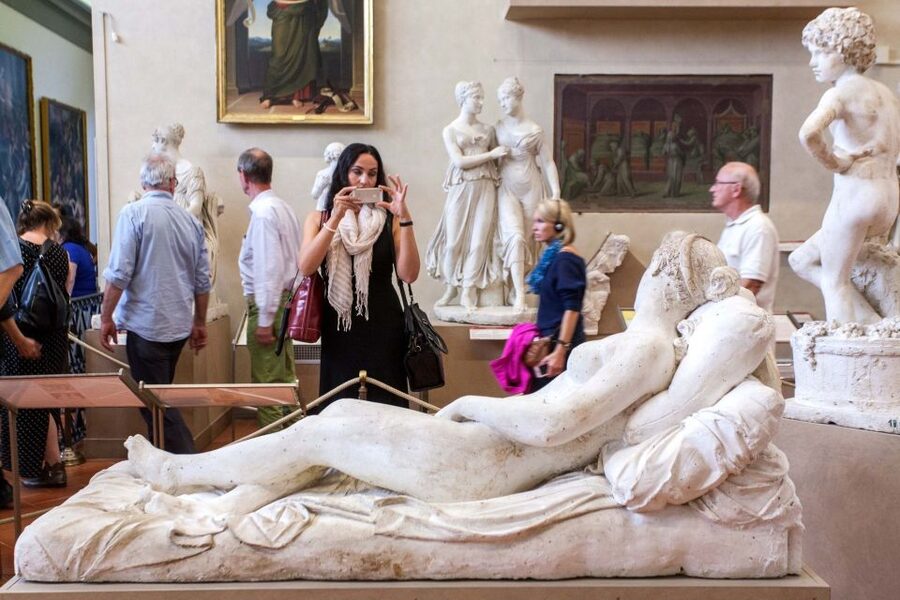
This part of the collection is easier to overlook because David has such a strong pull. I recommend slowing down in the painting rooms after seeing the sculpture. The pictures give you a broader sense of Florence’s artistic culture and place Michelangelo within a much larger tradition.
Botticelli and Ghirlandaio are especially useful names to keep in mind as you move through the collection. You do not need a long art lecture to appreciate these works, but a few minutes of audio context can help you notice composition, figures, and religious themes rather than simply walking past another old painting.
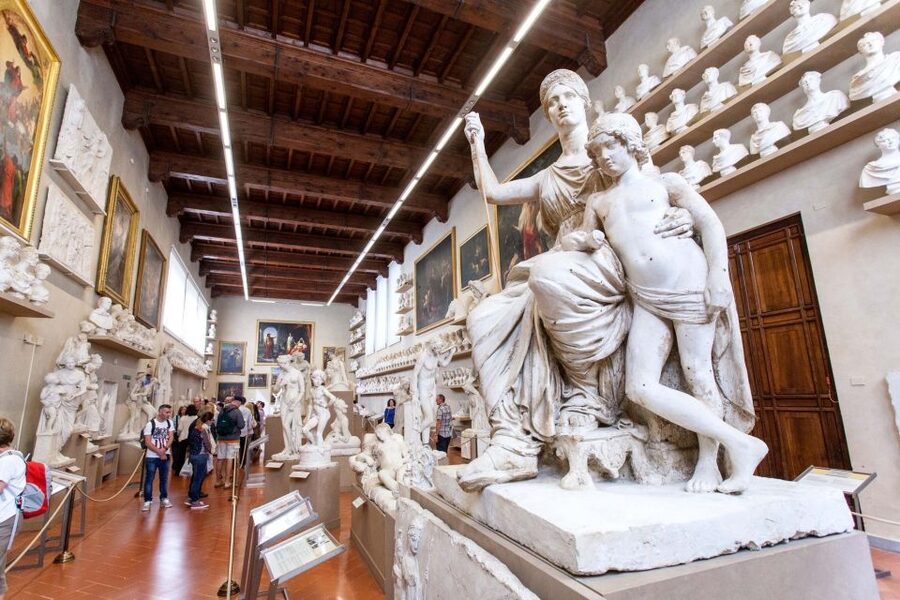
The gallery is smaller than the Uffizi, which is useful if you have only part of a day. It is compact enough for a focused visit, yet full enough that you can spend more time than expected if you listen to the app and examine the less famous rooms.
Same sights, a different narrator:
- Rome: Pantheon Fast-Track Ticket and Official Audioguide
★ 4.5 · 27,353 reviews - Rome: City Sightseeing Hop-on Hop-off Bus with Audioguide
★ 4.0 · 16,045 reviews - Pompeii: Entry Ticket with Audio Guide
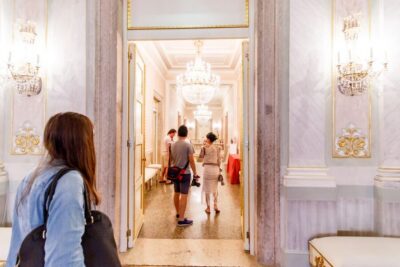
★ 4.1 · 13,491 reviews - Venice: La Fenice Opera House Entry Ticket with Audio Guide
★ 4.6 · 11,742 reviews
The Stradivarius violin and the musical-instrument room
One of the museum’s more unexpected features is its collection of old musical instruments from the Cherubini Conservatory’s Department of Musical Instruments.
The highlight is a violin by Antonio Stradivarius, part of the Medicean Quintet. It offers a change of pace after the marble sculptures and Renaissance paintings. You are looking at an object made for sound, craft, and courtly use rather than a figure carved for a church or public monument.
This room is easy to skip if you visit only for David. I would include it, especially if you enjoy music, decorative arts, or unusual museum collections. It also helps make the $23 price feel more worthwhile because you are getting a broader museum visit, not simply access to one famous statue.
How much time should you allow?
The ticket is valid for your chosen date and time, while the stated duration is one day. That means you should read it as a timed museum visit with flexibility inside the gallery, not as a one-day guided program.
You can make a quick stop focused on David and the main Michelangelo sculptures. With a short visit, you might spend time in the main hall, see the Prisoners and St. Matthew, then scan the paintings and instruments.
For a more satisfying visit, allow enough time to listen to selected audio stops and explore the painting rooms. The museum’s compact size makes it possible to see the main collection without committing an entire day.
Earlier time slots can be a smart choice. They may help you avoid the heaviest queues and leave the rest of the day for Florence. The gallery can feel more crowded than expected, even though it is smaller than the Uffizi, so an early reservation is especially useful during busy periods.
Is $23 a fair price?
At $23 per person, this is not the cheapest possible way to see the Accademia. You are paying for the reserved entry, the convenience of a nearby host, and the included audio app.
The value depends on your schedule. If you can obtain a timed ticket through another channel at a lower price, you may prefer to do that. But if official availability is gone, the regular ticket line looks daunting, or your Florence visit is tightly planned, the priority access can be worth the added cost.
The audio guide adds value if you want background without joining a live group. It is less valuable if you prefer to read labels, move quickly, or already know the collection well.
A bonus selection of Tuscan food tastings is included, with examples such as extra-virgin olive oil, truffle specialties, schiacciata, and cantuccini. The supplied details do not establish a full tasting itinerary or exact redemption process, so treat this as an added benefit rather than the main reason to book.
Who will like this visit most?
I would choose this experience for a first-time Florence visitor who wants to see David without gambling on a long line. It also suits couples, families, and independent museum visitors who prefer to move at their own pace.
It works well for anyone who wants a little explanation but does not want a live guide talking continuously. You can listen to the sections that interest you and ignore the rest.
It is less suitable if you expect a personal art historian, a detailed guided lecture, or a fully managed group tour. The host handles the practical entry process, but the museum visit itself is self-guided.
Wheelchair access is available. Large bags and luggage are not allowed, and pets are not permitted. You may bring one bottle of water per person, up to 500 milliliters. Bring a passport or ID card, including for children, as well as your headphones and phone.
Should you book the Accademia priority ticket?
Book it if seeing David is a priority, your dates are busy, and you value a timed entrance more than the lowest possible ticket price. The strongest part of the experience is the practical entry arrangement, followed by the freedom to explore the Accademia without a group.
Prepare properly: arrive early, install the app on Wi-Fi, charge your phone, and bring headphones. If you do that, this is a straightforward way to see David, Michelangelo’s unfinished sculptures, Renaissance paintings, and the Stradivarius collection in one compact museum visit.
Skip it if you want a live guide or if you already have a reliable timed ticket elsewhere. For most first visits, though, the saved queue time and flexible audio format make the $23 reasonable.
FAQ
Where is the meeting point?
Meet at Via Ricasoli 57, directly in front of the Carrefour Express supermarket, a short distance from the Accademia Gallery entrance. Look for the assistant wearing a yellow vest and an ACCORD ID badge.
How early should I arrive?
Arrive 15 minutes before your scheduled activity time. This gives you time to find the host, receive your ticket, and join the correct entry line.
Is this a live guided tour?
No. The host provides the reserved ticket and directions, but there is no live museum guide. The included audio guide works through a mobile app.
Which languages are available in the audio app?
The app is available in English, Italian, Spanish, German, French, Russian, Chinese, Japanese, Polish, Turkish, Portuguese, Dutch, Korean, Hungarian, Greek, Croatian, and Romanian.
Do I need to bring headphones?
Yes. Earphones or headphones are not included, so bring your own.
Can I bring luggage into the museum?
No. Luggage and large bags are not allowed. Pets are also not permitted.
Can I bring water?
Yes. Each visitor may bring one bottle of water, with a maximum capacity of 500 milliliters.
Is the Accademia Gallery wheelchair accessible?
Yes, the activity is listed as wheelchair accessible.
New audio tours around Italy
- Lecce Walking Tour with Audio and Written Guide by a Local★ 4.0 · 38 reviews
- Private Audio Guided Walking Tour in Lecce★ 4.0 · 7 reviews
- Private Audio Guided Walking Tour in Como★ 3.0 · 3 reviews
- Como Walking Tour with Audio and Written Guide by a Local★ 4.5 · 30 reviews
- Finance and Nobility: Explore medieval Genoa on a self-guided audio tour★ 4.5 · 7 reviews
- Genova Walking Tour with Audio and Written Guide by a Local★ 4.5 · 33 reviews
- Udine Walking Tour with Audio and Written Guide by a Local★ 4.0 · 2 reviews
- Florence: Uffizi Gallery Timed Entry Ticket with Audio★ 3.0 · 3 reviews
Italy Audio Tours, compared.
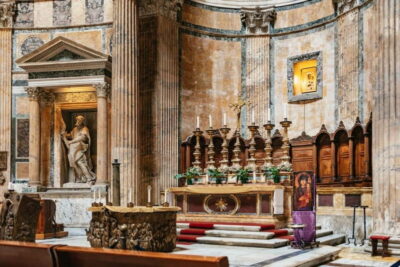
Rome: Pantheon Fast-Track Ticket and Official Audioguide
Read our review →
Rome: Colosseum & Forum with Audio Guide App -Optional Arena
Read our review →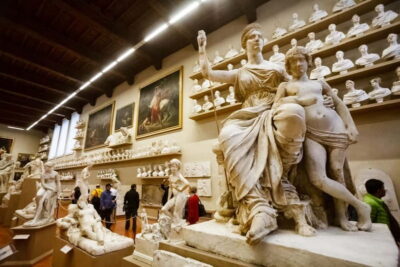
Florence: Timed Entry to Michelangelo’s David + Audio App
Read our review →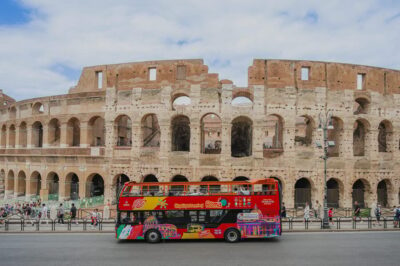
Rome: City Sightseeing Hop-on Hop-off Bus with Audioguide
Read our review →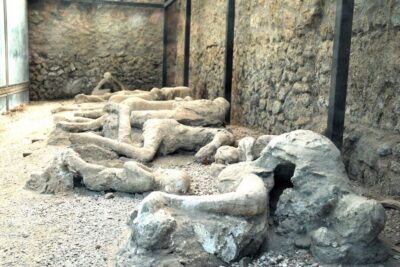
Venice: La Fenice Opera House Entry Ticket with Audio Guide
Read our review →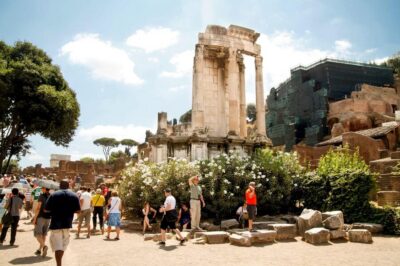
Rome: Colosseum, Forum, Palatine Hill Entry & Audioguide App
Read our review →
Rome: St. Peter’s Basilica & Dome Entry Ticket & Audio Tour
Read our review →Browse the lists this tour appears in