
Review · SPAIN
Fortaleza de la Mota Entrance Ticket with Audio Guide
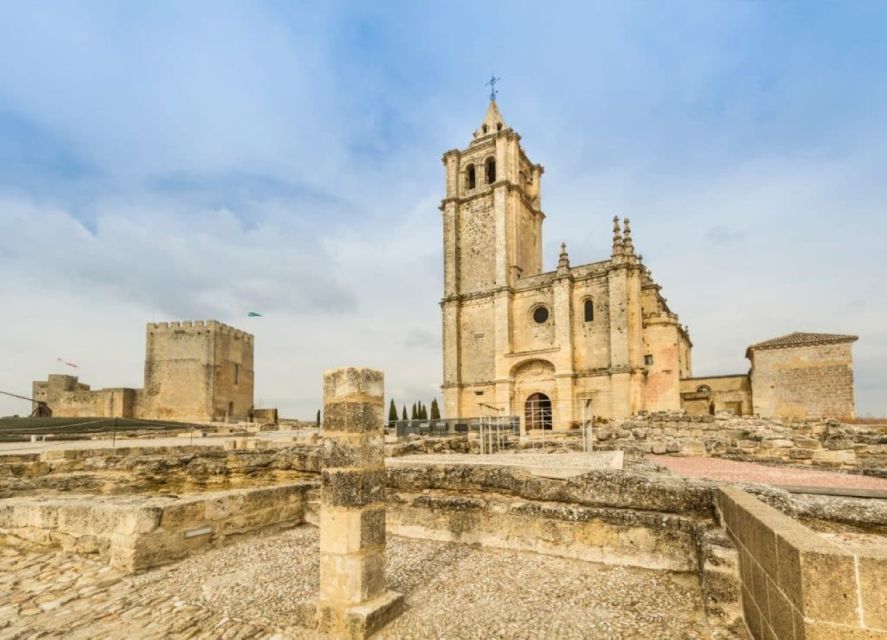
La Fortaleza de la Mota is not just a castle you glance at from below. It is a fortified medieval city, with gates, streets, homes, churches, storage spaces, and defensive towers enclosed within its walls. You can walk through the same urban framework that once guarded the border kingdoms of Castile.
I like the freedom of the map and self-guided audio tour, especially since you can set your own pace. I also like the audiovisual presentation in the Iglesia Mayor Abacial, which gives the ruins a clear story rather than leaving you to guess what each stone once meant. The main drawback is practical: the audio guide appears to require an app download, and the site is not suitable for people with mobility impairments.
Key points at a glance
- A medieval city, not only a castle: Explore gates, streets, houses, the Alcazaba, church, wineries, prison tower, and wall walk.
- A $9 entry price: The ticket includes admission, a monument map, and an audio guide in English, Spanish, French, German, and Italian.
- A 90-minute visit: The suggested duration is short enough for a half-day plan, but the many sections reward a steady pace.
- An audiovisual history lesson: A projection in the Iglesia Mayor Abacial recreates the story of the city at scheduled times.
- An app-related catch: Prepare for the possibility that you must download an app to use the audio guide.
- Not suitable for every visitor: Pets and food are not allowed, and the complex is not suitable for people with mobility impairments.
Why La Fortaleza de la Mota matters
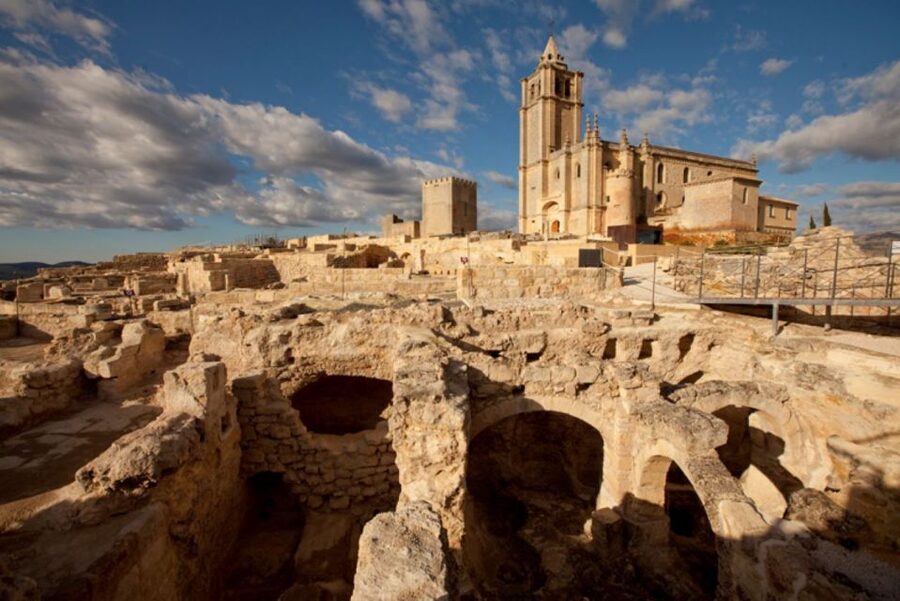
Alcalá la Real sits in Andalusia, and La Fortaleza de la Mota was built as a key border stronghold for the kingdoms of Castile. That position shaped everything about the site. The walls were not decoration. The entrances, towers, raised paths, and enclosed buildings formed a working defense system.
The most useful way to approach the fortress is to think of it as a small city under protection. You are not simply climbing to a lookout, taking a photo, and leaving. You are tracing how people entered, worshipped, stored supplies, moved through narrow streets, and defended the settlement.
The audio guide helps here. Without it, you could still appreciate the stonework and commanding position, but the complex might feel like a collection of ruins. With the guide, each part has a role. You learn why the doors were placed where they were, how the defensive sections connected, and what daily life required inside the walls.
This is why the visit suits people who enjoy heritage sites more than people searching for a quick scenic stop. The fortress asks you to pay attention to its layout.
More audio tours around Spain:
- Barcelona: Sagrada Familia Entry Ticket with Audio Guide
★ 4.6 · 105,312 reviews - Barcelona: Casa Batlló Entry with Self-Audioguide Tour
★ 4.7 · 25,359 reviews - Granada: Alhambra Entry Ticket with Audio Guide
★ 4.1 · 5,950 reviews
Entering through the strategic gates
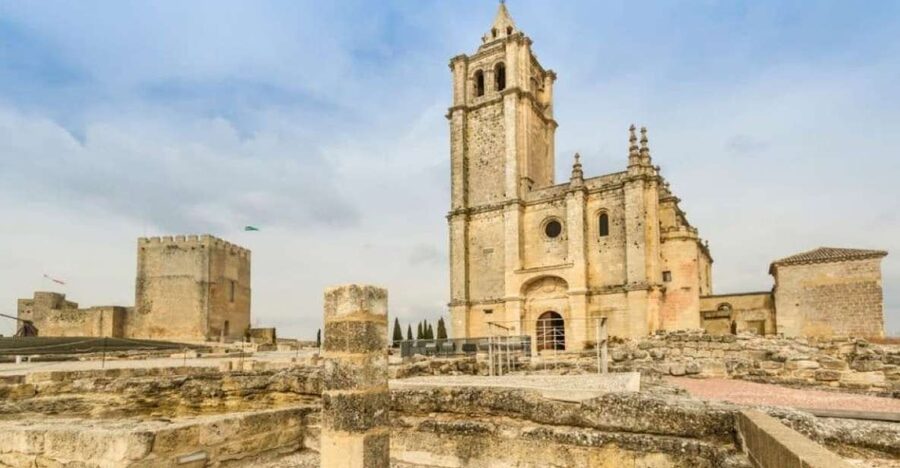
Your visit begins with the fortified entrances. These are more than a formal way into the complex. They show how the site controlled movement and protected the settlement from attack.
Use the map before you start walking. It is included with the ticket and gives you a simple way to understand the route. The complex includes several parts, and it is easy to lose your bearings once you begin moving among the walls, streets, and buildings.
The audio guide is useful from the start because it turns the gates into evidence of military planning. Listen for the explanation of how the entrances worked and why a border fortress needed more than one layer of protection.
The guide is available in English, Spanish, French, German, and Italian. Hosts and greeters are listed as speaking English, Spanish, German, and French, while the audio guide adds Italian to that selection. A special version is also available for children, which can help families keep younger visitors interested.
One practical warning: a review in Italian points to the required app download as a frustration that can distract from the visit. If you want the audio commentary, allow yourself a little time to deal with the app before setting off. The ticket includes the guide, but included does not always mean instant.
Walking the medieval streets and houses
Inside the walls, the streets and houses make the fortress feel more like a settlement than a military outpost. This is one of the most rewarding parts of the visit because it gives you a sense of ordinary movement within an extraordinary setting.
You can follow the urban framework and imagine how people lived around the central defensive structures. The available information does not provide details about individual houses or their original occupants, so the audio guide and map matter here. They help separate spaces that may otherwise look alike.
I recommend slowing down in this section. The site is advertised as a 1.5-hour experience, but that does not mean you should rush from sign to sign. Stop at the turns in the streets. Look at how the buildings relate to the walls. Notice how a city had to fit inside a space designed for protection.
The route also shows the limits of medieval life. A fortified city offered safety, but it could not spread freely beyond its defensive lines. The streets, homes, and public buildings all had to work within that boundary.
This is a good section for history-minded families. Children can use the special audio guide and treat the complex like a real-world puzzle: Which way would you enter? Where would defenders watch from? How would people reach the church or storage areas?
The Alcazaba and the defensive heart
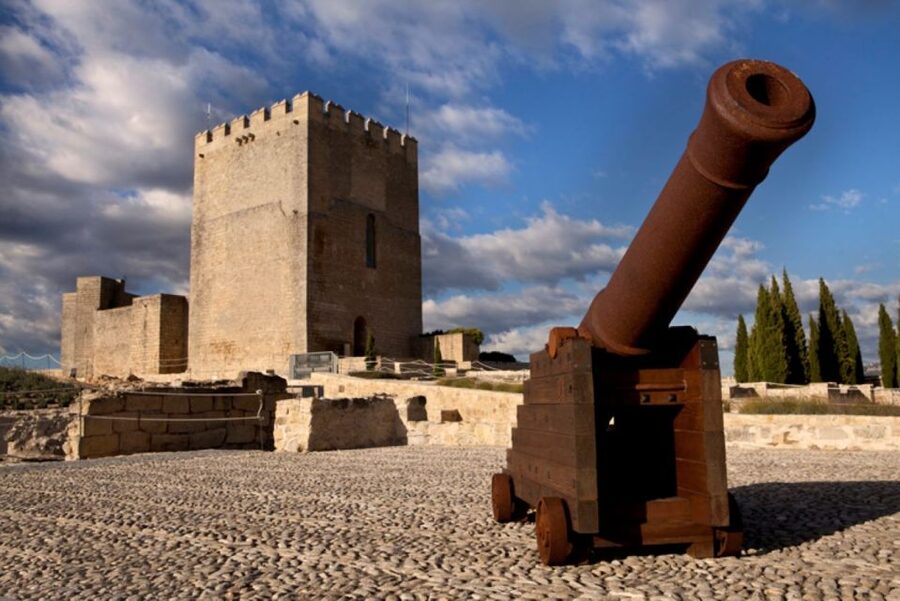
The Alcazaba forms the main military center of La Fortaleza de la Mota. It is the part of the complex where the fortress idea becomes clearest.
The visit lets you tour the Alcazaba along with its other dependencies. The exact order depends on how you move through the site, but you should give this area enough time to connect the separate walls and towers into one defense plan.
An audio guide is especially valuable in a place like this. Stone walls can look impressive but silent. The commentary gives you the political and military setting: La Mota served as a key guard and defense point because of its border position.
You do not need to be a specialist in medieval warfare to enjoy it. The basic questions are enough. What needed protection? Where could an attacker approach? How did the gates, walls, and towers work together? The guide is designed to answer those questions without requiring a separate expert-led tour.
For many visitors, the Alcazaba will be the strongest reason to buy the ticket. It gives the complex its sense of purpose.
Same sights, a different narrator:
- Casa Batllo Admission Ticket with Intelligent Audio Guide
★ 4.5 · 3,168 reviews - Madrid: Las Ventas Bullring Tour with Audio Guide
★ 4.6 · 3,154 reviews - Cordoba: Mosque-Cathedral E-Ticket with Audio Guide
★ 4.1 · 2,895 reviews - Nerja: Caves of Nerja Entry Ticket with Audio Guide
★ 4.6 · 1,616 reviews
The Iglesia Mayor Abacial and its scheduled projection
The Iglesia Mayor Abacial is one of the major stops within the fortress. The visit includes an audiovisual presentation projected inside the church at set times. It recreates the history of the city and provides a more structured account than the self-guided route alone.
Pay attention to the projection schedule when you arrive. The information provided does not give the exact times, only that the presentation runs at different set times. If you arrive just after one showing, you may need to organize the rest of your visit around the next one.
This is a small but important planning point. The church presentation is included, yet you may miss it if you simply wander without checking when it starts. It also gives you a useful pause in the middle of the visit, particularly if you have been walking through the open-air sections.
The church adds another layer to the complex. La Mota was not only a defensive site. It was also a place where religious and civic life took place within the protected settlement.
I like the mix of formats here. The map gives you orientation, the audio guide provides details as you walk, and the projection tells the larger story in one sitting. None of these tools replaces seeing the site itself, but together they make the visit easier to follow.
Wineries, the prison tower, and the wall walk
The tour includes the wineries, the Torre de la Cárcel, and the Adarve. Each area helps you read the fortress as a functioning city.
The wineries point to storage and supply. A fortified settlement could not depend only on its walls. It needed places for goods and provisions. The information supplied does not specify the exact contents or preservation methods, so use the audio commentary for the site’s particular explanation.
The Torre de la Cárcel, or Prison Tower, adds a less comfortable side of fortress life. Military defenses protected the settlement, but the same controlled spaces could also be used for confinement. The tower’s name gives you a direct reminder that the complex had civic and judicial functions as well as military ones.
The Adarve is the wall walk, and it is one of the sections where the defensive design becomes easiest to picture. Moving along the protected edge lets you understand how defenders monitored the approaches and connected different parts of the fortification.
Be realistic about the physical demands. The complex includes walls, towers, streets, and historic structures, and it is specifically not suitable for people with mobility impairments. Even if you are comfortable walking, take care around uneven historic surfaces and allow time rather than trying to complete the route in a hurry. No detailed accessibility information is provided, so contact the operator before booking if you have concerns.
What the $9 price really covers
At $9 per person, this is a modestly priced heritage visit. You are paying for entry to a large monumental complex, not a short stop at one isolated tower. The map, multilingual audio guide, and church projection are included, so the price represents good value if you plan to use all three.
The value is strongest for independent visitors. You get structure without being tied to a guide’s walking pace. You can pause in the streets, spend longer in the Alcazaba, or move quickly through a section that interests you less.
It is less ideal if you want a personal guide answering questions in real time. The experience is self-guided, even though English, Spanish, German, and French-speaking hosts or greeters are available. The supplied information does not promise a live guided tour.
The app issue also affects value. An included audio guide sounds simple, but downloading an app can take time and may require attention before you begin. If you prefer a fully low-tech visit, you might rely on the map and the physical site instead. Still, the audio commentary adds enough context to make the extra step worthwhile for many people.
Free cancellation is available up to 24 hours before the visit, and you can reserve now and pay later. Those terms are useful if your Andalusia plans are still shifting, though they do not change the site’s physical demands or the scheduled timing of the audiovisual presentation.
How to plan your 90 minutes
The stated duration is 1.5 hours. I would treat that as a sensible target for a focused visit, not a strict limit on how long you must stay.
Start by checking the projection time in the Iglesia Mayor Abacial. Then look over the map and decide whether you want to follow the site in a particular order or simply move through each marked section.
A practical sequence looks like this:
- Begin with the gates and main defensive access points.
- Continue through the streets and houses to understand the settlement’s urban shape.
- Spend focused time in the Alcazaba and related dependencies.
- Visit the Iglesia Mayor Abacial in time for the audiovisual presentation.
- Finish with the wineries, Torre de la Cárcel, and Adarve, or reverse those last sections according to the projection schedule.
The exact route is not fixed in the information provided, so think of this as a planning method rather than an official order.
Food is not allowed, and pets are not allowed. Plan around those rules before arriving. You should also avoid booking this as a casual stop for someone who cannot manage the site’s physical conditions.
Who should book La Fortaleza de la Mota
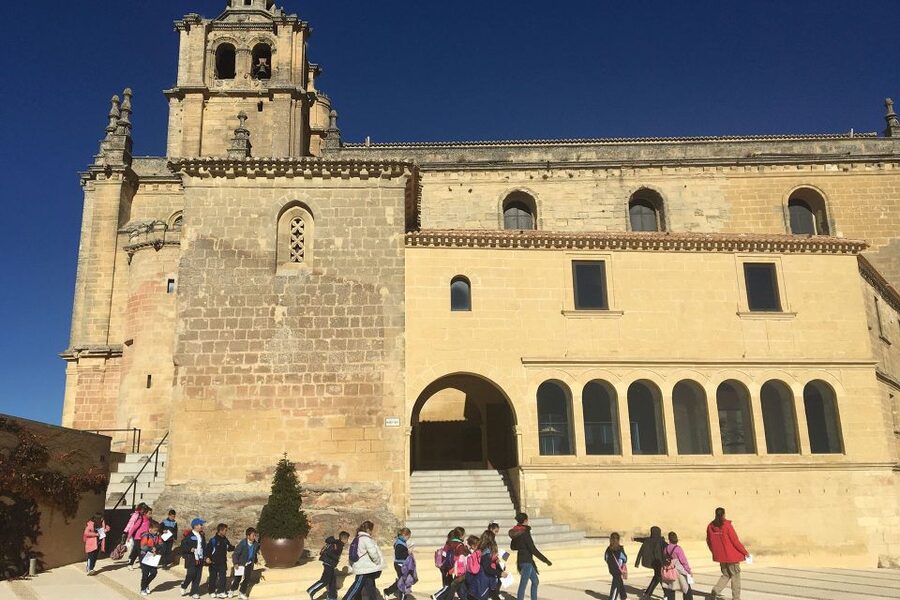
I would recommend this ticket to you if you enjoy castles, border fortifications, religious buildings, and old urban layouts. It is also a good choice if you prefer learning at your own pace and want several languages available.
Families can make good use of the children’s audio guide version. The complex offers enough variety to prevent the visit from becoming one long wall walk: gates, streets, houses, towers, a church, storage areas, and the Alcazaba all play different roles.
History lovers should plan to use the audio guide rather than treating it as optional background. The fortress is much easier to understand when you know why its doors, towers, streets, and protected spaces were arranged as they were.
I would hesitate to recommend it to you if you want a quick photo stop, a fully guided tour, or a site with easy access throughout. The app download may also annoy anyone who wants to walk straight in with no technical setup.
Should you book this ticket?
Book it if you want to explore a real fortified settlement rather than simply admire a castle exterior. For $9, the combination of admission, map, multilingual audio, and audiovisual presentation gives you a solid amount of historical context for a 90-minute visit.
Before paying, check the start times and consider the projection schedule. Be ready for the audio-guide app, leave pets and food behind, and think honestly about the mobility limits of the site.
If those conditions suit you, La Fortaleza de la Mota offers an affordable, well-structured look at how a medieval border city worked. It rewards curiosity more than speed.
FAQ
How long does the visit to La Fortaleza de la Mota take?
The stated duration is 1.5 hours. You can use the map and audio guide to set your own pace within that visit.
What is included in the ticket?
The ticket includes entrance to the Monumental Complex of the Fortress of La Mota, a map of the monument, and an audio guide.
Which languages are available for the audio guide?
The audio guide is available in English, Spanish, French, German, and Italian.
Is there an audio guide for children?
Yes. A special version of the audio guide is available for children.
Is the audiovisual presentation included?
Yes. The visit includes an audiovisual presentation in the Iglesia Mayor Abacial. It is shown at set times.
Is the experience suitable for people with mobility impairments?
No. The activity is listed as not suitable for people with mobility impairments.
Are pets allowed inside La Fortaleza de la Mota?
No. Pets are not allowed.
Can I bring food?
No. Food is not allowed at the site.
Can I cancel the booking?
Yes. You can cancel up to 24 hours in advance for a full refund. You can also reserve now and pay later.
New audio tours around Spain
- Entrance to the Alhambra and Generalife with Audio Guide★ 3.5 · 38 reviews
- Alhambra Ticket with Audio Guide in Granada★ 3.5 · 151 reviews
- Montsacopa: An audio tour in the Volcano in the Centre of the City★ 4.5 · 3 reviews
- Mosque-Cathedral of Córdoba E-Ticket with Audio Guide★ 3.5 · 15 reviews
- Cádiz TukTuk Tour with Audio Guide★ 5.0 · 4 reviews
- Vejer de la Frontera: The White Pearl of Andalusia Audio Guide★ 5.0 · 2 reviews
- Bilbao Scavenger Hunt and Highlights Self Guided Audio Tour★ 4.5 · 4 reviews
- Self-Guided Audio Tour-The Surrealist Barcelona of Dalí and Gaudí★ 3.5 · 8 reviews
Spain Audio Tours, compared.
Barcelona: Sagrada Familia Entry Ticket with Audio Guide
Read our review →
Barcelona: Casa Batlló Entry with Self-Audioguide Tour
Read our review →
Granada: Alhambra Entry Ticket with Audio Guide
Read our review →
Casa Batllo Admission Ticket with Intelligent Audio Guide
Read our review →
Madrid: Las Ventas Bullring Tour with Audio Guide
Read our review →
Cordoba: Mosque-Cathedral E-Ticket with Audio Guide
Read our review →
Nerja: Caves of Nerja Entry Ticket with Audio Guide
Read our review →
Madrid: Prado Museum Ticket with In-App Audio Guide
Read our review →Browse the lists this tour appears in