
Review · BARCELONA
Gaudi’s Crypt in Colonia Güell with Audioguide
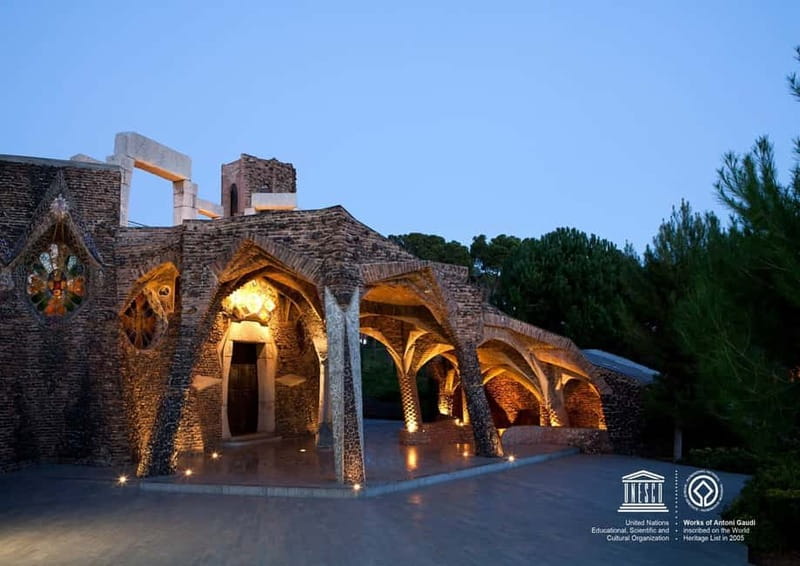
Gaudí’s Crypt is not a grand cathedral. It is a compact, wonderfully strange church where Antoni Gaudí tested twisted columns, unusual shapes, and structural ideas that later influenced the Sagrada Família. The crypt sits in Colonia Güell, a former textile village about 20 minutes from Barcelona by train.
I like the chance to see Gaudí’s work in a quieter setting, and I like that the ticket adds the Interpretation Center and village streets, not just the church itself. The main drawback is getting there: trains and buses serving Colonia Güell may not run often, so the short journey on paper can take much longer in practice.
Key points to know before you go
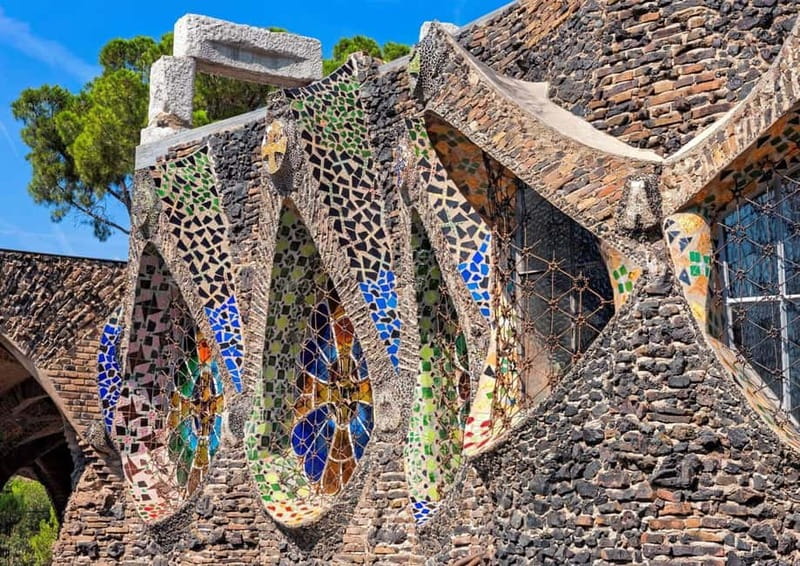
- Gaudí’s architectural laboratory: The crypt is often linked to the Sagrada Família because Gaudí experimented here with structural solutions and interior forms.
- A UNESCO World Heritage Site: The church received this status in July 2005.
- More than one building: You can walk through Colonia Güell and see other Modernist buildings tied to the former textile settlement.
- Audioguide in 10 languages: Choose from Spanish, English, French, German, Italian, Japanese, Russian, Catalan, Chinese, and Korean.
- A low-cost Barcelona side trip: At $11 per person, the ticket offers good value if you want Gaudí with less city traffic and fewer major-sight crowds.
- Plan around public transport: From Barcelona’s Pl. Espanya station, take the FGC railway to Colònia Güell on lines S33, S8, or S4.
Why Gaudí’s Crypt matters
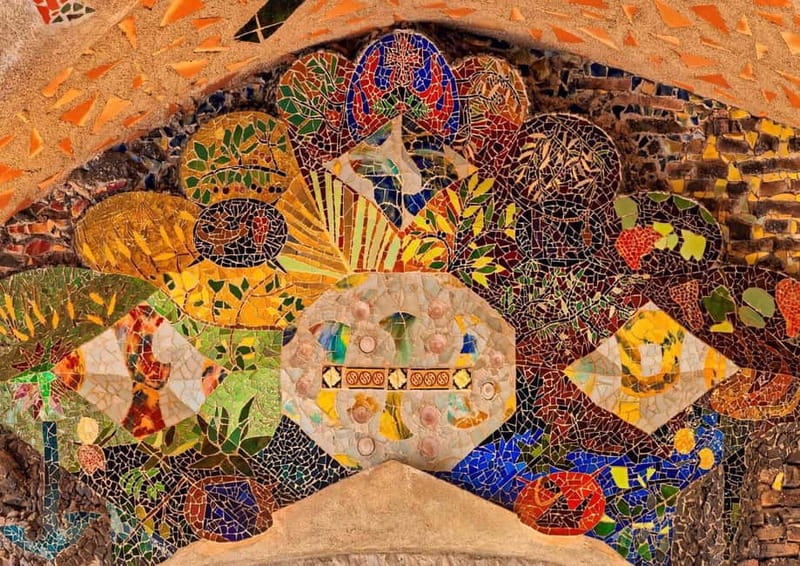
Gaudí’s Crypt is one of the best places near Barcelona to see the architect thinking through a problem rather than simply presenting a finished masterpiece. The church is known for its twisted columns, and its forms feel more experimental than polished.
That is part of the appeal. At the Sagrada Família, you see Gaudí’s ideas on a huge scale. At Colonia Güell, you can look more closely at the ideas themselves. The crypt shows how he worked with structure, weight, curves, and irregular shapes.
The site is also linked to Eusebi Güell, the industrialist who developed Colonia Güell as a textile settlement. The village was designed to support factory workers and their families, so the visit gives you more than a single piece of architecture. You are also seeing a planned community shaped by industry, religion, housing, and Modernist design.
The church was never completed as originally intended. That unfinished story is explained at the Interpretation Center, where models show how the church might have looked if construction had continued. For anyone interested in Gaudí, these models add useful context. You can compare the small crypt you see with the larger building that was planned above it.
More audio tours around Barcelona:
- Barcelona: Sagrada Familia Entry Ticket with Audio Guide
★ 4.6 · 105,312 reviews - Barcelona: Casa Batlló Entry with Self-Audioguide Tour
★ 4.7 · 25,359 reviews - Casa Batllo Admission Ticket with Intelligent Audio Guide
★ 4.5 · 3,168 reviews
Getting from Barcelona to Colonia Güell
The usual route begins at Pl. Espanya station in Barcelona. From there, take the Ferrocarrils de la Generalitat de Catalunya, commonly called FGC, to Colònia Güell station. Lines S33, S8, and S4 serve the station.
The advertised journey is about 20 minutes from Barcelona, but you should think of that as the train ride rather than the entire outing. You still need to allow time for finding the correct platform, waiting for a train, walking from the station, and returning to Barcelona.
Service frequency matters. A German visitor found the journey took over an hour because buses ran only every half hour. That does not mean every visit will take that long, but it is a useful warning. Check the departure times before leaving Barcelona, especially if you have a timed plan for the rest of the day.
If you have the Hola Barcelona card, transportation to Colonia Güell is included. That can make the outing especially good value, since your $11 ticket then covers the main admission rather than the train as well.
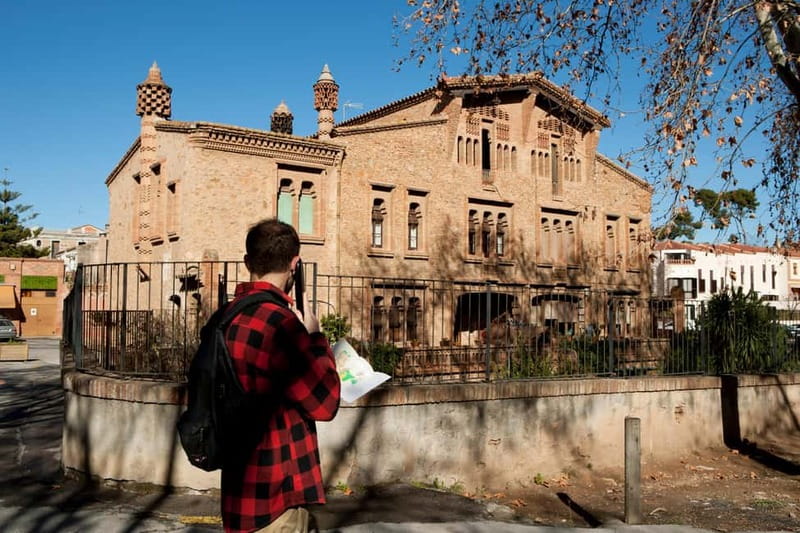
The meeting point is the Visitors’ Center in Colonia Güell. Start there rather than heading straight to the church. You can collect your bearings, use the map, and understand how the separate parts of the visit fit together.
Beginning at the Visitors’ Center
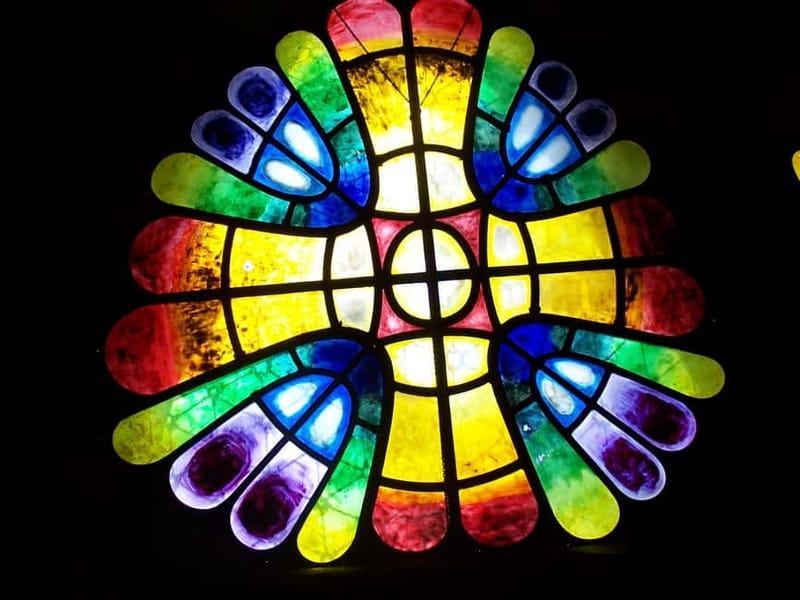
The Visitors’ Center is the practical starting point for the visit. Your admission includes a map, which is useful because Colonia Güell is not just one attraction with a single entrance.
The map helps you connect the crypt with the village streets and other Modernist buildings. This matters because the character of Colonia Güell comes from the relationship between the church and the wider settlement. You are not simply checking off a famous building. You are walking through the setting that gave the project its purpose.
Allow yourself enough time to look around before entering the crypt. The village is described as quiet, and that slower pace is a welcome change from central Barcelona. You might find the streets more interesting if you are willing to pause rather than rush directly to the main site.
Inside the church of twisted columns
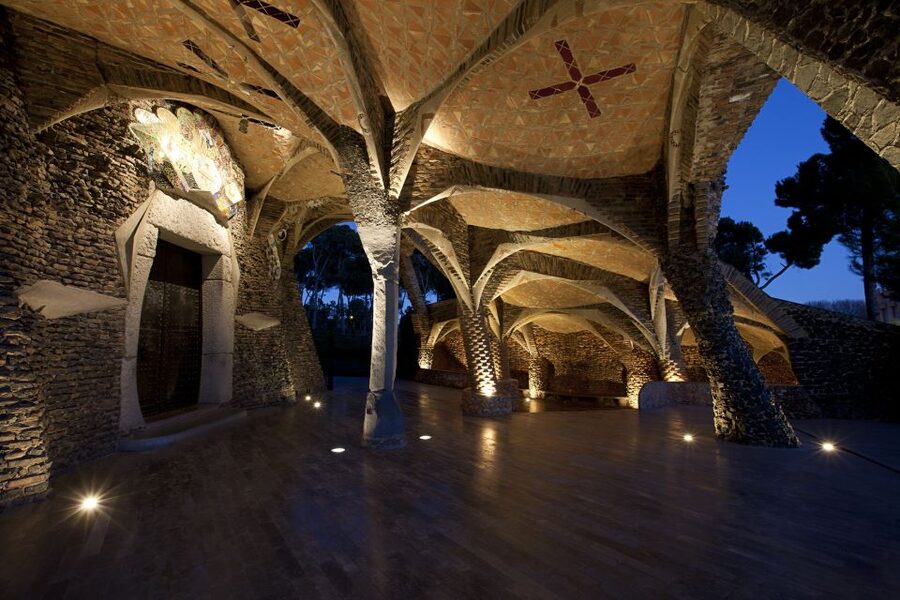
The crypt is the heart of the visit. Its nickname, the church of the twisted columns, tells you what to look for, but it does not fully explain the effect. The columns give the interior an unusual rhythm and make the structure feel less formal than a conventional church.
This is where the experience works best for visitors who enjoy seeing how buildings are made. You can focus on the shapes, supports, and arrangement of the interior rather than expecting the scale of a major basilica.
The crypt is also valuable because Gaudí used it as a testing ground. Several architectural solutions developed here are connected with later work at the Sagrada Família. You are seeing an important stage in his creative process, not only a small religious building.
The audioguide helps place the details in context. It is available in 10 languages: Spanish, English, French, German, Italian, Japanese, Russian, Catalan, Chinese, and Korean. Since the visit is self-guided, you can listen at your own pace and spend more time with the parts that interest you.
No individual guide is named for this experience, and there is no live guided tour described. That means you should choose it for independent sightseeing rather than personal commentary or group storytelling.
Same sights, a different narrator:
- La Pedrera-Casa Mila Admission Ticket with Audioguide
★ 4.5 · 1,032 reviews - Gaudi´s Casa Vicens Skip the Line Ticket with Audioguide
★ 4.5 · 685 reviews - Erotic Museum Admission Ticket with Audioguide
★ 5.0 · 527 reviews - Barcelona: Mies van der Rohe Pavilion Ticket and Audio Guide
★ 4.6 · 380 reviews
What the audioguide adds
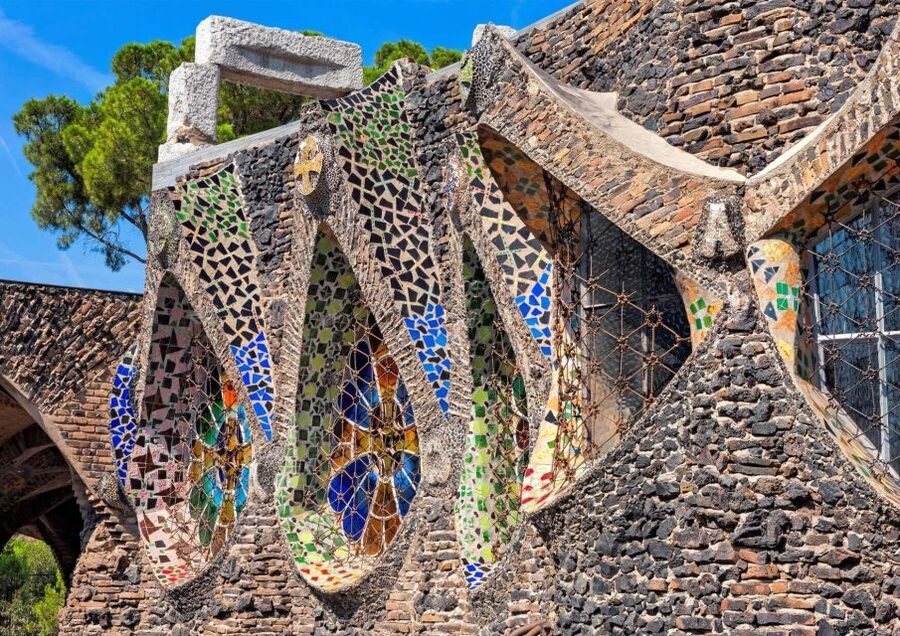
The audioguide is important here because the crypt can be easy to underestimate. Without background, you may see an unusual church and move on. With the explanation, the building becomes a record of Gaudí’s experiments.
Use it to understand why the columns matter, how the crypt relates to the planned church above it, and why Colonia Güell has a place in the story of Catalan Modernism. The audioguide will not turn the visit into a full architectural course, but it gives you the framework needed to notice more.
English is included, along with nine other languages. That makes the ticket suitable for international visitors who want clear information without arranging a private guide.
If you prefer to wander quickly, the audioguide also lets you keep the visit flexible. You are not tied to a group schedule. The ticket is valid for one day, and you can check available starting times when booking.
The Interpretation Center and unfinished plans
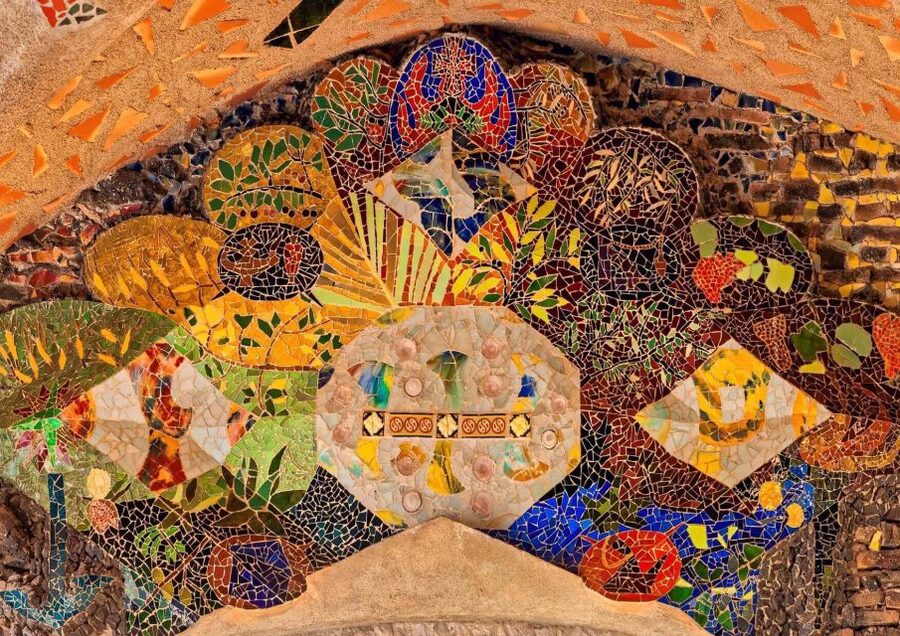
The Interpretation Center is in the former workers’ co-operative building. Its permanent historical exhibition explains Colonia Güell and the people and ideas behind it.
This stop is easy to skip if you are focused only on Gaudí’s architecture. I would not skip it. The crypt makes more sense once you understand that it belonged to a textile colony, not an isolated country church.
The center also includes models showing how the church might have looked if construction had been completed. These models are particularly useful because the existing crypt is only part of the original plan. They give you a way to picture the intended scale and design without pretending that the unfinished project exists today.
You should expect interpretation rather than a hands-on attraction. The value comes from the added context. If you enjoy architecture, planning, or social history, this part may be nearly as useful as the crypt itself.
Walking through Colonia Güell
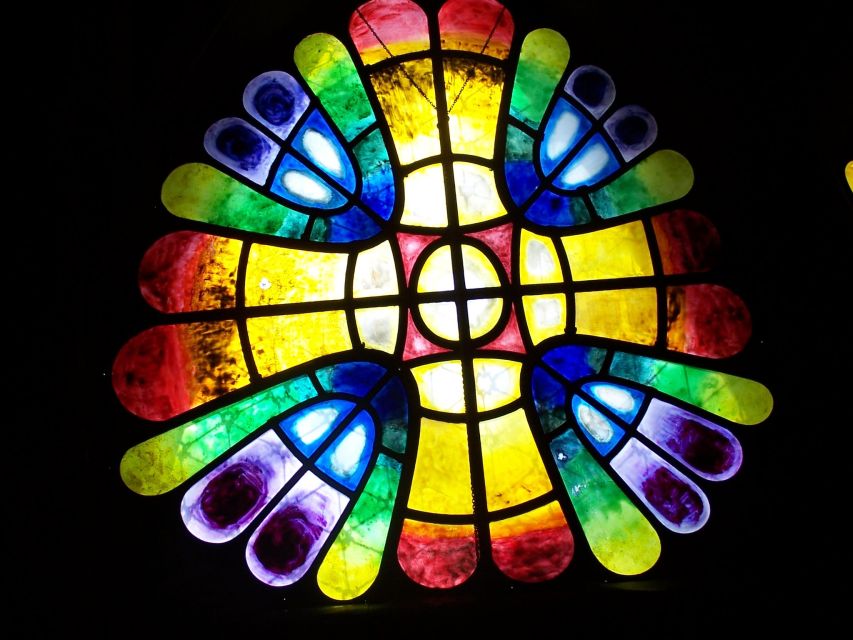
After the indoor visits, use the map to walk through the colony. The streets contain other Modernist buildings, and they help show how the settlement functioned as a complete community.
The strongest reason to add this walk is that it turns the experience into a place visit rather than a quick church stop. You can see how Gaudí’s crypt fits into a wider project shaped by Eusebio Güell and the textile industry.
Do not expect every building in Colonia Güell to be a major Gaudí masterpiece. The attraction is the collection of Modernist details and the quiet setting. Some visitors may find the village walk less exciting than the crypt itself, but it is still worth including if you have come all the way from Barcelona.
The visit suits people who prefer a slower side trip. You can look at the buildings, follow the map, and listen to the audioguide without the pressure of a large central attraction. Families, architecture fans, and repeat visitors to Barcelona may find this especially appealing.
How much time should you allow?
The ticket is valid for one day, but the supplied information does not set a fixed visit length. You should plan more than the time needed to enter the crypt, since the ticket also includes the Interpretation Center and a map for exploring Colonia Güell.
At a minimum, allow time for:
- The FGC journey from Barcelona and the return trip
- Finding the Visitors’ Center
- Seeing the crypt with the audioguide
- Visiting the Interpretation Center
- Walking through the colony’s streets
Your exact schedule will depend on train times and how closely you follow the audioguide. The important point is not to treat Colonia Güell as a rushed stop between central Barcelona sights. Transport delays can quickly eat into a tight schedule.
If you have only a short window in Barcelona, the Sagrada Família may be the more obvious choice. If you have already seen the major sights, or you want a quieter architectural outing, Colonia Güell earns the extra planning.
Is $11 a fair price?
At $11 per person, this is a strong-value admission for a UNESCO World Heritage Site, especially because the ticket includes three useful elements: entry to the crypt, the audioguide, and the Interpretation Center.
The value is better if you already have a Hola Barcelona card, since transportation to Colonia Güell is included with that card. If you need to pay separately for transport, include that cost when comparing this outing with other Barcelona activities.
The ticket is not a guided tour, so you are paying for access and interpretation rather than a person leading you around. That keeps the price low, but it also means you need to take charge of your own timing and route.
For $11, I would not expect a full-day attraction. Think of it as a focused cultural visit with a village walk and transport planning attached. The price is fair for the amount of architectural and historical material included.
Who should book this experience?
I would recommend Gaudí’s Crypt to you if you enjoy:
- Gaudí and Catalan Modernist architecture
- Smaller sites with a calmer setting
- Self-guided visits
- Seeing how a major architect developed ideas over time
- Adding a short outing beyond central Barcelona
- Exhibitions that explain the social setting behind a building
You may want to skip it if your Barcelona schedule is very tight, you dislike changing trains, or you want a live guide with personal stories. The crypt is not a replacement for the Sagrada Família, and the journey can be inconvenient when services do not line up.
It is also a good choice for repeat visitors who have already seen Barcelona’s headline sights. You get a different side of Gaudí, along with a look at a former industrial community rather than a busy city center.
Practical details before you book
The experience is wheelchair accessible. The audioguide comes in 10 languages, including English, Spanish, French, German, Italian, Japanese, Russian, Catalan, Chinese, and Korean.
You can cancel up to 24 hours in advance for a full refund. The reserve-now, pay-later option lets you hold a place without paying at the time of booking, which is useful when your Barcelona plans are still shifting.
Check the available starting times before booking. Although the ticket is valid for one day, the transport schedule remains the main practical issue. Lines S33, S8, and S4 leave from Pl. Espanya, and waiting for the next service can add a surprising amount of time.
Should you book Gaudí’s Crypt?
Book it if you want a less familiar Gaudí site, a low ticket price, and the chance to see architecture in its working context. The crypt, exhibition, and village walk make a fuller visit than the church alone.
Skip it if you have only a few hours in Barcelona or if the thought of coordinating FGC trains sounds like more work than fun. For everyone else, this is a worthwhile side trip, especially with a Hola Barcelona card and a relaxed half-day plan.
FAQ
Where is Gaudí’s Crypt located?
Gaudí’s Crypt is in Colonia Güell, a former textile village in Catalonia, Spain, about 20 minutes from Barcelona by train.
How do I get to Colonia Güell from Barcelona?
Take the Ferrocarriles de la Generalitat de Catalunya from Pl. Espanya station to Colònia Güell station. Lines S33, S8, and S4 serve the route.
Is transportation included with the ticket?
Transportation is included if you have the Hola Barcelona card. The admission details otherwise cover the crypt, audioguide, Interpretation Center, and map.
What does the $11 ticket include?
The ticket includes admission to Gaudí’s Crypt, an audioguide, entry to the Interpretation Center, and a map.
Which languages are available for the audioguide?
The audioguide is available in Spanish, English, French, German, Italian, Japanese, Russian, Catalan, Chinese, and Korean.
Is the experience valid for one day?
Yes. The ticket is valid for one day, and you should check the available starting times before booking.
Is Gaudí’s Crypt wheelchair accessible?
Yes, the experience is wheelchair accessible.
Can I cancel my booking?
Yes. You can cancel up to 24 hours in advance for a full refund. A reserve-now, pay-later option is also available.
New audio tours around Barcelona
- Self-Guided Audio Tour-The Surrealist Barcelona of Dalí and Gaudí★ 3.5 · 8 reviews
- Barcelona Self-Guided Audio Tour★ 3.0 · 6 reviews
- Palau de la Musica Catalana Admission Ticket with Audioguide★ 4.5 · 246 reviews
- Self-Guided Audio Tour – Legends of the Gothic Quarter★ 4.5 · 6 reviews
- Montjuïc Cable Car Entry Voucher with Audio Tour on Your Phone★ 3.5 · 37 reviews
- Montjuic Park Walking Tour with Audioguide on Your Smartphone★ 3.0 · 4 reviews
- Self-Guided Audio Tour of Barcelona City★ 3.0 · 2 reviews
- Sagrada Familia Skip The Queue With Audio Guide Tour★ 4.5 · 20 reviews
Barcelona Audio Tours, compared.
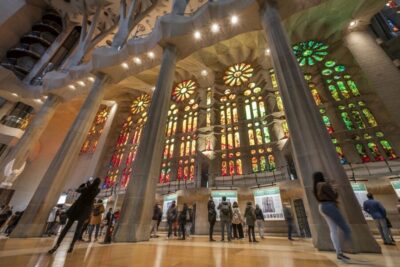
Barcelona: Sagrada Familia Entry Ticket with Audio Guide
Read our review →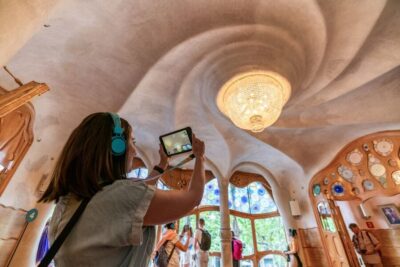
Barcelona: Casa Batlló Entry with Self-Audioguide Tour
Read our review →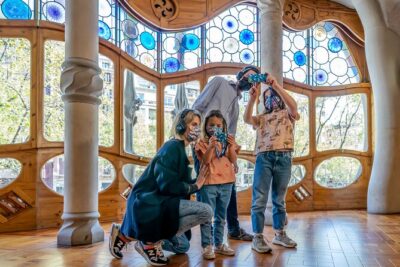
Casa Batllo Admission Ticket with Intelligent Audio Guide
Read our review →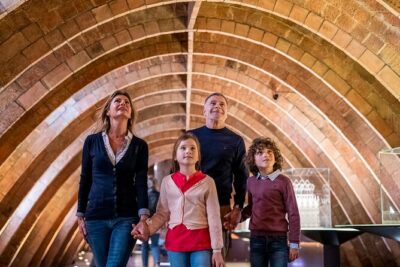
La Pedrera-Casa Mila Admission Ticket with Audioguide
Read our review →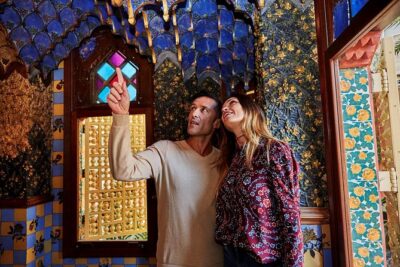
Gaudi´s Casa Vicens Skip the Line Ticket with Audioguide
Read our review →
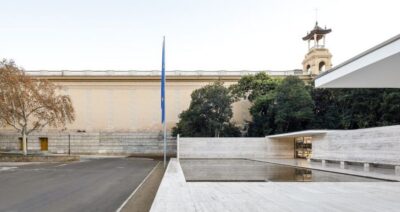
Barcelona: Mies van der Rohe Pavilion Ticket and Audio Guide
Read our review →
Barcelona: Montjuïc Cable Car Ticket with Audio Guide
Read our review →Browse the lists this tour appears in