
Review · NAPLES
Herculaneum: Skip-the-Line Entry Ticket with Audio Guide
Herculaneum gives you something Pompeii cannot: a smaller ancient city where wooden doors, beams, colorful frescoes, and household details survived the eruption of Vesuvius in 79 AD. The ruins feel close and personal. You can look into homes, shops, fountains, temples, and public spaces without needing to cross a vast site.
I like the freedom to set your own pace, and I like the audio guide’s detailed explanations of Roman homes and daily life. The site is compact enough for a focused two- to three-hour visit, though you can spend four hours or more if you stop often. The main catch is that the ticket and audio-guide arrangements can be confusing, and the audio numbers do not always match the buildings clearly.
Key points to know before you go
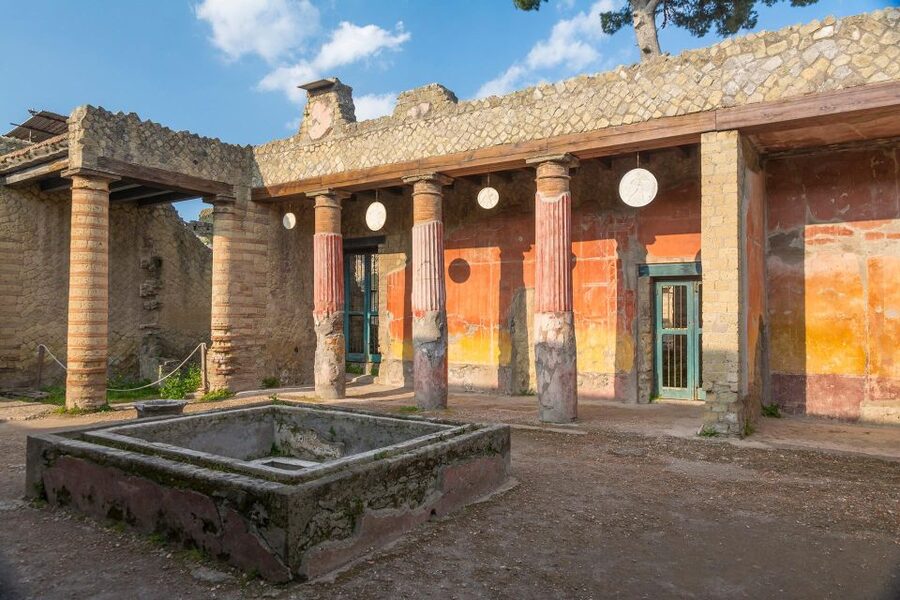
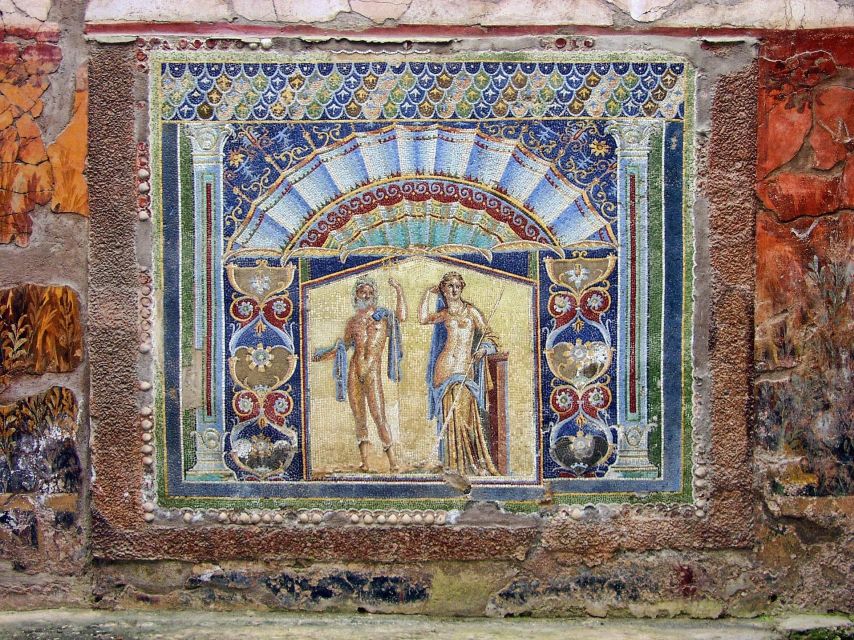
- See unusually well-preserved Roman interiors: Frescoes, mosaics, wooden features, doors, and furniture give Herculaneum a more domestic feel than many ancient sites.
- Plan on two to four hours: The park is smaller than Pompeii, but there is more here than the compact layout first suggests.
- Use the audio guide at your own pace: The commentary is detailed and available in English, French, German, Italian, and Spanish.
- Bring comfortable shoes: Expect cobblestones, uneven ground, and some steep steps.
- Ask exactly what your booking includes: Some options include the entry ticket and audio guide, while the audio-guide-only option requires you to obtain or buy entry separately.
- Arrive early if you can: The park is generally calmer at opening time, although the skip-the-line benefit may be limited when queues are short.
Why Herculaneum feels different from Pompeii
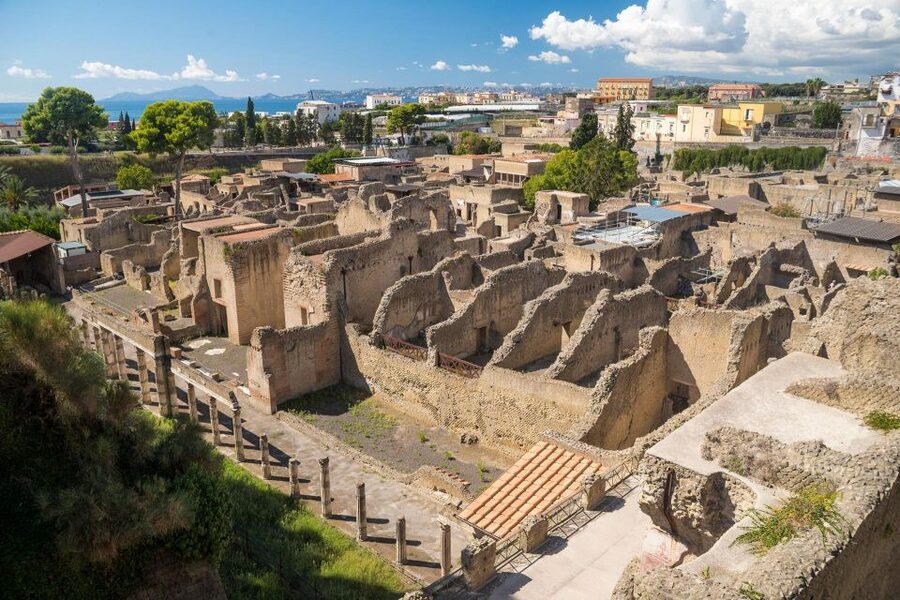
Herculaneum was also buried by the eruption of Mount Vesuvius in AD 79, but the volcanic material preserved parts of the town in remarkable detail. You are not simply looking at walls and foundations. In many buildings, you can still see painted decoration, patterned floors, wooden elements, and the shape of ordinary living spaces.
The town is smaller than Pompeii, which makes it easier to understand as you walk. I find that useful because you can spend less time worrying about navigation and more time noticing how rooms connect. A wealthy home may open onto decorated reception rooms, while more modest spaces show a plainer side of Roman life.
The scale also suits a mixed itinerary. You can visit Herculaneum in a morning, spend a few focused hours there, and still have time for another activity in the Naples area. If you want to study every house and exhibit, however, do not treat it as a quick stop. Several people spend three or four hours here, and a longer visit is easy to justify.
The site also carries a darker side. Near the ancient shoreline area, you can see the place where around 300 people died while waiting for rescue from the sea. The remains and boat exhibit make the final part of the visit particularly moving. This is not just a collection of old buildings. It is a town interrupted by disaster.
More Skip-the-Line Audio Tours in Naples:
- Mount Vesuvius: Skip-the-Line Ticket and Smart Digital Guide
★ 4.2 · 2,780 reviews - Pompeii: Skip-the-Line Entry Ticket with Audio Guide or Tour
★ 4.1 · 1,364 reviews - Prague: Skip-the-line Castle Ticket and Optional AudioGuide
★ 4.3 · 11,121 reviews
Entering the park and sorting out the ticket
The meeting point is the Herculaneum ticket office at the Archaeological Park. Show your voucher there, but pay close attention to the option you selected when booking. The advertised experience can be offered with the entry ticket included, while the option called Herculaneum: Audio Guide no ticket requires the archaeological admission to be selected separately.
That distinction matters. One person paid for what seemed to be the audio guide and then had to pay for entry at the park. Read the booking details before you set out, especially if the price looks unusually low.
The phrase skip-the-line also needs a practical reading. At quiet times, there may be little or no queue, so the benefit is modest. At busier times, the ticket process can help, but the arrangement is not always obvious. You may be directed between the ticket office, an audio-guide desk, and another service point.
Some visitors have found the entry process quick and simple. Others had to wait for the audio device, then join another line for admission. If people in the regular queue do not understand where you are meant to go, staff assistance is useful. Go to the office named on your voucher rather than assuming the main queue is the right place.
A passport or ID card is listed as something to bring. The audio device may require identification as a deposit, and an insurance card has also been accepted in at least one reported case. Ask about this at collection, and keep your identification available.
Getting the most from the audio guide
The audio guide is the main feature of this self-guided visit. It lets you choose where to stop and how long to listen, rather than following a fixed group route. You can linger in a house, skip a room, or return to an earlier section when something catches your eye.
The commentary covers Roman life as well as the buildings themselves. That is important at Herculaneum because the details can be easy to miss without context. The guide helps explain the difference between the living spaces of wealthy residents and the simpler quarters used by enslaved people.
The system uses numbered points of interest. Some versions provide a handheld device with the map and commentary, while the audio guide may also be presented through a smartphone-style device. One useful feature mentioned in the experience details is the ability to view selected objects in 3D and 360 degrees, showing how they may have appeared before the eruption.
The weak point is navigation. Several numbered cues do not always match the physical site, and some buildings are not clearly marked. The guide can occasionally jump to another location or begin partway through a description. It may take a few minutes to understand how the numbers work.
The map helps, but it is not always handed out clearly. Ask for a printed map at the start if one is available, and check the digital map on the device. A few people found the map and audio sequence confusing at first, yet the system became easier once they stopped trying to follow the numbers in strict order.
Do not assume you have to listen in numerical order. The site can be explored in whatever sequence suits you. I would first walk a short distance to learn the layout, then choose audio points based on the building in front of me. That prevents you from spending the whole visit looking down at the guide.
The audio is available in English, French, German, Italian, and Spanish. It is generally praised for its detail, although some have found the volume too quiet or the information slightly out of date. Earbuds may be useful, but Bluetooth compatibility is not guaranteed, so do not count on pairing your own wireless set.
What you see first: streets, shops, and public spaces
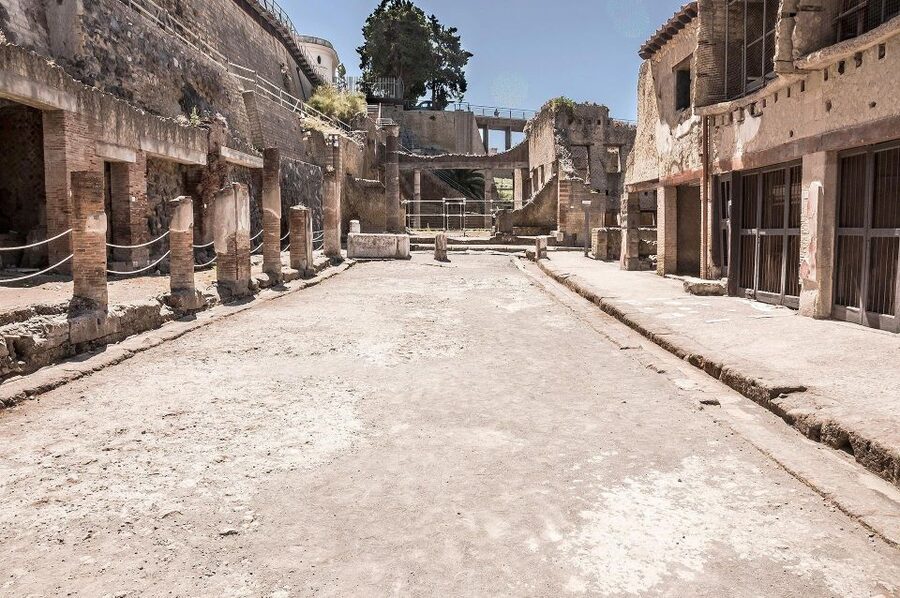
Use the map to locate the ancient market, public fountains, and main streets. These areas help you picture Herculaneum as a working town rather than a set of grand private villas.
The market area is valuable because it shifts your attention from wealthy homes to trade and daily errands. The fountains show how water was part of public life. Even when a building is partly closed, the street plan helps you see how homes, shops, and shared spaces fitted together.
The park is easy enough to walk around, but it is not a modern paved attraction. Cobblestones and uneven surfaces require steady footing, and some entrances include steep steps. Wear shoes with a firm sole, particularly if you plan to stay for several hours.
You may also find quiet places to sit and take in the view across the excavated town. That matters on a hot day, when listening to a long audio explanation in direct sun is tiring. One optional guided upgrade was handled with regular stops in the shade, which is a sensible approach in summer.
More audio tours around Naples:
- From Naples: Caserta Palace Ticket and Train with Audioguide
★ 4.3 · 348 reviews - Naples: Pompeii Self Guided Audio Tour
★ 3.9 · 211 reviews - Naples: National Archaeological Museum Tour & Digital Guide
★ 4.2 · 177 reviews - Naples: National Archaeological Museum audio guide
★ 4.0 · 155 reviews
The houses where daily life remains visible
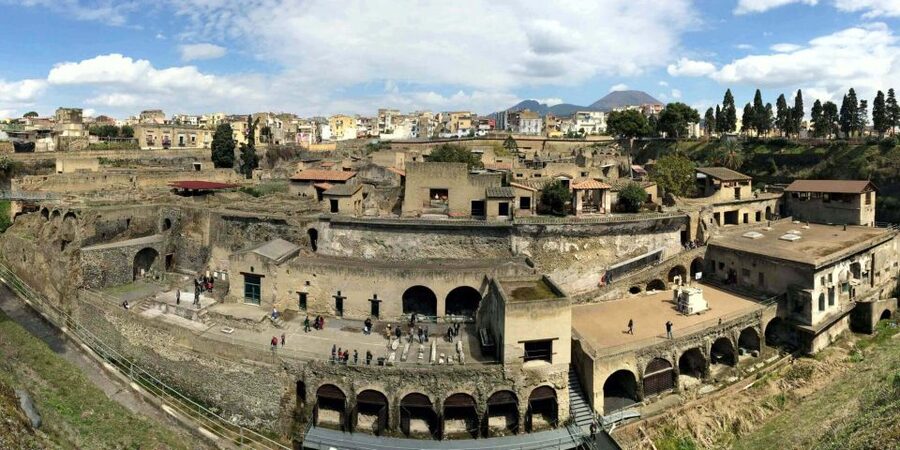
The villas are the heart of Herculaneum. Here, the preservation gives you more than a sense of a building’s footprint. You can study wall paintings, mosaics, wooden fittings, and room arrangements that make Roman domestic life easier to imagine.
The decorated homes show how wealthy residents used color, mythological images, open rooms, and carefully finished floors to impress visitors. Look for depictions of ancient gods in temples and private spaces. The audio guide adds the needed explanation, since a painted room can otherwise look merely pretty rather than ceremonial or social.
Then compare those interiors with the smaller and plainer areas associated with enslaved people. That contrast is one of the most useful parts of the visit. Herculaneum does not present Roman life as a single grand lifestyle. It shows a sharp division between those who owned property and those who served within it.
Wooden doors and beams are especially striking. Most ancient Roman sites leave you with stone, brick, and fragments. At Herculaneum, surviving wood makes the rooms feel less remote. You can better understand where a doorway stood, how a room was finished, and how much care went into an ordinary household object.
The preservation is not uniform. Some buildings or exhibits may be closed, and internal signs are not always clear. If a room does not seem to match the audio description, check the number on the map rather than assuming you have missed something.
Frescoes, mosaics, temples, and the Antiquarium
Set aside time for the painted walls and patterned floors. The colors and detail are among the strongest reasons to visit Herculaneum, particularly if you have already seen Pompeii and want a more concentrated look at Roman interiors.
The temples provide a different mood. Depictions of gods and religious spaces show how belief fitted into the town’s public and private life. The audio commentary is useful here because it can explain what you are looking at without requiring you to join a scheduled group.
Near the entrance or exit, depending on the route and current access arrangements, the Antiquarium adds important context. It contains artifacts and furniture connected with the eruption and the town. The boat exhibit is another highlight, offering a direct link to the people who tried to escape toward the sea.
The final area can be poignant. The shoreline shelters are associated with the roughly 300 people who waited for rescue and died there. I would not rush this section. It changes the tone of the visit from architectural curiosity to a clear human story.
How much time should you allow?
Two hours is enough for a brisk visit to the main streets, several houses, and the most important exhibits. Three hours gives you time to listen properly and pause for photographs or rest.
I would allow three to four hours if Herculaneum is a main reason for visiting the area. That gives you room to explore the market, public fountains, villas, temples, museum displays, and shoreline exhibits without treating the audio guide as background noise.
A full day is possible for people who like archaeology and want to move slowly. There are places to sit, and the compact layout makes it easy to revisit a building. A café and snack stop are available, though toilet facilities have received poor marks. Plan accordingly and carry water, especially in hot weather.
The park is often calmer early in the day. Later, it can become busier, so an opening-time visit is useful if you want quieter rooms and easier listening. The site is still more manageable than Pompeii in scale, but do not expect every passage to be empty.
Getting there and planning around the visit
Herculaneum is in Campania, and the park is walkable from the local station. One reported route from Naples used the EAV train from Garibaldi, followed by a walk of about 12 minutes from the station.
The exact starting time depends on availability when you book. Since the experience is valid for one day rather than being a short fixed tour, you have some flexibility once inside. Still, check the entry conditions and selected time before leaving your hotel.
There are places to eat near the entrance, including a restaurant across the road, and a packed lunch can work well if you want to spend several hours at the site. Keep food planning simple. The main value here is time inside the ruins, not a complicated meal stop.
Is the $15 price good value?
At around $15 per person, the experience can be strong value if the entry ticket and audio guide are both included. You get access to one of the best-preserved Roman sites in the Naples area and a commentary service that gives structure to a self-guided visit.
The value drops if you book the audio-guide-only option without realizing that admission is separate. Check the final price and inclusions before paying. You may also find the skip-the-line label less useful during a quiet period when the ticket queue is already short.
The audio guide is not a substitute for a private archaeologist. A live guide can answer questions, choose a route, and explain why a particular room matters. Optional upgrades have included guides named Tony, Fabio, and Amara, with Fabio receiving particular praise for a steady explanation of the site. That option costs more, but it may suit you if the numbering system sounds frustrating or if you prefer conversation.
For independent visitors who want control over the pace, the basic audio option makes sense. You can pause, skip, and revisit without keeping up with a group. At this price, that freedom is the main benefit.
Who should book this Herculaneum visit?
I would choose this for anyone interested in Roman homes, archaeology, architecture, or the human story of the Vesuvius eruption. It works well for first-time visitors and for people who have already seen Pompeii and want a smaller site with more intact domestic details.
Families can manage it, but children may tire on the cobbles and steps. The audio guide offers useful stories, though younger children may need shorter stops and regular breaks.
This is also a good choice if you prefer independent sightseeing. You are not locked into a group route, and you can spend five minutes or half an hour in a room. If you need constant wayfinding help or want to ask questions as you go, pay more for a live guide if that upgrade is available.
Should you book it?
Book it if you want a self-guided visit to a compact but remarkably detailed Roman town. The villas, wooden features, frescoes, mosaics, Antiquarium, and boat exhibit give Herculaneum a clear identity of its own, not simply a smaller version of Pompeii.
Before booking, confirm that your selected option includes the archaeological entry ticket. Bring identification, comfortable shoes, and patience for the audio numbering. Arrive early, ask for the map, and allow at least three hours if you want to hear the commentary and take in the most moving sections without rushing.
FAQ
Does the experience include entry to Herculaneum?
Some booking options include the Herculaneum entry ticket and audio guide. The option labeled Herculaneum: Audio Guide no ticket does not include admission, so check the selected option carefully.
Where do I collect the ticket and audio guide?
You show your ticket at the Herculaneum Archaeological Park ticket office. The audio guide may be collected from a separate office or service desk near the entrance.
Is the audio guide available in English?
Yes. Audio commentary is available in English, French, German, Italian, and Spanish.
How long does a visit take?
The activity is valid for one day. Most people can see the main areas in two to three hours, while a slower visit with the museum exhibits and detailed audio stops can take four hours or longer.
Do I need to bring identification?
Yes. A passport or ID card is listed among the recommended items. Identification may also be requested as security when collecting the audio device.
Is a map included?
A map is included in the experience details, but it may be provided in print or through the audio-guide device. Ask for a map when you collect the guide, since the building numbers are not always easy to follow.
Is the site easy to walk around?
The park has cobblestones, uneven ground, and some steep steps. Comfortable shoes are important, and you should expect to walk through ancient streets and buildings rather than along smooth modern paths.
Can I cancel the booking?
You can cancel up to 24 hours in advance for a full refund. A reserve-now-and-pay-later option is also available for some bookings.
New audio tours around Naples
- National Archaeological Museum synchronized audioguided tour without QR or app★ 4.0 · 4 reviews
- Naples: National Archaeological Museum Tour & Digital Guide★ 4.2 · 177 reviews
- Naples: Royal Palace Entry Ticket with Digital Audio Guide★ 4.1 · 146 reviews
- Naples:Pompeii SkiptheLine Ticket audioguide Round-Trip Bus★ 4.1 · 18 reviews
- Naples: Herculaneum Entry Ticket with Digital Audio Guide★ 4.0 · 14 reviews
- Naples Audioguide – TravelMate app for your smartphone★ 4.6 · 7 reviews
- Naples from Above: Castel Sant’Elmo Ticket & Audio Guide★ 4.0 · 53 reviews
- Naples: daily/weekly transport ticket, map and audio guide★ 4.8 · 4 reviews
Naples Audio Tours, compared.

Mount Vesuvius: Skip-the-Line Ticket and Smart Digital Guide
Read our review →
Pompeii: Skip-the-Line Entry Ticket with Audio Guide or Tour
Read our review →
From Naples: Caserta Palace Ticket and Train with Audioguide
Read our review →

Naples: National Archaeological Museum Tour & Digital Guide
Read our review →
Naples: National Archaeological Museum audio guide
Read our review →
Naples: Royal Palace Entry Ticket with Digital Audio Guide
Read our review →
Naples from Above: Castel Sant’Elmo Ticket & Audio Guide
Read our review →Browse the lists this tour appears in