
Review · PISA
Pisa: Camposanto and Cathedral Entry Tickets and Audio Guide
Pisa’s Camposanto is the quieter, more atmospheric part of Piazza dei Miracoli, with marble arcades, Roman sarcophagi, frescoes, and works of art that deserve more than a quick glance. This ticket pairs it with entry to the Cathedral, so you see two very different sides of the famous square.
I like the separate entrance, which can save you time at the ticket office, and I like being able to explore at your own pace with an audio guide in five languages. The main drawback is the guide itself: it is easy to use for some people, but the route can be hard to follow and the explanations may feel too brief.
Key points
- The Camposanto is the main reason to book: Its marble cloister holds Roman sarcophagi, frescoes, and important works of art.
- Cathedral entry is included: You can visit Pisa’s great Romanesque church as part of the same self-guided route.
- The audio guide works in five languages: Choose English, Italian, Spanish, French, or German.
- The visit lasts about one hour: That makes it a useful choice for a short stop in Pisa.
- Collect everything at the Sinopie Museum entrance: Present your reservation at the Audioguide Desk in Piazza dei Miracoli.
- Plan around church services: A selected time may overlap with Mass, when access to parts of the Cathedral can be limited.
Why the Camposanto deserves your time
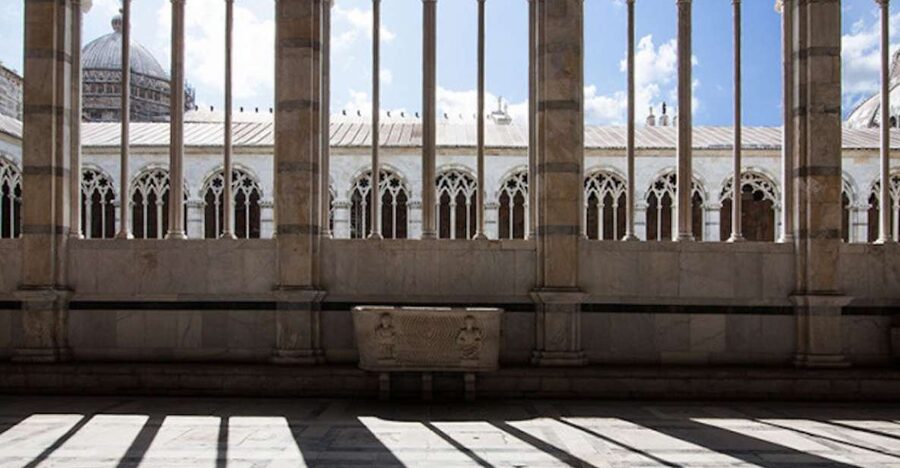
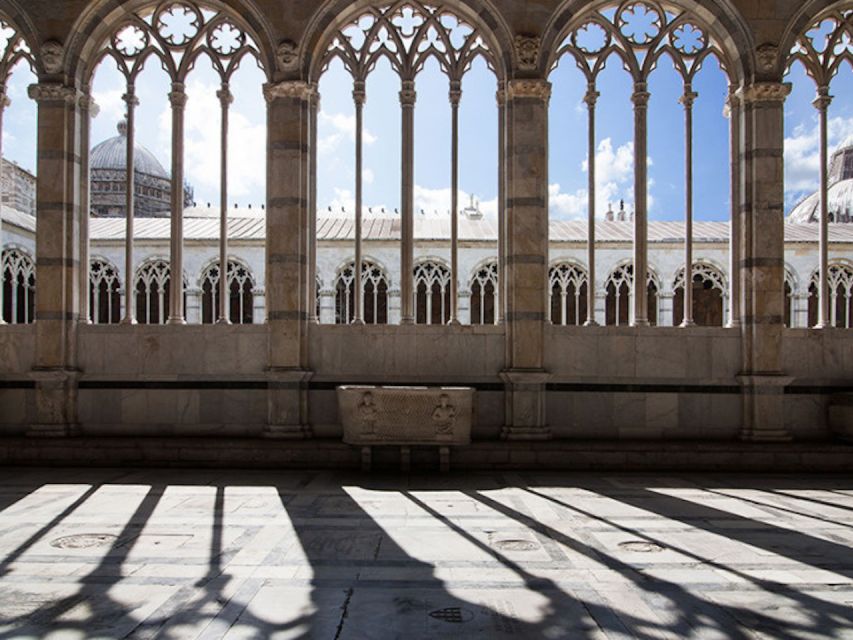
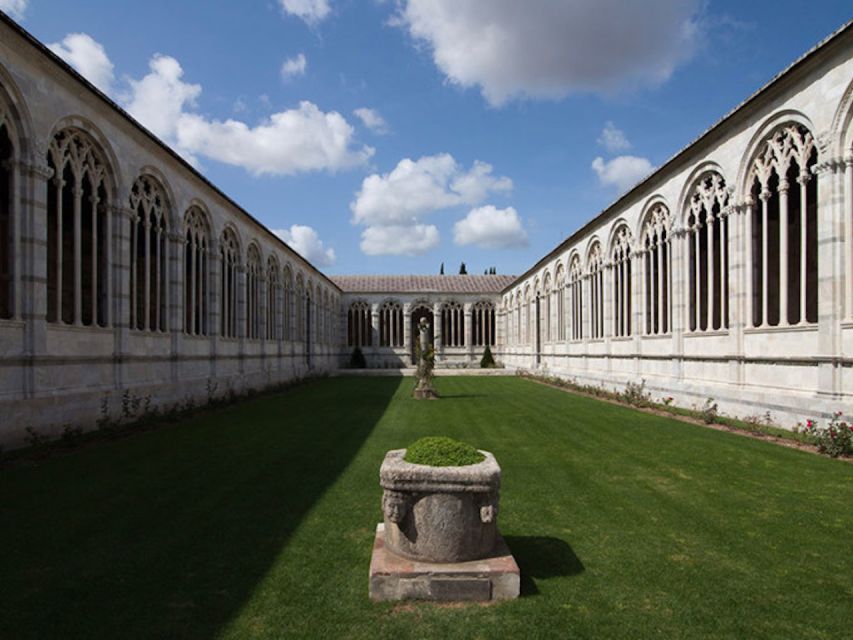
Most people come to Pisa to photograph the Leaning Tower. That is understandable, but the Camposanto often provides the more thoughtful visit. It is a monumental cemetery built around a long, open courtyard, with covered marble walkways framing the central ground.
Inside, you can see Roman sarcophagi, frescoes, and other works of art. The setting changes the way you look at them. Instead of moving from one isolated object to another in a crowded museum room, you encounter art within a solemn architectural space designed for remembrance.
The Camposanto also gives you a better sense of the scale of Piazza dei Miracoli. Pisa’s Cathedral, Baptistery, and tower get the attention, but the cemetery completes the group. Its long arcades and pale stone make the square feel like a planned religious center rather than a collection of famous buildings.
The audio guide is useful here because the Camposanto can be difficult to read without context. It points out the major features and gives you a route through the space. Still, keep your expectations in check. The information is not equally detailed at every stop, and you may need to pause and look around to match the commentary with the object or section in front of you.
More Church and Cathedral Audio Tours in Italy
- Rome: St. Peter’s Basilica & Dome Entry Ticket & Audio Tour
★ 4.2 · 7,537 reviews - Florence: Cathedral & Brunelleschi’s Dome Ticket & Audio App
★ 4.4 · 6,973 reviews - Vatican & Sistine Chapel Ticket with Optional Audio Guide
★ 4.1 · 5,405 reviews
Collecting your ticket in Piazza dei Miracoli
You do not begin at the main ticket office. Go to the Audioguide Desk by the entrance to the Sinopie Museum, in Piazza dei Miracoli, and present your reservation. This is an important detail, since arriving at the wrong counter can eat into a one-hour visit.
Bring your passport or identity card. The instructions specifically require an ID, so do not leave it at your hotel.
The separate entrance is one of the strongest practical reasons to choose this option. Pisa’s monumental square can be crowded, especially in the main sightseeing hours. A skip-the-line arrangement does not make the square empty, but it can remove one annoying step from your visit: waiting to buy the ticket before you can enter.
The collection point also provides the audio guide. The route is self-guided, so you are not joining a live walking group or following a guide through the buildings. That gives you flexibility, but it also means you must manage the order and pace yourself.
Inside the Camposanto: marble, sarcophagi, and frescoes
Start with the Camposanto if you want the most distinctive part of the experience first. The building combines the feeling of a cemetery with the scale of a monumental gallery. Its covered walkways protect you from the sun and frame the works in a calm setting.
The Roman sarcophagi are among the most striking objects. Their presence reflects Pisa’s long connection with the ancient Roman world and the way later generations reused and valued classical pieces. Look closely at the carved details rather than treating them as decoration along the wall.
The frescoes give the interior a different mood. They are not simply colorful additions to the architecture. They were made for a sacred setting, and the audio guide helps explain what you are seeing and why the works matter.
You may find the audio route less straightforward than expected. One common problem is knowing exactly where you are standing in relation to the next stop. If the commentary refers to a feature that is not immediately obvious, stop the recording and use the time to orient yourself. The guide is more helpful when you treat it as a set of prompts rather than a complete tour delivered without effort.
The app itself is reported to be simple to use, which is good news when you want to spend your time looking at the buildings rather than fighting with your phone. The weak point is depth. The explanations may leave you wanting more, especially if you already have an interest in medieval art or architecture.
Pisa Cathedral and its Romanesque design
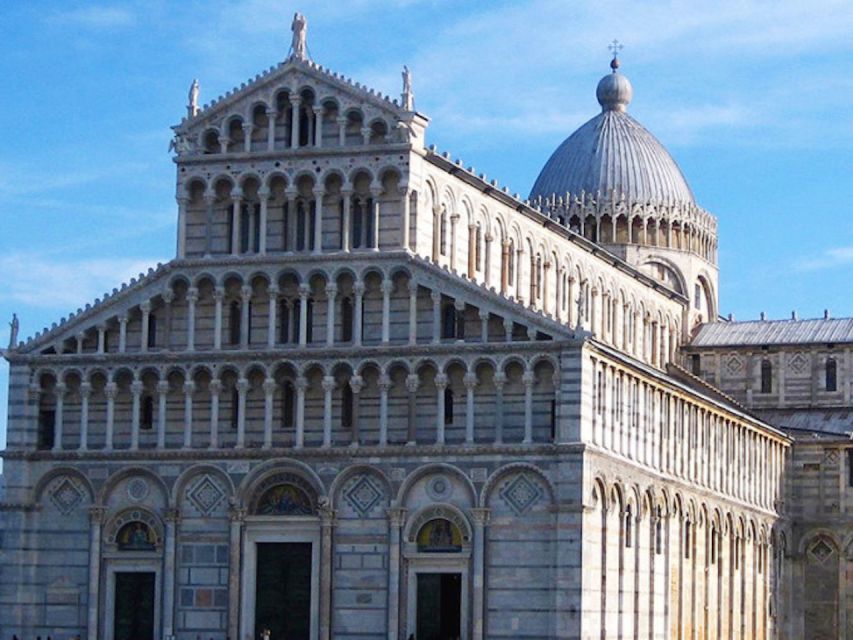
Entry to the Cathedral is included, and this gives you a valuable second stop after the Camposanto. The Cathedral is one of the major examples of Italian Romanesque architecture highlighted by the route.
The experience here is different from the cemetery. The Camposanto asks you to notice individual objects and painted surfaces. The Cathedral asks you to look at the building as a whole, then move between architectural details and works of art inside.
Use the audio guide to follow the Cathedral route, but also give yourself a few quiet moments without narration. Look at the relationship between the interior and exterior design. The building is not important only because it is located beside the Leaning Tower. It is a major work in its own right, and the audio commentary helps separate the Cathedral from the more famous tower next door.
Your access may not be complete if a Mass is taking place. One scheduled time has been reported to coincide with a service, leaving only part of the Cathedral open. That is not necessarily a flaw in the ticket itself, but it is a real planning issue. If seeing every accessible section matters to you, check the timing before you commit and ask at the desk if a service will affect entry.
The Cathedral can also feel less satisfying if you expect the audio guide to explain every detail. The route provides historical points and orientation, but it is not a substitute for a specialist art historian. You will get the most from it by looking carefully and allowing yourself time between stops.
Same sights, a different narrator:
- Rome: Pantheon Fast-Track Ticket and Official Audioguide
★ 4.5 · 27,353 reviews - Rome: Colosseum & Forum with Audio Guide App -Optional Arena
★ 4.2 · 24,770 reviews - Florence: Timed Entry to Michelangelo’s David + Audio App
★ 4.6 · 19,496 reviews - Rome: City Sightseeing Hop-on Hop-off Bus with Audioguide
★ 4.0 · 16,045 reviews
How the one-hour timing works
The stated duration is one hour. That is enough for a focused visit to both sites, especially if you want the main architectural and artistic highlights rather than a long study session.
A sensible order is:
- Collect the audio guide and ticket at the Sinopie Museum entrance.
- Visit the Camposanto first, allowing time for the sarcophagi, frescoes, and arcades.
- Continue to the Cathedral and listen to the sections on its Romanesque architecture.
- Leave a few minutes for returning the audio guide if required by the desk.
The one-hour format suits a short Pisa stop, a shore excursion schedule, or a day when you are also seeing other parts of Tuscany. It is less suitable if you like to linger over every fresco or read every detail at your own pace.
You should also remember that the one-hour estimate does not mean you will be finished with Piazza dei Miracoli in one hour. It covers this particular route. The square itself contains several major sights, and this ticket does not include every monument.
The Baptistery is a useful example. Information about its opening status has not always been accurate in the app, so do not assume that a note about closure applies to your exact date. This ticket is for the Camposanto and Cathedral, not a promise of entry to the Baptistery.
Audio guide languages and ease of use
The audio guide is available in English, Italian, Spanish, French, and German. That choice is helpful for couples or families who prefer to listen in different languages, though each person should confirm how the equipment or app is supplied at the desk.
The most positive practical point is the delivery process. The Audioguide Desk is organized, and the application is described as simple to operate. You should still give yourself a few minutes at the start to select your language and understand the route.
The main limitation is the level of explanation. Some sections are informative and well organized, while others may feel short. The route can also be confusing if you are not sure which object the audio is describing.
Here is the best way to use it:
- Pause between stops instead of letting the narration rush you.
- Match the description to the architecture before moving on.
- Keep your bearings inside the Camposanto, where similar arcades can make the route feel unclear.
- Use the audio guide as a framework, then spend extra time with the objects that interest you.
That approach helps you avoid the biggest frustration: standing in the wrong part of the building while the commentary talks about something behind you.
Dress rules and practical access
The Cathedral is an active religious building, so modest clothing is required. Shorts and skirts are listed as not allowed. Dress with covered legs to avoid a problem at the entrance.
You also need a passport or ID card. Carry the same document used for the reservation if possible, and keep it easy to reach.
The experience is listed as wheelchair accessible. The visit uses a separate entrance and a self-guided format, which can make it easier to manage your pace. Specific access details inside each monument are not provided, so if you have particular mobility needs, confirm the route with the desk before entering.
There is no transport included. You make your own way to Piazza dei Miracoli, then find the Audioguide Desk near the Sinopie Museum entrance. In practice, the hardest part is not the ticket itself but locating the correct collection point in a busy square.
Is $23 a fair price?
At $23 per person, this is not the cheapest way to spend an hour in Pisa, but the price can make sense if you value time and want a guided structure without paying for a private guide.
The value comes from three things:
- Skip-the-line entry for the Camposanto
- Free Cathedral access
- An audio guide in five languages
If you are already planning to visit both buildings, the combination is convenient. You avoid buying separate access at the last minute and gain commentary for the two main stops.
The value is weaker if you only want a quick look inside the Cathedral or if you expect a long, detailed lecture. The audio guide has been described as too brief by some users, and the route is not always easy to follow. You are paying partly for convenience, not only for interpretation.
I would compare the price with the time you have. If you have one hour and a busy Pisa schedule, the skip-the-line setup may be worth it. If you have plenty of time and prefer to wander without audio commentary, you may not need this particular package.
Who should book this Pisa ticket?
I would recommend it to first-time visitors who want the Camposanto and Cathedral covered in a short, orderly visit. It is also a good fit for anyone who prefers listening in English, French, German, Italian, or Spanish rather than reading signs or joining a live group.
Families and independent sightseers may appreciate the freedom to pause, move on, or spend extra time at a sarcophagus or fresco. The one-hour length also works well when Pisa is one stop in a larger day.
I would be more cautious if you want expert-level art history. The commentary gives useful background, but it may not answer every question. I would also hesitate if your schedule is fixed around a particular Cathedral time, since a Mass can limit access to parts of the building.
Should you book it?
Book this experience if you want a short, practical visit to two important monuments, and if skipping the ticket-office line matters to you. The Camposanto is the real reward, while the Cathedral adds major Romanesque architecture and a second layer of context.
Skip it if you want a long specialist tour, dislike audio apps, or have no flexibility around religious services. At $23, the package earns its price through convenience and included access, not through a large amount of commentary.
For most visitors with only an hour in Piazza dei Miracoli, it is a sensible choice. Just arrive at the correct desk, bring ID, dress modestly, and allow yourself time to get oriented before the audio starts.
FAQ
How long does the Pisa Cathedral and Camposanto experience last?
The stated duration is one hour. This covers the self-guided route through the Camposanto and Cathedral.
Where do I collect the ticket and audio guide?
Collect them at the Audioguide Desk in Piazza dei Miracoli, by the entrance to the Sinopie Museum. Present your reservation there.
Which languages are available for the audio guide?
The audio guide is available in Italian, English, Spanish, French, and German.
Is entry to Pisa Cathedral included?
Yes. The package includes free access to the Cathedral, along with skip-the-line tickets for the Camposanto.
Do I need to bring identification?
Yes. A passport or identity card is listed as required, so bring one with you.
Are shorts and skirts allowed?
No. Shorts and skirts are listed as not allowed. Dress modestly for entry to the religious sites.
Can I cancel the booking?
You can cancel up to 24 hours in advance for a full refund. The reservation can also be made with a pay-later option.
New audio tours around Italy
- Lecce Walking Tour with Audio and Written Guide by a Local★ 4.0 · 38 reviews
- Private Audio Guided Walking Tour in Lecce★ 4.0 · 7 reviews
- Private Audio Guided Walking Tour in Como★ 3.0 · 3 reviews
- Como Walking Tour with Audio and Written Guide by a Local★ 4.5 · 30 reviews
- Finance and Nobility: Explore medieval Genoa on a self-guided audio tour★ 4.5 · 7 reviews
- Genova Walking Tour with Audio and Written Guide by a Local★ 4.5 · 33 reviews
- Udine Walking Tour with Audio and Written Guide by a Local★ 4.0 · 2 reviews
- Florence: Uffizi Gallery Timed Entry Ticket with Audio★ 3.0 · 3 reviews
Pisa Audio Tours, compared.
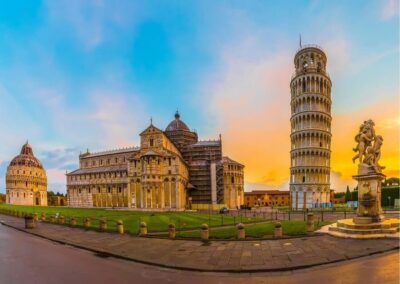
Timed Entrance to Leaning Tower Pisa & Cathedral with Audio
Read our review →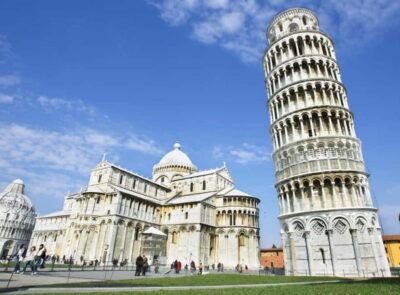
Pisa: Tower and Miracle Square with Skip-Line & Audio Guide
Read our review →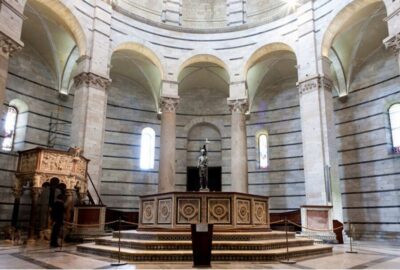
Pisa: Baptistery and Cathedral Ticket with Audio Guide
Read our review →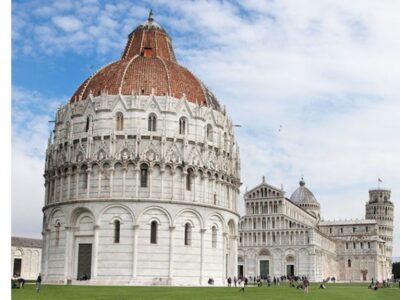
Pisa: Square of Miracles Entry Tickets and Audio Guide
Read our review →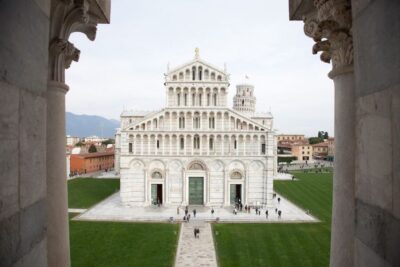
Pisa: Opera del Duomo Museum, Cathedral Ticket & Audio Guide
Read our review →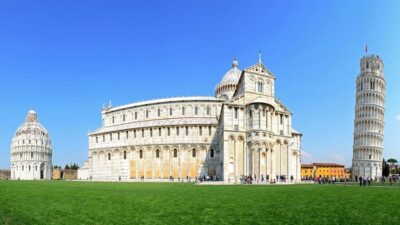
Pisa Audioguide – TravelMate app for your smartphone
Read our review →Browse the lists this tour appears in