Review · ITALY
Rome: Mamertime Prison Entrance Ticket with Audio guide
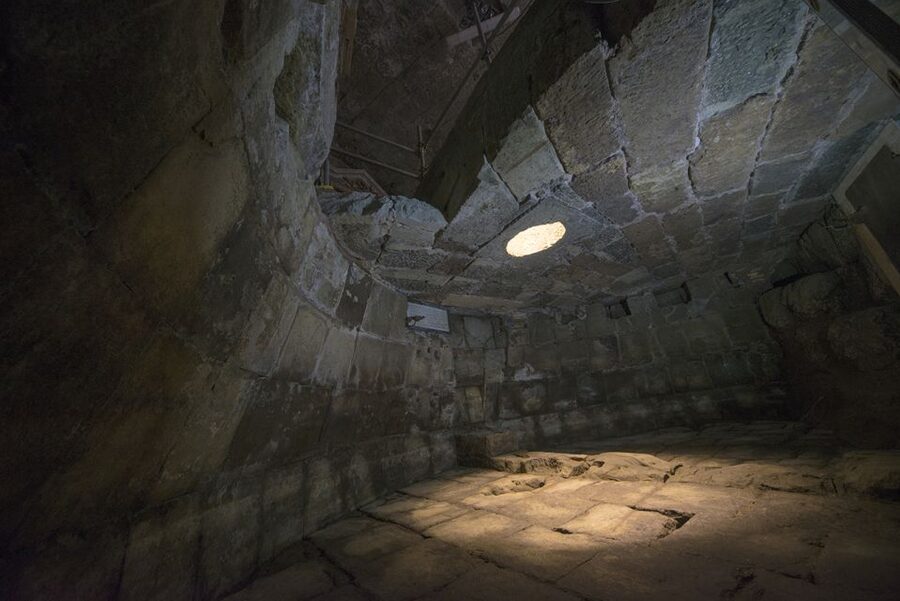
Rome’s Mamertine Prison is a small, stark place with an outsized story. This is where Rome is said to have held Jugurtha of Numidia, Vercingetorix of Gaul, and the followers of Catiline before their deaths. Christian tradition also connects the prison with Peter and Paul. I like the powerful contrast between Roman punishment and Christian memory, and I like that the visit costs about $11 and fits easily beside the Roman Forum.
The main drawback is the audio guide. It runs through an app on your phone, and downloading it, finding the right starting point, and keeping a signal in the lower cell can be frustrating. The prison itself is also brief, so you should come for a concentrated historical stop, not a large museum.
Key points to know before you go

- Rome’s oldest prison: Carcer Tullianum preserves the lower prison chamber traditionally associated with Rome’s most dangerous captives.
- A strong Christian connection: The site is linked with Saints Peter and Paul, making it especially meaningful if you care about early church history.
- Small but affecting: Most people need roughly an hour or less, and the actual prison area is compact.
- Your phone is the guide: The audio tour is multilingual, but you need to download the Vatican&Rome or current operator app and use your own headphones.
- Easy to pair with the Roman Forum: The prison is near several major ancient sites, so it can fit neatly into a day around the Forum.
- Not suitable for limited mobility: Baby strollers, luggage, and large bags are not allowed.
Why this little prison matters
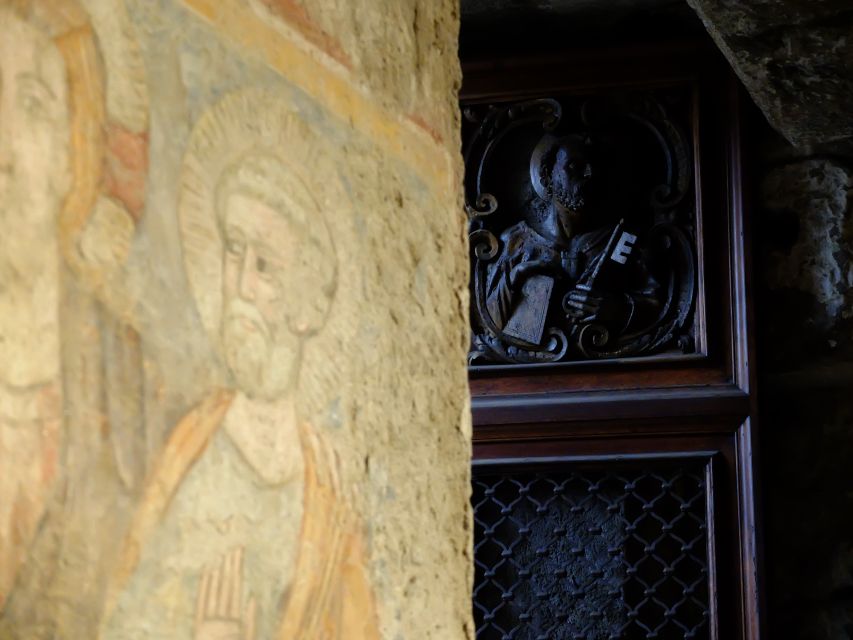
I find Mamertine Prison most interesting because it forces two different versions of Rome into the same cramped space. The upper layers reflect centuries of Christian devotion and church building. Below them is a hard, dark prison chamber tied to the machinery of the Roman state.
The ancient name, Carcer Tullianum, refers to the prison’s lower section. Rome used it for high-value enemies and political prisoners, not as an ordinary public jail. The point was final custody. Those sent there were awaiting execution, and the site’s story is therefore less about rehabilitation than about power, fear, and Roman control.
The audio guide helps place the names in context. Jugurtha, king of Numidia, was defeated and brought to Rome. Vercingetorix, the Gallic leader defeated by Julius Caesar, also spent his final days here. The followers of Catiline met their end in this setting as well.
I appreciate that the site does not require half a day. Rome has enough grand monuments that demand time, lines, and careful planning. Mamertine Prison is a short stop with a clear focus. If you are already visiting the Roman Forum, walking over for this compact experience makes sense.
More audio tours around Italy:
- Rome: Pantheon Fast-Track Ticket and Official Audioguide
★ 4.5 · 27,353 reviews - Rome: Colosseum & Forum with Audio Guide App -Optional Arena
★ 4.2 · 24,770 reviews - Florence: Timed Entry to Michelangelo’s David + Audio App
★ 4.6 · 19,496 reviews
Finding the entrance near the Roman Forum
The prison is near the Roman Forum, but the entrance can be harder to spot than you might expect. I would allow extra time to find the correct doorway and arrive at least 15 minutes before your selected start time.
Your voucher is checked at the office or reception area. The process is usually straightforward once you reach the right place, but the location and entrance instructions have caused confusion. Look carefully for signs for Mamertine Prison and Carcer Tullianum rather than assuming the first church or ancient structure nearby is the entrance.
This is one reason I would not schedule the visit immediately after another timed attraction. Give yourself a cushion. The Forum area has many paths, entrances, and archaeological remains, and it is easy to lose a few minutes getting oriented.
There is no transportation included. You make your own way there, and the location is best treated as part of a walking day in central Rome. The prison sits around several important ancient and religious sights, so you can build a sensible route around it rather than making a special cross-town trip.
What you see above the prison
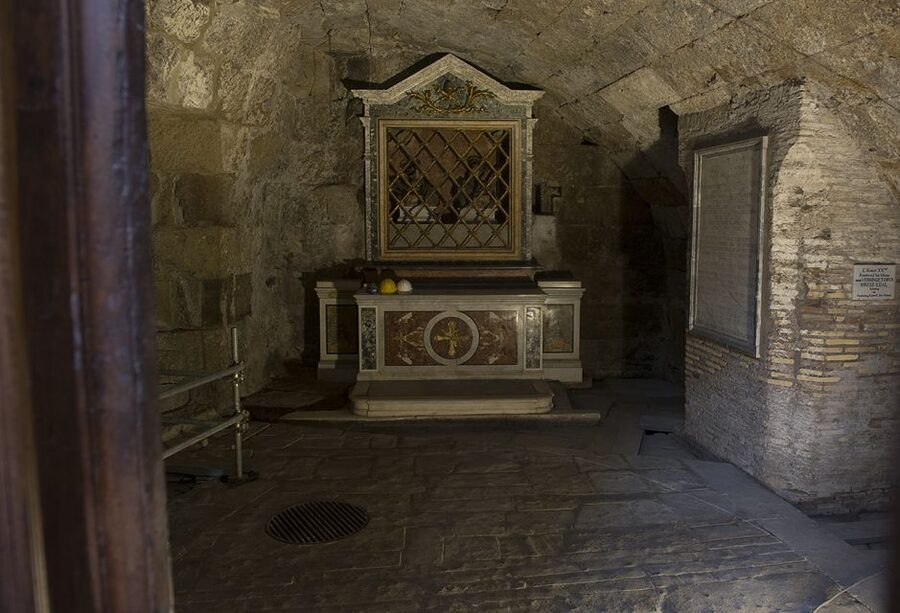
The visit takes you through the built layers above and around the original prison. Mamertine Prison is now part of a religious complex, and the upper areas provide the transition from Roman state history to Christian tradition.
The artistic and architectural details matter here because the site has changed over time. It is not preserved as a bare Roman ruin. Churches, altars, displays, and later additions surround the ancient prison, creating a visual record of how each period gave the place a new meaning.
That contrast is one of the best reasons to use the audio guide. Without explanation, some of the details may look like a small church museum with stairs leading below. With the narration, you get a clearer sense of how a prison became a place of pilgrimage and remembrance.
Do not expect a grand collection of art. This is a focused site, and its interest comes from the setting, the stories, and the physical descent into the prison itself. I would pay attention to the displays before going down, since the lower room is much more limited.
The lower cell and the final stop
The prison chamber is the heart of the visit. You descend into a small, enclosed space that feels very different from Rome’s open plazas and monumental ruins. The room is the kind of place where scale matters more than decoration. It is low, confined, and direct.
Tradition holds that Peter and Paul were imprisoned here, along with other Christian martyrs. For many people, this is the most important part of the visit. The connection to Paul is particularly meaningful to visitors who know his letters and the early Christian story.
It is important to keep the wording in perspective. The connection to Peter and Paul is presented as tradition and belief, not as a claim that can be proven in the same way as the prison’s broader Roman setting. That does not make the place less meaningful. It simply helps you separate the documented history of Roman imprisonment from the religious memory that grew around the site.
The lower prison is not a large series of rooms. Access is limited, and you may see only one principal chamber. This explains why the visit can feel short. I would plan on about an hour for the museum, upper areas, and cell, though you can stay at your own pace.
The site’s physical limits also mean that it is not suitable for people with mobility impairments. Baby strollers are not allowed, and large bags or luggage cannot be brought inside. Pack lightly.
Same sights, a different narrator:
- Rome: City Sightseeing Hop-on Hop-off Bus with Audioguide
★ 4.0 · 16,045 reviews - Pompeii: Entry Ticket with Audio Guide
★ 4.1 · 13,491 reviews - Venice: La Fenice Opera House Entry Ticket with Audio Guide
★ 4.6 · 11,742 reviews - Rome: Colosseum, Forum, Palatine Hill Entry & Audioguide App
★ 4.4 · 10,957 reviews
Using the audio guide on your phone
The ticket includes a multilingual audio guide in Italian, English, French, German, Spanish, and Portuguese. It is intended to add context to the displays and explain details that are easy to miss.
You need to download the Vatican&Rome app from the App Store or Google Play. Instructions connected with the audio system have varied, and some people have encountered references to the Pop Guide app instead. I would ask the staff which current app and access code apply when you arrive.
Bring your own headphones. The audio plays on your phone, not necessarily through a device handed to you at the entrance. If you have no smartphone, the audio guide may not be usable, and you may need to rely on written captions.
The office may provide Wi-Fi and a QR code to help you connect. This is useful, but I would not depend on a fast download at the last minute. Reception and Wi-Fi can be weak, especially in the lower prison chamber. Download the app and any available content before you arrive, then make sure your phone is charged.
The app itself can require a little patience. You may need to scan a code, open the correct guide, download maps or tracks, and work out where the first stop begins. Ask for the Wi-Fi password, the app instructions, and the starting point before walking into the exhibition.
Once it works, the audio guide lets you move at your own pace. That is a real advantage in a small site. You can pause to look closely, skip ahead, or replay a section instead of following a group.
The content is useful, but I would not expect a full academic lecture. It explains the main history and gives the visit structure. Some sections may leave you wanting more detail about daily prison conditions, food, illness, light, visitors, or how prisoners obtained writing materials.
If the audio stops in the lower level, do not panic. The lack of phone or Wi-Fi service has caused problems. You may need to return to the upper area to reconnect. This is inconvenient, but it is another reason to download all material before descending.
What the $11 price gets you
At about $11 per person, this is a reasonably priced add-on to a Roman Forum day. The ticket includes admission and the audio guide, with no separate guide or transportation. For a site that may take an hour or less, the value depends on your interest in the subject.
I think the price works best for three kinds of visitors. First are people interested in ancient Roman political history. Second are those who want to understand the traditional setting associated with Peter and Paul. Third are repeat visitors who have already seen Rome’s largest monuments and want a shorter, more focused stop.
The value is less clear if you expect a long guided tour or a large museum. The prison is small, and the audio technology can take time to set up. If you already know the history and do not want to use an app, the visit may feel thin.
Buying online can save time at the site, and the booking allows cancellation up to 24 hours in advance for a full refund. Reserve now and pay later is also available, which helps if your Roman schedule is still shifting. Still, some people find that tickets can be bought in person, so the main reason to book ahead is flexibility and planning rather than guaranteed hours of entertainment.
The activity is valid for one day, with availability depending on the selected start time. The listed host languages include Italian, English, Spanish, French, German, and Portuguese, but this is not a conventional guided walking tour. You should think of it as admission with self-guided audio.
Who will get the most from the visit
I would recommend Mamertine Prison most strongly to anyone with a personal interest in Christian history. Standing in the lower chamber can be a quiet, serious moment, especially if you have read Paul’s letters or are tracing the early church in Rome.
History fans who care about the Roman Republic and imperial power will also find a lot here. The names of Jugurtha, Vercingetorix, and Catiline connect the cell to major conflicts that shaped Rome. The site gives those stories a physical setting rather than leaving them as names in a textbook.
Families with older children may appreciate the short length, but the cramped space and serious subject are not designed as a playful attraction. I would explain the prison’s purpose before entering.
I would be more cautious if you have mobility limitations, need a stroller, or dislike phone-based audio. The attraction does not suit those needs well. I would also skip it if your day is already packed with the Colosseum, Forum, Palatine Hill, and several churches. The prison is worthwhile, but it is not essential for every first visit to Rome.
How to fit it into your Rome day

The simplest plan is to visit Mamertine Prison near your Roman Forum time. Since the prison is close to major ancient sights, you can combine it with a day focused on the Forum and nearby archaeological areas.
I would not place it between two attractions with tight entry times. Finding the entrance and setting up the app may take longer than expected. Arrive early, collect your access information, and get the audio working before you descend.
After the visit, you can continue toward the Forum area and other nearby monuments. The prison offers a quieter contrast to Rome’s larger sites. It is also a useful pause if you want something indoors and focused rather than another broad archaeological walk.
Give yourself time to look at the upper displays before or after the lower cell. The central room is memorable, but the surrounding layers explain how the site moved from Roman prison to Christian place of memory.
Should you book Mamertine Prison?
I would book it if you want a short, serious visit tied to both ancient Rome and the story of Peter and Paul. The lower prison chamber is genuinely affecting, and the $11 price is fair when you are already in the Forum district.
I would skip it if you want a large museum, a live guide, or a long tour with detailed discussion of prison life. The app requires preparation, and the signal may fail below ground. Download the audio before you go, bring headphones, pack light, and allow time to find the entrance.
For the right visitor, this is not a grand attraction. It is a compact place where Rome’s power, political violence, and Christian memory meet in one very small room.
FAQ
Where is Mamertine Prison located?
Mamertine Prison, also called Carcer Tullianum, is in Rome’s Lazio region near the Roman Forum.
How long does the visit take?
The prison and museum are small. Plan for about an hour or less, although you can move through the site at your own pace.
Is a live tour guide included?
No. The ticket includes entry and a self-guided multilingual audio guide. Transportation and a personal tour guide are not included.
Which languages are available for the audio guide?
The audio guide is available in Italian, English, French, German, Spanish, and Portuguese.
Do I need to bring my own phone and headphones?
Yes. You need to download the Vatican&Rome app, or the current app specified by the site, to use the audio guide. Bringing your own headphones is recommended.
Can I bring luggage or a baby stroller?
No. Luggage, large bags, and baby strollers are not allowed inside.
Can I cancel the booking?
Yes. You can cancel up to 24 hours in advance for a full refund. Reserve now and pay later is also available.
New audio tours around Italy
- Lecce Walking Tour with Audio and Written Guide by a Local★ 4.0 · 38 reviews
- Private Audio Guided Walking Tour in Lecce★ 4.0 · 7 reviews
- Private Audio Guided Walking Tour in Como★ 3.0 · 3 reviews
- Como Walking Tour with Audio and Written Guide by a Local★ 4.5 · 30 reviews
- Finance and Nobility: Explore medieval Genoa on a self-guided audio tour★ 4.5 · 7 reviews
- Genova Walking Tour with Audio and Written Guide by a Local★ 4.5 · 33 reviews
- Udine Walking Tour with Audio and Written Guide by a Local★ 4.0 · 2 reviews
- Florence: Uffizi Gallery Timed Entry Ticket with Audio★ 3.0 · 3 reviews
Italy Audio Tours, compared.

Rome: Pantheon Fast-Track Ticket and Official Audioguide
Read our review →
Rome: Colosseum & Forum with Audio Guide App -Optional Arena
Read our review →
Florence: Timed Entry to Michelangelo’s David + Audio App
Read our review →
Rome: City Sightseeing Hop-on Hop-off Bus with Audioguide
Read our review →

Venice: La Fenice Opera House Entry Ticket with Audio Guide
Read our review →
Rome: Colosseum, Forum, Palatine Hill Entry & Audioguide App
Read our review →