
Review · CANADA
Self-Guided Audio Tours for the Canadian Rockies
The best thing about this Canadian Rockies audio tour is how it fills the long stretches between viewpoints. Instead of simply driving past a glacier, canyon, or historic railway site, you get the story at the right moment. The app uses your phone’s GPS to play commentary automatically, so you can keep your eyes on the road and still learn what you are seeing.
I especially like the freedom to change plans and the fact that the tour works without cell service after you download it. I also like the practical narration, which points out side trips, wildlife areas, photo stops, and useful directions instead of talking only about famous attractions. The main drawback is that this is a very large tour, not a tidy one-day route. You need to plan carefully, and the narrator cannot replace a park pass, attraction ticket, or good judgment about weather and road conditions.
Key points to know before you book
- One purchase covers up to eight people: The $39.99 price applies to the group using one vehicle, making it good value for families and friends.
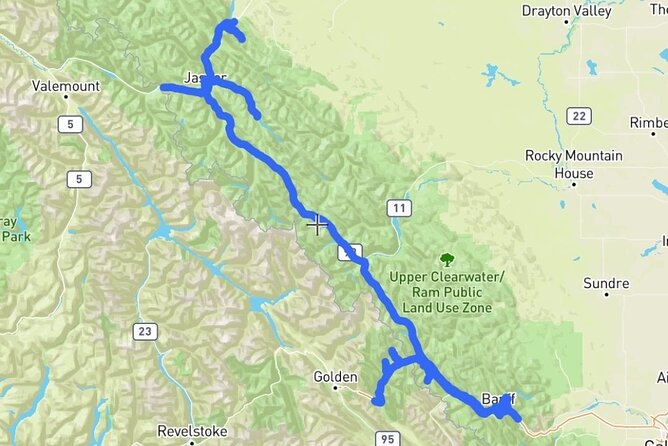
- Four major routes come in one app: You get Banff and its surroundings, Lake Louise and Yoho, the Icefields Parkway, and Jasper National Park.
- GPS-triggered commentary plays automatically: Stories, directions, and tips begin as you approach the relevant point.
- Download before leaving town: The tour works offline once the app and route have been saved to your phone.
- The route is yours to shape: Start, stop, skip, repeat, or rearrange the suggested itineraries without an expiry date.
- Bring a charger and plan for audio sharing: A USB car charger, Bluetooth connection, or earbuds will make the experience much easier.
How GuideAlong works on a Canadian Rockies road trip
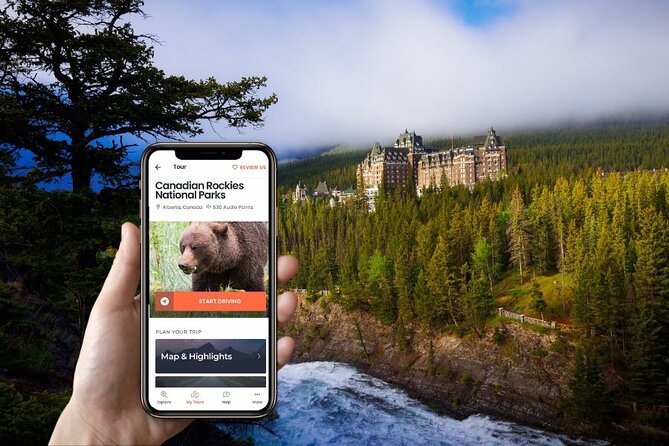
GuideAlong, formerly known as GyPSy Guide, is a private, self-guided audio experience rather than a bus tour or fixed walking tour. You receive access through the GuideAlong app, download the Canadian Rockies tour, and let your phone’s GPS trigger stories as you drive.
The narration covers 520 points. It includes local history, geology, wildlife, directions, and small details that are easy to miss when you are focused on driving. One especially useful feature is that it talks ahead of upcoming stops, giving you time to decide if you want to turn off the main road or allow an extra hour for a hike.
The tour is in English. You can use it in any direction along the routes, and you can begin or finish anywhere on the covered roads. The app includes suggested trip plans through the app, website, and PDF, but you are not locked into them.
That flexibility matters in the Rockies. Weather can change quickly, roads can be busy, and some attractions have seasonal access. If a stop is crowded or closed, you can simply continue and return later. One particularly practical use is listening with earbuds on a shuttle, hike, or walking stop, although the main experience is designed for a vehicle.
Download everything over Wi-Fi or cellular data before setting out. After that, no internet or phone signal is needed. This is important on the Icefields Parkway and in other mountain areas where reception can be unreliable.
More Self-Guided Audio Tours in Canada
- Self Guided Audio Driving Tour of the North Shore of PEI
★ 4.0 · 24 reviews - Self-Guided Audio Driving Tour in Icefields Parkway
★ 5.0 · 24 reviews - Icefields Parkway Self-Guided Driving Audio Tour
★ 4.5 · 16 reviews
Banff’s best first stops, from Sulphur Mountain to Vermilion Lakes
The Banff portion gives you a useful introduction to the town and its surroundings. The Banff Gondola is the obvious headline stop. It carries you up Sulphur Mountain for wide views across six mountain ranges, followed by boardwalks toward the Sulphur Mountain Cosmic Ray Station.
Allow more than the listed short stop if you plan to ride the gondola, walk the boardwalk, eat at the bistro, or wait for sunset. Admission is separate, and the gondola can become a major time and cost decision during a busy day. You might see bighorn sheep along the boardwalk.
Bow Falls and Surprise Corner are much easier stops. Bow Falls sits near the Banff Springs Hotel, and the water changes greatly with the season, especially during spring thaw. Surprise Corner gives you the classic view of the hotel, Bow Falls, Sulphur Mountain, and Mount Rundle. Take care at Surprise Corner because the viewing area is beside a blind road corner.
Cave and Basin National Historic Site explains how thermal springs helped lead to the creation of Banff National Park. The site includes an interpretive centre, the original underground cave, and boardwalks where you can look for the endangered Banff Springs snail. Admission is separate.
At Banff Upper Hot Springs, you can soak in mineral water ranging from 37 to 40 Celsius. These are the only hot springs in Banff National Park where you can bathe. The pool is close to the gondola base station, so it can work well after a morning on Sulphur Mountain, though it is another paid stop and may require more time than the short suggested visit.
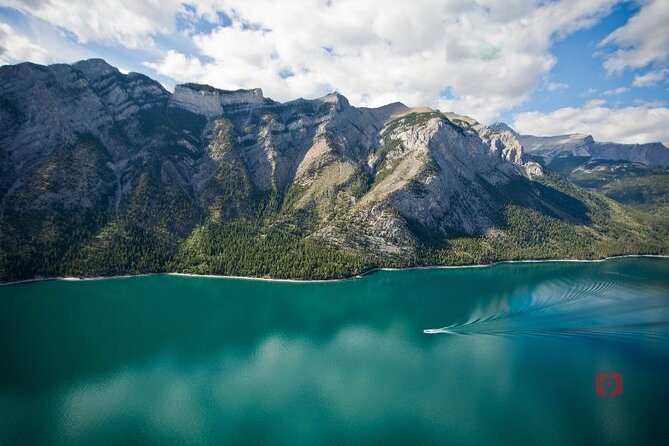
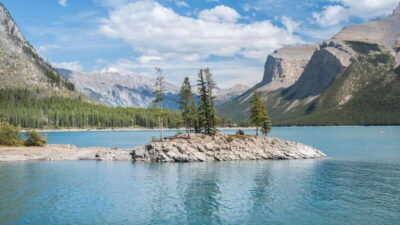
Lake Minnewanka is a larger outing, with a 21-kilometre glacial lake, cruise options, picnic areas, and the Stewart Canyon trail. The name means water of the spirits in Nakoda. The short stop is enough for a look, but you will need longer for a cruise or the 6.4-kilometre return hike.
The Hoodoos Trail gives you a different view of the area. Wind, rain, and ice have left tall rock spires above the Bow River, with Mount Rundle behind them. Vermilion Lakes, close to town, is a good choice for an easy walk, bike ride, or wildlife lookout. Birds, coyotes, and occasionally bear or moose can be seen there, so keep a sensible distance and follow park rules.
Lake Louise and Yoho, with time for Johnston Canyon
The old Bow Valley Parkway offers a slower alternative to the main Trans-Canada Highway between Banff and Lake Louise. Castle Mountain and Morant’s Curve are two worthwhile viewpoints, and the route is also known for wildlife viewing.
Johnston Canyon is the most active stop here. The Lower Falls is about 1.1 kilometres along a trail and steel walkways attached to the canyon walls. A short tunnel leads to a final viewing platform. If you continue uphill, the Upper Falls adds more walking and climbing. In summer, the cool canyon and mist feel refreshing. In winter, the waterfalls freeze into a very different scene.
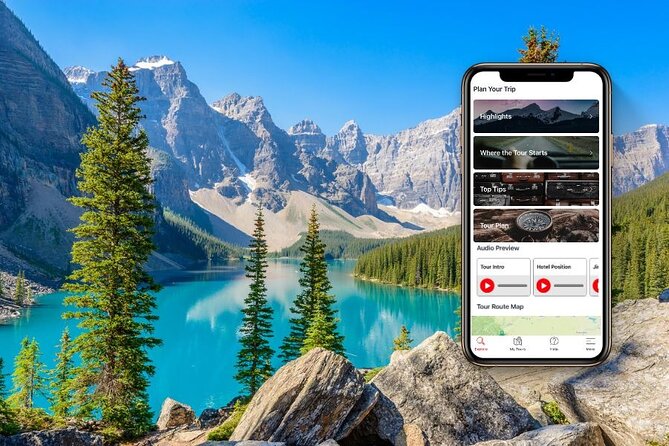
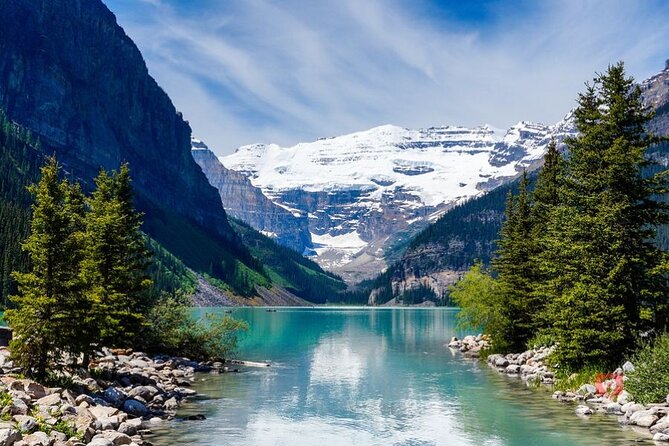
Lake Louise is the famous one, with turquoise water, high peaks, and Victoria Glacier. The lakeshore gives you the classic view with little walking, but the area also offers the Plain of Six Glaciers and Lake Agnes Tea House hikes. The supplied guidance notes that the teahouses do not take debit or credit cards, so bring cash if you plan to buy a treat there.
You can also rent a canoe or ride the Lake Louise Sightseeing Gondola. The lake itself is free to view, but parking, transportation, and optional activities can affect your day and budget. Plan extra time if you want to hike rather than simply take photographs.
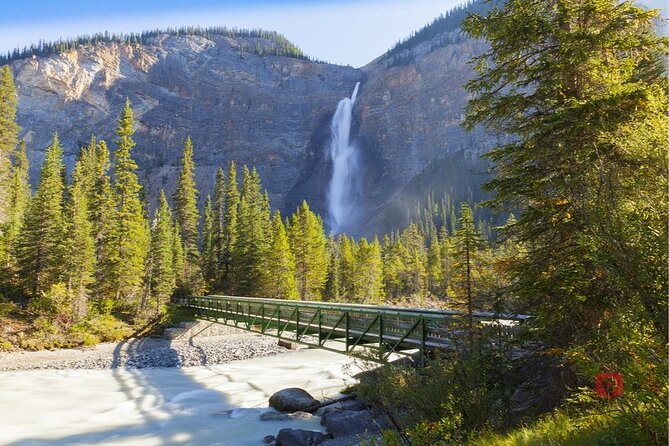
West of Lake Louise, Yoho National Park provides a quieter companion to the Banff route. The tour points you toward Takakkaw Falls, Emerald Lake, Natural Bridge, and smaller stops along the road. Takakkaw is fed by glaciers and sends spray into the air below a very tall cascade. The access road usually does not open until June because of avalanche danger.
Emerald Lake is a fine place to slow down. You can walk around part of the shoreline, paddle a canoe, or eat at Emerald Lake Lodge. Natural Bridge makes a quick extra stop on the access road. At the Lower Spiral Tunnels Viewpoint, you can watch trains use two looping tunnels to manage the steep climb through Kicking Horse Pass. The railway story adds useful context to what might otherwise be just another scenic pullout.
The Icefields Parkway, where the audio earns its keep
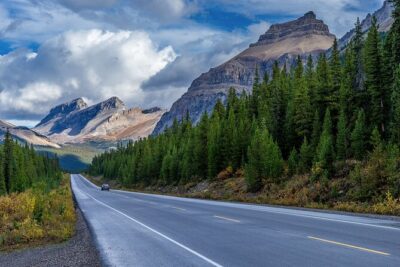
The Icefields Parkway is the strongest reason to buy this tour. It connects Lake Louise and Jasper through a series of glaciers, lakes, waterfalls, and high mountain passes. The road is beautiful enough on its own, but the route commentary helps you recognize what you are looking at and decide where to stop.
Allow much more than the listed one-hour overview if you want to visit several sites. Parker Ridge, near the Icefield Centre, is a short but steep hike with views toward Saskatchewan Glacier. The trail sits around 6,000 feet, so it can feel harder than the distance suggests. Snow may remain on the path throughout the year, and you should allow roughly 1.5 to 2 hours for the full experience.
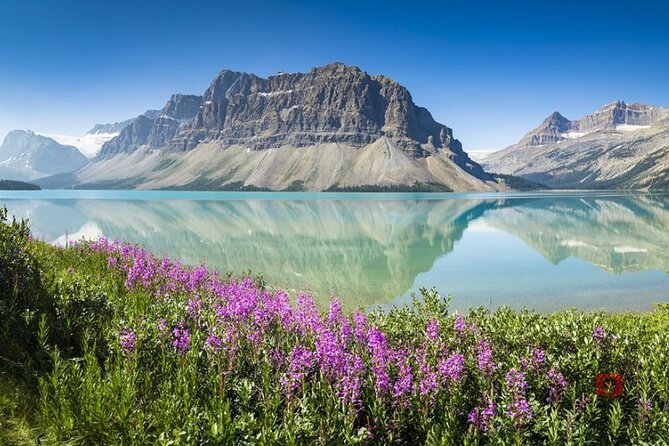
Crowfoot Glacier and Bow Lake are quick but worthwhile viewpoints. Crowfoot is a hanging glacier above Bow Lake, named for its former three-pronged shape. As the ice has retreated, only two toes remain. Bow Lake feeds the Bow River, which continues through Banff National Park toward Calgary. Num Ti Jah Lodge beside the lake adds a historic human touch to the view.
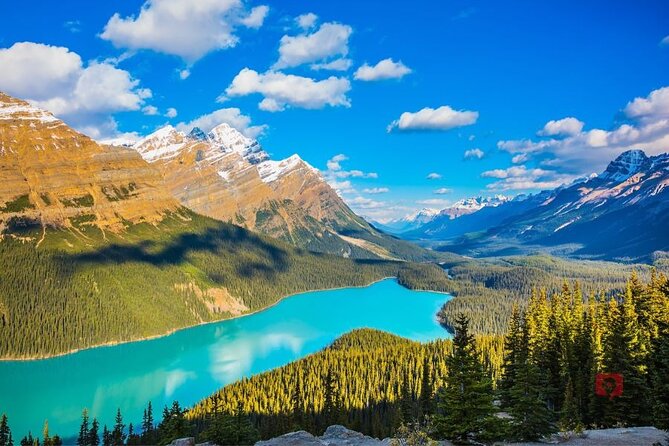
Lake Louise and Peyto Lake offer two different versions of the famous blue Rockies water. Peyto sits at Bow Summit, the highest point on the Icefields Parkway, and is best seen in good sun when its colour is strongest. The viewing area is high above the lake, so weather can change the experience quickly.
The Athabasca Glacier is one of the most accessible glaciers in the world. You can view it from the road and the Columbia Icefield Discovery Centre, or pay for the Columbia Icefield Adventure, which uses a large Ice Explorer vehicle to reach the glacier. That package also includes a bus to the glass-bottomed SkyWalk and takes at least three hours. These tickets are not part of the audio tour.
The Discovery Centre is also the place to understand the glacier’s retreat, with markers showing how far the ice has moved over more than a century. That is a useful reminder that the scenery is not fixed.
Sunwapta Falls and Canyon require little walking for excellent viewpoints. A three-kilometre loop goes farther into the canyon if you have the energy. Athabasca Falls, closer to Jasper, cuts through hard quartz-rich rock and can be especially forceful during spring melt.
The Weeping Wall is a quick roadside sight where snowmelt trickles down a steep cliff. In winter, the water freezes and attracts ice climbers. This is exactly the sort of feature that is easy to pass without an audio prompt.
Same sights, a different narrator:
- Cabot Trail: a Smartphone Audio Driving Tour
★ 4.5 · 118 reviews - Icefields Parkway: a Smartphone Audio Driving Tour
★ 4.0 · 118 reviews - A 7th-Gen Local’s View of Downtown Charlottetown: An Audio Tour
★ 4.5 · 27 reviews - Smartphone Audio Driving Tour between Banff and Calgary
★ 4.0 · 25 reviews
Jasper’s lakes, canyons, hot springs, and mountain views
The Jasper section gives you several good reasons to stay beyond a single drive-through day. The Jasper SkyTram carries you up Whistlers Mountain to about 2,200 metres. From the upper station, you can walk to viewpoints above the treeline or eat at the mountaintop restaurant. Admission is separate, and you should allow more time than a quick photo stop if you plan to walk higher.
Pyramid and Patricia Lakes sit above Jasper. Pyramid Lake gives you the familiar view toward Pyramid Mountain, and the small island footbridge provides a distinct photo position. Patricia Lake also carries a surprising Second World War story, which the audio narration explains along the road.
Maligne Canyon cuts through limestone and offers several viewpoints close to the main parking area. You can see the first section with very little walking, or begin at the Fifth Bridge for a longer route through the canyon. Continue to Maligne Lake if you have time. The road passes Medicine Lake, and the lake itself is known for boat cruises toward Spirit Island. You should prebook a cruise if that is a priority.
Old Fort Point is close to Jasper and combines a short stair climb with trails and views back toward town and the surrounding valleys. Bighorn sheep are often found in this area. Mount Edith Cavell is a longer side trip requiring at least two hours. The Path of the Glacier leads to Cavell Pond, where icebergs may float below the glacier. The longer Cavell Meadows Trail is recommended for midsummer, when wildflowers are more likely.
Miette Hot Springs sits about 50 minutes from Jasper along Highway 16. The pools are described as the hottest thermal pools in the Rockies, and the drive along the Athabasca River includes wildlife and viewpoint stops. It is a natural final stop after a long day, though admission is separate.
What the $39.99 price really buys you
At $39.99 per group of up to eight, this is inexpensive if you are sharing a rental car with family or friends. One purchase can cost less than a single paid attraction ticket, while covering four route areas and unlimited use after purchase.
The value is strongest for a first visit, a long road trip, or anyone who wants more than silent driving. The app gives you directions, stories, suggested stops, and trip planning without requiring a scheduled guide. It also continues to work when you lose service, which is a real advantage in the Rockies.
The price does not include national park passes, gondola rides, hot springs, Cave and Basin admission, SkyTram tickets, lake cruises, canoe rentals, or the Columbia Icefield Adventure. Budget for those separately. The short suggested times also need careful interpretation. Thirty minutes may cover a viewpoint, but not a hike, meal, cruise, or gondola visit.
Setup tips that prevent road-trip frustration
Redeem the voucher through the email or text instructions, then sign in with the same Apple or Google account on the GuideAlong app. Download the tour before you leave reliable Wi-Fi. The app can be used offline afterward.
Connect your phone to the rental car by Bluetooth if possible. Bring a USB or car charger, since GPS and audio can use battery power over a long day. If someone else in your group needs to hear the commentary away from the vehicle, bring earbuds.
The purchase is linked to the account and device used to access it, so only one phone is needed for normal vehicle use. If your plans change, there is no expiry date or fixed tour time. The support team is available by toll-free phone, chat, and email.
Free cancellation is available up to 24 hours before the scheduled start time. Within 24 hours, the payment is not refunded.
Who should book this Canadian Rockies audio tour?
You should book it if you are driving your own rental car, want context without a fixed group schedule, and appreciate help finding worthwhile stops. It is especially useful for families, since children may stay interested when the narration points out wildlife, railway tricks, mountain features, and unusual stories.
It also suits repeat visitors. Even if you have driven these roads before, the location-based commentary can draw your attention to features you normally miss. The tour is less suitable if you want a live guide who can answer questions in person, or if you plan to stay in one town and avoid driving.
Should you book it?
I would choose this for a road trip that includes Banff, Lake Louise, the Icefields Parkway, and Jasper. The price is modest, the offline function solves a real Rockies problem, and the ability to adapt your route is more useful than a fixed schedule.
Just do not treat the full package as a one-day checklist. Pick a route, allow time for weather and hikes, and reserve separate attractions in advance. If you want a quiet drive with no commentary, skip it. If you want the mountains explained while you travel, this is a practical buy.
FAQ
What areas does the Canadian Rockies audio tour cover?
It covers Banff Townsite and surrounding areas, Lake Louise and Yoho National Park, the Icefields Parkway, and Jasper National Park.
How much does the tour cost?
The tour costs $39.99 per group, with one purchase covering up to eight people in the vehicle.
Does the price include attraction tickets?
No. National park passes and attraction tickets are separate. This includes places such as the Banff Gondola, Cave and Basin, Banff Upper Hot Springs, Jasper SkyTram, and Columbia Icefield experiences.
Does the audio tour work without cell service?
Yes. Download the app and tour before your trip. After that, the audio commentary works offline using your phone’s GPS.
How does the commentary start?
Stories, directions, and tips play automatically according to your location as you drive. You can also preview the route and trip plans in the app.
Can I use the tour on a different day?
Yes. The tour has no expiry date or fixed date and time. You can start, pause, and resume it according to your plans.
Is the tour available in languages other than English?
No. The supplied tour information lists English as the available language.
Do I need to begin in Banff and finish in Jasper?
No. You can start and end anywhere along the tour routes and drive in either direction.
What equipment should I bring?
Bring a fully charged phone, a USB or car charger, and a way to connect the phone to the vehicle audio system. Earbuds are useful when listening on walks or shuttles.
New audio tours around Canada
- Kelowna E-Bike Bee Tour, Tastings, Organic Lunch & Audio Guide★ 5.0 · 9 reviews
- Smartphone Audio Driving Tour between Kamloops & Revelstoke★ 3.5 · 8 reviews
- Jasper National Park Self-Guided Driving Audio Tour★ 4.0 · 4 reviews
- Smartphone Audio Driving Tour between Kamloops and Vancouver★ 3.5 · 5 reviews
- Smartphone Audio Driving Tour between Huntsville & Toronto★ 4.5 · 4 reviews
- Halifax Explosion Smartphone Audio Walking Tour★ 4.0 · 3 reviews
- Edmonton Self Guided Audio Experience★ 3.0 · 2 reviews
- Smartphone Audio Driving Tour between Collingwood and Toronto★ 4.5 · 3 reviews
Canada Audio Tours, compared.
A 7th-Gen Local’s View of Downtown Charlottetown: An Audio Tour
Read our review →

Halifax Churches, Gardens & Graveyards: a Smartphone Audio Walking Tour
Read our review →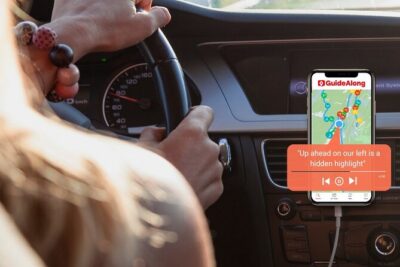
Western Canada Self-Driving Audio Guide English and German
Read our review →Browse the lists this tour appears in