
Review · GERMANY
Spicy’s Gewürzmuseum Entry Ticket and Audio Guide
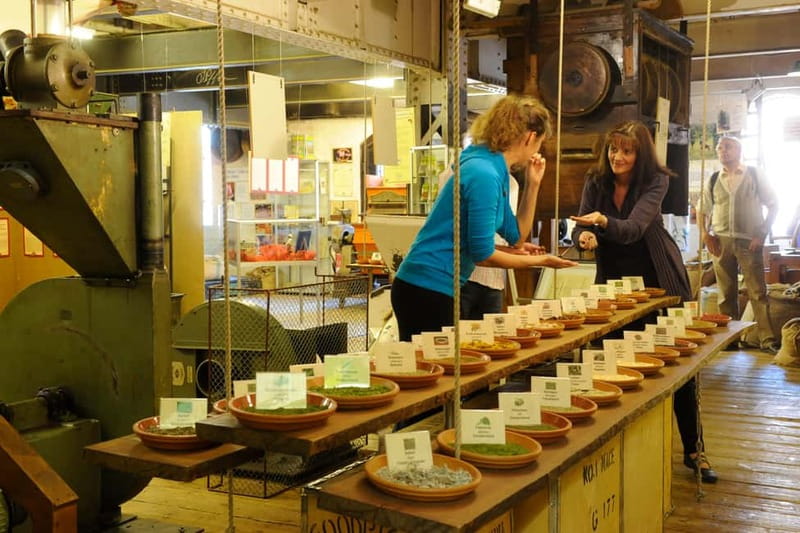
Spicy’s Gewürzmuseum turns a simple museum visit into a hands-on tour of the spice trade. You can touch and smell more than 50 spices, then follow the path from cultivation to finished product through old tools, machines, containers, and clay tasting bowls.
I like the personal audio guide because you can move at your own pace, and I like the tasting tables because they make the subject real. The original storage floor also gives the museum a fitting setting rather than a polished modern hall.
The main drawback is access: the museum is not suitable for wheelchair users. You also need a charged smartphone or tablet, and the audio guide works best when you bring headphones.
Key points
- More than 50 spices to handle and smell: The collection uses your nose and hands, not just wall text.
- Over 900 exhibits: Antique equipment and machinery explain how spices moved from farms to kitchens.
- Original storage building: The museum occupies a historic storage floor suited to its subject.
- Audio guide in three languages: Listen in German, English, or French on your own phone or tablet.
- Small edible extras: Adults receive a pepper spice sample, while children receive gummy bears.
- Short, affordable visit: At about $8 per person and 1.5 hours, it fits neatly into a Hamburg day.
Hamburg’s spice story begins on an old storage floor
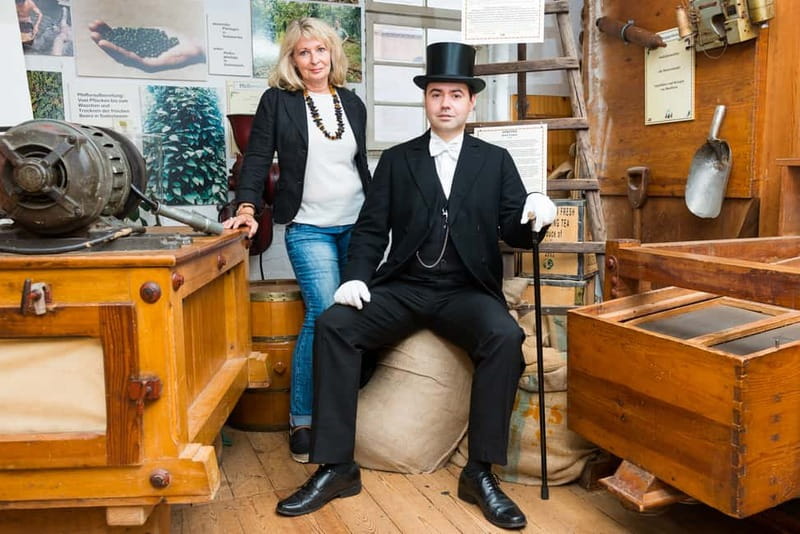
The setting does much of the teaching before the audio guide says a word. Spicy’s Gewürzmuseum is housed on an original storage floor, an appropriate home for a collection about goods that once traveled long distances before reaching a kitchen shelf.
You are not walking through a large palace-sized museum. Instead, the experience centers on a working-style storage environment filled with containers, equipment, machinery, and displays. That makes the subject easier to understand. Spices were stored, sorted, processed, and packed somewhere, and this museum gives those steps a physical setting.
I find this more useful than a display of attractive jars alone. The building helps you picture the practical side of the trade: bulk materials arriving, workers handling them, and familiar kitchen products taking shape.
The visit lasts about 90 minutes. That is enough time to look closely without turning the museum into an all-day commitment. You can fit it into a wider Hamburg schedule, especially if you want a short indoor stop with a clear theme.
More audio tours around Germany:
- Neuschwanstein Castle Skip-the-Line Ticket with Audio Guide
★ 4.4 · 1,388 reviews - Berlin: Solar Powered Sunset Catamaran Cruise & Audio Guide
★ 4.6 · 1,043 reviews - Berlin: Boat Sightseeing Cruise with Audioguide
★ 4.6 · 947 reviews
Touch, smell, and taste instead of just looking
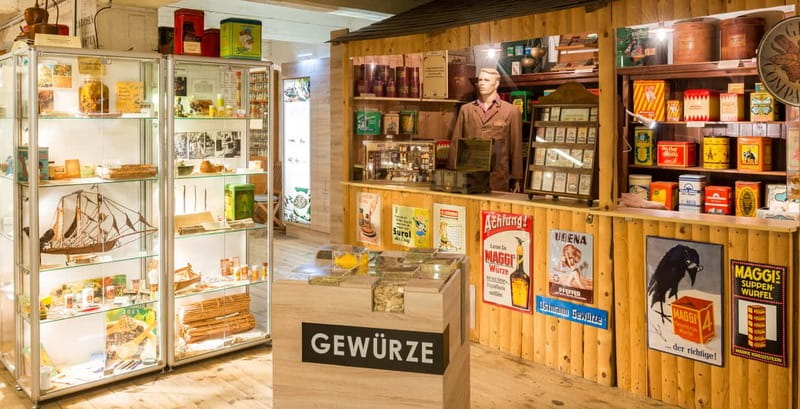
The best part of the museum is its sensory approach. You can explore more than 50 spices through touch and smell, with some displayed in containers and others arranged in clay bowls on tasting tables.
That matters because spices can look surprisingly alike. Their scent tells a different story. A museum label can identify a seed or herb, but handling it and smelling it gives you a stronger sense of its character and use.
The tasting area adds another layer. You can try pepper spice samples, and the experience includes a pepper sample for adults. Children receive gummy bears, which gives younger visitors a simple treat while keeping the visit playful.
Use the tasting tables early enough to leave yourself time to notice the aromas afterward. Your nose can become less sensitive as you move through many strong smells. One practical point is worth knowing: after several perfumes or spices, you may not detect every later scent with the same clarity. Take breaks, smell your own sleeve or the clean air, and do not rush from bowl to bowl.
This is also why the museum works well for families. Children have something to touch, smell, and taste instead of being asked to read long panels. The gummy bears are a small detail, but they help make the visit feel welcoming for younger children.
From kitchen herbs to international spice seeds
The displays cover kitchen herbs, spice seeds, and classic spices from near and far abroad. That broad range keeps the visit from becoming a single lesson about pepper or one famous trade route.
You may begin with ingredients you recognize, then encounter forms you know less well. Seeing a spice as a seed, dried plant, or raw material helps explain how different it can look before it reaches a grinder or packet.
The museum also presents spices as products with a life cycle. You learn about production from cultivation through processing and on to the finished product. This is a useful thread because it links the plant in the field to the ingredient in your cupboard.
Look for the difference between an ingredient as nature provides it and the form sold for cooking. The antique equipment and machinery help make that change visible. Rather than treating food as something that simply appears in a shop, the exhibits show the handling and work behind it.
The information is split into sections, so you can take it in at a steady pace. The displays include examples and explanations, with the tasting area giving you a practical break from the historical material.
The audio guide lets you choose your own pace
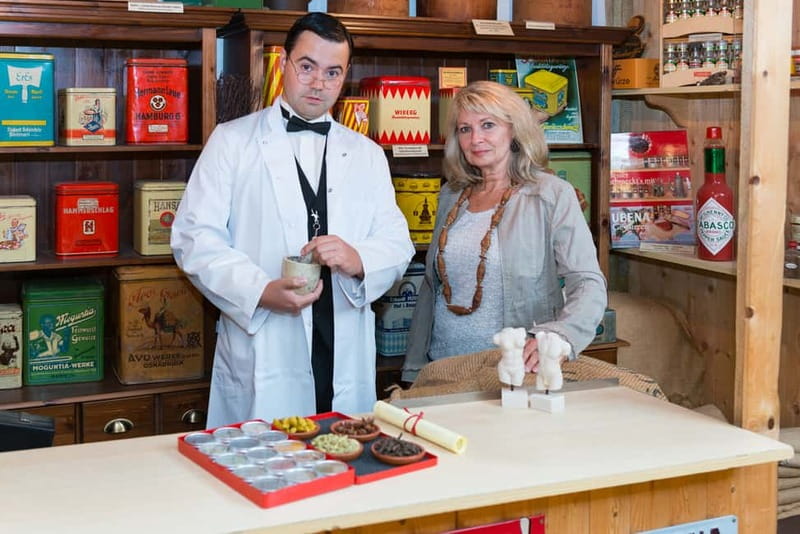
Your entry includes a downloadable audio guide, available in German, English, and French. You access it on your own phone or tablet, so bring a charged device and, ideally, headphones.
I like this format for a museum of this size. You are not tied to a scheduled guide or a fixed group pace. You can pause to examine a machine, replay a section, or move ahead when a display interests you less.
The audio guide is especially useful when the objects need context. An old piece of equipment may not immediately reveal what it did. Spoken explanation can connect the machine to cultivation, storage, processing, or packaging.
Still, your phone is part of the preparation. A low battery can spoil an otherwise easy visit. Download or access the guide as instructed, check that your device is charged, and bring headphones if you have them. The supplied information confirms the guide languages, but it does not identify individual guides by name.
You can also visit without treating the audio as a race. Listen to a section, then spend time with the physical display. The strongest moments come when the sound, object, and scent work together.
Same sights, a different narrator:
- Füssen: Neuschwanstein Castle Express Ticket and Audio Guide
★ 3.9 · 788 reviews - Neuschwanstein Castle Ticket With Audio Guided Tour
★ 3.5 · 473 reviews - Berlin: Panoramic Boat Tour with Bilingual Audio Guide
★ 4.1 · 136 reviews - Berlin: Französischer Dom Viewing Platform with Audio Guide
★ 4.1 · 43 reviews
Antique equipment gives the collection its working character
The museum has more than 900 exhibits from the last five centuries. That number includes more than spice samples. You also see antique equipment and machinery tied to the production process.
These objects give the museum weight. A bowl of seeds tells you what the product is. A machine helps explain what people did with it.
The age range also adds perspective. Spices are ordinary pantry items now, but their handling and distribution have changed over hundreds of years. The collection lets you compare old methods and equipment with the finished goods you recognize today.
Do not expect every object to be immediately self-explanatory. This is where the audio guide and display explanations matter. Give yourself time to connect the tools to the stages of production rather than simply counting the exhibits.
The storage setting helps here too. The objects do not feel entirely separated from the work they represent. You are seeing them in a building associated with storage, rather than in a bare gallery with no connection to goods and trade.
What the $8 admission gives you
At about $8 per person, this is a modestly priced museum stop. The value comes from more than the admission itself: you get access to the collection, the downloadable audio guide, the sensory stations, and a small edible extra.
For adults, the pepper spice sample is included. For children, the included treat is gummy bears. These are not reasons alone to plan a visit, but they add something tangible to a low-cost experience.
The 1.5-hour length also helps the value. You receive enough time for a proper look at the exhibits without committing half a day. If you are building a Hamburg schedule around several attractions, this can fill a useful block without exhausting you.
The price is less compelling if you prefer large art collections, broad city history, or a fully guided tour with a person leading the group. This museum is focused. It pays off most when you are curious about food, trade, household ingredients, or hands-on displays.
The audio guide is included rather than an extra charge, which keeps the final cost simple. You should still plan for the practical requirement of a charged phone or tablet.
Families, food lovers, and curious cooks will get the most from it
I would recommend this museum to adults who enjoy learning through objects and smells rather than only through written panels. It also suits families because children can interact with the displays and receive gummy bears.
It is a good choice for anyone who likes cooking. You may already know several spices, but the museum gives you a chance to consider where they come from, how they are processed, and how their form changes before sale.
The visit can also work for a mixed-age group. One person can focus on the historical exhibits, another on the machinery, and children on the touch-and-taste stations. The audio guide allows each person to spend more time on the parts that interest them.
I would be more cautious if you have limited mobility. The experience is specifically listed as unsuitable for wheelchair users. Since the information provided does not give further access details, contact the museum before booking if you need other accessibility arrangements.
A few practical ways to enjoy the visit
Start with a charged phone or tablet. Since the audio guide is accessed through your device, this is the one item you should not overlook.
Bring headphones if you prefer listening privately. The guide is available in German, English, and French, so choose the language that lets you focus on the exhibits rather than translate as you go.
At the tasting tables, slow down. Smell one item at a time and pay attention to differences between familiar herbs, seeds, and stronger spices. If your sense of smell fades, take a short pause instead of assuming the samples are weak or old.
The museum’s sensory displays are the main attraction, but do not skip the machines. They explain the less visible work between cultivation and the finished spice product.
You must exchange your voucher at the ticket counter before beginning. The museum also offers free cancellation up to 24 hours in advance and a reserve now, pay later option, which can be useful when your Hamburg plans are still changing.
Should you book Spicy’s Gewürzmuseum?
Book it if you want an affordable, unusual indoor stop with real objects, hands-on spice displays, and a short audio-led visit. The strongest reasons are the chance to touch and smell more than 50 spices, the original storage setting, and the collection of more than 900 exhibits.
Families, cooks, and food-minded visitors should find plenty to do. The pepper sample for adults and gummy bears for children add a friendly touch, while the three-language audio guide keeps the visit flexible.
Skip it if you want a major art museum, a broad survey of Hamburg, or a live guide leading a group. Also check access needs in advance, since the museum is not suitable for wheelchair users.
For about $8 and 90 minutes, Spicy’s Gewürzmuseum offers a focused look at the ingredients behind everyday cooking. It is small in scope, but hands-on in the right places, and that makes it a worthwhile addition to a Hamburg day.
FAQ
Where is Spicy’s Gewürzmuseum located?
Spicy’s Gewürzmuseum is in Hamburg, in Northern Germany.
How long does the visit last?
The stated duration is about 1.5 hours.
What is included with admission?
Admission includes entry to Spicy’s Gewürzmuseum, a downloadable audio guide, a pepper spice sample for adults, and gummy bears for children.
In which languages is the audio guide available?
The audio guide is available in German, English, and French.
Can I use my own phone for the audio guide?
Yes. The audio guide is accessible through an app on your phone or tablet. Bring a charged device.
What can I do with the spice displays?
You can touch and smell more than 50 spices. Some are displayed in containers, while others are presented in clay bowls on tasting tables. Pepper samples are also included.
Is the museum suitable for wheelchair users?
No. The activity is listed as unsuitable for wheelchair users.
Can I cancel my booking?
Yes. You can cancel up to 24 hours in advance for a full refund. A reserve now, pay later option is also available.
New audio tours around Germany
- Leipzig’s Communist Past: A Self-Guided Audio Tour★ 5.0 · 16 reviews
- Discover Leipzig: Self-Guided Audio Tour★ 4.0 · 2 reviews
- Koblenz: City Walk with Audio Guide in 7 Languages on your Phone★ 4.5 · 5 reviews
- Laboe Naval Memorial: A Self-Guided Audio Tour★ 5.0 · 2 reviews
- Baden-Baden Self Guided Audio Tour in English★ 4.0 · 5 reviews
- Heidelberg: City Walk Audio Guide in 7 Languages on your Phone★ 3.0 · 2 reviews
- Heidelberg’s Altstadt: A Self-Guided Audio Tour★ 4.0 · 26 reviews
- Hamburg’s Historical Highlights: A Self-Guided Audio Tour★ 4.5 · 5 reviews
Germany Audio Tours, compared.

Neuschwanstein Castle Skip-the-Line Ticket with Audio Guide
Read our review →
Berlin: Solar Powered Sunset Catamaran Cruise & Audio Guide
Read our review →
Berlin: Boat Sightseeing Cruise with Audioguide
Read our review →
Füssen: Neuschwanstein Castle Express Ticket and Audio Guide
Read our review →
Neuschwanstein Castle Ticket With Audio Guided Tour
Read our review →
Berlin: Panoramic Boat Tour with Bilingual Audio Guide
Read our review →
Berlin: Französischer Dom Viewing Platform with Audio Guide
Read our review →
Lübeck Scavenger Hunt and Highlights Self Guided Audio Tour
Read our review →Browse the lists this tour appears in