
Review · JAPAN
Tokyo Self-Guided Audio Tour
Tokyo is too large to fit neatly into a group tour, and this audio experience takes that idea seriously. You get one playlist and a Google My Maps route covering 22 major sights, then decide which parts deserve your time. There is no guide waiting at a meeting point and no fixed group schedule.
I like the freedom to stop at Meiji Jingu for a quiet walk, linger at Senso-ji, or skip a museum without holding anyone up. I also like the low price, $9 per person, and the six-day access period, which lets you split the route instead of forcing everything into one long outing. The catch is that the sights are spread across Tokyo, so four hours is not enough for a full visit to all 22 stops. The audio may also feel basic if you expect precise, live navigation.
Key points before you buy
- Twenty-two sights in one map: The route links imperial landmarks, shrines, museums, gardens, shopping districts, and modern Tokyo.
- You set the route: Start and finish anywhere in Tokyo, pause when you like, and skip places that do not interest you.
- Six-day access: The audio and map links remain valid for up to six days, making a split visit possible.
- Very low price: At $9, the tour costs far less than a staffed private tour, but you pay separately for transport and paid attractions.
- No pickup or transport: You must travel between districts on your own, and the product does not include entry tickets.
- Best for independent planners: You need to read the instructions, use the map, and keep track of your own route.
What this $9 Tokyo tour really gives you
The experience is a digital guide, not a walking tour with a person beside you. Before your selected travel date and starting time, you receive two links by email. One opens the audio content through SoundCloud. The other opens a Google My Maps route with points for all 22 attractions.
At each stop, you select the matching map point and play the related audio. You can also listen to the full playlist before setting out, which is a useful way to decide what deserves priority. The guide is intended to work without being online during the tour, an important feature when you are moving through a large city.
The product is described as a private activity because only your own group uses it. That does not mean you receive a private human guide. You receive digital access and customer support for questions about the links or the instructions.
The overall score is 3.3 from 10 ratings, which tells me to set expectations carefully. The strongest practical point is flexibility. The weakest is ease of use. Some people have found the directions confusing, and one complaint said the commentary did not always match the location. Read the access instructions before you leave your hotel, and preview the map and audio first.
More Self-Guided Audio Tours in the world:
- Athens: Acropolis Ticket & Optional Self-Guided Audio Tours
★ 4.1 · 2,542 reviews - Gettysburg Battlefield Self-Guided Driving Audio Tour
★ 4.5 · 910 reviews - Joshua Tree National Park Self-Guided Driving Audio Tour
★ 4.5 · 762 reviews
A sensible way to tackle the 22 stops
The listed order moves across several different parts of Tokyo. It is better understood as a menu than as a strict four-hour walking route. You cannot realistically explore every museum, garden, shrine, tower, and district in depth in four hours, especially because the stops are not all close together.
You might use the map to build one compact half-day around central Tokyo, another around Shibuya and Shinjuku, and a third around Asakusa and Ueno. The links last up to six days, so the experience works better as a planning tool for several outings than as a single nonstop circuit.
Tokyo Station and the Imperial Palace area
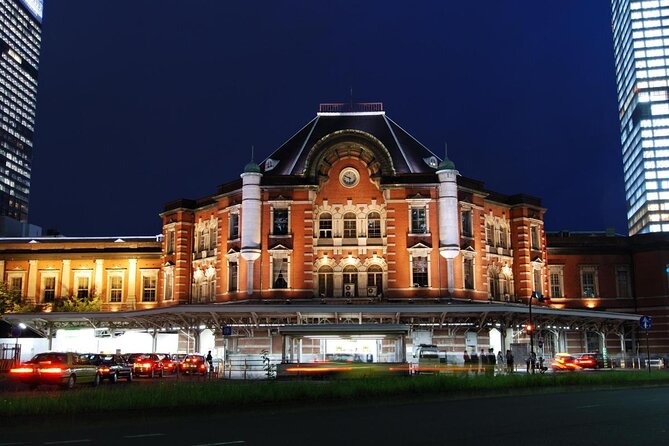
Begin at Tokyo Central Railway Station if you want an introduction to the city’s transport system and modern growth. The station is presented as a historic rail hub with important architecture and a role in Japan’s modernization. The audio stop is brief, listed at about 10 minutes, so use it as an orientation rather than a full architectural tour.
From there, the East Gardens of the Imperial Palace offer a quieter change of pace. The grounds occupy part of the former Edo Castle site, and the audio points you toward the area’s imperial connection and carefully arranged gardens. Admission is listed as free, but opening conditions are not provided, so check before you go.
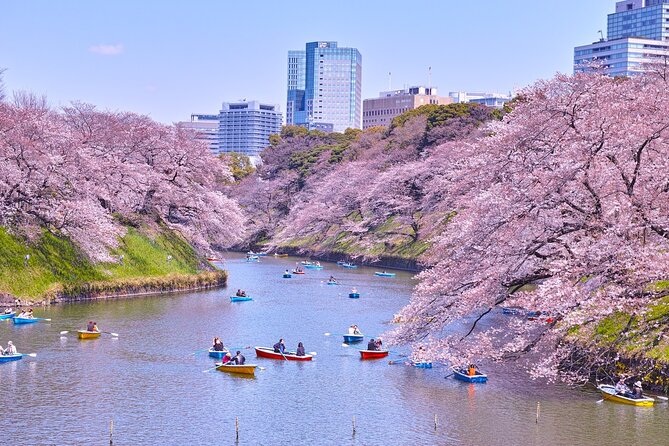
Chidorigafuchi is another short stop in the Imperial Palace area. The moat is especially associated with cherry blossoms in spring, while the audio explains its defensive role in feudal Japan. Entry is not included, and the route gives no transport, so you will need to decide how to connect these central sights.
Yasukuni-jinja Shrine requires a thoughtful approach. It is dedicated to Japan’s war dead and carries a difficult, controversial place in modern Japanese memory. The audio promises cultural and historical context, but allow yourself time to consider the site rather than treating it as just another photo stop. Admission is listed as free.
Shinjuku and Shibuya in one broad sweep
Shinjuku Gyoen National Garden gives you a break from Tokyo’s dense streets. Its grounds combine Japanese, French, and English garden styles, and the audio covers its imperial beginnings and later transformation. Entry is not included, and this is one place where 10 minutes is only enough for a quick orientation. If you enjoy gardens, plan extra time.
The Tokyo Metropolitan Government Buildings are a practical stop for city views. The audio covers Tokyo’s government and the building’s modern design. Admission is listed as free, which makes this one of the better value stops if you want a high viewpoint without adding a ticket cost.
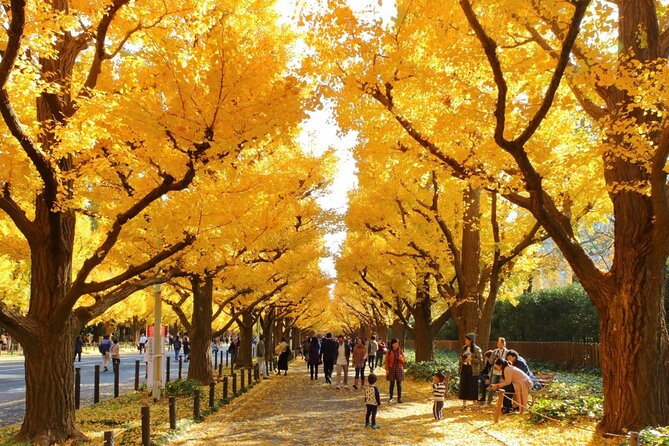
Meiji Jingu Shrine is one of the tour’s more atmospheric locations. The approach runs through wooded grounds, and the shrine is dedicated to Emperor Meiji and Empress Shoken. The audio introduces Shinto customs and imperial history. I would not rush this one. Even if you spend only a short time at the shrine itself, the setting gives you a useful contrast with nearby Shibuya.
Shibuya Crossing is the city at full speed. The audio explains how the district changed from a residential area into a major fashion and entertainment center. The crossing itself is free, but the stop works best as a brief look at Tokyo’s modern energy, not as a formal attraction with an admission desk.
These four stops sit in the same general western part of the city, but they are not one continuous walk in the simple sense. Use public transport between them. Since transport is excluded, fares and route planning remain yours to handle.
More audio tours around the world:
- Barcelona: Sagrada Familia Entry Ticket with Audio Guide
★ 4.6 · 105,312 reviews - Rome: Pantheon Fast-Track Ticket and Official Audioguide
★ 4.5 · 27,353 reviews - Barcelona: Casa Batlló Entry with Self-Audioguide Tour
★ 4.7 · 25,359 reviews - Rome: Colosseum & Forum with Audio Guide App -Optional Arena
★ 4.2 · 24,770 reviews
Roppongi, Tokyo Tower, and the old temple beside it
The National Art Center, Tokyo, is described as an empty museum because it has no permanent collection and instead hosts temporary exhibitions. Its unusual design and changing program make it different from a standard art museum. The audio can help you understand the building and its cultural role, but exhibition admission is not included.
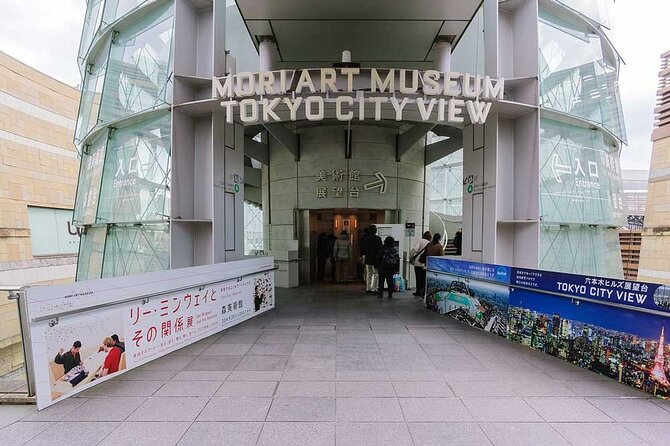
Mori Art Museum takes you high above Roppongi Hills and focuses on contemporary art. It is a good fit if you want Tokyo’s present-day creative side rather than only old temples and imperial sites. Entry is not included, and the museum stop may require more than the suggested 10 minutes if an exhibition catches your attention.
Tokyo Tower is one of the city’s familiar symbols. The commentary covers its Eiffel Tower inspiration, construction, and place in postwar Japan. You can admire it from outside without paying, but entry to the tower is not included. That distinction matters when you compare the $9 audio price with the total cost of the day.
Zojoji Temple makes a strong companion stop. The Buddhist temple sits near Tokyo Tower, creating one of the city’s clearest old-and-new views. Its connection to the Tokugawa shogunate adds political and religious context to the visit. Admission is listed as free, so this is an easy place to pair with the tower without another ticket.
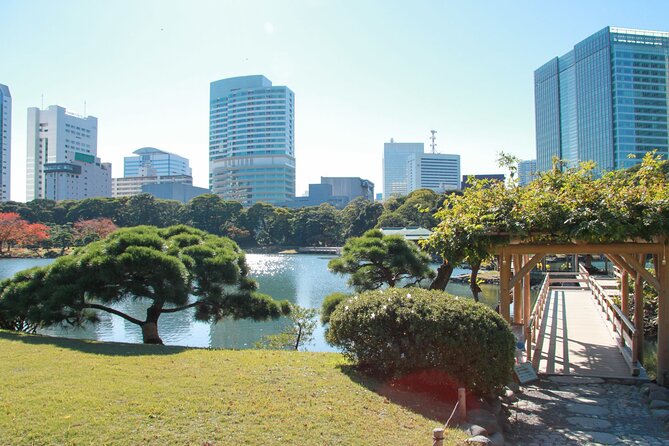
Hama Rikyu Gardens moves you back toward Tokyo’s older feudal world. The grounds once belonged to a feudal lord and later adapted as the city changed around them. Entry is not included. As with Shinjuku Gyoen, the 10-minute guide segment is only a starting point. Give the gardens more time if you want to notice the contrast between historic grounds and the surrounding city.
Rainbow Bridge and Odaiba
Rainbow Bridge is presented as an engineering landmark over Tokyo Bay, with attention to its construction and night lighting. The stop itself is free, but the audio tour does not arrange transport or a special viewing position.
Odaiba is the route’s futuristic counterpoint. Built on artificial islands, it grew from a defensive idea into an entertainment district. The audio gives that change some context, which helps you see Odaiba as more than a collection of modern attractions. Entry to specific sites is not included, and you should allow extra time if you want to explore beyond the audio point.
These bay-area stops can consume more time than expected because they sit away from several other parts of the route. I would group them together rather than trying to squeeze them between Ueno and Shibuya.
Skytree, Asakusa, and Ueno’s museum quarter
Tokyo Skytree is the tallest structure on this itinerary and a major symbol of modern Tokyo. The audio highlights its design and the way traditional Japanese ideas influenced its appearance. Entry is not included, so decide in advance if you want only an outside view or a paid visit.
Senso-ji is Tokyo’s oldest temple and one of the route’s essential cultural stops. Its founding legend and role in Edo-period life give the audio a solid subject. Admission is free, but the temple precinct can become crowded, so the 10-minute segment should be treated as a quick introduction.
Asakusa gives the temple a wider setting. This historic district retains an older Tokyo character and once functioned as an entertainment center before taking on a stronger cultural role. The audio helps connect Senso-ji with the surrounding streets rather than treating the temple as an isolated monument.
Ueno Park is another free stop and one of the city’s best-known public parks. The audio covers its history, museums, and importance during cherry blossom season. It is a useful final stop because it connects several cultural institutions in one area.
The Tokyo National Museum is Japan’s oldest and largest museum, with Japanese art and antiquities. Entry is not included, and a 10-minute audio track cannot replace the museum itself. If this is high on your list, make it a main event rather than a quick add-on.
The National Museum of Nature and Science covers Japan’s natural world and technological progress. It suits families and anyone who wants a change from shrines and art. Admission is not included, and its subject range makes it another stop where you should plan for more time than the audio segment suggests.
The National Museum of Western Art is housed in a building designed by Le Corbusier and has UNESCO World Heritage status. It offers a different cultural angle from the Japanese collections nearby. Entry is not included, so the Ueno cluster can become an expensive museum day if you visit all three institutions.
Cost, timing, and the real value
At $9 per person, this is inexpensive for a Tokyo guide. The price makes sense if you want background information and a route framework without paying for a private guide. It is especially useful for a solo visitor or a small group that prefers to move independently.
The low price does not cover the parts that can add up. You pay for transport between districts, and admission fees are separate for Chidorigafuchi, Shinjuku Gyoen, Mori Art Museum, Tokyo Tower, Hama Rikyu Gardens, Odaiba attractions, Tokyo Skytree, and the museums. Several other stops are free, including Tokyo Station, the Imperial Palace East Gardens, Yasukuni-jinja, the Tokyo Metropolitan Government Buildings, Meiji Jingu, Shibuya Crossing, Zojoji, Senso-ji, Asakusa, and Ueno Park.
The advertised duration is about four hours, with roughly 10 minutes assigned to each stop. That timing is best understood as audio time, not total sightseeing time. Travel between districts, waiting for trains, buying tickets, taking breaks, and actually seeing the sites will push the experience well beyond four hours.
The six-day link validity improves the value. You can select 22 stops in advance, then divide them into sensible areas. If you try to follow every point in a single outing, the tour may feel rushed and confusing.
How to avoid the common problems
The most important preparation is simple: open both links before you leave. Read the instructions, test the SoundCloud audio, and inspect the Google My Maps points. The audio is accessed through a web link, while the map sends you to individual guides, so knowing how the two work together will save time.
Download or prepare the content as instructed if you expect to be offline. The tour says you do not need to remain online while using it, but the access email and map should be available before you begin.
Do not assume someone will meet you at a shrine, station, or museum. There is no pickup, drop-off, or physical meeting point. You choose your own starting and ending locations.
The non-refundable policy also makes careful planning important. Once booked, the experience cannot be canceled or changed for a refund. Confirm that your phone can open the links and that you understand transport and entry costs before paying.
Who should book it?
I would choose this for an independent visitor who likes short audio explanations, wants to control the pace, and is comfortable using a map in a large city. It can also work for a couple or family that wants to split Tokyo sightseeing across several days without joining a group.
I would not choose it if you want a person to explain Tokyo in real time, guide you through train transfers, or adjust the commentary to your exact location. The mixed score and complaints about confusing details suggest that you need to manage the experience yourself.
Book it for the flexibility and low price, not for a polished, fully guided day. Use it as a digital outline, select one or two city areas at a time, and budget separately for transport and admissions. Done that way, $9 buys a useful starting point. Treated as a complete four-hour tour of all 22 sights, it is likely to disappoint.
FAQ
How long does the Tokyo Self-Guided Audio Tour last?
The suggested duration is about four hours. The 22 audio stops are each listed at roughly 10 minutes, but transport, sightseeing time, breaks, and attraction visits will make the total outing longer.
Can I start and finish anywhere?
Yes. There is no fixed meeting point. You choose your starting and ending locations in Tokyo.
Is transportation included?
No. Pickup, drop-off, and transportation between attractions are not included. You arrange and pay for your own travel.
Are admission tickets included?
No. Entry fees are separate wherever they apply. Several outdoor sites and shrines are listed as free, while places such as Tokyo Skytree, Tokyo Tower, museums, gardens, and Mori Art Museum may require payment.
How do I access the audio guide?
You receive an email with two links on your selected travel date before the starting time. One link opens the audio through SoundCloud, and the other opens a Google My Maps route connecting the 22 attractions to their audio guides.
Do I need to stay online during the tour?
The tour information says no. You can use the audio guide without remaining online, but you should open and prepare the links before setting out.
How long do I have access to the audio and map?
The private access links are valid for up to six days. You can use that period to split the sights across several outings.
Is this a private tour with a human guide?
It is a private self-guided activity for your own group, but no human guide accompanies you. Customer support is available for questions about using the audio and map links.
New audio tours around the world
- London Panoramic Open Top Bus Tour with Audio Guide★ 4.0 · 209 reviews
- London: British Museum Audio Guide & Small Group Entry★ 3.5 · 81 reviews
- London: National Gallery Audio Tour (No Entry Ticket)★ 3.5 · 11 reviews
- London’s Alternative History: A Self-Guided Audio Tour★ 5.0 · 4 reviews
- London: British Museum’s English Audio Tour with Free Reservation★ 3.0 · 15 reviews
- London: Churchill War Rooms Ticket & Political London Audio Tour★ 4.0 · 83 reviews
- London: British Museum Audio Tour with Free Guaranteed Entry★ 3.0 · 30 reviews
- Houses of Parliament Ticket & Political London Audio Guide★ 4.0 · 13 reviews
Japan Audio Tours, compared.
Tokyo: Open Top Panoramic Sightseeing Bus with Audio Guide
Read our review →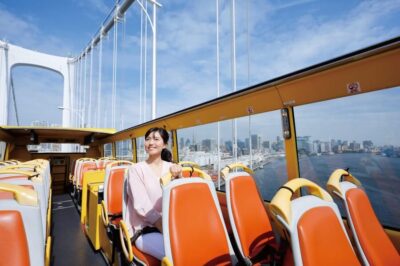
Tokyo: 60min Panoramic Open Top Bus Tour with Audio Guide
Read our review →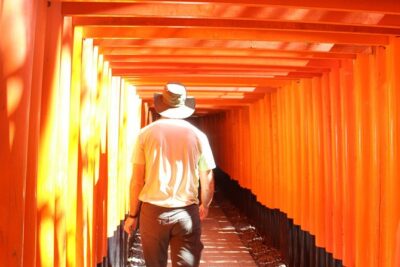
Fushimi Inari Shrine: Explore the 1,000 Torii Gates on an audio walking tour
Read our review →
Tokyo: Sumo Keiko Training Tour with Audio Guide & Photo
Read our review →Browse the lists this tour appears in