Review · VERONA
Verona: Juliet’s House Fast-Track Entry Ticket & Audio Guide
Juliet’s House is less about proving Shakespeare’s story and more about stepping into Verona’s most famous piece of romantic theater. You’ll enter a medieval house linked to the Cappelletti family, look over the courtyard from Juliet’s balcony, and pose beside the polished bronze statue below.
I like the fast-track entry, especially in summer, when the regular line can stretch through the heat. I also like the freedom of the self-guided audio tour, since you can move at your own pace instead of keeping up with a group.
The main catch is scale. This is a small house, and the balcony can become a photo bottleneck. The audio app also needs to be downloaded before you arrive, and you must collect a paper entry ticket first.
Key points to know before you go
- The balcony is the main event: You can step onto Juliet’s famous balcony and take in the courtyard below.
- The courtyard has two different experiences: The ticketed entrance is separate from the area where people gather to see and touch the statue.
- Fast-track entry matters most at busy times: Summer lines can be long, while early morning visits are often calmer.
- Your phone replaces a traditional guide: Download the audio app and bring your own headphones.
- The house takes less than two hours for most people: The two-hour allowance gives you room to explore, but many finish in about an hour.
- Ticket collection needs planning: Pick up the official ticket at the Verona Luggage Room, Via Stella, 16, before going to the house.
What Juliet’s House really offers
Verona’s Juliet’s House is a theatrical sight with a medieval shell. The building is associated with the Cappelletti family, often connected with Shakespeare’s Capulets, while the nearby Montecchi family is linked with the Montagues. That connection is part local tradition, part literary imagination, and part clever museum-making.
You are not visiting a proven home of Shakespeare’s Juliet. You are visiting the place Verona has shaped into her home, complete with a balcony, a bronze statue, period-style rooms, artwork, costumes, and a story people have carried around the world.
That distinction matters. If you expect a large palace filled with original objects from the 1300s, you may find the house slight. If you enjoy the meeting point between medieval Verona and Shakespeare’s famous tragedy, the setting works well.
The best approach is to treat this as a short cultural stop with a strong emotional hook. Let the audio commentary fill in the story, then spend a few quiet minutes looking at the building itself. The romance is partly in the architecture, partly in the city’s storytelling, and partly in the fact that so many people have come here for the same reason.
More audio tours around Italy:
- Rome: Pantheon Fast-Track Ticket and Official Audioguide
★ 4.5 · 27,353 reviews - Rome: Colosseum & Forum with Audio Guide App -Optional Arena
★ 4.2 · 24,770 reviews - Florence: Timed Entry to Michelangelo’s David + Audio App
★ 4.6 · 19,496 reviews
Collecting your ticket on Via Stella
The first practical step is collecting the official entry ticket at the Verona Luggage Room, Via Stella, 16. This is important because the booking voucher alone is not enough for admission. You need the official ticket before entering Juliet’s House.
The office can be a little easy to miss, so allow extra time. A small sign and an unfamiliar doorway have caused confusion, and some people have found the meeting point harder to locate than expected. If you are already in central Verona, collecting the ticket earlier in the day, or even the day before when permitted, can make the actual visit calmer.
Once you have the ticket, follow the instructions for fast-track entry. The quick entrance is particularly useful because the courtyard also attracts people who are only there to see or touch Juliet’s statue. That crowd is not the same as the timed admission line.
A useful local-style tip is to look for the correct entrance rather than simply joining the largest queue. The ticketed entrance can be on the right-hand side, while the long line may be for people waiting to enter the courtyard without the house visit. Staff instructions may help, but you should still check before waiting.
The courtyard and Juliet’s bronze statue
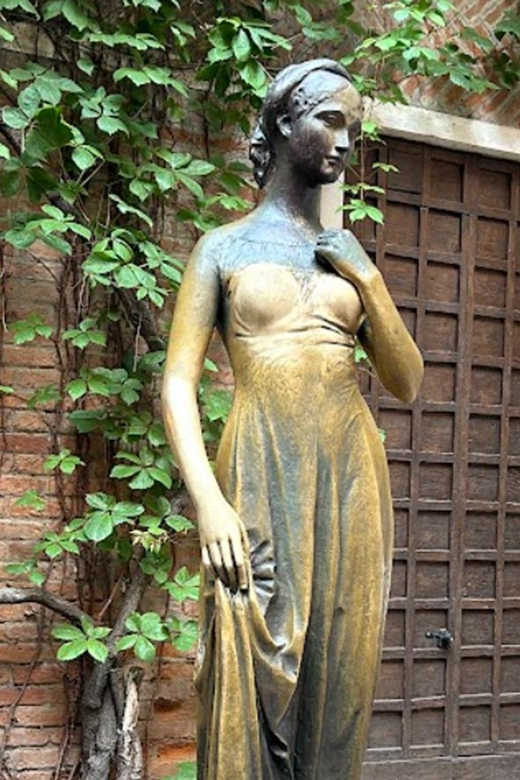
The courtyard is the most crowded and theatrical part of the visit. Here you’ll see the bronze Juliet, usually surrounded by people taking photographs and reaching toward the statue. The tradition says that touching her right breast brings good luck in love, which explains the steady traffic.
The statue makes a memorable photograph, but the crowd can be untidy. Lines for pictures may not be clearly organized, and people sometimes linger while arranging elaborate photo shoots. If you want a quick picture, be prepared to wait your turn and keep your camera ready.
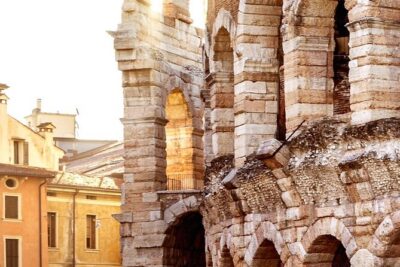
The courtyard also gives you the first view of the balcony above. This is where the Shakespeare connection becomes visually clear. You see the brick walls, the old-looking stonework, the balcony, and the visitors waiting for their turn. It feels more like a scene than a quiet museum courtyard.
I would not judge the whole experience by the courtyard alone. It can be noisy and crowded, especially later in the day. The house interior is often more interesting than the statue area because it gives you something to look at beyond the familiar photograph.
Stepping onto the famous balcony
The balcony is the emotional center of the visit. You can step out, look over the courtyard, and take your Romeo and Juliet photograph. Couples sometimes whisper sweet nothings, stage a proposal, or simply enjoy the brief moment before the next person steps forward.
The space is limited, so your time on the balcony depends partly on the crowd. You may get a clear photograph, but you should not expect a long private pause. Some visitors have found that people taking full photo sessions make it hard for others to use the balcony.
The simplest strategy is best: decide in advance who will take the picture, keep your phone ready, and take a few efficient shots. If you are traveling with someone, you may need to ask another person to take your photo, then return the favor. This small act often works better than waiting for a staff photographer.
A morning time slot can make a large difference. Several early visits, especially around 10:30 a.m., have been calm enough to let people enjoy the balcony and the house without constant jostling. Afternoon queues can be much longer, particularly in summer.
The balcony itself is not grand. That is part of the point. It is a compact stage set above a narrow courtyard, and its fame comes from the story attached to it. You are buying the chance to occupy a famous image for a moment, not access to a vast architectural monument.
Same sights, a different narrator:
- Rome: City Sightseeing Hop-on Hop-off Bus with Audioguide
★ 4.0 · 16,045 reviews - Pompeii: Entry Ticket with Audio Guide
★ 4.1 · 13,491 reviews - Venice: La Fenice Opera House Entry Ticket with Audio Guide
★ 4.6 · 11,742 reviews - Rome: Colosseum, Forum, Palatine Hill Entry & Audioguide App
★ 4.4 · 10,957 reviews
Inside the medieval house
The interior contains artwork, frescoes, costumes, and displays connected with the Romeo and Juliet story. The rooms help turn the building from a quick photo stop into a small museum.
The frescoes and medieval details are worth looking at carefully. They give the house a sense of age and help explain why Verona can connect the building with the Cappelletti family. Costumes add a more theatrical note, reminding you that this attraction sits between local history, literature, and performance.
Some parts of the house may be closed during restoration or changes to the display. At times, the upper floors have been listed as unavailable, while on other visits they were open. Check the current conditions when you arrive, since the exact amount on view can change.
You may finish the interior in around an hour without feeling rushed. That is not necessarily a weakness. Juliet’s House works well as part of a day in Verona, when you want a focused stop rather than a half-day museum visit. The two-hour duration gives you breathing room for the ticket exchange, audio commentary, photographs, and a second look at the courtyard.
I especially like the house when approached with modest expectations. The interior is charming, but it is small and some displays may feel limited for the price. The building itself, its atmosphere, and the balcony carry most of the experience.
Using the audio guide on your phone
The audio guide is self-guided, so you control the pace. It is available in English, French, Italian, German, Spanish, and Mandarin Chinese. You listen through your own mobile device and headphones, not equipment supplied at the house.
The commentary covers the building, the courtyard, and the story surrounding Juliet. It can add useful context to displays that might otherwise pass in a few seconds. You can pause, replay, or move on when a room is crowded.
Download the app and audio guide before you arrive. This is one of the most important tips for the visit. The instructions direct you to scan a QR code, but the download reminder may arrive too late for someone without mobile data. Wi-Fi in the area may not be reliable enough to solve the problem at the last minute.
Bring charged headphones. No headset is included, and playing audio aloud from your phone would be awkward in a small, crowded museum. If the app fails, printed information and display text can still provide some help, but the audio is meant to be a central part of the ticket.
The audio guide is also promoted with commentary for a walking tour of Verona at key points around the city. Check the app carefully to see what is available with your booking. If that city commentary is active, it adds value beyond the house itself, especially if you plan to walk through central Verona afterward.
Timing, crowds, and the value of fast-track entry
The $28 price makes the most sense when the regular line is long. In quiet periods, Juliet’s House is a short visit, and you may question paying extra for a fast-track ticket. In July and August, though, avoiding a long wait in the sun can make the ticket worthwhile.
Timed entry helps control the number of people inside. When the system is working well, the house feels manageable and you can move through the rooms without being pressed from behind. The courtyard can still be chaotic because not everyone there has the same type of ticket.
Aim for an early slot. Morning visits around 10:30 a.m. have often offered a better balance of access and space. Later in the day, the line can grow dramatically, and the balcony becomes harder to enjoy.
The advertised duration is two hours, but you do not need to stay that long. Many people complete the visit in about one hour. Use the extra time for the audio commentary, a second look at the displays, or a more patient attempt at the balcony photograph.
If your schedule is tight, remember to count the ticket collection as part of your planning. The official entry ticket must be picked up at Via Stella, 16, before you go inside.
Who will enjoy this most
This experience suits first-time visitors to Verona who want to see the city’s best-known romantic sight without spending half a day there. It is also a good fit for couples, Shakespeare fans, families with older children, and anyone who enjoys a quick museum stop with a strong photograph at the center.
You’ll get the most from it if you appreciate the difference between historical evidence and a beloved local tradition. The house is connected with Verona’s medieval families, but Shakespeare’s exact Juliet did not live here. The attraction is about the story Verona tells, not a confirmed literary crime scene.
It may disappoint you if you want a large collection, original Shakespeare objects, or a long guided tour. It is also less appealing if you dislike crowds, phone-based audio, or waiting for a balcony photograph.
People with very limited time can still fit it into a central Verona itinerary, but plan the ticket pickup carefully. Those who already know the courtyard from countless photographs may find the interior more rewarding than the statue or balcony.
What the $28 ticket includes
The price covers fast-track admission, access to the courtyard, access to the balcony, and the multilingual audio guide. It does not include transportation, a live guide, headphones, or a mobile device.
That makes the value depend on how you use the visit. If you only want to touch the statue and photograph the balcony from below, you are paying for more than you need. If you want the interior, the balcony, the displays, and the audio commentary, the price is easier to justify.
The fast-track feature is the strongest practical benefit. A long queue in Verona’s summer heat can drain the fun from a short attraction. The audio guide is the strongest educational benefit, but only if you download it early and bring headphones.
Free cancellation up to 24 hours before the visit and reserve now, pay later terms add flexibility. Check the available starting times before booking, since the visit uses timed entry.
Should you book Juliet’s House?
Book it if standing on Juliet’s balcony matters to you, especially during the busy season. Choose an early time, collect your official ticket with plenty of margin, download the audio guide before leaving your hotel, and bring headphones.
I would skip the fast-track ticket if you only want a quick look at the courtyard and statue, or if your Verona schedule is already packed with larger museums and historic buildings. For most first-time visitors, though, the ticket is a sensible way to handle the city’s most famous romantic stop without wasting time in line.
The house is small, the courtyard can be disorderly, and the balcony moment may last only a few seconds. Still, with the right expectations, it delivers exactly what it promises: a memorable place to connect Verona’s medieval setting with Shakespeare’s most famous love story.
FAQ
Where do I collect the official ticket for Juliet’s House?
Collect it at the Verona Luggage Room, Via Stella, 16. The booking voucher by itself is not enough for entry, so allow time to exchange it for the official ticket.
Does the ticket include access to the balcony?
Yes. The ticket includes access to Juliet’s House Balcony and the courtyard, as well as fast-track entry to the house.
Is a live guide included?
No. This is a self-guided audio experience. A live guided tour is not included.
Which languages are available for the audio guide?
The audio guide is available in English, French, Italian, German, Spanish, and Mandarin Chinese.
Do I need my own phone and headphones?
Yes. You need a mobile device to use the audio guide, and headphones are not provided. Download the app and audio guide before arriving.
How long does the visit take?
The scheduled duration is two hours, but many people finish in about one hour. The extra time allows for the audio commentary, photographs, and possible queues inside the house.
New audio tours around Italy
- Lecce Walking Tour with Audio and Written Guide by a Local★ 4.0 · 38 reviews
- Private Audio Guided Walking Tour in Lecce★ 4.0 · 7 reviews
- Private Audio Guided Walking Tour in Como★ 3.0 · 3 reviews
- Como Walking Tour with Audio and Written Guide by a Local★ 4.5 · 30 reviews
- Finance and Nobility: Explore medieval Genoa on a self-guided audio tour★ 4.5 · 7 reviews
- Genova Walking Tour with Audio and Written Guide by a Local★ 4.5 · 33 reviews
- Udine Walking Tour with Audio and Written Guide by a Local★ 4.0 · 2 reviews
- Florence: Uffizi Gallery Timed Entry Ticket with Audio★ 3.0 · 3 reviews
Verona Audio Tours, compared.

Verona Walking Tour with Audio and Written Guide by a Local
Read our review →
Verona: Juliet’s House Fast-Track Entry Ticket & Audio Guide
Read our review →