
Review · JAPAN
Tokyo: Open Top Panoramic Sightseeing Bus with Audio Guide
Tokyo is a city best understood from several angles, and this open-top bus ride gives you a quick, useful first look. In 70 minutes, you pass Tokyo Station, Ginza, Tokyo Tower, major parks, skyscrapers, or the waterfront and Rainbow Bridge. I like the low price and the GPS audio system, which keeps the commentary tied to the sights outside your window.
I also like the choice between a city route and a bay route. The main drawback is simple: you are exposed to the weather, and even on a pleasant day the bus may feel hot, cold, or cramped. If rain arrives, the roof may be closed, so this is not always the open-air ride you imagined.
Key points to know before booking
- Two distinct 70-minute routes: Choose the City Course for central Tokyo and the Bay Course for Rainbow Bridge and Odaiba.
- Automatic GPS commentary: The audio starts according to the bus’s location and is offered in Japanese, English, Chinese, French, Korean, Vietnamese, and Thai.
- Excellent first-day orientation: You see a broad slice of Tokyo without changing trains or planning a complicated route.
- Rainbow Bridge is the Bay Course highlight: The bus crosses both the first and second levels, giving the waterfront ride extra appeal.
- Bring your own headphones if possible: Optional headphones cost 100 yen, and the jack accepts only a standard 3.5mm mini plug.
- Arrive early and be precise: Check in at the Tokyo VIP Lounge 20 to 40 minutes before departure. The bus leaves on time and does not wait for late arrivals.
A fast way to get your bearings in Tokyo
At $11 per person, this is one of the easier sightseeing purchases to justify in a city as large as Tokyo. You are not paying for a long guided day out. You are paying for a focused 70-minute circuit that shows you where the main districts sit in relation to one another.
That distinction matters. You will not get off to explore Tokyo Tower, Ginza, or Odaiba during the ride. Instead, you see them from the road, hear a short explanation, and note which places deserve a closer visit later.
I think this works best on your first day, especially if you have just arrived and want a broad picture before tackling Tokyo’s train system. It also suits you if your schedule is tight, or if you want a pleasant break from walking and underground stations.
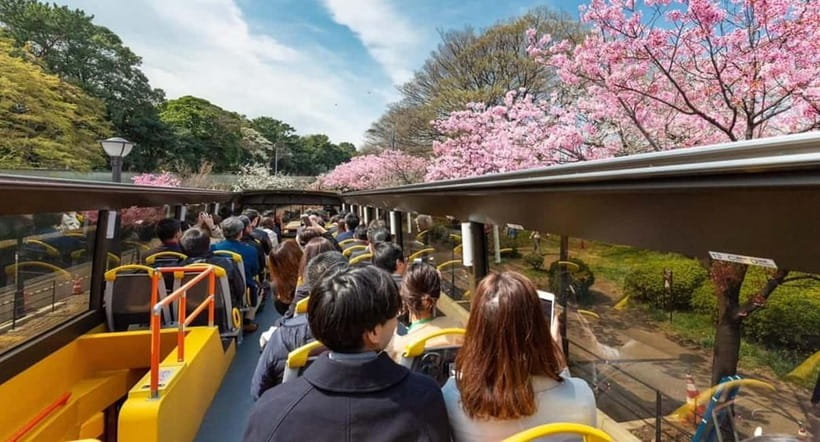
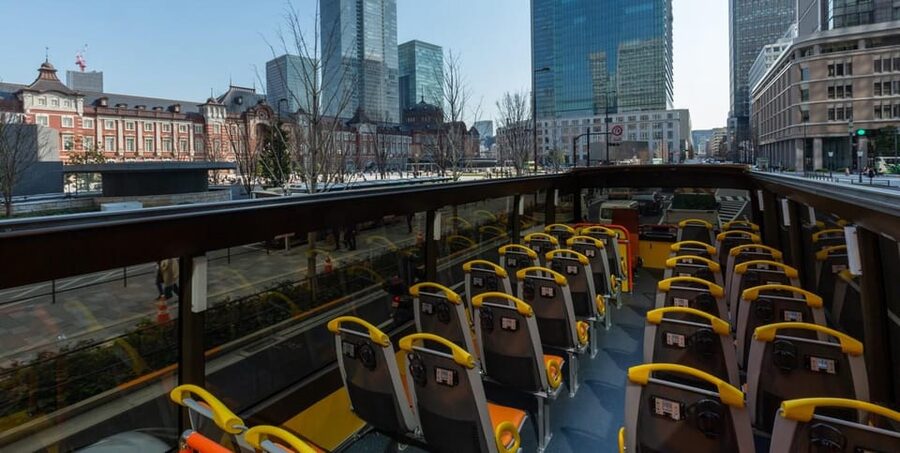
The bus is open-top when conditions allow, giving you a clear view above traffic and buildings. You can look up at Tokyo Tower, watch the skyline pass overhead, and take in the scale of the city in a way that is hard to do from a regular car or train.
The experience is not a substitute for visiting the sights. It is a practical introduction. You get a sense of Tokyo’s districts, roads, waterfront, parks, and high-rise areas, then return to the places that caught your attention.
More Bus Audio Tours in the world:
- Rome: City Sightseeing Hop-on Hop-off Bus with Audioguide
★ 4.0 · 16,045 reviews - Milan: City Sightseeing Hop-On Hop-Off Bus with Audio Guide
★ 4.0 · 6,256 reviews - Rome: Hop-on Hop-off Sightseeing Bus Tour with Audioguide
★ 4.1 · 4,801 reviews
Choosing between the City Course and Bay Course
The two routes cover different sides of Tokyo. If you can take only one, think about the kind of city view you want rather than trying to guess which course is more important.
The City Course is the better choice for classic central Tokyo. It follows this general route:
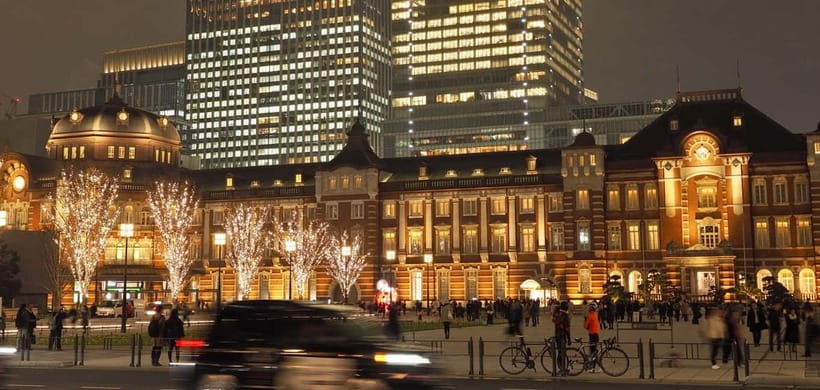
Tokyo Station Red Brick Station Building, Marunouchi, Chidorigafuchi, Akasaka State Guest House, Meiji Jingu Gaien, Tokyo Midtown, Roppongi, Tokyo Tower, Hibiya, and Ginza.
The Bay Course gives you more open space and a stronger sense of movement. It includes:
Tokyo Station Red Brick Station Building, Marunouchi, Zojoji Temple, Tokyo Tower, Shibaura, Rainbow Bridge, Fuji TV Building, the Statue of Liberty, Odaiba Seaside Park, Shiodome, Ginza, and another crossing of Rainbow Bridge.
The City Course is probably more useful if your priority is Tokyo’s central districts and well-known urban landmarks. The Bay Course is the more visually varied ride, with bridges, open water, Odaiba, and the unusual experience of crossing Rainbow Bridge.
The City Course from Tokyo Station to Ginza
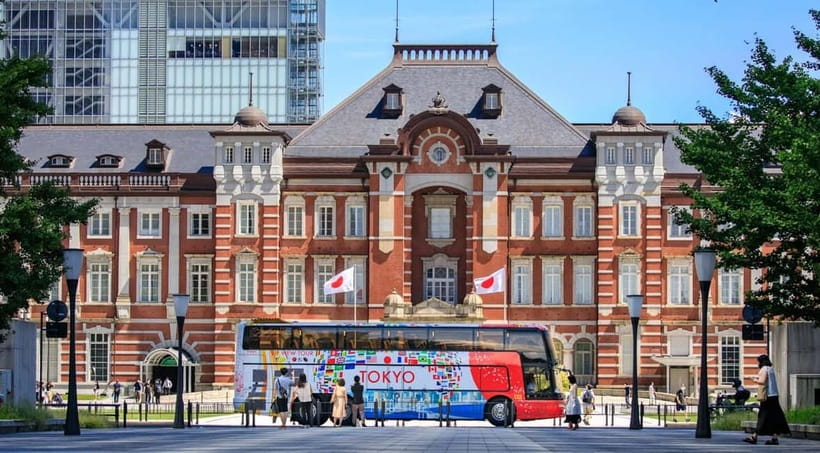
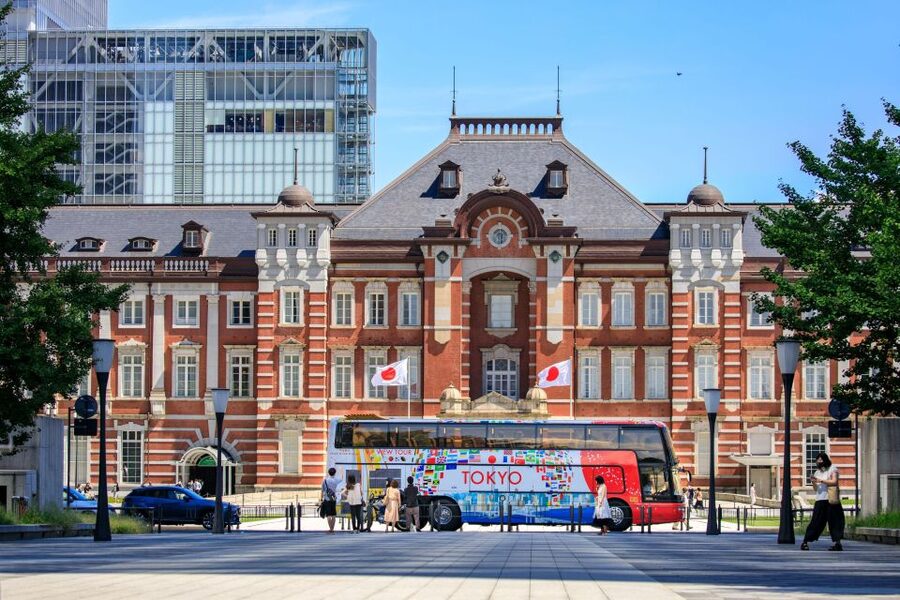
The trip begins near Tokyo Station, whose red-brick building gives you an immediate landmark and a useful reference point. From there, the bus moves through Marunouchi, the polished business district beside the station.
You pass near the Imperial Palace area and Chidorigafuchi. The route does not turn this into a walking visit, but the road view helps you see how central Tokyo mixes government buildings, tree-lined areas, office towers, and busy commercial streets.
Akasaka State Guest House adds a more formal side of the city. The building and district offer a contrast to the modern towers later on the route. The audio guide gives context as the bus moves, so you get more than a series of place names.
Meiji Jingu Gaien brings parks and open space into the ride. This section is useful if you want to see how Tokyo residents use central green areas without leaving the city center.
The bus then passes Tokyo Midtown and Roppongi, two areas known for modern buildings, shops, restaurants, and high-end city life. You will not have time to stop, but the view helps you compare Roppongi’s tall urban style with the more traditional or formal areas earlier in the route.
Tokyo Tower is one of the major photo moments. An open-top bus gives you a clean upward view, although the best angle depends on traffic, weather, and where you are seated. Keep your phone ready, but do not spend the entire ride looking at a screen.
The City Course continues through Hibiya and ends its central-city loop around Ginza. Ginza is famous for department stores, polished streets, and major shopping avenues. Seeing it from the bus gives you a quick preview before you return on foot.
The weakness of this route is that several attractions pass by rather than receive a long stop. The strength is its range. In just over an hour, you move from Tokyo Station to palace-side roads, parks, Roppongi, Tokyo Tower, Hibiya, and Ginza.
The Bay Course and the Rainbow Bridge crossing
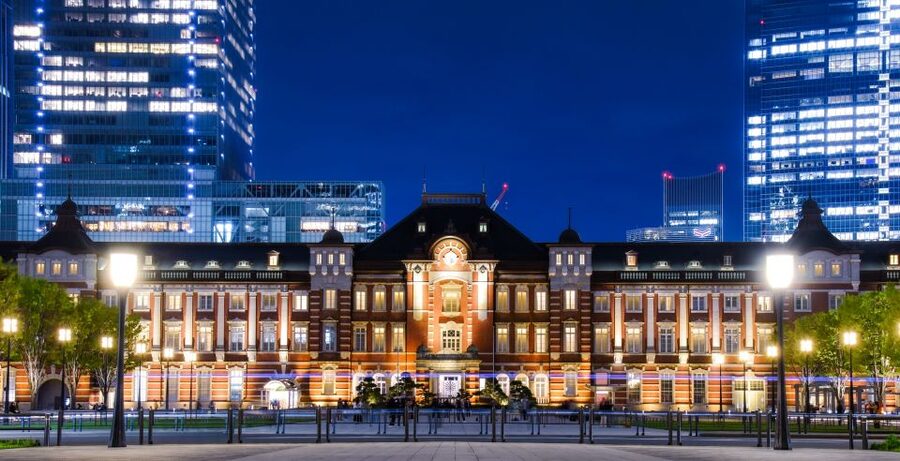
The Bay Course begins with Tokyo Station and Marunouchi, then moves toward Zojoji Temple and Tokyo Tower. Zojoji brings a Buddhist temple setting into the route, while Tokyo Tower provides the familiar vertical marker that helps you understand where you are in central Tokyo.
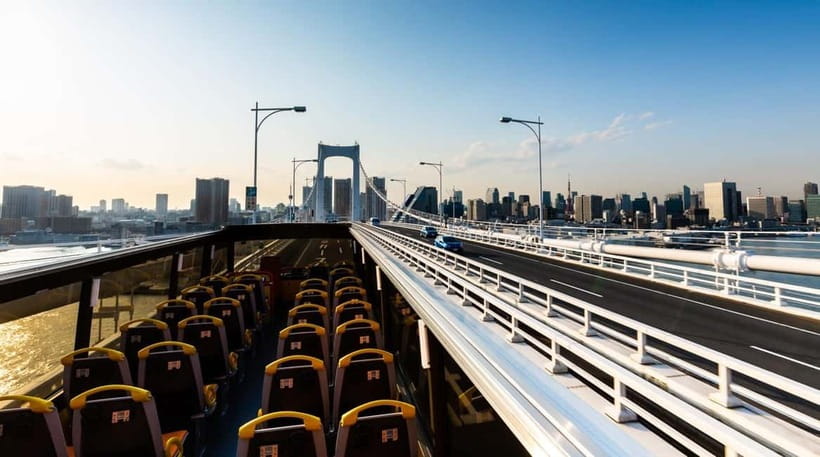
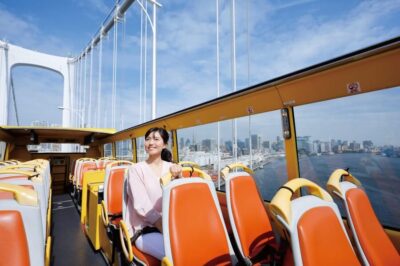
The ride then heads toward Shibaura and Rainbow Bridge. This is the part many people will remember most. The bus crosses the bridge on its first level and later crosses the second level, giving you changing views of Tokyo Bay and the city around it.
The bridge ride is valuable because it connects central Tokyo with Odaiba in a way that feels like an outing, not just a transfer. You see the water, the bridge structure, the shoreline, and the spread of the city from a higher and more open position.
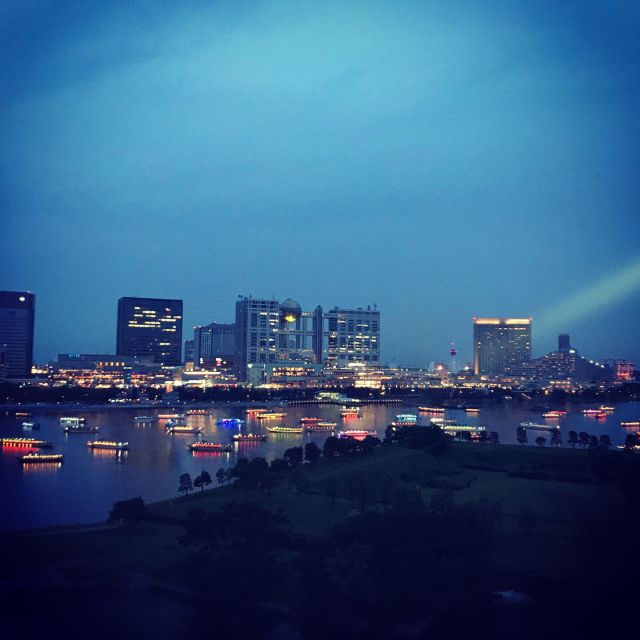
On the Odaiba side, the route passes the Fuji TV Building, the Statue of Liberty, and Odaiba Seaside Park. The small Statue of Liberty is a playful landmark, while the waterfront park offers a different mood from Ginza or Roppongi.
Odaiba is modern, spacious, and built around the bay. From the bus, you get a useful overview, but you should not expect enough time to explore its attractions. If the waterfront appeals to you, note the area and return later by train or on foot.
The bus then heads back through Shiodome and Ginza. Shiodome’s high-rises add another strong skyline section, while Ginza brings the journey back to one of Tokyo’s best-known commercial districts.
I would choose the Bay Course if you want the most varied ride or if Rainbow Bridge is high on your list. It also works well near sunset or after dark, although the exact departure times and daylight conditions depend on the schedule you select.
More audio tours around the world:
- Barcelona: Sagrada Familia Entry Ticket with Audio Guide
★ 4.6 · 105,312 reviews - Rome: Pantheon Fast-Track Ticket and Official Audioguide
★ 4.5 · 27,353 reviews - Barcelona: Casa Batlló Entry with Self-Audioguide Tour
★ 4.7 · 25,359 reviews - Rome: Colosseum & Forum with Audio Guide App -Optional Arena
★ 4.2 · 24,770 reviews
How the GPS audio guide works
The audio system is automatic. GPS tracks the bus and supplies commentary according to its location, so you do not need to search for the next landmark or watch a guide point out every turn.
The listed languages are Japanese, English, Chinese, French, Korean, Vietnamese, and Thai. This makes the ride easier for international visitors, though the language selected and the exact playback setup should be confirmed when you check in.
There is also Japanese commentary from the staff or onboard instructor. At times, this can make the audio harder to hear, especially if you are listening through headphones while Japanese announcements play over a loudspeaker.
Some audio segments include music between announcements. A few people may enjoy that atmosphere, but the music can feel too loud compared with the spoken information. I recommend bringing your own 3.5mm headphones if you have them, since the optional pair costs 100 yen and the bus accepts only that standard plug.
The commentary focuses on the places along the route and their background. It is useful for orientation and basic history, but do not expect a long personal talk about daily life in Tokyo or a traditional walking-tour conversation. This is a location-based audio ride, not a live guiding experience.
The meeting point near Tokyo Station
The meeting point is the Tokyo VIP Lounge, on the second and third floors of a building with Family Mart on the ground floor. It is about a five-minute walk from Tokyo Station’s Yaesu North Exit.
This is the detail to take seriously. The building is easy to miss if you are rushing, and Tokyo Station itself has many exits and corridors. Check the map and coordinates in advance, then allow enough time to find the lounge without stress.
Arrive 20 to 40 minutes before departure. The facility is shared with other users, and open-top bus customers can use it free of charge beginning 40 minutes before departure. Outside that period, a facility fee may apply.
The lounge is functional rather than luxurious. Do not book this expecting a grand VIP waiting room or complimentary drinks. Japanese-speaking staff are available, and several people have found the staff kind and helpful, but English communication may be limited.
After check-in, staff may give you a map and lead you on a short walk to the bus. This is useful because the bus does not necessarily wait directly outside the lounge. Plan your arrival carefully, especially if you have only just reached Tokyo and are still working out the train system.
Late arrivals are not accommodated, even if you call ahead. The bus leaves at the scheduled time, and there are no refunds for arriving late or going to the wrong location.
Weather, seating, and comfort
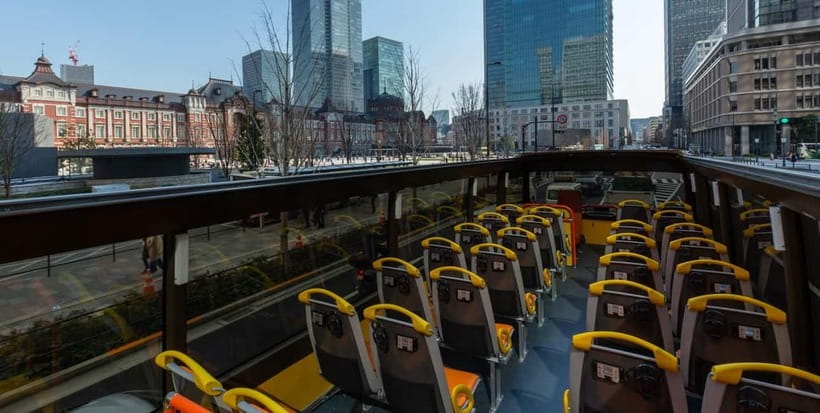
This is an open-top ride, so weather is part of the deal. The tour operates in rain or shine, except in extreme conditions such as typhoons. If it rains, the open top may be closed.
A sunny day can be excellent for photos, but the upper section may become hot. In cooler weather, wind can make the ride feel colder than expected. Knee space is limited, so the bus may not suit you if you need a lot of room to stretch out.
Umbrellas are not allowed on the vehicle. Food and smoking are also prohibited, and selfie sticks are not permitted. Dress for the forecast, and consider a hat or light layer when appropriate, but make sure anything you bring can be stored safely.
Traffic can affect the exact timing and views. The operator may make minor schedule or route adjustments due to weather, road conditions, or other unexpected problems. That is normal for a road-based city tour, but it means you should not plan a tight connection immediately afterward.
Who gets the most from this $11 ride?
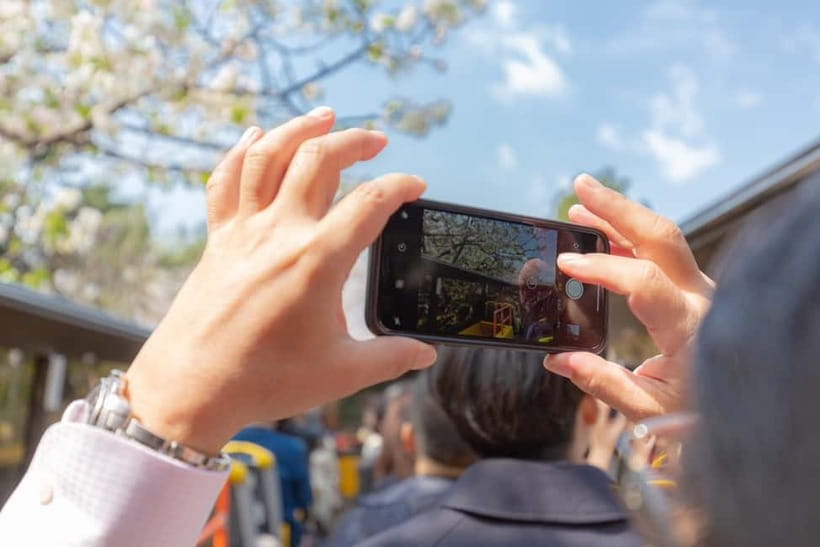
The best match is a first-time visitor who wants to understand Tokyo’s scale before exploring on foot. You see several major districts without navigating multiple train lines, and the low price leaves room in your budget for the places you decide to revisit.
It also suits you if you have only a short stay. A 70-minute circuit can show you far more than a single neighborhood walk, especially on a first afternoon.
Families and older visitors may appreciate the chance to sit while seeing the city, though the weather and limited knee space deserve attention. It can also be a relaxing choice after a long flight, provided you are comfortable with the possibility of heat, cold, or rain.
You may want something else if you expect a fully live-guided tour, frequent stops, or detailed personal commentary. This bus does not let you hop off at each landmark, and the audio can be interrupted by music or Japanese announcements.
The experience has a 3.8 rating from 254 reviews, which fits the practical picture: many people enjoy the views, organization, friendly assistance, and value, while others are frustrated by weather, the meeting point, limited space, or communication issues. At $11, the price softens those flaws, but it does not remove them.
Cancellation and booking details
You can cancel up to 24 hours before departure for a full refund. A reserve-now, pay-later option is also available, which helps if your Tokyo schedule is still changing.
Check the departure time carefully and confirm the route before booking. The City Course and Bay Course offer different sights, and the bus cannot wait if you arrive at the wrong meeting point.
The contact number may not respond outside business hours, listed as Monday through Saturday from 9:30 AM to 6 PM Japan time. Do not rely on last-minute messaging to solve a location or timing problem.
Should you book this Tokyo bus tour?
Book it if you want a cheap, low-effort introduction to Tokyo and understand that this is a sightseeing circuit, not a hop-on hop-off service. The City Course gives you central landmarks and districts, while the Bay Course offers the stronger bridge and waterfront experience.
I would pick the Bay Course for its variety and Rainbow Bridge crossing, unless the Imperial Palace area, Roppongi, and Ginza matter more to you. Bring headphones, arrive early at the Yaesu-side lounge, and check the weather before you go.
Skip it if you need a guaranteed open roof, generous legroom, or a guide speaking directly to you throughout the ride. For most first-time visitors with realistic expectations, though, $11 is a fair price for a broad view of Tokyo in just 70 minutes.
FAQ
How long is the Tokyo open-top bus tour?
The tour lasts 70 minutes. Both the City Course and Bay Course include audio commentary.
What languages are available on the audio guide?
The GPS audio guide is available in Japanese, English, Chinese, French, Korean, Vietnamese, and Thai.
Where is the meeting point?
The meeting point is the Tokyo VIP Lounge on the second and third floors of a building with Family Mart on the ground floor. It is about a five-minute walk from Tokyo Station’s Yaesu North Exit.
How early should I arrive?
You should check in 20 to 40 minutes before your scheduled departure. The bus leaves promptly and cannot wait for late arrivals.
What is included in the ticket?
The ticket includes the open-top bus tour, the multilingual audio guide, and assistance from Japanese-speaking staff.
Are headphones provided?
Headphones are not included. Optional headphones cost 100 yen, and the headphone jack accepts only 3.5mm mini plugs.
Does the bus operate in bad weather?
The tour operates rain or shine, except in extreme conditions such as typhoons. If it rains, the open top may be closed.
What is not allowed on the bus?
Smoking, selfie sticks, food, and umbrellas are not allowed in the vehicle.
New audio tours around the world
- London Panoramic Open Top Bus Tour with Audio Guide★ 4.0 · 209 reviews
- London: National Gallery Audio Tour (No Entry Ticket)★ 3.5 · 11 reviews
- London’s Alternative History: A Self-Guided Audio Tour★ 5.0 · 4 reviews
- London: British Museum Audio Guide & Small Group Entry★ 3.5 · 81 reviews
- London: British Museum’s English Audio Tour with Free Reservation★ 3.0 · 15 reviews
- London: Churchill War Rooms Ticket & Political London Audio Tour★ 4.0 · 83 reviews
- London: British Museum Audio Tour with Free Guaranteed Entry★ 3.0 · 30 reviews
- Houses of Parliament Ticket & Political London Audio Guide★ 4.0 · 13 reviews
Japan Audio Tours, compared.
Tokyo: 60min Panoramic Open Top Bus Tour with Audio Guide
Read our review →
Fushimi Inari Shrine: Explore the 1,000 Torii Gates on an audio walking tour
Read our review →
Tokyo: Sumo Keiko Training Tour with Audio Guide & Photo
Read our review →Browse the lists this tour appears in