
Review · JAPAN
Tokyo: 60min Panoramic Open Top Bus Tour with Audio Guide
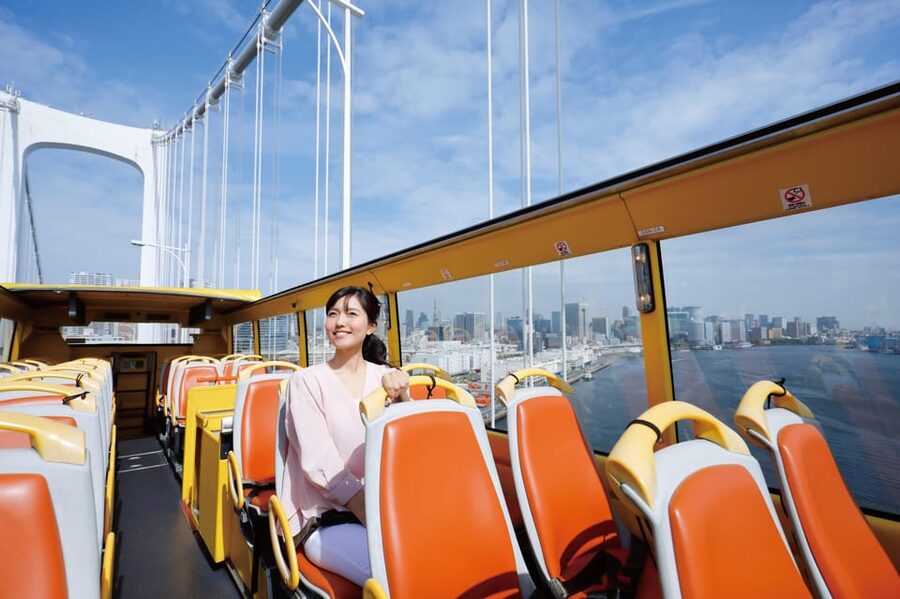
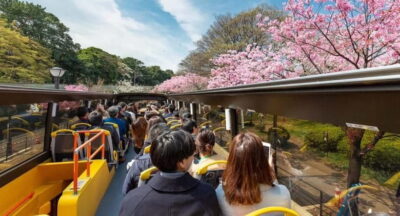
Tokyo has a lot to take in, and this one-hour open-top ride gives you a quick, breezy look at its grandest sights. From the upper deck, you pass the National Diet Building, Tokyo Tower, Rainbow Bridge, Odaiba, Toyosu, Tsukiji, Kabuki-za, and Ginza without the usual bus roof blocking your view. I like the broad city sweep, and I like that the route includes both central Tokyo and the bay area.
The tour costs $14 per person, which is a fair price for a simple orientation ride. The main tradeoff is that this is a moving view, not a sightseeing stop tour. You cannot hop off, and rain can close the roof or cancel the trip.
Why this short Tokyo bus ride is worth considering
- Tokyo Tower from several angles: The route gives you changing views of one of the city’s most familiar landmarks, something a single photo stop cannot provide.
- A rare open-air view of the bay: You pass Rainbow Bridge, Odaiba, and Toyosu with the Tokyo breeze around you.
- Eight audio languages: GPS guidance is available in English, Chinese, Korean, Spanish, French, Thai, Indonesian, and Vietnamese.
- A useful first look at Tokyo: Central districts, government buildings, shopping streets, and the waterfront all fit into one hour.
- Easy departure near Tokyo Station: The Hato Bus office is about two minutes from the Marunouchi South Exit.
- A low-cost choice: At $14, it gives you a city overview without taking half a day.
Starting beside Tokyo Station’s Marunouchi South Exit
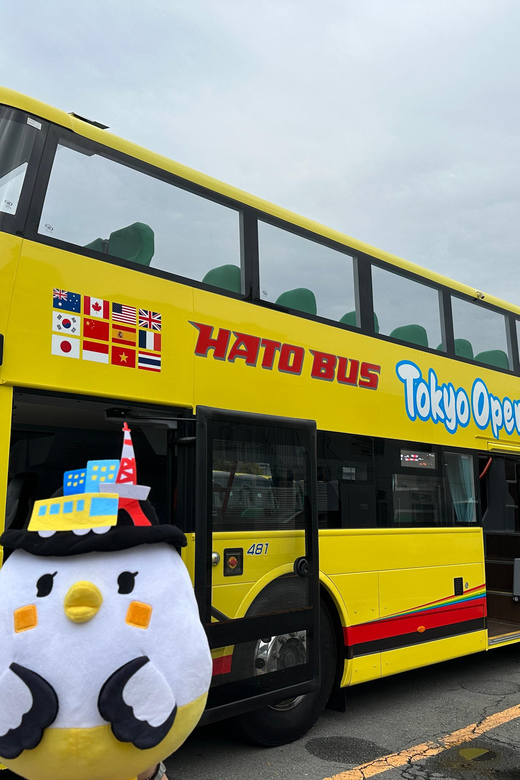
Your meeting point is the Hato Bus Tokyo office near the Marunouchi South Exit of JR Tokyo Station. When you leave the station through that exit, turn left and walk straight for about two minutes. Look for the yellow Hato Bus stop.
That location matters. Tokyo Station is large, and the wrong exit can add needless walking. Give yourself enough time to reach the Marunouchi South Exit before setting out. The provided coordinates are 35.678964, 139.765781, which can help if you use a map app.
The bus leaves from and returns to this same office. There is no hotel pickup or drop-off, so you handle your own way to the station. For a short tour, that central meeting point keeps the arrangement fairly simple.
A Japanese-speaking guide conducts the ride. The guide provides the live commentary, while the GPS system gives recorded guidance in eight languages. The language options are English, Chinese, Korean, Spanish, French, Thai, Indonesian, and Vietnamese.
Bring a smartphone that works in Japan and your own earphones. The GPS devices and earphones are not supplied. The audio system is free, but technical trouble or faulty earphones do not qualify for a refund, so check your phone and pack comfortable earphones before you arrive.
More Bus Audio Tours in the world:
- Rome: City Sightseeing Hop-on Hop-off Bus with Audioguide
★ 4.0 · 16,045 reviews - Milan: City Sightseeing Hop-On Hop-Off Bus with Audio Guide
★ 4.0 · 6,256 reviews - Rome: Hop-on Hop-off Sightseeing Bus Tour with Audioguide
★ 4.1 · 4,801 reviews
Hibiya Park and the National Diet Building
The bus first passes Hibiya Park, a green break between Tokyo’s office districts and government center. You do not stop, so treat this as a quick visual introduction rather than a park visit.
Next comes the National Diet Building, Japan’s national legislature. Its symmetrical design and prominent central tower make it easy to recognize from the road. Seeing it from an open upper deck gives you a clear view above traffic and street-level obstacles.
This section helps you place Tokyo’s political center on the map. You will not have time to study architectural details, and the bus does not provide a walking visit. Still, it is useful context before the route shifts toward Toranomon and Tokyo Tower.
Toranomon and the changing view of Tokyo Tower
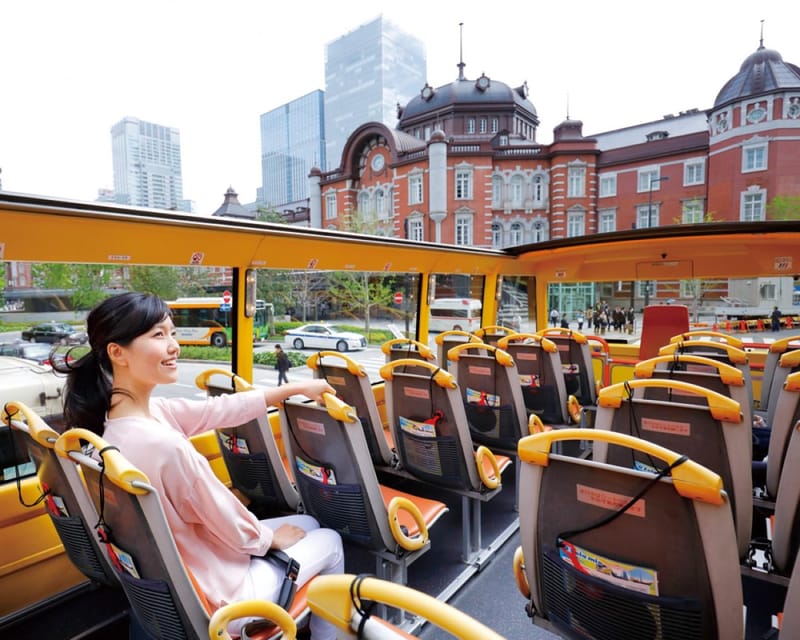
Passing through Toranomon, you see one of the central city areas where business, government, and major roads meet. The moving route gives you a sense of how closely packed Tokyo’s districts are, even when the buildings and streets change quickly.
Tokyo Tower is one of the strongest parts of the tour. The bus approaches it from different directions, so you get more than the standard straight-on view. The changing angles are especially useful if you want a quick set of city photographs, though the bus will not pause for a carefully composed shot.
I would keep your camera ready before the tower comes into view. On an open-top bus, the upper deck gives you a much clearer sightline, but the best angle can pass quickly. Keep both hands free when needed, and do not let photography distract you from the broader city view.
The tour is comfortable for a one-hour ride, according to the supplied experience details. That matters because this is a sightseeing circuit rather than a short transfer. You stay aboard for the full route, so a comfortable seat and a light layer for the breeze are practical choices.
Rainbow Bridge and the Tokyo Bay air
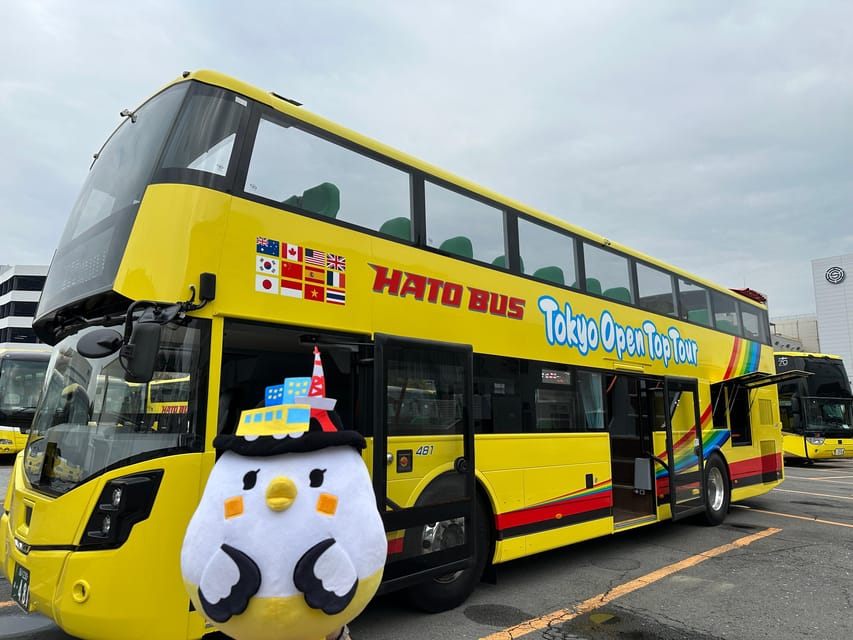
The route then heads toward Rainbow Bridge and the Tokyo Bay area. This is where the open-top design makes the biggest difference. You can feel the air, see farther across the roadway, and take in the changing scale of the city without a bus ceiling in your sightline.
The bridge is passed rather than treated as a walking stop. You will not have time to explore its pedestrian path or pause beside the water. What you get is a moving view of the structure, the bay, and the surrounding city zones.
Weather matters most here. In rain, the roof may be closed. Heavy rain or bad weather can also cancel the tour, so check the conditions on the day and keep your schedule flexible if the bus ride is an important part of your plans.
In dry weather, this section can be the most memorable stretch. You get a sense of Tokyo’s scale as the route moves from the government district and tower area toward the broad waterfront. It is not a quiet nature outing, but the breeze and open sky provide a welcome change from dense streets and indoor attractions.
More audio tours around the world:
- Barcelona: Sagrada Familia Entry Ticket with Audio Guide
★ 4.6 · 105,312 reviews - Rome: Pantheon Fast-Track Ticket and Official Audioguide
★ 4.5 · 27,353 reviews - Barcelona: Casa Batlló Entry with Self-Audioguide Tour
★ 4.7 · 25,359 reviews - Rome: Colosseum & Forum with Audio Guide App -Optional Arena
★ 4.2 · 24,770 reviews
Odaiba and Toyosu from the upper deck
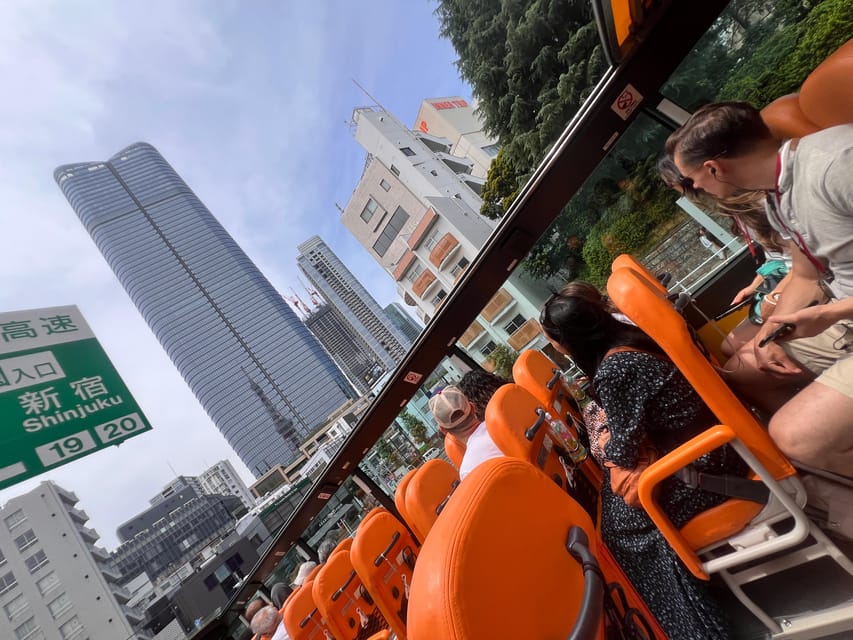
After Rainbow Bridge, the bus passes Odaiba and Toyosu. These waterfront areas give the route a different character from Ginza or the National Diet Building. Roads open up, buildings spread out, and the bay becomes part of the view.
Because the bus does not stop, you should think of Odaiba and Toyosu as a moving overview. This is useful if you are deciding which part of Tokyo deserves a longer visit later. It is less useful if your main goal is shopping, dining, or visiting a particular attraction in either area.
The upper deck lets you look around without the visual limits of ordinary bus windows. That is the central value of this experience. You are not simply being transported between sights. You are given a continuous view of the city as its districts change.
Still, keep your expectations measured. The tour cannot cover the waterfront in depth in only one hour. You see the relationship between the bay districts and central Tokyo, but you do not receive time to explore Odaiba or Toyosu on foot.
Tsukiji, Kabuki-za, and Ginza on the return route
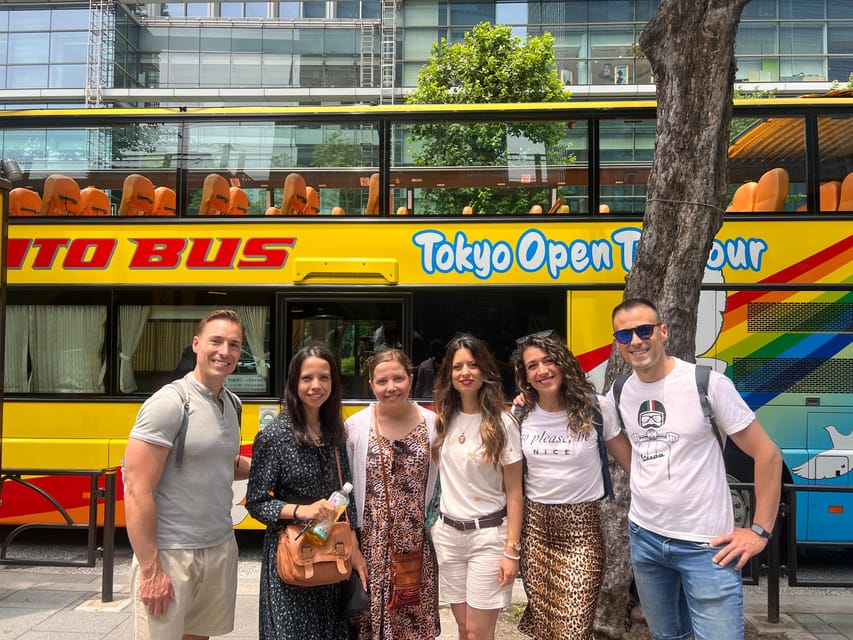
The return section passes Tsukiji Outer Market, Kabuki-za, and Ginza. These stops bring you back into the older and denser parts of central Tokyo after the wide bay roads.
Tsukiji Outer Market is known for food shops and market streets, but this bus route only passes by. You will not have time to browse stalls or eat there during the tour. Since food and drinks are not allowed on the bus, plan any market visit before or after the ride, not during it.
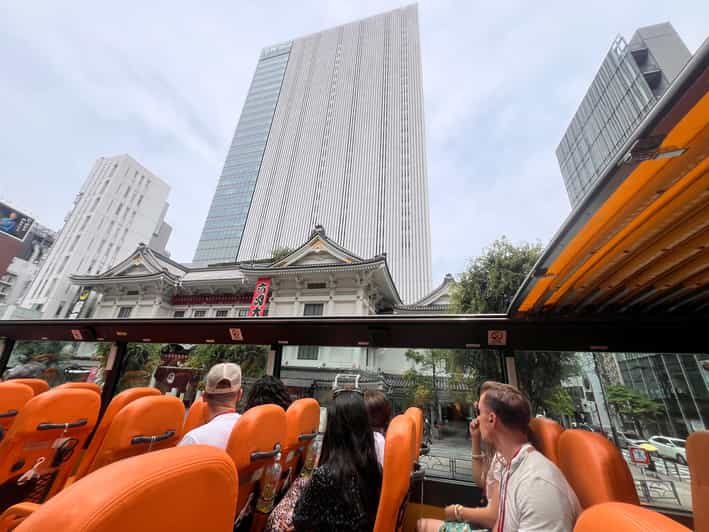
Kabuki-za adds a cultural landmark to the route. From the bus, you get a brief view of the theater’s distinctive exterior. It is a good reminder that Tokyo’s central districts mix modern offices, shopping streets, traditional performance culture, and major transport routes within a small area.
Ginza closes the sightseeing loop with some of Tokyo’s best-known commercial streets. The view is quick, and traffic may affect how much you see, but the route gives you a useful sense of Ginza’s position between the station area and the bay.
Then the bus returns to the Hato Bus office near Tokyo Station. Since the tour begins and ends at the same point, you can continue to the station, meet a train connection, or use the ride as a first look before exploring on foot.
What the $14 price really gives you

At $14, this is a modestly priced city orientation. You are paying for the open-top double-decker bus, the one-hour route, the live Japanese-speaking guide, and the GPS audio system. There is no meal, hotel transfer, or attraction admission included.
The value is strongest if you want to see many districts quickly. In one hour, you pass government buildings, Tokyo Tower, the bay, Odaiba, Toyosu, Tsukiji, Kabuki-za, and Ginza. Visiting all those areas independently would take much longer and require several train or subway rides.
The value is weaker if you prefer to spend time inside each place. Nothing on this route is a full stop, and you cannot hop off to take a closer look. You are buying a moving overview, not a guided walking tour.
I would consider it especially useful early in a Tokyo visit. It can help you decide where to return for a longer visit. It also suits a short stay, when a one-hour circuit gives you a broad view without taking up a full morning or afternoon.
Free cancellation up to 24 hours before departure adds useful flexibility. You can also reserve now and pay later. Since weather can affect the roof and the operation itself, those terms are helpful when your plans are still changing.
The audio guide and what you need to bring
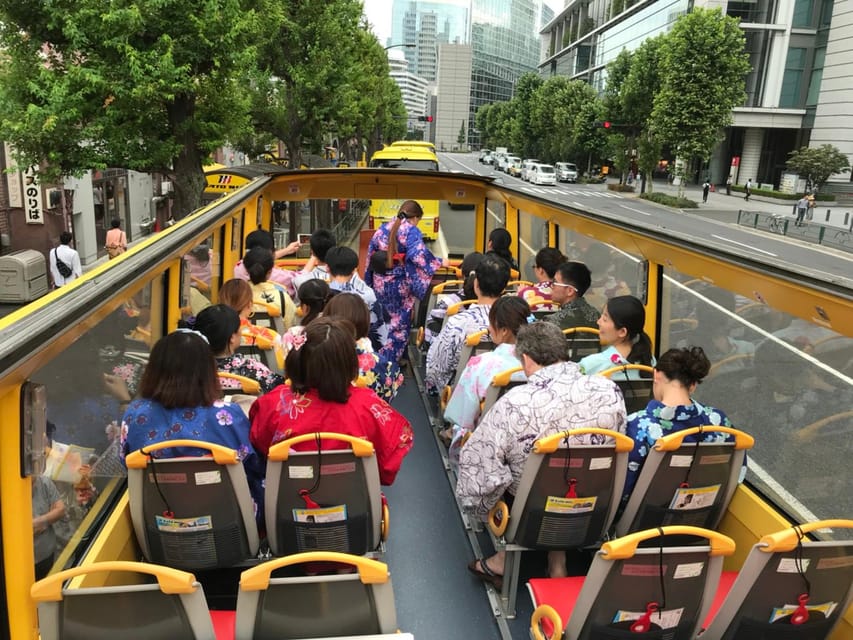
The GPS guidance is available in eight languages, which makes this tour accessible to a wide range of visitors. English, Chinese, Korean, Spanish, French, Thai, Indonesian, and Vietnamese are included.
You must bring your own smartphone and earphones. Your phone needs to work in Japan, and the system depends on GPS. The tour does not provide rental devices or earphones.
This setup keeps the audio service free, but it also puts the technical preparation on you. Charge your phone before the tour and bring earphones that stay in place. The operator does not provide refunds for technical problems or malfunctioning earphones.
The Japanese-speaking guide remains part of the ride even if you use the audio commentary. That gives you the live presence of a guide while allowing you to follow information in your preferred language.
Weather, seating, and practical comfort

The open roof is the reason to book this experience, but it is also the main weather risk. Rain may cause the roof to close, and bad weather or heavy rain may cancel the tour entirely. The view is therefore best on a dry day with tolerable temperatures.
Drinks in plastic bottles are permitted. Food is not allowed, and the activity information also says food and drinks cannot be taken on the bus, so follow the stricter practical rule: eat before boarding and bring only a permitted plastic bottle if needed.
This is not a hop-on hop-off service. You remain on the bus for the circuit and return to the starting office. That makes the experience easy to follow, but you cannot use it as transportation to Odaiba, Ginza, or any other point along the route.
Children under six can join free without a seat, with one child per adult. If a child needs a seat, the usual paid arrangement may apply, so confirm the booking details before you reserve.
The tour lasts one hour. That short length is a strength for families, first-time visitors, and anyone with limited time. It also means the pace is brisk, so you should not expect long explanations at every landmark.
Who will get the most from this bus tour
I would recommend this ride to you if you want a fast city overview with open-air views. It suits first visits, short stays, families who want a simple activity, and anyone who would rather see Tokyo from a high seat than spend an hour underground on trains.
It is also a good fit if you want to compare Tokyo’s districts. The route moves from Hibiya and the National Diet Building to Toranomon, Tokyo Tower, the bay, Odaiba, Toyosu, Tsukiji, Kabuki-za, and Ginza. That range helps you understand the city’s geography.
I would not choose it as your main activity if you want detailed history, shopping time, food stops, or photo breaks. The bus passes every listed landmark, and the hour goes by quickly.
The strongest moments are likely to be Tokyo Tower from changing angles and the open-air stretch around Rainbow Bridge. The broader benefit is seeing how central Tokyo connects to the waterfront. One supplied rating also described the route as comfortable, while another praised the complete guidance and the way well-maintained city sights appeared from the road.
Should you book the Tokyo open-top bus?
Book it if you want an inexpensive, one-hour introduction to Tokyo and you value broad views over close-up visits. The $14 price is sensible for a route that covers several major districts, especially if you are short on time.
Skip it if rain is likely, if you need a guaranteed open roof, or if you want to get off at Tokyo Tower, Tsukiji, Odaiba, or Ginza. Bring your own working phone and earphones, arrive at the Hato Bus office near the Marunouchi South Exit, and treat the ride as a moving city portrait.
FAQ
Where does the Tokyo open-top bus tour begin?
It begins at the Hato Bus Tokyo office near the Marunouchi South Exit of JR Tokyo Station. From the exit, turn left and walk straight for about two minutes to the yellow Hato Bus stop.
How long does the tour last?
The tour lasts one hour.
Does the bus return to Tokyo Station?
Yes. The tour begins and ends at the Hato Bus Tokyo office near Tokyo Station.
Is this a hop-on hop-off bus?
No. You remain on the bus for the full circuit and cannot get off at the sights along the route.
What languages are available for the audio guide?
GPS audio guidance is available in English, Chinese, Korean, Spanish, French, Thai, Indonesian, and Vietnamese.
Is the live guide English-speaking?
The live tour guide is Japanese-speaking. The GPS audio system provides the listed language options.
Do I need to bring anything for the audio guide?
Yes. Bring a smartphone that works in Japan and your own earphones. GPS devices and earphones are not provided.
What happens if it rains?
The roof may be closed in rain. The tour may also be canceled because of bad weather or heavy rain.
Can I bring food or drinks on the bus?
Food is not allowed. Drinks in plastic bottles are permitted, according to the activity information.
New audio tours around the world
- London Panoramic Open Top Bus Tour with Audio Guide★ 4.0 · 209 reviews
- London: British Museum Audio Guide & Small Group Entry★ 3.5 · 81 reviews
- London: National Gallery Audio Tour (No Entry Ticket)★ 3.5 · 11 reviews
- London’s Alternative History: A Self-Guided Audio Tour★ 5.0 · 4 reviews
- London: British Museum’s English Audio Tour with Free Reservation★ 3.0 · 15 reviews
- London: Churchill War Rooms Ticket & Political London Audio Tour★ 4.0 · 83 reviews
- London: British Museum Audio Tour with Free Guaranteed Entry★ 3.0 · 30 reviews
- Houses of Parliament Ticket & Political London Audio Guide★ 4.0 · 13 reviews
Japan Audio Tours, compared.
Tokyo: Open Top Panoramic Sightseeing Bus with Audio Guide
Read our review →
Fushimi Inari Shrine: Explore the 1,000 Torii Gates on an audio walking tour
Read our review →
Tokyo: Sumo Keiko Training Tour with Audio Guide & Photo
Read our review →Browse the lists this tour appears in