

Review · BAR HARBOR
Cape Cod Self-Guided Driving Audio Tour
Cape Cod’s long hook is its mix of sea stories and hard history. This self-guided drive follows the Pilgrims, the Nauset people, old fishing towns, lighthouses, a wireless station tied to the Titanic, and the road to Provincetown. The audio starts by location, so you can keep your hands on the wheel and stop when something catches your eye.
I like two things right away: one $16.99 purchase covers up to four people, and the app remains yours for a year with no expiry. I also like the freedom to pause for a beach, lunch, a trail, or a photo without waiting for a guide or bus.
The main caution is the app. Several people had trouble with setup, route direction, delayed turns, repeated narration, or audio cutting off. You need strong service to download the tour before leaving, and you should confirm your starting point before setting out.
Key points to know before you go

- A 77-mile route with more than 64 audio stories covers much of Cape Cod, from the Cape Cod Visitor Center to Provincetown.
- The price is per car, not per person, making this a strong deal for a couple or family of four.
- The stories focus on Pilgrim and Nauset history, plus lighthouses, whaling, beaches, nature trails, and radio history.
- Optional detours add the Cape Cod Lavender Farm, Bank Street Beach, Wellfleet Bay, and the Atlantic White Cedar Swamp Trail.
- Offline maps are available after download, but the app must be installed and tested while you have good Wi-Fi or cellular service.
- Plan on four hours at a minimum, and considerably longer if you take the detours and stop to explore.
What this Cape Cod audio drive actually offers
This is not a traditional guided tour with a person waiting for you. It is a private, GPS-based driving experience for your own car. You download the Action Tour Guide app, enter the password sent by email and text, and follow the route as the audio begins near each story point.
The advertised drive takes about three to four hours without much stopping. That is a bare driving estimate. If you walk a trail, visit a beach, explore Provincetown, or take several optional side roads, allow closer to six hours. One useful feature is lifetime access, despite some of the older information describing a one-year period. The current details say there is no expiry, so you can use it again on another Cape trip.
The English narration is the heart of the experience. It provides historical context while you drive, rather than asking you to read signs or stop at every visitor center. The tone is aimed at a general audience, with enough detail to make the route meaningful without turning every mile into a lecture.
The app includes a live GPS map and location-triggered audio. In theory, it tells you where to turn and plays the next story as you approach. In practice, you should treat it as a helpful guide rather than your only navigation tool. Some sections have triggered early, repeated after a stop, or played a turn instruction too late. Keep the speed reasonable and check the route before moving.
More Self-Guided Audio Tours in the USA
- Gettysburg Battlefield Self-Guided Driving Audio Tour
★ 4.5 · 910 reviews - Joshua Tree National Park Self-Guided Driving Audio Tour
★ 4.5 · 762 reviews - Ultimate Acadia National Park Self-Guided Driving Audio Tour
★ 4.0 · 521 reviews
Start with Cape history at the Visitor Center
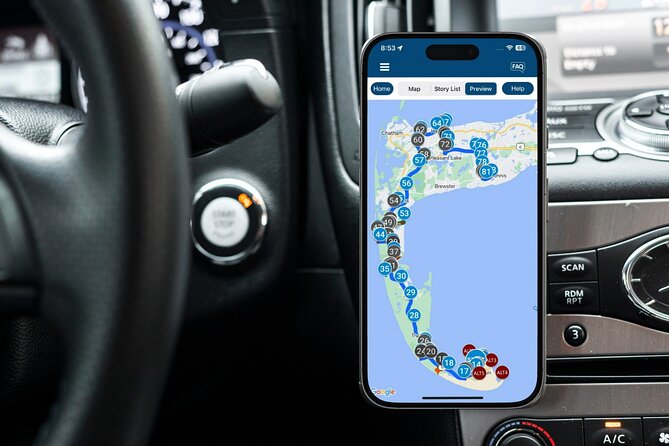
The route begins at the Cape Cod Visitor Center, where the narration sets up the story of the peninsula. You hear about the Pilgrims, the origins of the United States, and the Nauset people who already lived here when unfamiliar ships appeared offshore.
This opening matters because the tour does not treat Cape Cod as only a collection of pretty beaches. It frames the scenery through the people who lived here first and the difficult encounters that followed. You hear about Nauset traditions and legends before the drive moves into the small Massachusetts towns along the road.
There is an important practical wrinkle here. The supplied meeting information also lists Pilgrims’ First Landing Park in Provincetown as the start and end point, while the route description begins at the Cape Cod Visitor Center. The directions indicate that there are eastbound and westbound versions, with the eastbound tour beginning near the Visitor Center and the westbound version beginning near MacMillan Pier in Provincetown. Confirm which direction you downloaded before leaving.
That confusion caused real trouble for some users, who spent a long time trying to find the correct start. I would not wait until you are parked at the first stop. Download the app, open both the map and the tour, and make sure the first story matches your intended direction.
Scargo Tower and the Harwich side trip
An optional detour takes you past Scargo Lake and Scargo Tower. The lake has a memorable Nauset legend: a great chief created it to comfort his daughter, who could not stop mourning three dead fish.
The story also reaches back to the first sighting of the Mayflower. The Nauset people saw the approaching ship before the Pilgrims arrived, and the narration explains why its appearance caused fear rather than welcome. Scargo Tower gives the drive one of its more scenic pauses, though the tour does not include admission to any attraction.
Another optional turn leads to Harwich, a pleasant Cape town known for its beaches. The route presents this as a place to swim or slow down, not just a location to pass through. If you want to add beach time, this is one of the sections that can push the trip well beyond the advertised three or four hours.
In Harwich, the Cape Cod Lavender Farm offers woodland paths, lavender fragrance, and souvenirs. The trail access is described as free, but purchases and any separate activities are not included. This is the kind of stop that makes the audio tour useful: it points you toward a place you might otherwise skip while keeping the choice in your hands.
Bank Street Beach follows as another optional stop. You can relax, walk near the water, or dip your feet in the Atlantic. Check local access rules before planning a summer swim. Beach parking and access can be restricted for nonresidents from June through September, and public restrooms may not be open even when the beach itself is accessible.
Eastham and the first Pilgrim encounter
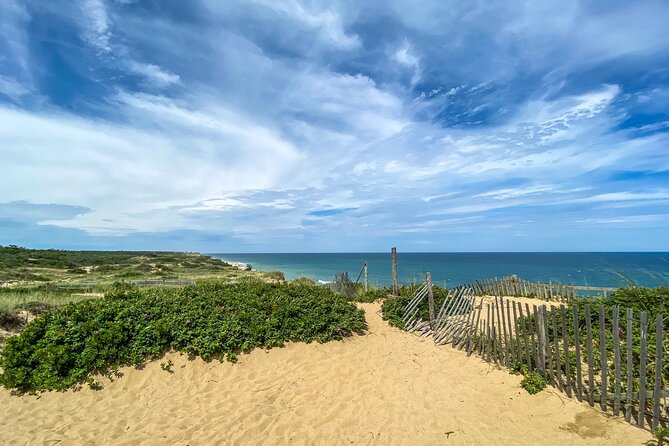
The drive continues through Eastham, a Colonial town that supplies one of the tour’s most important historical chapters. Here the narration covers the first difficult meeting between the Pilgrims and the Nauset people, along with Squanto’s assistance and the truce associated with the first Thanksgiving.
The story is valuable because it gives context to places that might otherwise seem like ordinary roads and wooded stretches. The Cape’s history is not only about the Pilgrims surviving their first winter. It is also about the people already living here, the misunderstandings between cultures, and the help that made survival possible.
At First Encounter Beach, a plaque marks the site of the skirmish. The location is at 220 Samoset Road. You can get out, see the shore, and connect the narration with a specific place rather than hearing a story in the abstract.
The stop itself is free, but the time needed depends on how much you want to see. The audio gives you the historical reason to pause, while the beach provides a simple break from the car. This is a good example of why the drive works best when you do not rush from one GPS point to the next.
More Driving Audio Tours in the USA:
- Ultimate Lake Tahoe Self-Guided Driving Audio Tour
★ 4.5 · 435 reviews - Scenic Newport, RI Self-Guided Driving Audio Tour
★ 4.5 · 325 reviews - Arches National Park Self-Guided Driving Audio Tour
★ 4.5 · 288 reviews - Kauai Adventure Bundle: 4 Epic Audio Driving Tours
★ 4.5 · 211 reviews
Salt Pond, Nauset Light, and the Three Sisters

At the Salt Pond Visitor Center, located at 50 Nauset Road, you get a useful pause in the route. The small museum adds Cape history, and the center offers a restroom and a chance to stretch your legs.
Next comes Nauset Light Beach and the nearby Nauset Lighthouse. The lighthouse is one of the Cape’s most recognizable sights, and the narration explains why it was needed in waters once known as an ocean graveyard. The coastline’s shoals and rough water made navigation dangerous, so the lighthouse story adds weight to what might otherwise be a quick photo stop.
The route lists both Nauset Light Beach and Nauset Lighthouse as separate points. That is helpful if you want to spend time at the beach, but it may also mean the narration repeats or seems to trigger in close succession. Keep an eye on the map and do not assume every audio point requires a separate long stop.
The Three Sisters Lighthouses provide one of the more unusual sights. These three short white towers are now inland among trees rather than directly on the shore. The narration explains why they were placed there and how Cape Cod changed from Nauset country to Colonial fishing settlements, then into a major holiday destination.
This section combines scenery with a clear historical thread. You see how the Cape’s working life changed over time, and why old structures can now appear far from the water they once guarded.
Wellfleet Bay and Cape Cod’s natural side
The optional detour to Mass Audubon Wellfleet Bay Wildlife Sanctuary is aimed at people who want to walk. Five miles of paths cross four different types of habitat, with opportunities to see birds and other wildlife.
You should not treat this as a quick pull-off. A sanctuary visit takes time, especially if you want to walk more than a short section. It is a good choice for families who need a break from driving, bird watchers, and anyone who wants to balance the historical narration with time outdoors.
The Atlantic White Cedar Swamp Trail offers another short walk. In roughly one mile, the route includes a beach, freshwater marsh, deciduous woods, and salt plain. That compact variety makes it a practical stop if you want a taste of Cape Cod’s natural features without committing to a long hike.
The audio also uses this part of the drive to discuss the old whaling industry. That adds a working-sea chapter to the better-known Pilgrim stories. You get a fuller sense of the Cape as a place shaped by fishing, shipping, tourism, and changing relations with the natural world.
At both nature stops, bring a realistic plan for time. The tour’s timing assumes you will keep moving. If you walk five miles, browse a sanctuary, or linger at the beach, the schedule changes quickly.
Marconi Station and the rescue story

Marconi Wireless Station is one of the most distinctive historical stops on the route. It marks the first radio station to send a wireless message across the Atlantic.
The narration connects the station to the Titanic disaster in 1912. A radio station hundreds of miles away helped send information that contributed to saving lives. This is an effective change of pace from Colonial history and lighthouses, showing Cape Cod’s role in modern communications.
You may find this stop especially useful if you enjoy technology and maritime history. It also breaks up the drive with a story that has a clear beginning, crisis, and consequence. Not every audio section has a major sight directly beside the road, so listen for what the app tells you before assuming you have arrived at a large attraction.
Pilgrim Spring and the final run to Provincetown

The Pilgrim Spring Trail marks one of the places the Pilgrims visited after reaching Cape Cod. The freshwater spring mattered because the exhausted settlers needed water after their ten-week voyage.
The trail is short, but again, the route’s three to four hours does not include generous time for every walk. If you stop here, stretch your legs, and take photos, you are adding to the day in a worthwhile way.
The final section leads into Provincetown and MacMillan Pier. Ships have launched from the pier for generations, and today it is mainly associated with whale-watching trips. The stop shows the Cape’s older maritime purpose continuing in a modern form.
The route then points you toward the Pilgrim Monument, a 250-foot granite tower completed in 1910. It is described as the tallest all-granite monument in the country. Climbing it takes effort, but the view from the top reaches over the town and ocean. Admission is not included, so check access and ticket details separately before planning your visit.
The narration also explains the Mayflower Compact, the set of rules the Pilgrims created for themselves after reaching the New World. That makes the monument more than a photo stop. It links Provincetown to the political story introduced at the beginning of the drive.
Finishing at Pilgrims’ First Landing Park
The official endpoint is Pilgrims’ First Landing Park, where the Mayflower first reached land on November 11, 1620. After a long journey at sea, the settlers stepped onto Nauset territory here.
The park gives the drive a natural ending. You have moved from the first sighting of the ship, through conflict and uneasy cooperation, past lighthouses and maritime history, and finally to the landing site itself.
The park is listed as open daily from 6:00 AM to 9:00 PM during the stated operating period. No guide meets you there. You simply arrive, let the app trigger the final story, and explore at your own pace.
The start and end information deserves another reminder. If you begin at the Cape Cod Visitor Center and finish in Provincetown, you may need to arrange your own return drive. Some directions describe the experience as a round trip, while the route details also describe eastbound and westbound versions. Confirm this before starting, especially if you are driving alone.
How the app works in real driving conditions
The tour is designed to play hands-free. Connect your phone to the car stereo with Bluetooth, USB, or an AUX cable. It also works with Apple CarPlay, while Android Auto support is described as forthcoming.
Download the app and tour content while you have strong Wi-Fi or cellular service. Once downloaded, the maps work offline, which is important on rural stretches where reception may fail.
The strongest part of the system is the freedom to pause. You can stop the narration for lunch, a beach, a bathroom, or a walk, then continue later. You can also use the tour across multiple days and return to stops on another trip.
The weak point is timing. The app may advance if you drive faster than the suggested pace, and audio can overlap when you approach the next point. A few users had to turn around to make the narrator resume properly. If you are driving alone, this can be distracting. Set the app up before moving, keep the phone mounted, and use a second navigation method if needed.
The recommended devices are an iPhone with iOS 15 or later, an Android device with version 9 or later, or an iPad or tablet with GPS and cellular service. Support is available if audio problems occur, but you will lose valuable daylight if you wait until the first stop to solve basic access issues.
Is $16.99 a good deal?
For a group of four, the price is excellent. At less than $5 per person, you get a long route, dozens of stories, offline maps, and the ability to reuse the tour. Even for two people, it costs less than many traditional guided activities.
The value depends on how you use it. If you only drive the main route and expect a constant stream of narration, you may find quiet stretches and limited information between stops. If you use it as a framework for a full day, the price makes more sense. You can add beaches, trails, museums, and Provincetown without paying for a new tour each time.
The tour does not include attraction admission, reservations, parking, beach fees, or food. Build those costs into your plans. Also check seasonal beach rules and opening hours before relying on a specific stop.
Who should book this drive?
I would choose this tour for a couple or family who wants historical context without joining a fixed group. It is also useful if mobility makes a walking tour difficult, since much of the experience happens from the car and you decide when to get out.
It suits repeat visitors who want to explore at a slow pace. Lifetime access means you can complete half the route one day and return later. A rainy day is another good use, since the drive gives you something to do when beach weather fails.
I would be cautious if you dislike smartphone setup or need perfect turn-by-turn navigation. The app has had enough timing and access problems that you should not make it your only map. Solo drivers should be especially careful because managing the phone while driving is not easy.
FAQ
How long does the Cape Cod Self-Guided Driving Audio Tour take?
The main drive is described as about three to four hours and covers more than 77 miles. If you take most optional detours and stop to explore, plan for about six hours or more.
How much does the tour cost?
The tour costs $16.99 per group of up to four people. You purchase one tour for the car rather than one ticket per person.
What language is offered?
The tour is offered in English.
Where does the tour start?
The route information identifies the Cape Cod Visitor Center as the main starting point for the eastbound drive. Other directions identify Pilgrims’ First Landing Park or the MacMillan Pier area in Provincetown for the opposite direction. Confirm the selected route and starting point before you leave.
Where does the tour end?
The route officially ends at Pilgrims’ First Landing Park in Provincetown. The app may provide an eastbound or westbound version, so the exact driving arrangement depends on the direction you choose.
Do I need cellular service during the tour?
You need strong Wi-Fi or cellular service to download the app and tour content. After downloading, the maps and audio work offline.
Do I need to meet a guide?
No. This is a private, self-guided activity. No one meets you at the starting point.
Are admission tickets included?
No. Attraction passes, entry tickets, and reservations are not included. This applies to places such as monuments, museums, and other paid attractions along the route.
Can I pause and continue the tour later?
Yes. You can pause for meals, photos, walks, or side trips and resume later. The tour can also be used over multiple days and has no expiry according to the current access details.
Can I cancel for a refund?
You can cancel at least 24 hours before the scheduled start time for a full refund. Cancellations or changes made within 24 hours are not refundable.
Should you book it?
Book this Cape Cod drive if you want an inexpensive way to connect beaches, lighthouses, trails, Provincetown, and early American history in one flexible day. The storytelling is the strongest reason to go, and the per-car price plus lifetime access gives it real value.
Do not book it expecting a flawless navigation system or a nonstop audio program. Download everything early, confirm the direction, allow more than four hours, and keep another map available. Used that way, the tour becomes a useful road companion and a good introduction to Cape Cod, not a substitute for planning the day yourself.
New audio tours around the USA
- Beaches, Bites and Bavaria in Leavenworth: A Self-Guided Audio Tour★ 3.5 · 3 reviews
- Welcome to Fabulous Las Vegas Sign Self-Guided Audio Tour★ 5.0 · 2 reviews
- Las Vegas Day Trips: 3-Day Self-Guided Audio Tour★ 5.0 · 2 reviews
- Hoover Dam and Lake Mead Self-Guided Audio Tour★ 5.0 · 3 reviews
- Las Vegas Neon and Secrets: Self-Guided Audio Tour★ 5.0 · 3 reviews
- Driving Lake Tahoe: A Self-Guided Audio Tour From Tahoe City to Incline Village★ 5.0 · 10 reviews
- Baton Rouge Historic Downtown Self-Guided Audio Walking Tour★ 4.0 · 19 reviews
- Ultimate La Jolla Self-Guided Driving & Walking Audio Tour Bundle★ 3.5 · 9 reviews
Bar Harbor Audio Tours, compared.

Ultimate Acadia National Park Self-Guided Driving Audio Tour
Read our review →
Historic Bar Harbor Self-Guided Walking Audio Tour Guide
Read our review →
Self Guided GPS Audio Driving Tour Acadia NP From Hulls Cove VC
Read our review →

Browse the lists this tour appears in