

Review · USA
300 Years of War and Peacetime in Charleston: A Self-Guided Audio Tour
Charleston’s past comes into focus as you walk from the City Market to the Powder Magazine, passing places tied to war, slavery, trade, religion, architecture, and local customs. The route reaches back to the Revolutionary War and also touches on Civil War history, giving you a useful first look at why Charleston feels so layered.
I like the self-paced format, since you can stop for photos, pause the audio, or linger near the Battery without waiting for a group. I also like the way the route mixes major landmarks with smaller stories, including the pineapple at the waterfront fountain and the connection between High Cotton Charleston Restaurant and The Notebook. The main drawback is that you must provide your own smartphone and headphones, and admission to museums or other attractions is not included.
Key points before you book

- Charleston history in about 90 minutes to two hours: The route covers the Revolutionary War, the Civil War, slavery, commerce, religion, and local architecture.
- A flexible VoiceMap walk: Audio, maps, and route data work offline after you download them.
- Twelve useful stops: You pass the City Market, Custom House, Pineapple Fountain, Old Slave Mart Museum, Rainbow Row, the Battery, and more.
- A private experience without a live guide: Only your group takes part, but the narration is delivered through the app.
- A good orientation walk: The route begins near the City Market and ends outside the Powder Magazine, close to the starting area.
- Plan around your own equipment: The $14.99 price does not include a phone, headphones, food, transportation, or attraction tickets.
Starting at Charleston City Market
The tour begins outside the Museum at Market Hall, at 188 Meeting Street. This puts you near the Historic Charleston City Market, a practical place to begin because you get an immediate introduction to the city and the market before heading toward the waterfront.
The opening audio also explains how to use the VoiceMap app. That matters more than it might sound. With a self-guided tour, you do not have a person pointing out the next turn, so taking a moment to understand the app can keep the walk easy.
You receive lifetime access in English, along with offline audio, maps, and geodata. I would download everything before setting out, then bring charged headphones and a charged phone. The tour is not supplied with either item.
The City Market is also a useful place to get your bearings. Since the route ends close to where it starts, you are not left on the far side of Charleston trying to arrange a ride back. The experience is intended for your own group rather than a shared group, which lets you set the pace.
More Self-Guided Audio Tours in the USA
- Gettysburg Battlefield Self-Guided Driving Audio Tour
★ 4.5 · 910 reviews - Joshua Tree National Park Self-Guided Driving Audio Tour
★ 4.5 · 762 reviews - Ultimate Acadia National Park Self-Guided Driving Audio Tour
★ 4.0 · 521 reviews
From the Custom House to a movie-linked restaurant
One early stop takes you past Charleston’s United States Custom House. You hear about the building while walking rather than entering it. This is a recurring pattern throughout the tour: the audio gives you context from the street, while museum tickets and interior visits remain your responsibility.
That arrangement keeps the cost down, but it also shapes the experience. You are getting a walking introduction, not a series of guided indoor visits. If you want to see the interiors of attractions along the way, you will need extra time and money beyond the $14.99 tour fee.
The route also passes High Cotton Charleston Restaurant. The audio connects the restaurant with The Notebook, adding a bit of film history to the city’s architectural setting. It is a small detail, but it gives the walk some variety. You are not listening only to dates and military events. You also get a reminder that Charleston’s streets have been used as a setting for popular culture.
Pineapple Fountain and Charleston’s welcoming symbol
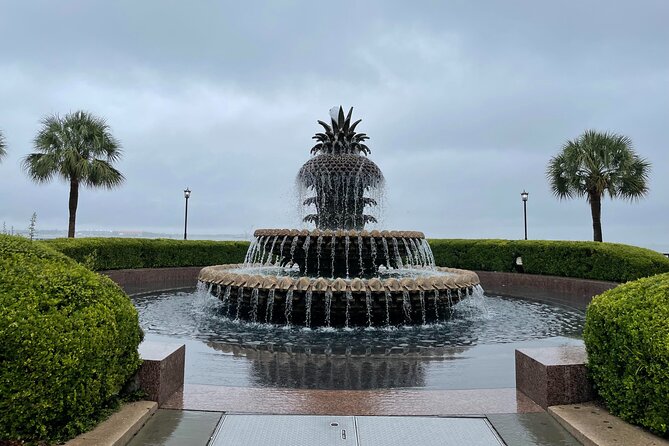
At Pineapple Fountain, the narration explains the fountain itself and why pineapples are so prominent in the South. This is one of the more distinctive stops because the object in front of you is easy to recognize, while the story gives it a wider regional meaning.
I like this kind of stop on a first walk through a city. It gives you a detail you can spot again during the rest of your visit, and it breaks up the heavier subjects that follow. The tour is not only about battle dates and old buildings. It also asks you to notice symbols in the streetscape.
You should allow a little flexibility here if you want photographs. The audio tour lasts about an hour and a half to two hours, but your actual time will depend on how often you stop. The route gives you a framework, not a race. Pause the narration when you need to, then restart it when you are ready.
The Old Slave Mart Museum and Charleston’s difficult past
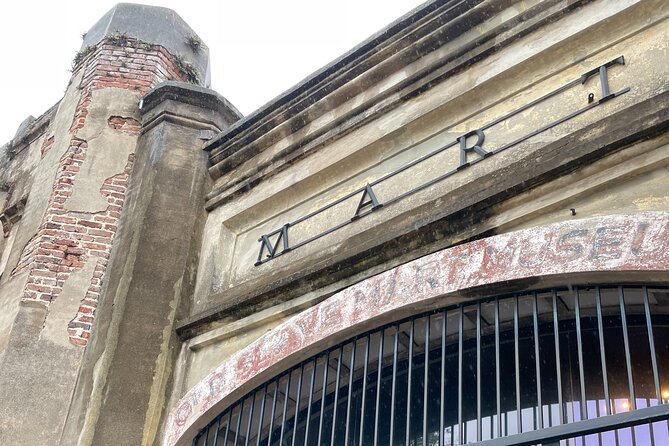
The route passes the Old Slave Mart Museum and discusses Charleston’s connection to slavery. This is an essential part of understanding the city. A tour that covered only grand houses, churches, and waterfront views would leave out the people and labor tied to Charleston’s growth.
You hear about the subject while walking past the museum. The museum itself is not included, so you will need a separate admission if you choose to go inside. That separation is worth noting when you plan your day. The audio tour can introduce the topic and place the building within the route, but it does not replace a museum visit.
For me, this stop helps give the walk a more honest shape. Charleston’s attractive streets and well-known landmarks exist alongside a painful history. The route includes that history rather than presenting the city as decoration alone.
Same sights, a different narrator:
- Los Angeles: Hop-On Hop-Off Bus Tour with Audio Guide
★ 3.7 · 2,030 reviews - City Sightseeing Hop-On Hop-Off Bus Tour with Audio Guide
★ 3.0 · 1,083 reviews - Medieval Torture Museum Ticket with Audio Guide and Ghost Hunting
★ 5.0 · 962 reviews - San Francisco: Alcatraz, Ferry & Audio Tour w/ Night Option
★ 4.4 · 617 reviews
The Old Exchange and Provost Dungeon
The walk continues past the Old Exchange and Provost Dungeon. The audio explains the building as you move through the historic district. This stop adds another layer to the city’s political and military past, and it fits naturally with the tour’s focus on three centuries of conflict and peacetime.
Again, you hear about the site from outside. There is no entrance fee included, and the tour does not promise an interior visit. If the building catches your interest, you can decide on the spot if you want to return later with a ticket or set aside time before or after the audio walk.
That flexibility is one reason I see this experience working best as an orientation. It introduces several places in a short period, then lets you choose which ones deserve a longer visit.
Rainbow Row and the Battery

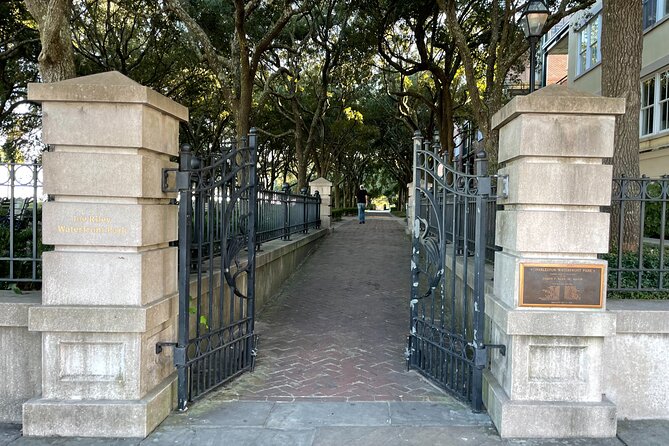
You walk down Rainbow Row and hear how it got started. This stretch is one of Charleston’s most recognizable architectural scenes, so the story gives you more than a photo opportunity. Instead of simply passing a row of colorful buildings, you get a reason to pay attention to how the street developed.
The route then reaches the Battery. The audio explains the waterfront area, and there is also a good photo opportunity at Battery Park. This is likely to be one of the most enjoyable pauses on the walk because it changes the feel of the route. After several urban streets and buildings, you reach an open waterfront setting.
The Battery also ties together several ideas in the tour: defense, public space, scenery, and Charleston’s relationship with the water. I would avoid treating the full 90-minute estimate as fixed if you want time for pictures here. The stated duration is approximate, and the Battery is a natural place to pause.
Dubose Heyward and Charleston’s literary side
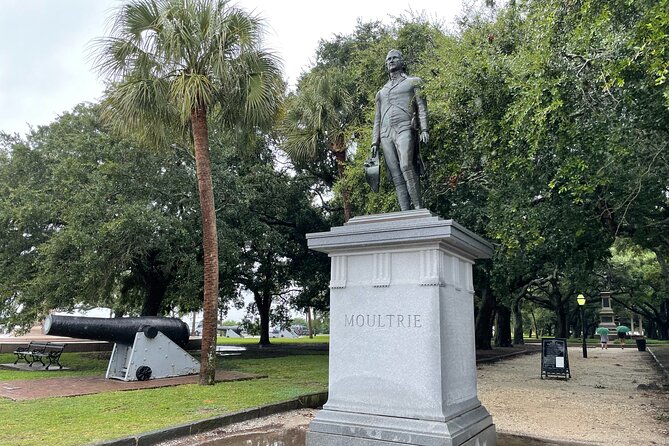
The next stop passes the Dubose Heyward House. You hear about Dubose Heyward and his connection to Charleston. This gives the tour a literary angle and keeps the subject matter from becoming too narrowly focused on war or government.
A stop like this is useful because cities are shaped by writers and artists as well as by soldiers, merchants, and officials. The route does not spend the entire walk on one theme. Instead, it shifts between public history and individual connections to Charleston.
Since the tour is delivered through headphones, you can look at the house while the story plays. That combination is the main strength of an audio format. The building supplies the visual focus, while the narration supplies the background.
Dock Street Theatre and St. Philip’s Church
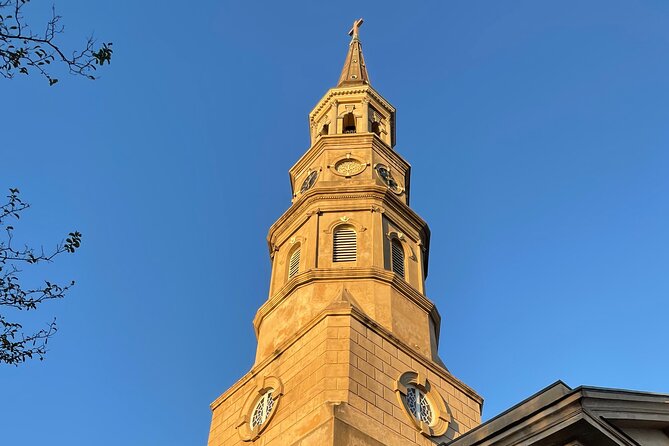
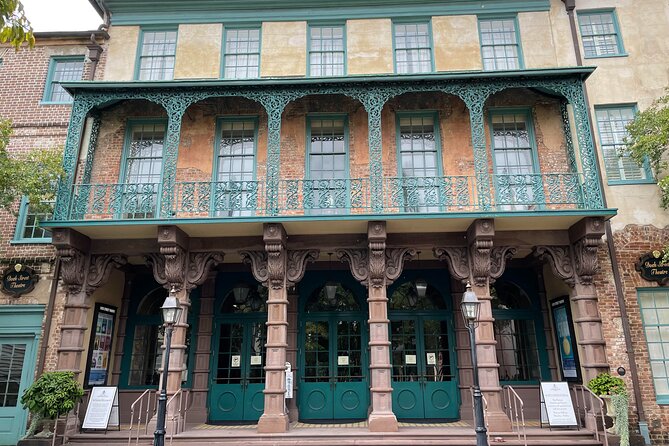
The walk passes Dock Street Theatre and explains both the theatre’s history and the story of the building. This is another stop where architecture and local culture meet. You get a sense of how Charleston’s historic structures have served different public purposes over time.
You also pass St. Philip’s Church and hear about the church. The church adds a religious and civic note to the route, especially after the military, commercial, and theatrical subjects earlier in the walk.
These stops are not separate guided visits. You should think of them as street-level introductions. That works well if you have limited time and want a broad overview, but it may leave you wanting more detail at the buildings that interest you most.
Ending at the Powder Magazine
The tour ends outside the Powder Magazine at 79 Cumberland Street. The audio gives you information about the historic building before the experience concludes. Since the endpoint is close to the starting area, you can finish near the City Market rather than arranging transport across town.
The ending also fits the tour’s central theme. After hearing about Charleston’s wars, public buildings, slavery, waterfront defenses, and cultural history, you finish at a structure connected with the city’s military past.
The Powder Magazine is an attraction in its own right, but entrance is not included. If you want to visit inside, plan for a separate ticket and check the opening details before your walk. The tour information lists the experience as available every day around the clock, which refers to access to the self-guided activity, not necessarily the opening hours of museums along the route.
What $14.99 gets you
At $14.99 per person, the tour costs less than a private live walking tour, but the comparison is not exact. You are paying for a narrated route, offline maps, and lifetime access through VoiceMap. You are not paying for a guide, attraction admissions, transportation, or refreshments.
I think the price works if you want a structured introduction and plan to use it at your own pace. Lifetime access is useful if you return to Charleston or want to replay a section later. It also means you are not limited to one rigid visit, provided you keep access to the app and tour.
The value is weaker if you expect a live guide to answer questions, adapt the route, or take you inside the buildings. The product is designed for independent walking. You need to be comfortable following audio directions and managing the app yourself.
Who will enjoy this walk most
I would recommend it to history buffs who want a broad look at Charleston without joining a scheduled group. It is especially useful for a first visit because it links several central sights in one route and gives you an idea of which places deserve a longer return visit.
It also suits couples, families, or small private groups who do not all want to walk at the same speed as strangers. You can pause for a photo at the Battery, spend more time near Rainbow Row, or stop the audio when you need a break.
The experience is less suitable if you want a deep museum program, a live historian, or a tour in another language. It is offered in English only, and you must bring your own phone and headphones. The information says most people can participate, but it does not provide detailed accessibility information, so you should confirm any specific needs before booking.
Timing, cancellation, and practical planning
Set aside roughly one hour and 30 minutes to two hours for the route. Add extra time if you plan to stop for photographs, enter attractions, or pause for food and drinks. Food and drinks are not included.
The tour is available for your private group, with no shared group joining you. Confirmation arrives at booking, and the activity has free cancellation if you cancel at least 24 hours before the start time. Cancellations or changes made inside that 24-hour window are not refunded or accepted.
One important practical point: the start and end locations are both in central Charleston, but they are not the same address. Begin outside the Museum at Market Hall at 188 Meeting Street, then finish outside the Powder Magazine at 79 Cumberland Street.
Should you book this Charleston audio tour?
Book it if you want an affordable, flexible introduction to Charleston that connects major sights with stories about war, slavery, architecture, religion, film, and local symbols. The Civil War references and the Battery photo stop add appeal for history-minded visitors, while the Pineapple Fountain and The Notebook connection keep the walk varied.
Skip it if you want a live guide, interior access, or a detailed museum experience included in the price. For everyone else, $14.99 is a reasonable way to get your bearings, especially if you download the audio and maps in advance and treat the route as a starting point for further exploring.
FAQ
How long does the self-guided audio tour take?
The tour takes approximately one hour and 30 minutes to two hours. Your timing may vary if you stop for photos or visit attractions along the route.
Where does the tour start?
It starts outside the Museum at Market Hall, at 188 Meeting Street in Charleston.
Where does the tour end?
It ends outside the Powder Magazine Museum at 79 Cumberland Street. The endpoint is close to the starting area.
What language is available?
The tour is offered in English.
Do I need to bring my own phone and headphones?
Yes. A smartphone and headphones are not included. The tour uses the VoiceMap app for Android and iOS.
Does the tour include museum admission?
No. Tickets and entrance fees for museums and other attractions along the route are not included.
Can I cancel for a full refund?
Yes, if you cancel at least 24 hours before the experience start time. Cancellations made less than 24 hours in advance are not refunded.
New audio tours around the USA
- Beaches, Bites and Bavaria in Leavenworth: A Self-Guided Audio Tour★ 3.5 · 3 reviews
- Welcome to Fabulous Las Vegas Sign Self-Guided Audio Tour★ 5.0 · 2 reviews
- Las Vegas Day Trips: 3-Day Self-Guided Audio Tour★ 5.0 · 2 reviews
- Hoover Dam and Lake Mead Self-Guided Audio Tour★ 5.0 · 3 reviews
- Driving Lake Tahoe: A Self-Guided Audio Tour From Tahoe City to Incline Village★ 5.0 · 10 reviews
- Las Vegas Neon and Secrets: Self-Guided Audio Tour★ 5.0 · 3 reviews
- Baton Rouge Historic Downtown Self-Guided Audio Walking Tour★ 4.0 · 19 reviews
- Ultimate La Jolla Self-Guided Driving & Walking Audio Tour Bundle★ 3.5 · 9 reviews
USA Audio Tours, compared.

Los Angeles: Hop-On Hop-Off Bus Tour with Audio Guide
Read our review →
City Sightseeing Hop-On Hop-Off Bus Tour with Audio Guide
Read our review →
Medieval Torture Museum Ticket with Audio Guide and Ghost Hunting
Read our review →


San Francisco: Alcatraz, Ferry & Audio Tour w/ Night Option
Read our review →
Ultimate Acadia National Park Self-Guided Driving Audio Tour
Read our review →
Browse the lists this tour appears in