

Review · USA
Charleston Self-Guided Audio Walking Tour
Charleston’s story unfolds block by block, and this GPS-guided walking tour gives you a useful thread to follow. For $14.99, you walk more than two miles past churches, grand homes, Civil War sites, slave-trade memorials, and the city market while audio stories begin at set locations.
I like the freedom to pause for lunch, museums, photos, or a quick look inside a church. I also like the lifetime access, which lets you return to unfinished stops on another day or reuse the tour on a later Charleston visit. The main concern is navigation: the GPS can be fussy, and the route has few bathrooms during its first half.
Charleston in 45-plus audio stops
- Circular Congregational Church opens the route with a look at one of the South’s oldest continuously worshiping congregations.
- White Point Garden and General Moultrie’s monument connect the waterfront to Charleston’s Revolutionary War and Civil War story.
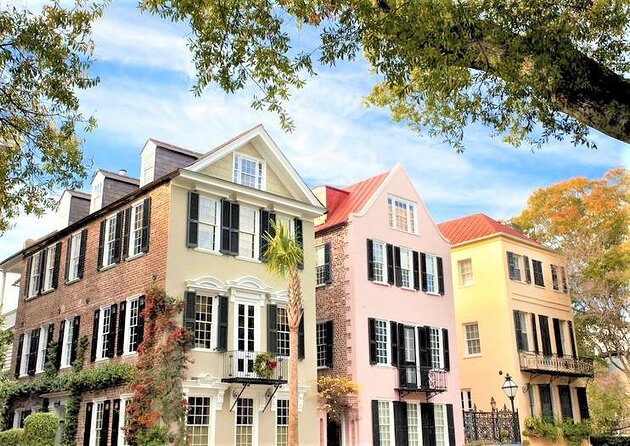
- Rainbow Row and Longitude Lane provide some of the city’s best-known architecture and a curious cannon tale.
- Slave Auction Site Memorial and Old Slave Mart Museum bring the city’s role in slavery into the tour rather than leaving it out.
- Charleston City Market finishes the walk with local crafts, Gullah sweetgrass baskets, and food.
- Offline GPS audio costs $14.99 and works at your pace, but you need to download the app and tour before arriving.
A walking route with more than pretty houses

Charleston is easy to admire and easy to misunderstand. Its pastel facades, church steeples, and shaded lanes can make the old city feel like a polished movie set. This tour helps put harder facts beside the beauty.
You move from religious dissent and Irish community life to government, wealthy merchants, slavery, war, and local commerce. The route also includes some of the city’s most photographed places, so you get both the postcard views and the less comfortable stories behind them.
The tour has more than 45 audio stories and covers over two miles. The basic walk takes about one to two hours if you keep moving, but you should allow two to four hours if you stop for photographs, museums, food, or signs along the way.
The route is private in the sense that no group joins you. You walk only with your own party, guided by the Action Tour Guide app rather than a person waiting at the starting point.
More Audio Walking Tours in the USA
- Self Guided Classic Freedom Trail Location Aware (GPS) Walking Audio Tour
★ 4.5 · 258 reviews - Cape Cod & Provincetown Self-Guided Driving & Walking Audio Tour
★ 4.0 · 207 reviews - Santa Fe Historic Downtown Smart Phone Audio App Self Guided GPS Walking Tour
★ 4.5 · 112 reviews
Starting at the Circular Congregational Church
The first listed stop is Circular Congregational Church, a fitting place to begin. The congregation dates to 1681 and was first associated with the White Meeting House, a gathering place for Dissenters who did not follow the Church of England.
The present circular building dates from 1891, after fire destroyed the earlier structure. The stop gives you an early example of Charleston as a place shaped by religious disagreement, not simply by grand colonial architecture.
The tour information identifies 152 Market Street as the starting point, while the route description places the opening story at the church. One audio user also noted that the narration did not begin until the third stop. I would download the tour before you arrive, open the map, and confirm the first GPS point before setting off.
That small bit of preparation matters. The app triggers stories within a set area, so starting at the wrong place or walking far from the route can cause skipped audio.
Hibernian Hall and Charleston’s Irish community

Hibernian Hall dates to 1840 and was built for the Hibernian Society of Charleston. Irish immigrants and their descendants formed the society in 1801 to provide aid, support, and cultural activities for their community.
This is a short stop, but it adds needed variety. Charleston’s story is not only about English colonists and wealthy planters. The city also grew through immigrant communities, fraternal groups, and mutual aid.
You should expect the audio to give you a quick explanation rather than a long lecture here. That is typical of the route. Some sites receive several minutes of narration, while others serve as brief pieces in a larger story.
The Historical Society and the Four Corners of Law

The South Carolina Historical Society Museum represents the state’s effort to preserve and present its past. The society was founded in 1855, making it one of the oldest historical societies in the United States.
The museum stop is short, so treat it as an orientation point rather than a full museum visit. If you plan to go inside, use the pause feature and give yourself extra time.
At Broad and Meeting Streets, the Four Corners of Law brings four major buildings and public institutions into one intersection. The name refers to the different forms of law and government represented at the corners.
I like this stop because it turns an ordinary-looking crossing into a quick lesson in how Charleston organized civic life. It also helps you understand why the route keeps returning to churches, halls, courts, and public buildings. In Charleston, architecture often tells you who held power and how the city worked.
More Self-Guided Audio Tours in the USA
- Gettysburg Battlefield Self-Guided Driving Audio Tour
★ 4.5 · 910 reviews - Joshua Tree National Park Self-Guided Driving Audio Tour
★ 4.5 · 762 reviews - Ultimate Acadia National Park Self-Guided Driving Audio Tour
★ 4.0 · 521 reviews - Ultimate Lake Tahoe Self-Guided Driving Audio Tour
★ 4.5 · 435 reviews
Society Hall and the Pringle House
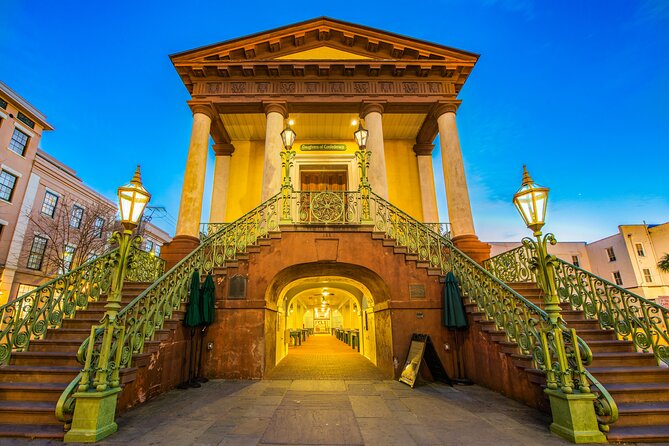
South Carolina Society Hall was built in 1803 for the South Carolina Society, a social and charitable organization founded in 1737. The society played a role in Charleston’s political, social, and cultural life.
The building is another reminder that old Charleston was built around organized groups. Churches, charitable societies, immigrant associations, and elite clubs all left their mark on the streets.
The John Robert Pringle House offers a more personal story. The audio makes clear that this Pringle has nothing to do with the familiar snack brand. Instead, his house becomes a way to consider the life of a European colonist in early Charleston.
These short stops are useful if you listen for the connections. The tour is not only pointing at facades. It is asking you to picture the people who built, occupied, funded, and used them.
Mansions, rumors, and White Point Garden

The Patrick O’Donnell House sits two doors from the Miles Brewton House. According to the story attached to the house, O’Donnell wanted the building to be perfect for his fiancée, and construction took 12 years.
It is a good Charleston anecdote because it explains the competitive spirit behind some of the city’s grand homes. You can admire the ornate details while remembering that these were private houses made possible by considerable wealth.
White Point Garden changes the mood. Once known as Oyster Point, it served as a public gathering place as early as the 18th century. It later became a defensive position and witnessed major events in Charleston’s past.
The park is also connected to General William Moultrie, whose monument recalls his role in the American Revolution. Moultrie commanded the fort on Sullivan’s Island during the Battle of Sullivan’s Island in 1776.
This part of the walk gives you open space after several close urban blocks. It is a sensible place to pause, though you should keep an eye on your route and phone battery.
The Palmer Home and Edmondston-Alston House

The Palmer Home was built in 1825 for Thomas Bennett Jr., South Carolina’s governor from 1820 to 1822. John Ravenel Palmer bought the house in 1861, and the Palmer family held the property for decades.
The Edmondston-Alston House, also built in 1825, adds another look at Charleston’s upper-class homes and the people who lived or visited there. The tour does not require you to enter these properties, so the audio is especially helpful for giving the street-side buildings some context.
You should not confuse passing a house with touring its interior. Entry tickets, reservations, and attraction passes are not included. If a particular house interests you, pause the audio and make a separate plan.
Longitude Lane and the real cannon story
Longitude Lane is one of the city’s narrow, picturesque passageways. The audio connects it to a cannon displayed in White Point Garden, explaining that the real cannon was taken from this lane.
This is the kind of small story that works well on a walking route. You are not simply told that an alley is old or pretty. You get a practical reason to look closely at the space and imagine how objects moved through the city.
The lane also gives you a break from broad streets and formal buildings. Keep your phone active so the GPS can detect the next story. One useful tip from an earlier user is to keep the screen from going to sleep, particularly if your phone is older.
Rainbow Row and the city’s commercial past
Rainbow Row is the tour’s most obvious photo stop. The colorful houses began as mercantile stores and residences for merchants and traders. Their current appearance reflects later restoration and preservation.
The facades are cheerful, but the story is commercial. These buildings were tied to trade, business, and the people who made money through Charleston’s port economy.
Give yourself time here. The listed audio stop is short, but this is an easy place to pause for photographs. Since the tour plays automatically, you can stop the narration and restart it when you are ready.
The Slave Auction Site Memorial and Old Slave Mart Museum
The Slave Auction Site Memorial marks land where slave auctions took place in the late 18th and early 19th centuries. This is one of the most important stops because it places Charleston’s prosperity beside the violence that supported much of it.
The tour also takes you to the Old Slave Mart Museum. It is connected in subject to the Old Exchange, but the two sites are not the same. The audio points out that difference and helps you understand why the Old Slave Mart deserves separate attention.
I appreciate that the route does not treat slavery as a footnote. You pass elegant streets and famous houses, but you also stop at places tied directly to the buying and selling of enslaved people. Listen carefully here, and allow time for the subject to register.
The audio stop itself is not a substitute for a museum visit. Admission is not included, and the tour does not promise entry. If you want more detail, use the app’s extra content and consider visiting the museum separately.
Pineapple Fountain and Charleston symbolism
The Pineapple Fountain is a lighter stop after the memorials and museum. Built in 1990, the fountain refers to a familiar piece of Charleston symbolism.
The audio keeps this stop brief, but it offers a chance to look at a modern landmark through an older cultural lens. It is also a practical place for photographs and a natural pause before the final group of historic buildings.
Dock Street Theater and St. Philip’s Church
Dock Street Theater began as a theater in 1736 and reopened as one in 1937. The interesting question is what happened between those two dates. The audio uses that gap to trace the building’s changing role.
St. Philip’s Church gives you another close look at how buildings shaped the street. The church juts onto Church Street, causing the road to bend and then straighten again.
These stops are short, but together they show how Charleston’s streets developed around existing buildings. The city was not laid out as a clean modern grid. Churches, lanes, houses, and public needs all affected the route you walk today.
Charleston City Market as the final stop
The tour ends at Charleston City Market, which has operated since 1804. It is a useful finishing point because you can shift from listening to browsing, eating, and shopping.
Look for local arts and crafts, Gullah sweetgrass baskets, and food. The market gives you a chance to connect the historical walk with living Charleston culture rather than ending at another silent facade.
The advertised endpoint is 188 Meeting Street. Once you arrive, you can stop the tour, continue exploring, or use the market as a place to rest. The route’s finish near shops and food is one of its practical strengths.
Using the Action Tour Guide app
You receive setup instructions and a password by email and text. Search for audio tour if the message is hard to find, then download the separate Action Tour Guide app.
Do the download while you have strong Wi-Fi or cellular service. Once the tour is stored on your phone, it works offline, so you do not need a signal on every block.
For the best results, use an iPhone with iOS 15 or later, an Android phone with version 9 or later, or an iPad or tablet with GPS and cellular access. Bring earbuds or headphones, and keep the phone awake while walking.
Audio stories begin automatically as you reach the correct locations. If you leave the route, the narration may skip or fail to trigger. You can use the app map to find the next stop, but following the suggested route and pace will save you frustration.
The password works on the number of devices matching the number of people booked. A couple may be able to share one tour by splitting headphones, which improves the $14.99 value.
Is $14.99 a good price?
At $14.99 per person, the tour is inexpensive for a private walking experience with more than 45 audio stories. You do not pay a guide’s hourly rate, and you can pause for lunch, museums, or photos without holding up a group.
The value is strongest if you like history but dislike fixed schedules. It is also useful for a short Charleston visit, since you can complete the core walk in about one to two hours.
The price feels less convincing if you want a live guide who can answer questions or adjust the route on the spot. Commentary depth varies by stop, and some listeners will want more detail than the standard stories provide. Use the app’s extra material when you want additional information.
You also need to handle your own technology. GPS glitches have occurred, particularly when the starting point was missed or an older phone struggled. That is manageable, but it is part of the tradeoff for a low-cost self-guided tour.
Who should book this Charleston walk?
I recommend it for independent visitors, history fans, couples, families, and anyone who wants to stop often. It works especially well when your group has different interests, since one person can take photos while another listens, and you can pause whenever needed.
Families may appreciate the short stories and freedom to take breaks. Couples can save by sharing a device and headphones. A solo visitor can follow the route without joining a group.
I would be more cautious if you need a fully guided experience, have limited phone battery, or dislike following GPS directions. Plan a restroom stop before the first half of the walk, since facilities are scarce along that section.
The tour has no expiry date, so you can split it across days or return on a later trip. That is a real advantage. You do not have to force every stop into one hot afternoon.
Final verdict
Book this tour if you want an affordable way to connect Charleston’s architecture with its religious, commercial, military, and painful social past. The freedom to pause and the lifetime access are its best features.
Skip it if you expect a live guide, constant narration, or perfectly smooth GPS. Download everything before arrival, begin at the correct point, bring headphones, and keep the app open. With those simple precautions, the tour offers a useful structure for seeing Charleston at your own pace.
Cancellation is free up to 24 hours before the experience begins. Cancellations within 24 hours are not refunded.
FAQ
How long is the Charleston audio walking tour?
The route is more than two miles and has over 45 audio stories. You can complete the main walk in about one to two hours, though stops for photos, museums, meals, and breaks can extend it to several hours.
What language is the tour offered in?
The tour is offered in English.
Where does the tour start and end?
The stated starting point is 152 Market Street in Charleston. The endpoint is Charleston City Market at 188 Meeting Street. The route information also identifies Circular Congregational Church as the first listed stop, so check the app map before starting.
Do I need cellular service during the walk?
You need strong Wi-Fi or cellular service to download the tour. After downloading, the audio and maps work offline.
Is a guide waiting at the meeting point?
No. This is a self-guided activity. You go to the starting point, open the Action Tour Guide app, and follow the GPS-triggered stories.
Are attraction admission fees included?
No. Entry tickets, attraction passes, and reservations are not included. The audio tour guides you past the sites and explains them from outside unless you make separate arrangements to enter.
Can I use the tour more than once?
Yes. The tour has lifetime access with no expiry date. You can pause it, continue on another day, reuse it on another Charleston visit, and listen to extra stories in the app.
New audio tours around the USA
- Beaches, Bites and Bavaria in Leavenworth: A Self-Guided Audio Tour★ 3.5 · 3 reviews
- Welcome to Fabulous Las Vegas Sign Self-Guided Audio Tour★ 5.0 · 2 reviews
- Las Vegas Day Trips: 3-Day Self-Guided Audio Tour★ 5.0 · 2 reviews
- Hoover Dam and Lake Mead Self-Guided Audio Tour★ 5.0 · 3 reviews
- Driving Lake Tahoe: A Self-Guided Audio Tour From Tahoe City to Incline Village★ 5.0 · 10 reviews
- Las Vegas Neon and Secrets: Self-Guided Audio Tour★ 5.0 · 3 reviews
- Baton Rouge Historic Downtown Self-Guided Audio Walking Tour★ 4.0 · 19 reviews
- Ultimate La Jolla Self-Guided Driving & Walking Audio Tour Bundle★ 3.5 · 9 reviews
USA Audio Tours, compared.

Los Angeles: Hop-On Hop-Off Bus Tour with Audio Guide
Read our review →
City Sightseeing Hop-On Hop-Off Bus Tour with Audio Guide
Read our review →
Medieval Torture Museum Ticket with Audio Guide and Ghost Hunting
Read our review →


San Francisco: Alcatraz, Ferry & Audio Tour w/ Night Option
Read our review →
Ultimate Acadia National Park Self-Guided Driving Audio Tour
Read our review →
Browse the lists this tour appears in