

Review · USA
Chicago Self-Guided Audio Tour
Chicago’s great strength is its variety: grand train halls, free public art, serious museums, lakefront parks, and bold architecture all sit within one city. This $6 self-guided audio tour gives you short stories for 15 major sights, from Union Station to the Griffin Museum of Science and Industry, without tying you to a group or fixed timetable.
I like the complete freedom to choose your starting point and skip places that do not interest you. I also like the low price and the mix of free stops with major museums, since you can build a route around your budget. The catch is important: this is a collection of concise audio clips, not a live guide or hours of narration. Some clips may last only a minute or a few minutes.
Key points
- Fifteen major Chicago sights: The route covers museums, parks, public buildings, observation decks, a zoo, and the lakefront.
- Use it over up to six days: The access links remain valid for a maximum of six days, so you do not need to force every stop into one long day.
- No fixed route: Start and finish anywhere, choose your own order, and use the Google My Maps link to plan a practical path.
- Free entry at several stops: Union Station, Buckingham Fountain, Millennium Park, Cloud Gate, the Cultural Center, the Riverwalk, Navy Pier, Lincoln Park Zoo, and Newberry Library do not require admission fees according to the tour details.
- Bring your own setup: You need a charged smartphone, headphones or earphones, and internet access.
- Expect short commentary: The audio is designed to add context while you explore, not replace a full museum tour or private guide.
What this $6 Chicago tour really provides

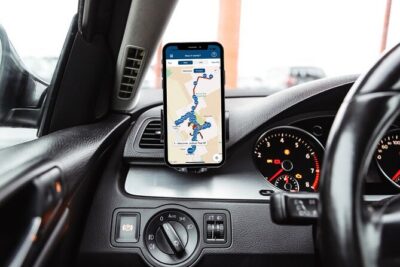
You receive two private access links through the booking platform’s messaging system. One opens a SoundCloud playlist containing the audio for all 15 attractions. The other opens a Google My Maps itinerary with headphone icons marking each stop and links to the related audio.
You do not need to create a SoundCloud account. Open the link in Safari, Chrome, or another browser, then choose the attraction you want. The map should also be opened in a web browser rather than directly in the Google Maps app.
This setup is simple once you know the trick. Before leaving your hotel, open both links, check that they work, and listen to a few clips. You can then decide which stops deserve your time and which ones you will treat as optional.
The advertised outing lasts about three to nine hours, but that includes moving around Chicago and exploring the attractions. It does not mean you will hear three to nine hours of spoken material. The audio itself is brief, and one low-rated experience specifically found that much of the commentary lasted only a minute or a few minutes. That is the key expectation to set before paying.
More Self-Guided Audio Tours in the USA
- Gettysburg Battlefield Self-Guided Driving Audio Tour
★ 4.5 · 910 reviews - Joshua Tree National Park Self-Guided Driving Audio Tour
★ 4.5 · 762 reviews - Ultimate Acadia National Park Self-Guided Driving Audio Tour
★ 4.0 · 521 reviews
Union Station, where rail grandeur meets film history
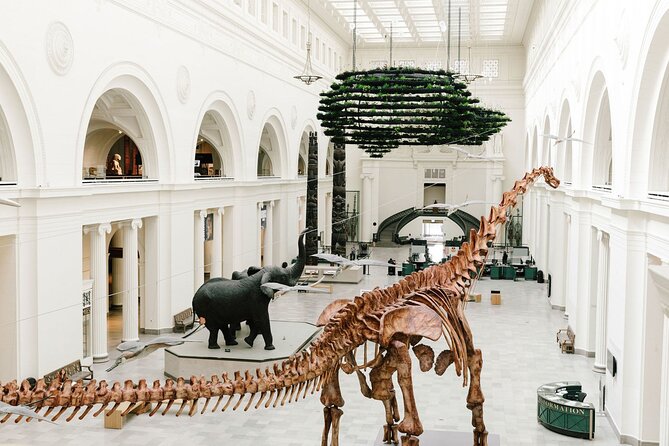
Begin at Union Station if you want a strong architectural opening. The Great Hall gives you soaring Beaux-Arts drama, marble surfaces, a huge skylight, and the feeling that Chicago once expected every rail arrival to be an important event.
The audio points to the station’s role in films such as The Untouchables and Public Enemies. It also covers World War II training activity, hidden tunnels, and notable passengers who moved through the station.
You do not pay an admission fee here, and the suggested stop takes about 20 minutes. Since this is an active transport hub, keep your visit respectful and avoid blocking commuters. The clip is best used while you look upward and notice the building rather than as a replacement for exploring it yourself.
Field Museum, from dinosaurs to Ancient Americas
The Field Museum offers one of the tour’s strongest chances to spend extra time beyond the audio. The guide begins with the institution’s origins after the 1893 World’s Fair, then points you toward areas that can be missed when everyone heads straight to the famous T-Rex.
You will hear about Ancient Americas collections, Egyptian mummies, and research taking place in museum laboratories. The larger point is how the museum helped shape modern thinking about evolution, anthropology, and the natural sciences.
Admission is not included. The suggested audio stop is only 20 minutes, but the museum itself can easily demand much longer if you read displays and move through its collections carefully. Treat the recording as an orientation, then use the exhibits to fill in the details.
Buckingham Fountain and Chicago’s lakefront spirit

Buckingham Fountain is free, easy to reach, and a good place to pause between indoor attractions. The audio explains the family behind its creation, the engineering that makes it one of the world’s largest fountains, and the Great Lakes symbolism built into its design.
You will also hear about restoration work, seasonal operation, and the fountain’s nighttime light show. These details give purpose to what might otherwise be a quick photo stop.
Allow about 20 minutes, though you may want longer if the fountain is operating. The timing and display can vary by season, so do not build your entire day around seeing the water show. This stop works best as part of a downtown walk linking the Art Institute, Millennium Park, and Cloud Gate.
Same sights, a different narrator:
- Los Angeles: Hop-On Hop-Off Bus Tour with Audio Guide
★ 3.7 · 2,030 reviews - City Sightseeing Hop-On Hop-Off Bus Tour with Audio Guide
★ 3.0 · 1,083 reviews - Medieval Torture Museum Ticket with Audio Guide and Ghost Hunting
★ 5.0 · 962 reviews - San Francisco: Alcatraz, Ferry & Audio Tour w/ Night Option
★ 4.4 · 617 reviews
The Art Institute, where famous images gain context
The Art Institute of Chicago needs more than the suggested 20 minutes. The audio focuses on how the museum built its collection, how Chicago’s industrial wealth supported its artistic ambitions, and why works such as Grant Wood’s American Gothic became part of everyday popular culture.
It also points toward disputed acquisitions and the donors who helped shape the museum. That is useful context because museums are not neutral storage rooms. Their collections reflect money, taste, competition, and the choices of earlier generations.
Admission is separate. If art is one of your main reasons for visiting Chicago, plan this as a major stop rather than a quick audio marker. The recording can help you choose a few themes, but it cannot guide you through a large collection in any serious detail.
Millennium Park and Cloud Gate

Millennium Park tells a modern Chicago story. The audio covers the transformation of former industrial ground into a major public space, along with political disputes, engineering challenges, and the international artists involved in the design.
Listen for the underground structures supporting the park, the technology behind Crown Fountain, and the ecological role of the Lurie Garden. These details help you notice that the park is more than a patch of lawn beside downtown offices.
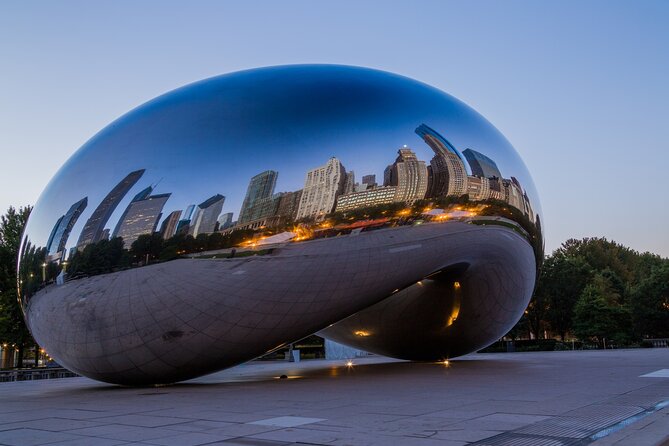
Cloud Gate, better known as the Bean, gets its own stop. The commentary explains the sculpture’s seamless surface, the difficult engineering behind it, its mathematical qualities, and the maintenance needed to keep it reflective.
Both stops are free. They are also among the easiest places to use the audio because you can stand, look, and listen without paying admission or following a timed entry. Expect crowds around Cloud Gate, so move around the sculpture and choose your viewing angle rather than waiting for one perfect photograph.
Chicago Cultural Center and Newberry Library
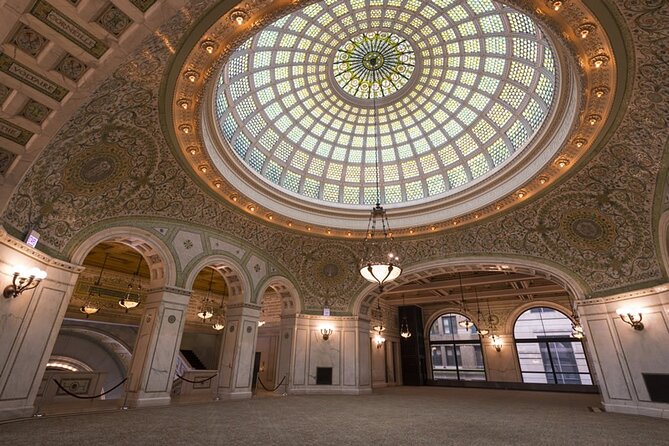
The Chicago Cultural Center is one of the best free interiors on this route. It began as the city’s central library and now serves as a public cultural building with galleries and performance spaces.
The audio highlights its Tiffany glass domes, mosaics, political battles over preservation, and the craftsmen behind its decoration. The building’s free access makes it especially useful for budget-conscious visitors who want serious architecture without another ticket.
Newberry Library offers a quieter change of pace. Its collections include rare manuscripts, old maps, and literary material, while the audio explains its founding and place in Chicago’s intellectual life.
The library is free, but do not expect the same experience as a general museum. Its purpose is research and public programming, and access to specific collections may depend on the building’s arrangements. The audio is most useful here as a brief introduction to the institution and its architecture.
The Chicago Riverwalk and the city’s greatest engineering story
The Riverwalk is one of the most rewarding outdoor portions of the route. You follow the water at street level while the audio explains the river’s role in Chicago’s growth and the remarkable decision to reverse its flow.
It also covers the change from neglected industrial corridor to public promenade, plus the river’s ecology and economic importance. Look up as you walk. The river offers views of architecture that can feel very different from the sidewalk above.
The route is free, and the 20-minute suggested stop gives you only a sample. You can stretch it into a longer walk or use it as a connecting path between downtown sights. Because the tour does not provide transportation, the Riverwalk is one of the places where route planning matters. Check the map before setting out so you do not zigzag across central Chicago.
Navy Pier, military history beside the lake
Navy Pier is Chicago’s most overtly recreational stop, but the audio gives it more substance than a simple entertainment visit. You will hear about its military training role, its near-demolition, and its later rescue and conversion into a major public attraction.
The guide also points to engineering below the boardwalk, tourism pressures, local community concerns, and environmental efforts. That broader view helps explain why the pier matters to the city beyond its attractions.
Entry to the pier itself is free, though individual activities and attractions may charge separately. Allow time for the parts that interest you, but do not assume the 20-minute audio stop covers everything. Navy Pier is spread out, and the tour does not include transport or attraction tickets.
Richard H. Driehaus Museum and Gilded Age luxury
The Driehaus Museum gives you a close look at Chicago’s decorative arts and Gilded Age wealth. It occupies an opulent mansion filled with Tiffany windows, hand-painted ceilings, period furnishings, and carefully restored interiors.
The audio explains the original family, the restoration, the craftspeople, and the social customs of the city’s wealthy residents. The museum also shows how a private home can become a public lesson in design, status, and American craftsmanship.
Admission is separate. This is a stop for visitors who enjoy rooms and objects rather than only paintings or outdoor landmarks. Set aside more than the brief audio time if you want to examine the furnishings. The recording supplies background, but the visual detail does most of the work.
360 Chicago and the city from above
At 360 Chicago, the audio shifts from individual buildings to the shape of the entire city. From the observation deck, it discusses Chicago’s skyscrapers, architects, neighborhood patterns, engineering, and continuing development.
This is where a short introduction can be genuinely helpful. Looking across the city without context can turn into a blur of towers. The commentary gives you categories to watch for, including architectural change and the geographic forces that shaped Chicago’s growth.
Admission is not included. The deck requires a separate ticket, and the visit works best when visibility is good. The tour information does not promise a specific wait time or viewing condition, so keep your schedule flexible.
Lincoln Park Zoo and the Chicago History Museum
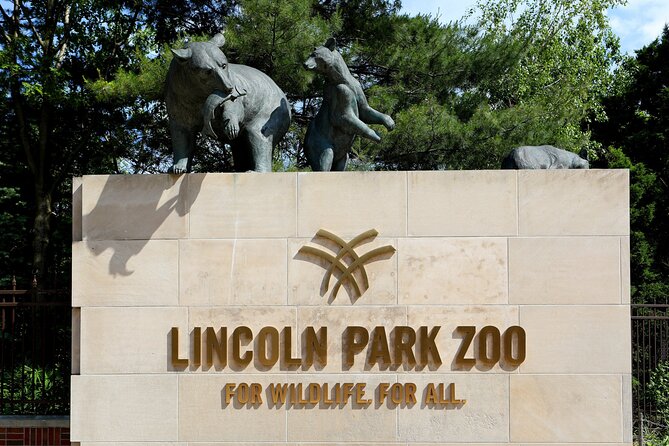
Lincoln Park Zoo is free and offers a useful counterpoint to the city’s buildings. The audio focuses on conservation, captive breeding, habitat design, animal welfare, and research conducted at the zoo.
It also follows the zoo’s growth from a small menagerie into a respected conservation center. Since there is no admission charge, you can stop briefly or stay longer without feeling that you must justify another ticket.
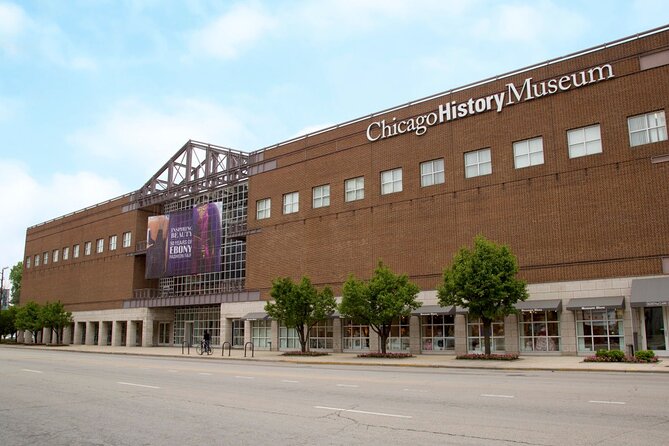
The Chicago History Museum gives the city its broadest local story. The audio moves from the Great Fire and the 1893 World’s Fair to cultural movements, ordinary residents, and the struggles that shaped Chicago’s identity.
Admission is separate. This museum deserves more than 20 minutes if you want to connect the city’s architecture and institutions with the people who built and contested them. Use the audio as a frame, then spend time with the objects and personal accounts.
Griffin Museum of Science and Industry
The final stop is one of the route’s biggest commitments. The Griffin Museum of Science and Industry occupies the last remaining building from the 1893 World’s Columbian Exposition, giving the visit both architectural and scientific importance.
The audio introduces the museum’s origins and highlights exhibits such as the captured German U-boat and Pioneer Zephyr train. It also covers technology, medicine, innovation, research partnerships, and education.
Admission is separate, and the museum is far too large for a quick pass. If you want to see the major exhibits, give this stop a substantial portion of your day. The audio can help you choose where to begin, but it is not a substitute for the hands-on displays.
How to build a sensible route
The 15 locations are spread across Chicago, so following the suggested order without checking distances may waste time. I would divide the experience into zones:
- Downtown core: Union Station, the Art Institute, Millennium Park, Cloud Gate, the Cultural Center, and the Riverwalk.
- Lakefront and north side: Buckingham Fountain, Navy Pier, 360 Chicago, Lincoln Park Zoo, and the Chicago History Museum.
- Museum and neighborhood stops: The Field Museum, Driehaus Museum, Newberry Library, and the Griffin Museum of Science and Industry.
You can use the tour over several days, which is the best way to handle the paid museums. A single day can work if you focus on outdoor sights and choose only one major museum. Do not confuse the advertised three to nine hours with the time needed to properly visit every paid attraction.
Public transportation is nearby for most of the route, but transport is not included. You arrange your own movement, meals, and entry tickets.
Is $6 good value?
At $6 per person, the tour is inexpensive if you want a light layer of background while walking around Chicago. It gives you access to 15 audio topics, a map, and the freedom to build your own day. The free attractions make the basic cost especially manageable.
The value drops if you expect the depth of a museum audio guide or the personal attention of a live local guide. The recordings are short by design, and one detailed account found the total spoken content across the stops to be under 30 minutes. That is a fair criticism if you expected long explanations.
Think of this as a city orientation tool, not a full guided tour. You pay separately for several major museums, and the audio does not include headphones, internet, food, transport, or entry fees. Bring your own equipment and confirm that the links work before heading out.
Who should book this experience?
I would recommend it to independent visitors who like making their own route, families or friends who do not want to keep up with a group, and budget-minded visitors who mainly want context at free landmarks.
It also suits repeat visitors who already know how to navigate Chicago and want a few stories to accompany familiar places. The six-day access window is useful if your schedule changes.
I would not choose it if you want a personal conversation, detailed museum interpretation, or a full narration at every stop. In that case, a live guide or dedicated museum audio program would better match your expectations. The booking is non-refundable, so be clear about that difference before purchasing.
FAQ
How long does the Chicago Self-Guided Audio Tour take?
The stated duration is approximately three to nine hours. Your actual time depends on which attractions you visit, how long you stay, and how you move between them.
Can I start the tour anywhere?
Yes. You choose your own starting and ending points and may visit the attractions in any order.
How do I receive the audio guide?
You receive private access links through the booking platform’s messaging system. One link opens the SoundCloud audio playlist, and the other opens the Google My Maps itinerary.
Do I need a SoundCloud account?
No. The tour instructions say you can open the SoundCloud link in a web browser without creating an account.
Are admission fees included?
No. Entry fees are not included for attractions that charge admission. Several outdoor and public locations on the route are free.
What should I bring?
Bring a fully charged smartphone, headphones or earphones, and internet access. The tour does not provide audio devices, headphones, or Wi-Fi.
New audio tours around the USA
- Beaches, Bites and Bavaria in Leavenworth: A Self-Guided Audio Tour★ 3.5 · 3 reviews
- Welcome to Fabulous Las Vegas Sign Self-Guided Audio Tour★ 5.0 · 2 reviews
- Las Vegas Day Trips: 3-Day Self-Guided Audio Tour★ 5.0 · 2 reviews
- Hoover Dam and Lake Mead Self-Guided Audio Tour★ 5.0 · 3 reviews
- Driving Lake Tahoe: A Self-Guided Audio Tour From Tahoe City to Incline Village★ 5.0 · 10 reviews
- Las Vegas Neon and Secrets: Self-Guided Audio Tour★ 5.0 · 3 reviews
- Baton Rouge Historic Downtown Self-Guided Audio Walking Tour★ 4.0 · 19 reviews
- Ultimate La Jolla Self-Guided Driving & Walking Audio Tour Bundle★ 3.5 · 9 reviews
USA Audio Tours, compared.

Los Angeles: Hop-On Hop-Off Bus Tour with Audio Guide
Read our review →
City Sightseeing Hop-On Hop-Off Bus Tour with Audio Guide
Read our review →
Medieval Torture Museum Ticket with Audio Guide and Ghost Hunting
Read our review →

San Francisco: Alcatraz, Ferry & Audio Tour w/ Night Option
Read our review →
Ultimate Acadia National Park Self-Guided Driving Audio Tour
Read our review →
Browse the lists this tour appears in