
Review · JAPAN
Fushimi Inari Shrine: Explore the 1,000 Torii Gates on an audio walking tour
Fushimi Inari is famous for its long corridors of bright red torii gates, but the best part of this tour is the meaning behind what you are seeing. The audio walk explains the fox statues, shrine rituals, and the Heavy-Light Stone, turning a quick photo stop into a more thoughtful visit.
I like the freedom to pause, replay, or move ahead at your own speed. I also like the offline access, which matters in a busy shrine area where a weak signal can spoil a phone-based tour. The main consideration is simple: this is self-guided, so you need your own smartphone and headphones, and the audio cannot answer questions on the spot.
Key points
- Starts by Inari Station: Find the fox statue opposite the station, at the entrance to Fushimi Inari Taisha Shrine.
- Explains Shinto customs: Learn how to perform hand water and why shrine details matter.
- Includes the Senbon Torii: Walk through the famous passage of red gates with context instead of only taking photographs.
- Covers unusual landmarks: Hear about fox statues, the Heavy-Light Stone, Okusha Shrine, and the Root up Pine Tree.
- Ends by a pond: The route finishes at Kumataka Shrine, where you can pause or continue exploring.
- Costs $5.99: The low price makes sense if you want structure and interpretation without paying for a private guide.
Why the torii gates are only half the story

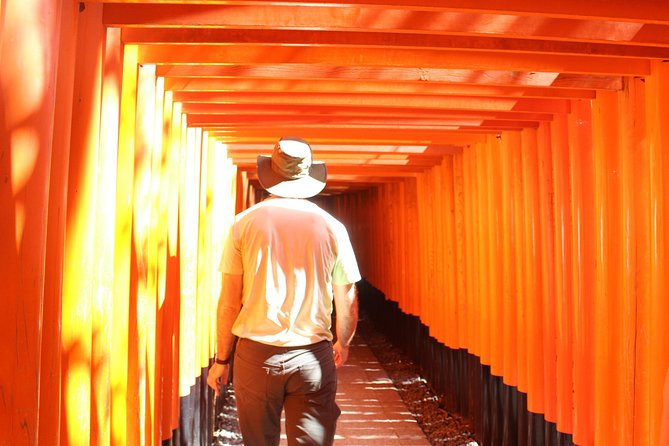
Fushimi Inari Taisha is one of Kyoto’s most visited Shinto shrines. Its most recognizable feature is the Senbon Torii, a long route lined with thousands of orange-red gates. The gates are the visual star of the visit, but without context, you may simply walk through them, take a few pictures, and leave.
This audio tour gives you a reason to slow down. It connects the gates with Shinto beliefs, local rituals, and the shrine’s influence over more than 1,300 years. You are not just following a scenic path. You are learning how worshippers approach the shrine and why certain objects appear again and again.
I find that useful at Fushimi Inari because the site can feel confusing at first. There are several approaches, many people, and a long route climbing through wooded surroundings. The audio gives your walk a clear shape without forcing you to keep up with a group.
The route takes about 45 minutes to one hour, though your real visit may last longer if you stop for photographs, take a rest, or continue beyond the official ending. The recording finishes at Kumataka Shrine, beside a pleasant pond deeper in the shrine complex.
More Audio Walking Tours in the world:
- Sofia: City Monuments Guided Walking Tour with Audio Guide
★ 4.5 · 825 reviews - Florence: 2.5 hour Audio Guided Walking Tour led by Host
★ 4.6 · 293 reviews - Self Guided Classic Freedom Trail Location Aware (GPS) Walking Audio Tour
★ 4.5 · 258 reviews
Starting at the fox statue near Inari Station
Your meeting point is easy to identify in broad terms: begin opposite Inari Station, in front of a fox statue at the entrance to Fushimi Inari Taisha Shrine. This is a useful starting place because the station is close to the shrine entrance and public transportation serves the area.
Before you arrive, download the VoiceMap app and the tour’s audio, map, and geodata. This is the most important practical step. One person who used the tour specifically advised downloading everything before reaching the shrine, and that is good advice for any app-based walk.
You need to bring your own phone and headphones. The tour price does not include either item, and there is no transportation, food, or drink included. The tour is listed as available around the clock, so you have flexibility in choosing your start time, although the audio itself does not provide a live escort or help with timing.
At the opening stop, you begin with the fox figure that signals Fushimi Inari’s identity. Foxes are closely linked with Inari worship, and the tour uses these statues to introduce the shrine’s beliefs. This is a small detail that can change the way you see the rest of the grounds. Instead of treating each statue as decoration, you start looking for meaning in its placement and features.
Learning what the shrine represents
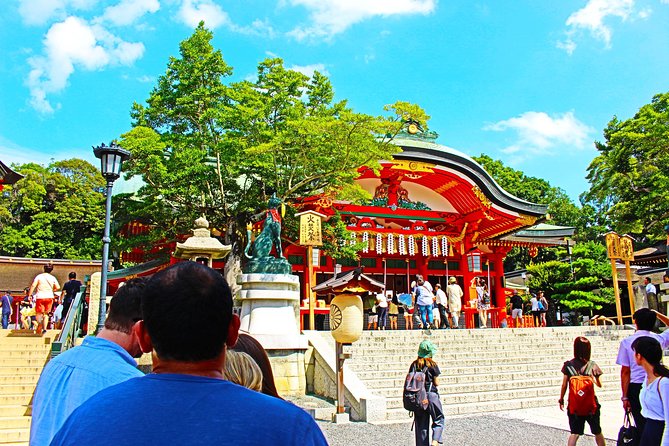
The second stop shifts from orientation to the purpose of the shrine. The audio explains the significance of the shrine and its connection to Shinto practice. The supplied information does not give a full script, so you should expect an introduction rather than an academic lecture.
That is part of the tour’s appeal. You pay $5.99 for a short, focused walk, not a full-day religious studies course. The explanation is designed to accompany the route, allowing you to understand what is in front of you while you are standing there.
I like this format for a first visit to Kyoto. A large shrine can offer too many details at once, and a short recording helps you notice a few important ones. It also gives you more control than a group tour. You can pause the audio when the path gets crowded, take a photograph, or replay a section without holding up anyone else.
The tradeoff is that the experience depends on your attention and your device. If your battery is low, your headphones are uncomfortable, or you forget the download, the tour becomes less useful. Bring a charged phone and test the app before setting out.
Performing hand water at the purification stop
One stop introduces hand water, the purification ritual performed before approaching a Shinto shrine. This is one of the most practical points in the walk because it explains an action you might otherwise copy without understanding.
The audio can tell you why the ritual matters and help you recognize the purification area. You still need to follow the instructions respectfully and avoid treating the process as a novelty. The value here is not simply knowing the steps. It is understanding that entering a shrine involves a change in attitude, from ordinary sightseeing to a more mindful visit.
This stop also shows why an audio guide can be better than a printed map for certain places. A map can point out a water basin, but it cannot easily explain the custom as you stand beside it. The recording adds a human voice and a sequence to the visit.
Because the experience is private to your own group, you do not share the walking pace with strangers. In this case, that means you can give the ritual the attention it deserves instead of rushing to keep up.
More audio tours around the world:
- Barcelona: Sagrada Familia Entry Ticket with Audio Guide
★ 4.6 · 105,312 reviews - Rome: Pantheon Fast-Track Ticket and Official Audioguide
★ 4.5 · 27,353 reviews - Barcelona: Casa Batlló Entry with Self-Audioguide Tour
★ 4.7 · 25,359 reviews - Rome: Colosseum & Forum with Audio Guide App -Optional Arena
★ 4.2 · 24,770 reviews
Pausing at the main hall

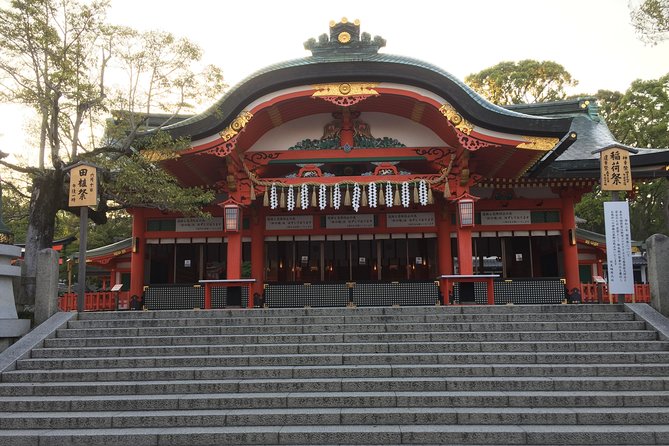
The route includes a short stop at Fushimi Inari’s main hall. This is an important pause because it gives you a central point in the shrine complex before you continue toward the torii gates.
You can expect the audio to explain the role of the main hall and guide your attention toward the details of the building and its setting. The information provided does not promise entry inside any building, so plan on listening from the route and observing the shrine respectfully.
The main hall stop is also a useful moment to check your bearings. Fushimi Inari is not just one gate and one building. It spreads through a much larger area, and the path continues into wooded sections. A short explanation here helps you understand that the famous torii passage is part of a wider religious site.
If you are short on time, this stop helps you decide how far you want to go. The official walk is short, but you can continue after it ends. That makes the tour workable for both a brief visit and a longer morning or afternoon at the shrine.
Wabi-sabi among the shrine buildings

Another stop introduces wabi-sabi, a Japanese idea often linked with simplicity, imperfection, age, and the quiet beauty of things that are not polished or grand. The tour places this idea within the shrine visit rather than leaving it as a vague design slogan.
This is a useful contrast to the bright torii gates. Fushimi Inari is visually dramatic, with strong color and repeated forms. Wabi-sabi asks you to notice subtler qualities too, including worn surfaces, natural surroundings, and the passing of time.
I like this part because it adds a different way to look at the site. You do not need prior knowledge of Japanese aesthetics to follow it. The audio offers a theme you can carry into the rest of the walk, especially as the route moves away from the busiest entrance.
Still, keep your expectations in check. A short audio stop can introduce wabi-sabi, but it cannot cover every interpretation of the concept. Think of it as a lens for looking, not a complete lesson.
Walking through the Senbon Torii
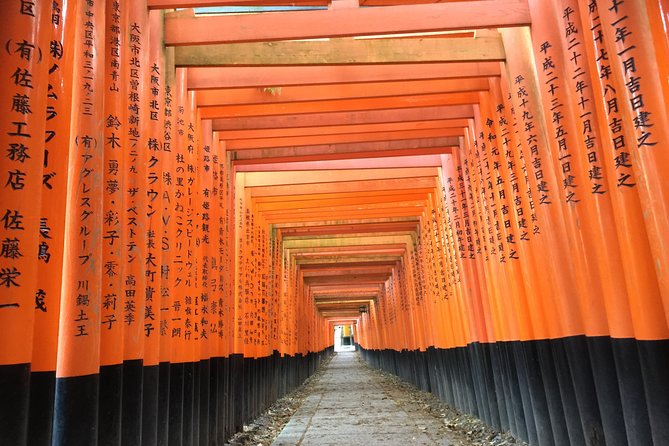
The Senbon Torii is the centerpiece of the experience. You make your way through the famous rows of red-orange gates, one after another, as the audio explains their role and importance.
The name refers to a thousand torii, though the wider shrine complex contains many more gates than the simple name suggests. The striking effect comes from repetition. Each gate is close to the next, creating a tunnel-like route through the forest.
This is where the tour earns its modest price. You could walk through the torii gates for free, but the recording gives the passage meaning and keeps your attention on more than the photographs. You learn why the gates are present and how they relate to devotion at the shrine.
The route can be visually intense near the entrance, especially when many people are taking pictures. An audio walk cannot remove crowds, and you should not expect uninterrupted silence. Its advantage is that you can keep the narration in your ears and move at your own pace.
I would allow extra time here even though the recording covers the route quickly. Stop when you want to look back through the gates, take in the forest, or let a crowded section clear. The stated duration is an estimate for the audio walk, not a command to finish the shrine in under an hour.
Okusha Shrine and the Heavy-Light Stone
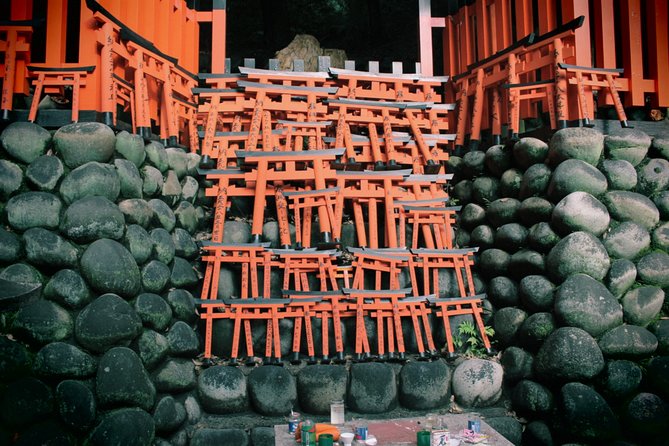
After the main torii passage, the route continues to Okusha Shrine. This stop gives the walk a more personal focus. Instead of viewing the shrine only as a grand public site, you begin to encounter places connected with individual hopes and acts of worship.
The Heavy-Light Stone is one of the tour’s most distinctive landmarks. You can make a wish there, and the audio explains how the stone relates to that act. This is the sort of detail that is easy to miss when you are following a sightseeing checklist.
The stone also gives you a chance to take part in the shrine rather than only observe it. Approach the moment with respect and listen carefully before attempting the ritual. The tour presents it as an opportunity to make a wish, but it does not promise any result.
This section may appeal most to people who want a personal connection with the site. If you are mainly interested in architecture or photography, the stop still adds context, but its meaning may be less important to you than the torii gates themselves.
The Root up Pine Tree and the final pond
Near the end, you stop by the Root up Pine Tree. The audio explains more about this unusual feature and adds one final point of interest before the route ends.
This is a good design choice for a short walk. The tour does not stop at the most obvious photo spot and send you back immediately. It continues to a less familiar feature, giving you another reason to look closely at the shrine’s smaller details.
The official end is Kumataka Shrine, at a lovely pond farther inside the complex. You can take a quick break there or continue exploring on your own. The ending gives you flexibility rather than forcing you toward a particular exit.
Pay attention to the end point before you start. You finish at the pond, not necessarily back at the fox statue where you began. If you want to return to the station or entrance, you will need to retrace your route or make your own way through the complex. The supplied information does not give a return route, so keep the map available.
Is $5.99 good value?
At $5.99 per person, this is an inexpensive way to add interpretation to a free shrine visit. You are paying for an English audio track, route guidance, and lifetime access through the VoiceMap app. You also receive offline maps and geodata, which can be useful when you do not want to depend on mobile service.
The price is especially reasonable if you dislike large group tours or have limited time in Kyoto. You can use the tour with only your own group, pause whenever you like, and continue after the formal end.
The value is lower if you already know Fushimi Inari well or prefer to wander without narration. You also need to supply the equipment and prepare the download yourself. This is not a ticketed attraction with a guide waiting at the entrance, and it does not include food, drinks, museums, or transportation.
The experience has a 4.8 rating from eight submitted ratings, which suggests strong satisfaction but is still a small sample. I would treat that as encouraging rather than decisive. The most praised features are the flexible pace, clear audio, and ability to notice less obvious places.
Who should choose this audio walk?
This tour suits you if you want a short introduction to Fushimi Inari with enough freedom to explore beyond the recording. It works well for independent visitors, couples, families with older children, and anyone who finds large guided groups tiring.
It is also a smart choice if you previously rushed through the shrine. One person used it after an earlier visit as part of a larger Kyoto and Nara tour had left too little time. The audio format lets you return with a clearer plan and a slower pace.
You may want another option if you need live answers, detailed religious scholarship, or assistance navigating every turn. The tour is self-guided, and there is no live guide included in the standard format. One account refers to a guide named Maha during a separate personalized experience, but you should not expect Maha or another guide to accompany this VoiceMap audio walk.
The tour is listed as suitable for most people, but the supplied information does not describe the route’s surfaces, stairs, or exact accessibility. If mobility access is important to you, confirm those details before booking.
Should you book it?
Book this tour if you want more than photographs but less than a full private guide. For $5.99, you get a clear English route through the fox statues, purification ritual, main hall, wabi-sabi discussion, Senbon Torii, Okusha Shrine, Heavy-Light Stone, Root up Pine Tree, and Kumataka Shrine pond.
Skip it if you prefer silent wandering or already have a guidebook and a strong understanding of the shrine. For everyone else, download the material before arrival, bring headphones, start with a charged phone, and give yourself extra time beyond the stated 45 to 60 minutes. That is the best way to turn a quick walk under red gates into a more meaningful visit.
FAQ
How long does the Fushimi Inari audio tour take?
The audio walk takes approximately 45 minutes to one hour. You can spend longer at the shrine by pausing the recording, taking photographs, resting, or continuing after the official end.
Where does the tour start?
It starts at the fox statue opposite Inari Station, in front of the entrance to Fushimi Inari Taisha Shrine in Kyoto.
Where does the tour finish?
The tour ends at Kumataka Shrine, beside a pond within the shrine complex. You can take a break there or continue exploring.
Is this a guided group tour?
No. It is a self-guided audio tour accessed through the VoiceMap app. Only your own group participates, and you set the walking pace.
Is the tour available in English?
Yes. The purchase includes lifetime access to the tour in English.
Can I use the tour without an internet connection?
Yes. You receive offline access to the audio, maps, and geodata. Download the material before arriving at the shrine.
What do I need to bring?
You need a smartphone and headphones. These are not included. Food, drinks, transportation, and tickets or entrance fees for museums or other attractions are also not included.
Can I cancel or change the booking?
No. The experience is non-refundable and cannot be changed for any reason. Cancellations or amendment requests do not receive a refund.
New audio tours around the world
- London Panoramic Open Top Bus Tour with Audio Guide★ 4.0 · 209 reviews
- London’s Alternative History: A Self-Guided Audio Tour★ 5.0 · 4 reviews
- London: British Museum Audio Guide & Small Group Entry★ 3.5 · 81 reviews
- London: National Gallery Audio Tour (No Entry Ticket)★ 3.5 · 11 reviews
- London: British Museum’s English Audio Tour with Free Reservation★ 3.0 · 15 reviews
- London: Churchill War Rooms Ticket & Political London Audio Tour★ 4.0 · 83 reviews
- London: British Museum Audio Tour with Free Guaranteed Entry★ 3.0 · 30 reviews
- Houses of Parliament Ticket & Political London Audio Guide★ 4.0 · 13 reviews
Japan Audio Tours, compared.
Tokyo: Open Top Panoramic Sightseeing Bus with Audio Guide
Read our review →
Tokyo: 60min Panoramic Open Top Bus Tour with Audio Guide
Read our review →

Tokyo: Sumo Keiko Training Tour with Audio Guide & Photo
Read our review →Browse the lists this tour appears in