
Review · UK
Paisley History Walking Tour with Personal Audio
Paisley’s story is bigger than its role as the town beside Glasgow Airport. This compact walking tour links a 12th-century abbey, grand civic buildings, old weaving streets, and the town’s long kiltmaking tradition. It gives you a useful shortcut through Paisley without asking you to work out the route or piece together its past from plaques.
I like the personal audio headset, especially in a small town where street noise or a large group can make a guide hard to hear. I also like the airport connection: a short taxi or bus ride can turn a long layover into a proper Scottish outing. The main drawback is simple: this is a walking tour of streets and exteriors, with only about 15 minutes listed at Paisley Abbey and 15 minutes at Houston Kiltmakers.
Key points at a glance
- Paisley Abbey anchors the walk: See a 12th-century monastery linked with Scottish royalty and William Wallace.
- Audio keeps the commentary clear: Each person receives a headset, so you do not need to crowd around the guide.
- The route covers more than grand buildings: Expect former mills, weavers’ cottages, a poet’s memorial, and a Gothic town landmark.
- Houston Kiltmakers adds a living craft stop: Visit a Scottish kiltmaker operating since 1909.
- Small groups make the route easier to follow: The maximum group size is 15 people.
- Useful for an airport layover: Paisley is close to Glasgow Airport, and luggage storage is available at the airport for a small fee.
Why Paisley makes a good two-hour stop
Paisley is easy to overlook when you are focused on Glasgow, but that is exactly why this walk can work well. The town brings together religious history, textile manufacturing, civic pride, social reform, and Scottish clothing traditions in a fairly tight area.
You are not signing up for a full-day excursion or a long trip into the countryside. The tour lasts about two hours and begins and ends at 2 County Place, Paisley PA1 1BN. That makes it a practical choice if you have several hours before a flight, a late arrival, or time to spare while staying near the airport.
I especially like the way the route appears to move between Paisley’s polished public face and its working past. A grand Victorian building may lead to a former thread mill, then to humble weavers’ cottages. That contrast helps explain the town better than a string of isolated monuments would.
The tour is offered in English. A maximum of 15 people keeps it from becoming a large procession, while the supplied audio equipment should help you hear the guide even when the group is moving along ordinary town streets.
More Audio Walking Tours in the UK
- London: Royal Walking Tour and Buckingham Palace Audio Tour
★ 4.8 · 154 reviews - Buckingham Palace: Walking Tour with Entry & Audio Guide
★ 5.0 · 91 reviews - Stratford-Upon-Avon Audio Walking Tour: Shakespeare’s Life
★ 3.5 · 33 reviews
Starting with Paisley Abbey and Abbey Close
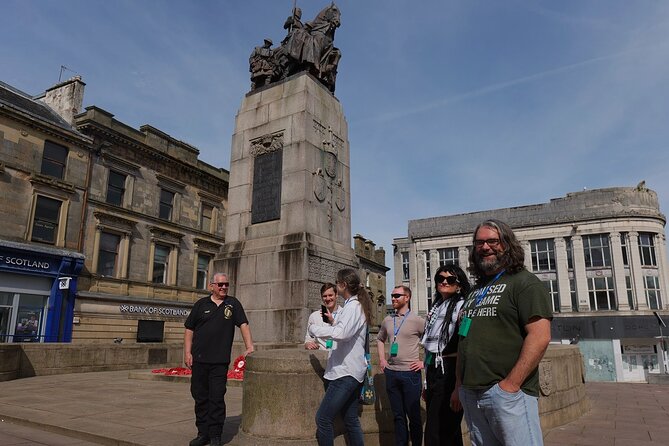
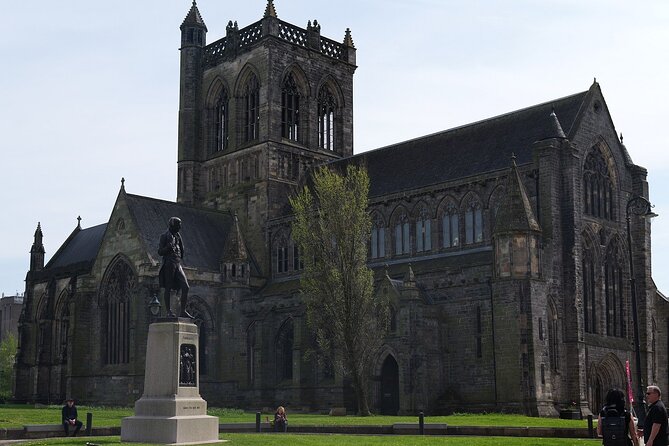
Paisley Abbey is the clearest first stop. The monastery dates to the 12th century and has links with Scottish royalty and William Wallace, giving the tour a strong opening point. Even if you know little about Paisley, the abbey gives you an immediate sense that the town’s story reaches far beyond its industrial period.
The planned stop is about 15 minutes, and admission is free. That timing matters. You should expect an exterior-focused introduction or a short visit rather than a long, leisurely examination of every corner. If entering the abbey is central to your plans, check what access is available on the day rather than assuming the walking tour includes an extended interior visit.
Abbey Close also helps set the tone for the route. From here, you can look at the civic buildings and public spaces that developed around one of Paisley’s oldest landmarks. The walk is not only about dates and famous names. It is about how religious, civic, and commercial life collected in the same town center.
Victorian civic pride above Abbey Close

One stop takes you to a grand Victorian civic building overlooking Abbey Close. The details provided do not identify the building by name, so I would treat this as a visual and historical stop rather than expect a separate admission visit.
Its value is in showing how Paisley presented itself during a period of confidence and growth. Victorian civic buildings often tell you what a town wanted to say about itself: order, prosperity, public service, and local importance. Here, the building’s position above Abbey Close creates a useful contrast with the older monastery below.
The audio commentary should help connect the architecture to the wider town story. Without a guide, you might pass the building, admire its scale, and move on. With the explanation, you get a reason to pause and notice how its setting relates to the abbey and the town center.
Following Paisley’s thread industry
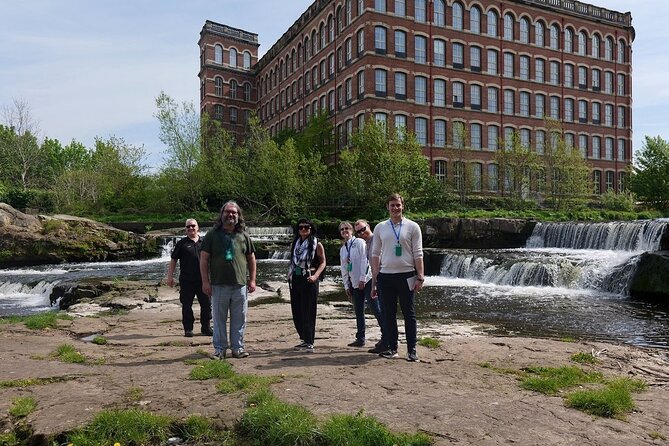
Paisley’s industrial identity appears in the stop at a striking red-brick former thread mill. The building is presented as a symbol of the town’s textile heritage, and this is one of the route’s most useful stops for understanding why Paisley grew as it did.
A former mill is more than an attractive brick facade. It points to the workers, machinery, production, and trade that shaped local life. The tour does not claim to offer a full industrial museum visit, so you should expect to see the building and hear its story rather than spend a long time inside.
I like this kind of stop because it corrects a common travel habit. Visitors often focus on old churches and monuments, while the workplaces that made a town prosperous receive less attention. Here, the mill gives the religious and civic sights some economic context.
More History Audio Tours in the UK
- London: Natural History Museum Express Guided Tour & Audio Guide
★ 4.0 · 100 reviews - London: Natural History Museum Express Tour & Audio App
★ 3.6 · 60 reviews - Cirencester’s Tall Tales and Hidden History: A Self-Guided Audio Tour
★ 4.0 · 5 reviews - London’s Alternative History: A Self-Guided Audio Tour
★ 5.0 · 4 reviews
An Art Deco building with a serious story
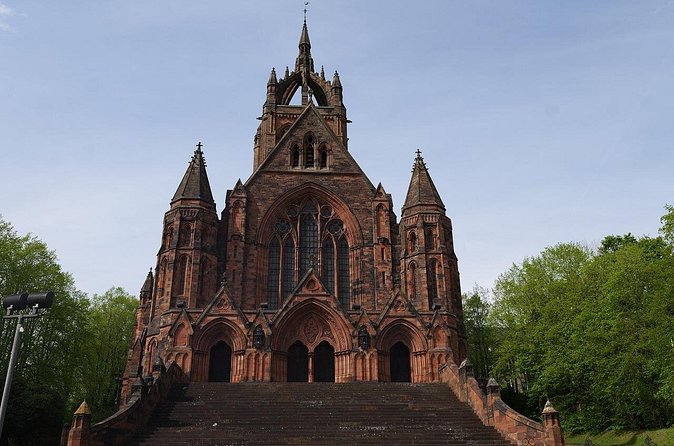
The route then reaches a striking Art Deco building with a powerful backstory in child welfare. The supplied details do not name the building, but the stop clearly adds a social-history layer to the tour.
Art Deco architecture can be easy to treat as decoration. This stop asks you to look past the lines and geometry and consider the institution’s human purpose. The building’s story is tied to child welfare, so the commentary may be more sobering than the lighter moments involving architecture or local craft.
That balance is useful. A good town walk should not reduce history to pretty facades and famous characters. This stop gives you a chance to think about how Paisley handled social needs, and how public buildings can carry difficult memories as well as civic pride.
Looking up at the town’s Gothic skyline icon
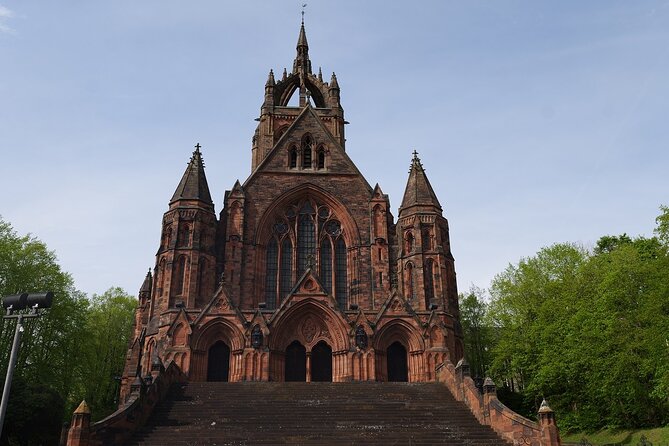
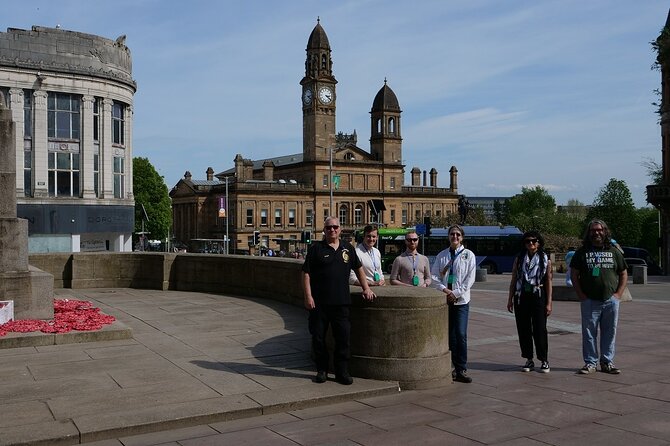
Another stop focuses on Paisley’s Gothic-style skyline icon. The description does not provide its name, but its role is clear: this is one of the town’s most recognizable vertical markers.
The stop works best as part of the wider architectural sequence. After the abbey and Victorian civic building, the Gothic feature adds another style to the town center. You get to see how different periods left their mark close together.
Do not expect a long climb or a special viewpoint unless the guide confirms otherwise. The tour information presents it as a point of interest along the walking route. Bring your attention upward, though. Town walks reward you when you look above shopfront level.
Weavers’ cottages and the people behind the cloth
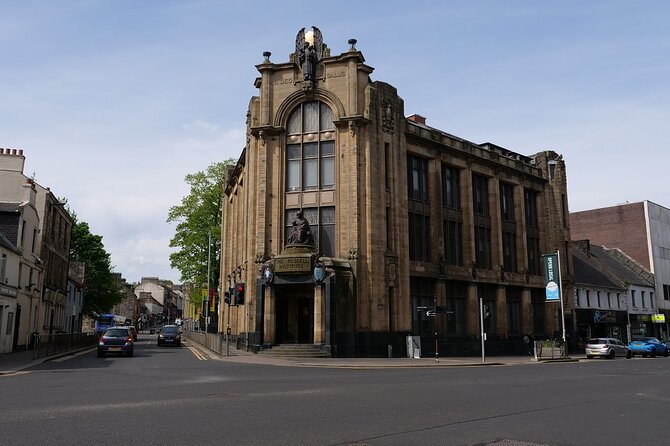
The preserved 18th-century weavers’ cottages may be among the most human-scale sights on the route. Large mills and civic buildings show power and industry. Cottages show where ordinary work and domestic life met.
These buildings help you picture Paisley before modern development changed the town center. Their importance comes from their modest size and survival. They connect the textile story to the people who made it, rather than leaving the subject at the level of factories and trade.
The information does not specify whether you enter the cottages, so plan to view them as part of the street walk. Your audio headset should be useful here, since the story may depend on details you would not notice from the outside.
Remembering Robert Tannahill, Paisley’s weaver-poet
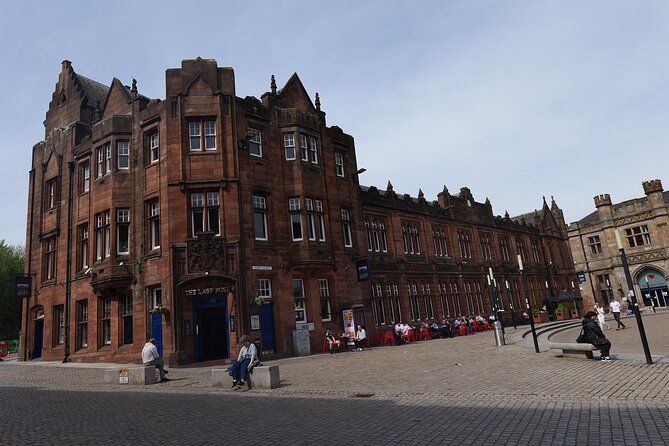
The stop honoring Robert Tannahill adds a personal voice to the textile story. Tannahill is described as Paisley’s own weaver-poet, which means the route does not separate working life from art and local identity.
That is a strong detail to include in a short tour. Tannahill was not presented simply as a distant literary figure. His connection with weaving makes him part of the same working town represented by the cottages and mill.
You should not expect a full literary lecture. Instead, this stop gives the tour a memorable character and a reminder that a town’s culture can grow from ordinary occupations. It also breaks up the architectural stops with a story about one local person.
Inside the long tradition of Houston Kiltmakers
Houston Kiltmakers is the final named stop and one of the tour’s more tangible experiences. The business has operated since 1909, and the visit offers a look at a Scottish craft tradition that is still connected to everyday commerce.
The listed visit lasts about 15 minutes and admission is free. That is enough time for an introduction and a look around, but not enough to expect a full workshop demonstration or a detailed lesson in tartan production unless the guide specifically arranges one.
I like the way this stop brings the tour into the present. Paisley’s story is not locked in abbeys, cottages, and former mills. A kiltmaker gives you a live link to Scottish clothing and local enterprise.
If you are shopping for a kilt, the stop may have extra appeal. If you are not, it still provides a useful closing note: Paisley has moved through religious, industrial, social, and cultural changes while keeping connections to Scottish craft.
What the personal audio headset changes
The audio headset is not a flashy extra, but it may be one of the most useful parts of the experience. Walking tours can become frustrating when the group spreads out, traffic passes, or several people try to stand close to the guide.
With a personal headset, you can keep a little space and still follow the explanation. That makes the walk less about fighting for a position and more about looking at the buildings. It also helps in a group of up to 15 people, where the back of the group might otherwise miss details.
The tradeoff is that audio equipment can feel less spontaneous than simply walking beside a guide and talking. Still, for a history-heavy route with several stops, clear sound is a practical advantage.
The value of the $27.42 price
At $27.42 per person, the tour asks you to pay for more than a route between free public sights. The price includes the guide’s time, the organized storytelling, and the audio headset. Admission is free at the listed stops, and lunch is not included.
I see the value most clearly if you have limited time. You could walk around Paisley independently at no charge, but you would need to find the main sights, research the links between them, and decide how to fit them into two hours. The tour handles that work for you.
The value is less obvious if you want extended museum visits, a meal, or a slow photography walk. This is a focused introduction, not a full-day cultural program. You are paying for structure and context rather than entry tickets.
The tour’s perfect five-star rating from 30 reviews and 100 percent recommendation rate point to a consistently positive response, with particular praise for guide Hugh. One especially practical use is an airport layover. A short taxi or bus ride from Glasgow Airport, plus luggage storage at the airport for a small fee, can make this a worthwhile break from waiting around.
Timing, meeting point, and who should book
The tour starts at 2 County Place and returns to the same meeting point. Returning to the start simplifies your plans, especially if you are using public transportation or need to head back toward the airport afterward.
The experience lasts about two hours. Add time before and after for getting to Paisley, finding the meeting point, and returning to the airport if you are flying. The supplied information confirms that Paisley is near public transportation, but it does not give exact bus routes or journey times.
Most people can take part, and service animals are allowed. Since this is a walking tour, you should still be comfortable moving through town streets for roughly two hours. No meal is included, so eat beforehand or plan food separately.
Free cancellation is available if you cancel at least 24 hours before the local start time. Changes made within 24 hours are not accepted, and late cancellations are not refunded. The tour also requires a minimum number of participants, so a cancellation by the operator would bring an alternative date or experience, or a full refund.
Is the Paisley History Walking Tour worth booking?
I would book this tour if you have a few spare hours near Glasgow Airport, want a guided introduction to Paisley, or prefer local history explained as you walk rather than read from a guidebook. It is also a good fit if you like seeing the link between grand monuments and ordinary working streets.
I would skip it if you are looking for long interior visits, a food experience, or a full-day excursion. The route is short, several stops are viewed from outside, and lunch is not included.
For the price, the best reason to go is the combination of convenience and context. You get Paisley Abbey, textile heritage, old cottages, Robert Tannahill, and a kiltmaker in one small-group walk. If Hugh is guiding on your date, the experience also has a named local guide associated with its strongest praise. For an airport layover, that is a much better use of time than sitting with your luggage and watching the clock.
FAQ
Where does the Paisley History Walking Tour begin?
The tour begins at 2 County Place, Paisley PA1 1BN, United Kingdom.
Where does the tour finish?
The activity ends back at the meeting point at 2 County Place.
How long does the walking tour last?
The tour lasts approximately two hours.
What language is the tour offered in?
The tour is offered in English.
Are audio headsets provided?
Yes. Personal audio headsets are included so you can hear the guide clearly during the walk.
What is the maximum group size?
The tour has a maximum of 15 participants.
Is admission to Paisley Abbey included?
Paisley Abbey is listed with free admission. The planned stop is about 15 minutes.
Is lunch included?
No. Lunch is not included in the tour price.
Can I cancel for a full refund?
Yes, if you cancel at least 24 hours before the experience start time. Cancellations made less than 24 hours before the start are not refunded, and changes within that period are not accepted.
New audio tours around the UK
- London Panoramic Open Top Bus Tour with Audio Guide★ 4.0 · 209 reviews
- London: British Museum Audio Guide & Small Group Entry★ 3.5 · 81 reviews
- London: National Gallery Audio Tour (No Entry Ticket)★ 3.5 · 11 reviews
- London’s Alternative History: A Self-Guided Audio Tour★ 5.0 · 4 reviews
- London: British Museum’s English Audio Tour with Free Reservation★ 3.0 · 15 reviews
- London: Churchill War Rooms Ticket & Political London Audio Tour★ 4.0 · 83 reviews
- London: British Museum Audio Tour with Free Guaranteed Entry★ 3.0 · 30 reviews
- Houses of Parliament Ticket & Political London Audio Guide★ 4.0 · 13 reviews
UK Audio Tours, compared.

London: Emirates Stadium Entry Ticket and Audio Guide
Read our review →
Westminster Abbey Entrance Ticket Including Audio Guide
Read our review →
London: British Museum Audio Tour & Priority Entrance Ticket
Read our review →
Golden Tours York Hop-on Hop-off Open Top Bus Tour with Audio Guide
Read our review →
Bath: Roman Baths Entry Ticket with Audio Guide
Read our review →
Canterbury Cathedral: Entry Ticket with Audio Guide
Read our review →
London: Churchill War Rooms Ticket & Political London Audio
Read our review →
London Panoramic Open Top Bus Tour with Audio Guide
Read our review →Browse the lists this tour appears in