
Review · ITALY
Antonio Canova Gypsotheca Museum: ticket and audio guide app
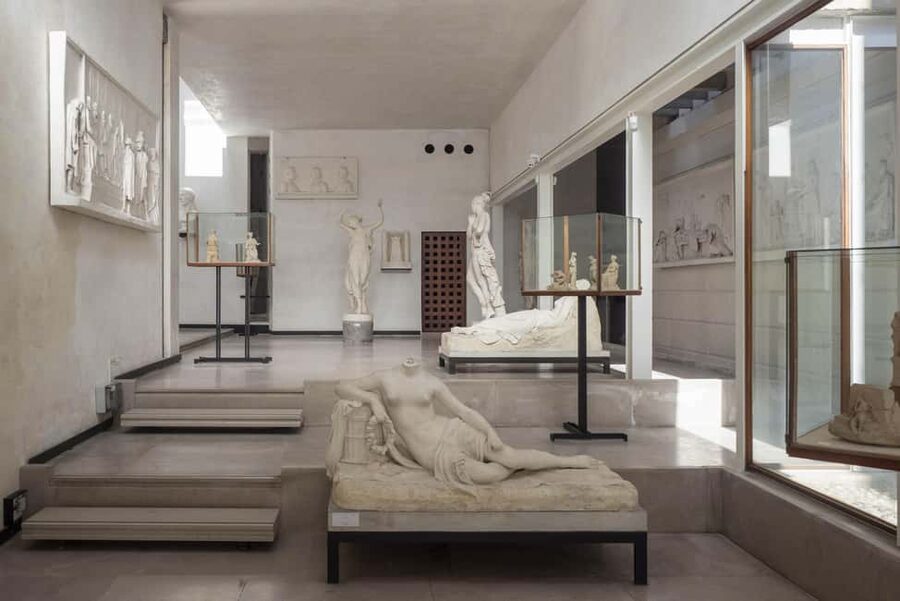
The Antonio Canova Gypsotheca in Possagno gives you a rare look at the original plaster models behind some of Neoclassicism’s best-known sculptures. These are not small study pieces tucked into a corner. They fill a purpose-built gallery, where you can see how Canova shaped and refined his ideas before marble became the final work.
I like two things here: the visit brings together the Gypsotheca and Canova’s birthplace, and the official audio guide adds useful context without forcing you into a fixed group. The main drawback is practical rather than artistic: the guide runs on your smartphone, so you should bring charged phones and your own earphones.
Key points to know before you go
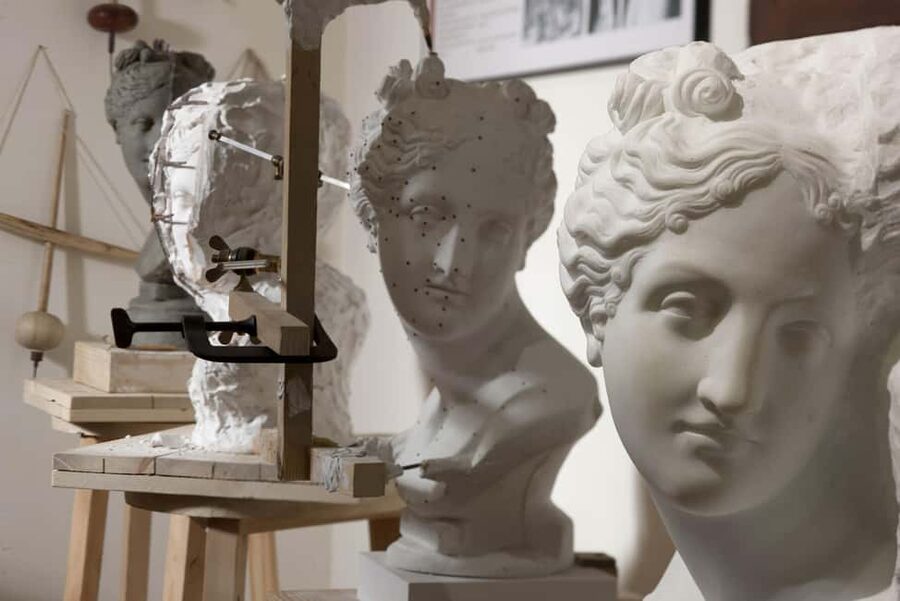
- Original plaster models: See the working models Canova used before producing finished marble sculptures.
- Birthplace rooms: Continue through paintings, sketches, tools, and historic rooms connected with the artist’s life.
- Audio guide app: Listen at your own pace using your smartphone, with Italian and other language options indicated for the web app.
- About 90 minutes: The visit is long enough for a serious introduction, but short enough to fit into a day in the Possagno hills.
- Independent format: There is no standard tour guide included, so you control the pace and order of attention.
- Advance planning helps: Weekend and holiday visits can be busier, and parking is available near the museum.
Why the plaster models matter
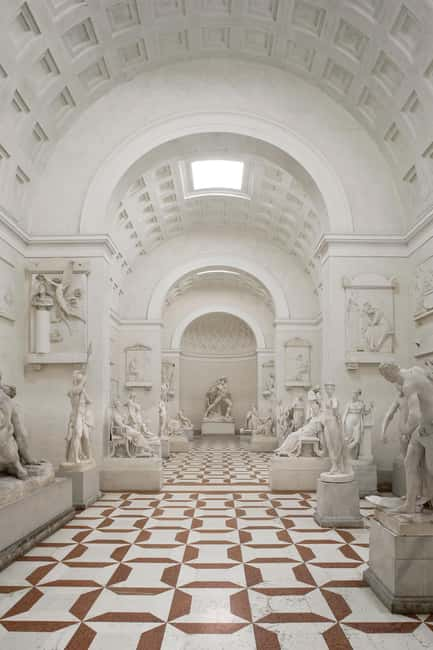
The heart of the visit is the Gypsotheca, a gallery devoted to Canova’s plaster casts. The word can sound technical, but the idea is simple: these are the full-size models used in the sculpting process before the final marble version was made.
That makes the collection especially useful for anyone who wants to understand how a sculpture develops. You are not only looking at a polished finished object. You are seeing the stage where Canova worked out poses, proportions, drapery, gestures, and details.
The plaster surface also gives the works a different character from marble. Marble can look smooth, cool, and complete. Plaster models preserve more of the working process. As you move through the gallery, look closely at the pose and the arrangement of the body before worrying about famous names or individual masterpieces.
I like this arrangement because it turns a visit to a sculpture museum into a lesson in making sculpture. The collection lets you think about the distance between an artist’s first full model and the finished work that later appeared in marble.
The gallery itself is the reason to make the trip to Possagno. The setting in the hills of Veneto adds a quieter feel than a large city museum, though you should not expect a packed urban cultural complex with a long list of separate exhibitions. This is a focused visit built around one artist and one important body of work.
More Museum Audio Tours in Italy
- Florence: Uffizi Priority Ticket & Masterpieces Audio App
★ 4.2 · 6,402 reviews - Venice: St. Mark Basilica Ticket, Audioguide+History Gallery
★ 3.9 · 4,780 reviews - Rome: Borghese Gallery Skip-the-Line Ticket & Audioguide
★ 4.3 · 4,318 reviews
Following Canova from the gallery to his birthplace
After the Gypsotheca, you continue to Antonio Canova’s birthplace. This part changes the mood. Instead of standing among large plaster models, you move through rooms connected with the artist’s daily life and working world.
You can see paintings, sketches, and tools used by Canova. These objects add practical detail to the grander story told by the sculptures. A sketch can show a quick idea. A tool points to the physical labor behind the art. A historic room gives you a sense of the setting in which Canova’s career began.
I find this combination more satisfying than a gallery visit made up only of finished works. The birthplace provides a human scale. You can move from monumental plaster figures to smaller signs of the artist’s routine, then back to the larger questions of style and technique.
The birthplace is also helpful if you are visiting with someone who is not already interested in Neoclassical sculpture. The tools and rooms offer an easier entry point than a long discussion of artistic theory. Families can divide their attention naturally, with some people focusing on the objects and others listening to the stories in the audio guide.
The available information does not list every room or object by name, so you should think of this section as a historic house visit connected to Canova’s life rather than a fully reconstructed studio tour. Its value comes from the link between the personal setting and the works in the Gypsotheca.
Getting more from the official audio guide
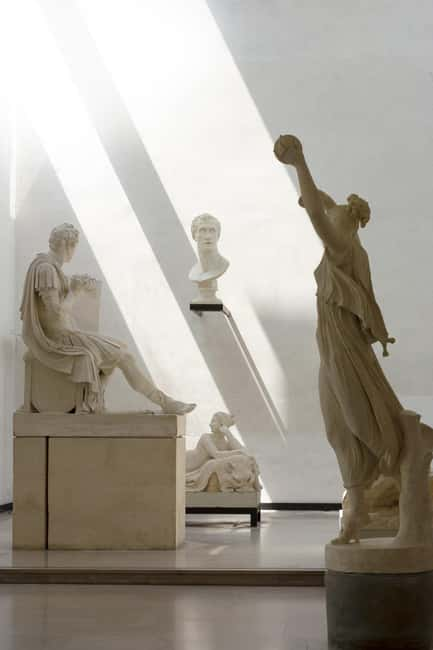
The official audio guide is provided as a web app for your smartphone. It gives explanations, facts, and anecdotes as you move through the museum. Since you visit independently, you can pause, replay, or skip sections instead of keeping pace with a guide and a group.
That flexibility matters in a collection of plaster models. You may want extra time with one sculpture, while another object may hold less interest. The app lets you shape the visit around your own curiosity.
Bring your own earphones. Physical earphones are not included, and there is no physical audio device supplied with the ticket. This is a small point, but it can affect the visit. Sharing a phone speaker in a quiet gallery is awkward, and listening without headphones may make it harder to focus.
Your phone should also be charged before you arrive. The experience depends on the smartphone web app, so a low battery is more than a minor inconvenience. The supplied information identifies Italian as the host language and indicates that the audio guide web app is available in Italian and other languages. Some content may remain in its original language, so check the language options when booking if that matters to you.
The audio guide is best treated as a companion, not a replacement for looking. Start by taking in the scale and arrangement of the works. Then listen for context. If you keep your eyes on the sculpture while the commentary explains its role in Canova’s process, the app becomes much more useful.
A self-paced visit that takes about 90 minutes
The average visit lasts around one hour and 30 minutes. That makes this a good cultural stop for a day in Possagno, especially if you want something focused rather than an all-day museum commitment.
You can move at your own pace, but do not rush the Gypsotheca. The plaster models need a little time to reveal their differences. A quick circuit will show you the scale of the collection, but a slower visit lets you compare poses, surfaces, and the relation between model and finished idea.
A sensible rhythm is to spend the first part in the Gypsotheca, pause when a model catches your attention, and then give the birthplace its own unhurried section. Finish with any audio stops you skipped earlier. The ticket is valid for one day, so you have flexibility around the timing, subject to the available entry times.
This is not a guided walking tour with a set departure. No standard tour guide is included. Guided visits can be arranged by reservation for an additional fee, which gives you another option if you want live explanation or have a group with particular interests.
The independent format works best for adults, families, and art lovers who enjoy choosing their own pace. It is less suitable if you want constant interaction with a guide or a detailed conversation about every object. You can add a guided visit, but you need to arrange it separately.
More Smartphone Audio Tours in Italy
- Rome: Colosseum & Forum with Audio Guide App -Optional Arena
★ 4.2 · 24,770 reviews - Florence: Timed Entry to Michelangelo’s David + Audio App
★ 4.6 · 19,496 reviews - Florence: Cathedral & Brunelleschi’s Dome Ticket & Audio App
★ 4.4 · 6,973 reviews - Florence: Michelangelo’s David Priority Ticket & Audio App
★ 4.4 · 6,812 reviews
What the $20 price gives you
At about $20 per person, the ticket covers entry to both the Gypsotheca and Canova’s birthplace, plus the official audio guide web app. The value is strongest if you care about the making of art, not just the final appearance of famous sculptures.
You are paying for access to a concentrated collection, a historic setting, and interpretive material in one visit. The audio app also saves you from needing to hire a guide for a basic introduction. For many people, that is a fair balance between information and independence.
The price does not include transport to Possagno, books or other publications from the bookshop, educational workshops, special events, or a live guided visit. It also does not include earphones. If you want a private or guided experience, your total cost will be higher.
I would compare this ticket with the time you have available. If Possagno is already on your route through Veneto, the admission makes good sense. If reaching the town requires a special trip and you have only a passing interest in sculpture, you may need to decide if a 90-minute museum visit justifies that travel. Parking is available near the museum, which helps if you are driving.
Planning your arrival at Piazzale A. Canova
The entrance is on Piazzale A. Canova in Possagno. That is the point to enter in your plans, rather than assuming the birthplace and gallery have separate public entrances.
Advance booking is recommended for weekends and holidays. The activity offers free cancellation up to 24 hours before the visit, and a reserve-now, pay-later option is available. Those terms are useful if your route through Veneto is still changing, though you should check the available starting times before fixing the rest of your day.
The museum has restrooms and a visitor reception area. Lockers and cloakroom use are not included, so avoid arriving with bags that you do not want to carry through the galleries.
Accessibility is partial for people with reduced mobility. If you have specific access needs, check with the museum before booking. The information provided does not give a full list of accessible rooms or routes, so advance confirmation is the sensible choice.
Who will enjoy this most
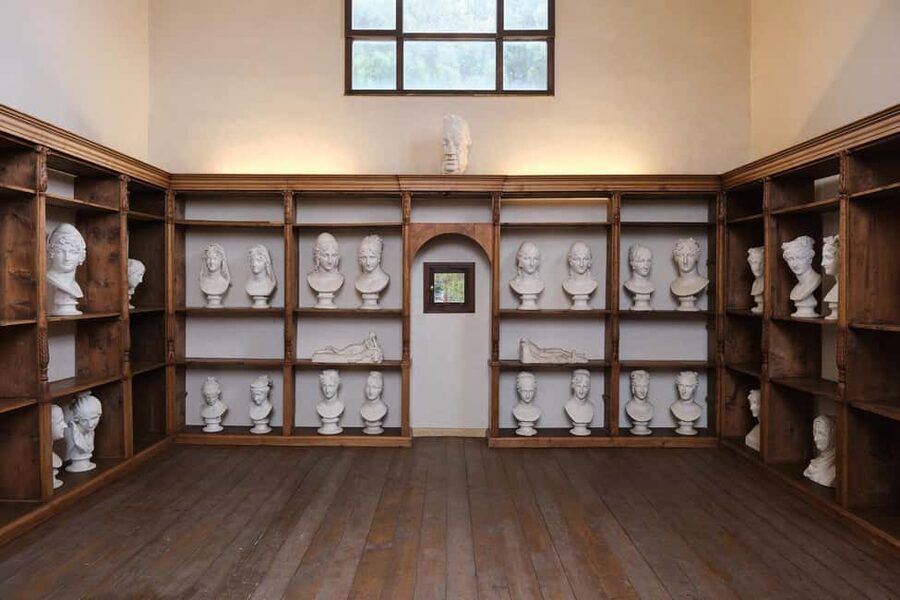
I would recommend the visit first to anyone interested in sculpture, Neoclassicism, or the practical steps behind a finished artwork. The plaster models make Canova’s process easier to understand than a display of marble works alone.
It also suits families because the visit has several ways in. Children may respond to the size of the models and the tools, while adults can spend more time with the artistic and historical material. The one-and-a-half-hour average length is manageable for a family outing, though younger children may not want to listen to every audio stop.
The museum works well for an independent day in the Veneto hills. You can take your time, use the audio guide when useful, and avoid the pressure of joining a group at a particular hour. The high rating of 4.7 from six recorded ratings fits the main strengths of the experience: the gallery is widely described as impressive, and the collection is repeatedly praised for the quality of its works.
The visit may be less satisfying for someone seeking a broad survey of Italian art. This is a specialist museum devoted to Canova. You will not find a large range of artists or periods. The focus is the point, but it also sets the limits.
Small details that improve the visit
Download or open the audio guide before you settle into the galleries, and bring earphones that you know work with your phone. This prevents a technical pause at the start and lets you begin looking right away.
Give yourself more time than the minimum if you like to read, listen to every stop, or sketch. The stated average is 90 minutes, not a strict limit. Since the ticket is valid for one day, ask at reception about the practical timing if you want to divide your visit.
If you are visiting on a holiday or weekend, book ahead. For a weekday visit, availability may be easier, but checking times is still wise because the activity operates according to available starting times.
Look at the whole room before following the audio commentary. Large plaster models can feel repetitive if you focus only on individual pieces. Their arrangement, scale, and differences in pose are part of what makes the Gypsotheca worth visiting.
Do not forget the birthplace section. It is easy to spend all your attention on the large gallery and then hurry through the rooms with sketches, paintings, and tools. Those smaller objects help connect Canova the celebrated sculptor with Canova the working artist.
Should you book the Antonio Canova Gypsotheca?
Book it if you want a focused art visit with genuine objects tied to the sculpting process, and if you appreciate seeing an artist’s birthplace alongside the main collection. The combination of original plaster models, historic rooms, sketches, paintings, and tools gives you more than a single gallery circuit.
The $20 price is reasonable for the two-part visit and smartphone audio guide, especially if you are already exploring Possagno. Bring earphones, allow about 90 minutes, and book in advance for weekends or holidays.
Skip it if you want a broad museum covering many artists, or if transport to Possagno would take up too much of your day for a specialist collection. For everyone else, this is a clear, manageable way to meet Canova’s art at the place most closely connected with his life and working process.
FAQ
Where is the Antonio Canova Gypsotheca Museum?
The museum entrance is on Piazzale A. Canova in Possagno, in Italy’s Veneto region.
How much does admission cost?
The listed price is $20 per person.
How long does the visit take?
The average visit lasts about one hour and 30 minutes.
What does the ticket include?
It includes entry to the Antonio Canova Gypsotheca, access to Canova’s birthplace, and the official audio guide web app.
Is a live tour guide included?
No. A live guided visit is not included, but guided visits may be available by reservation for an additional cost.
How does the audio guide work?
The audio guide is a web app used on your smartphone. It provides explanations, facts, and anecdotes as you move through the visit.
Should I bring earphones?
Yes. Earphones are not included, so you should bring your own for the smartphone audio guide.
Is the museum accessible to people with reduced mobility?
The museum is partially accessible. Contact the museum in advance to check specific access needs.
Can I cancel my booking?
You can cancel up to 24 hours in advance for a full refund. A reserve-now, pay-later option is also available.
New audio tours around Italy
- Lecce Walking Tour with Audio and Written Guide by a Local★ 4.0 · 38 reviews
- Private Audio Guided Walking Tour in Lecce★ 4.0 · 7 reviews
- Private Audio Guided Walking Tour in Como★ 3.0 · 3 reviews
- Como Walking Tour with Audio and Written Guide by a Local★ 4.5 · 30 reviews
- Finance and Nobility: Explore medieval Genoa on a self-guided audio tour★ 4.5 · 7 reviews
- Genova Walking Tour with Audio and Written Guide by a Local★ 4.5 · 33 reviews
- Udine Walking Tour with Audio and Written Guide by a Local★ 4.0 · 2 reviews
- Florence: Uffizi Gallery Timed Entry Ticket with Audio★ 3.0 · 3 reviews
Italy Audio Tours, compared.
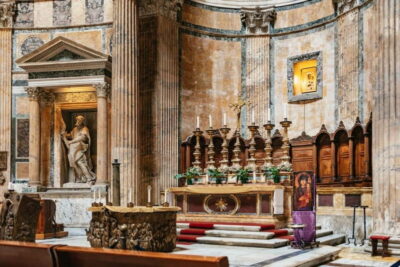
Rome: Pantheon Fast-Track Ticket and Official Audioguide
Read our review →
Rome: Colosseum & Forum with Audio Guide App -Optional Arena
Read our review →
Florence: Timed Entry to Michelangelo’s David + Audio App
Read our review →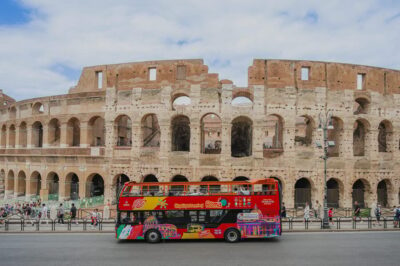
Rome: City Sightseeing Hop-on Hop-off Bus with Audioguide
Read our review →
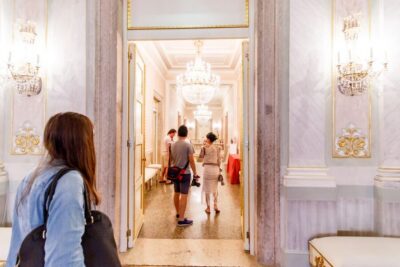
Venice: La Fenice Opera House Entry Ticket with Audio Guide
Read our review →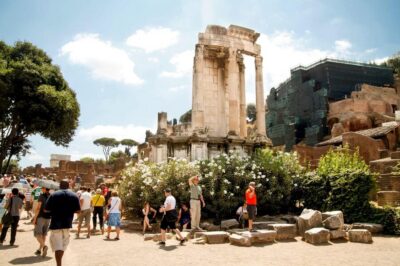
Rome: Colosseum, Forum, Palatine Hill Entry & Audioguide App
Read our review →
Rome: St. Peter’s Basilica & Dome Entry Ticket & Audio Tour
Read our review →Browse the lists this tour appears in