

Review · BERLIN
Berlin Walking Tour with Audioguide on Your Smartphone
Berlin’s story unfolds in layers on this self-guided smartphone walk, from Prussian grandeur at the Brandenburg Gate to Cold War reminders at Checkpoint Charlie and East Berlin symbols around Alexanderplatz. The route links many of the city’s best-known sights without forcing you to keep pace with a group.
I like the low price of $6.61 and the freedom to stop for coffee, lunch, photos, or a museum visit. I also like the offline map and replayable audio, useful when street noise or a passing tram makes you miss a sentence.
The main caution is that this tour depends on your phone and the app working well. Some users had freezes or occasional GPS trouble, and the suggested two hours can become four once you stop to explore.
Key points to know before you start
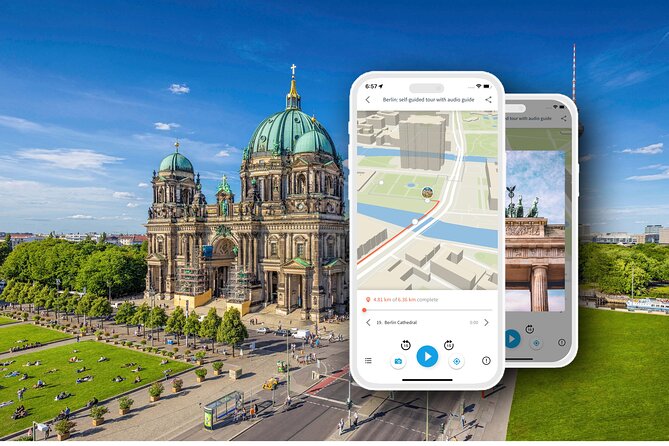
- 24 audio recordings cover Berlin’s major landmarks, political history, architecture, and everyday symbols.
- The route runs from Pariser Platz to Alexanderplatz, connecting the Brandenburg Gate, Holocaust Memorial, Checkpoint Charlie, Gendarmenmarkt, Bebelplatz, and Museum Island.
- You set the pace, with no group to catch and no fixed start time after activation.
- The route may take longer than two hours, especially if you pause for lunch, enter attractions, or spend time at the memorials.
- You need your own phone and headphones, and transportation, food, drinks, and entrance tickets cost extra.
- Technical preparation matters, since GPS accuracy and app stability can affect the walk.
A useful Berlin introduction for $6.61
At $6.61, this is not trying to replace a private historian. It is an inexpensive way to put structure around your first look at central Berlin. The route gives you a steady thread through places that can otherwise feel scattered: Prussian monuments, Nazi sites, Cold War checkpoints, East German traces, and modern reunification symbols.
The audio format is especially useful if you prefer to look around rather than watch a guide. You can replay a recording, pause it while crossing a street, or stop the tour entirely when a café catches your eye. The one-year access period also means you are not tied to one particular afternoon.
You should treat the stated two-hour duration as a rough walking time, not a complete sightseeing schedule. A careful walk with photographs, food, reading memorial displays, and possible interior visits can take about four hours. The route itself is manageable, but Berlin rewards slow looking.
The tour is offered in English and works on iPhone and Android. You download the app, activate the purchase, and follow the route on the map. The offline map is a useful safeguard, though you should still begin with a charged phone and headphones that work.
More Audio Walking Tours in Germany
- Berlin Cathedral Ticket & Audio Tour with a City Walk
★ 4.1 · 28 reviews - Trier: City Walk with Audio Guide in 7 Languages on your Phone
★ 4.0 · 19 reviews - Cologne Walking Tour with Audioguide: City and Cathedral
★ 4.5 · 14 reviews
Pariser Platz and the Brandenburg Gate
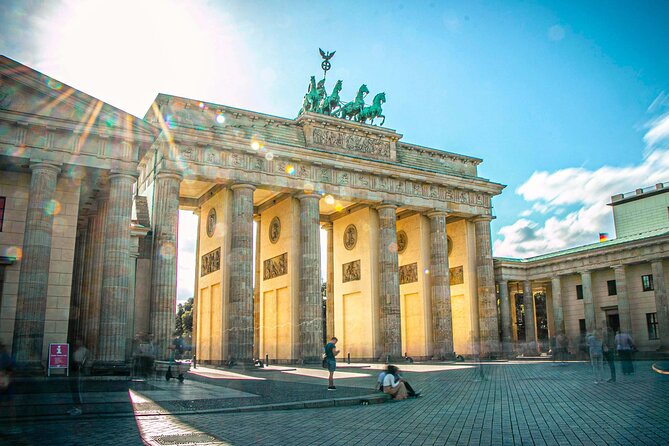
The walk begins at Pariser Platz, a formal square framed by grand buildings and the Brandenburg Gate. Give yourself time to look beyond the gate itself. The square is one of Berlin’s clearest examples of how a place can shift from royal entrance to wartime symbol, divided-city backdrop, and present-day meeting point.
The Brandenburg Gate deserves its own pause. Its neoclassical columns and Quadriga statue are easy to recognize, but the audio adds the political story behind the monument. The gate once sat beside the Berlin Wall and became associated with separation. Today, it is one of the most familiar signs of reunification.
The route allows roughly ten minutes at each of these first stops. That is enough for orientation and photographs, but not enough for a long architectural study. If this is your first time in Berlin, I would not rush. The opening section gives you the visual key to much of what follows: power, division, memory, and change.
The Reichstag and Berlin’s modern democracy
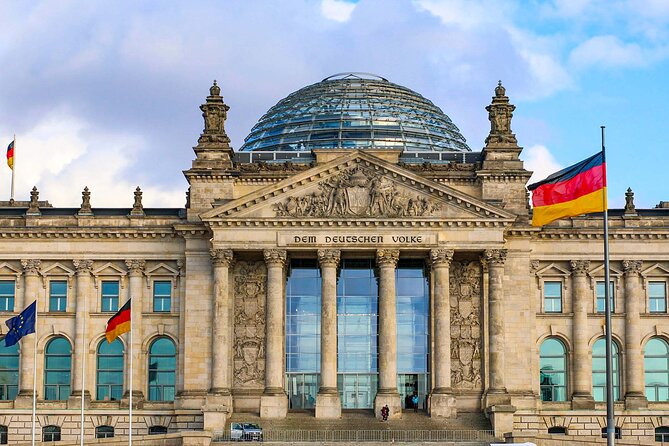
The Reichstag is one of the route’s most striking mixtures of old and new. Its historic shell carries the weight of Germany’s past, while the glass dome points toward openness and public government.
The audio explains the building’s role in Berlin’s political story and directs your attention to the contrast between its older architecture and modern additions. You can see the dome from outside, but entering it is a separate experience and requires its own arrangements. The tour does not include admission or reservations.
This is a good place to understand the limits of an audio walk. The recording can explain why the building matters, but it cannot provide the time or access needed for a full visit. If you already have a dome visit planned, use this stop as historical preparation rather than your complete Reichstag experience.
The Holocaust Memorial and the Führerbunker site

The Memorial to the Murdered Jews of Europe is one of Berlin’s most affecting places. Its field of concrete slabs changes as you walk through it. From the edge, the arrangement looks orderly. Inside, the ground drops and the blocks rise around you, creating a more unsettling sense of enclosure.
The audio encourages reflection on the memorial and the Nazi murder of Europe’s Jews. An underground Information Centre adds further material, but entrance is not part of the tour. Allow extra time here if you want to visit it, since ten minutes is only enough for a first encounter with the outdoor memorial.
Nearby, the former Führerbunker site offers a different kind of lesson. There is no dramatic ruin to visit. The location is now a parking area with an information display, and that plain setting is part of the point. It shows how a site tied to Hitler’s final days has been handled in modern Berlin: through factual explanation rather than spectacle.
This pair of stops calls for a respectful pace. The audio is useful for context, but you should not expect entertainment at every point. Some places on the route are meant to make you pause and think.
More Smartphone Audio Tours in Germany
- E-ticket to Berlin Botanical Garden with Audio Tour
★ 5.0 · 2 reviews - 800 Years of History: A Munich GPS Audio Tour
★ 4.5 · 12 reviews - Dusseldorf: City Walk Audio Guide in 7 Languages on your Phone
★ 4.5 · 11 reviews - Koblenz: City Walk with Audio Guide in 7 Languages on your Phone
★ 4.5 · 5 reviews
Ampelmännchen and the Trabi: everyday East Berlin
The Ampelmännchen, the cheerful pedestrian signal figures created in East Germany, bring a lighter note to the walk. Look for the distinctive little man at crossings. He has become one of Berlin’s most recognizable symbols, linking East German design with the city’s present-day identity.
The tour also introduces the Trabant, or Trabi, the small East German car that has become a pop-culture relic. You may see colorful Trabis connected with city tours, but this audio experience does not include a ride. The value here is the background: these ordinary objects help explain Berlin through daily life, not just monumental buildings.
I like this part because it keeps the route from becoming a parade of solemn memorials. Berlin’s past is also visible in traffic lights, cars, shop displays, and visual oddities. The audio helps you notice details you might otherwise walk past.
Checkpoint Charlie and the Cold War city
Checkpoint Charlie is one of Berlin’s most famous Cold War locations. The guardhouse is a replica, not the original border structure, but the location still carries the memory of a divided city. The audio explains the crossing’s role and points you toward the surrounding historical material.
A museum near the site covers escape attempts and the wider story of the Wall. Entrance is not included, so decide in advance how much time you want to spend indoors. The outdoor stop works as a short orientation, while the museum provides a longer and more detailed visit.
This is also one of the busiest parts of the central route. The area can feel commercial, with souvenir shops and crowds competing with the historical message. The audio helps restore some context, but you will need to look past the modern staging to understand what the crossing represented.
Gendarmenmarkt’s grand architectural pause

Gendarmenmarkt offers a welcome change of mood. The square is framed by the German Cathedral, the French Cathedral, and the Konzerthaus, with the Schiller Monument at its center. Their symmetry gives the square a calm, carefully planned character.
The audio points out the relationship among the buildings and the square’s cultural role. Depending on restoration work or local conditions, the appearance and access of individual buildings can vary, so think of this as an exterior architecture stop unless you have separate admission plans.
The route allows about ten minutes here, but I would linger if architecture interests you. This is one of the places where the walk’s low cost pays off: a short recording can give you a reason to study proportions, towers, statues, and the way the square fits into central Berlin.
Bebelplatz and the book-burning memorial
Bebelplatz is surrounded by important institutions, including the State Opera, St. Hedwig’s Cathedral, and Humboldt University. Its most powerful feature is easy to miss if you do not know where to look.
Set into the pavement is an underground memorial connected with the Nazi book burning. A glass panel offers a view into a room lined with empty bookshelves. The image is quiet and stark, and the audio explains why this small memorial matters.
This stop shows one of the tour’s strengths. You are not only sent to the biggest monuments. You are also directed toward a detail that many people could pass without noticing. Take care around the glass panel and give yourself time to understand what it represents.
The nearby State Opera adds another layer. Its neoclassical façade and long artistic history make it part of the cultural story of Unter den Linden, even if you do not attend a performance. The tour introduces the building from the outside rather than providing an opera ticket.
Unter den Linden, Frederick the Great, and Museum Island
The equestrian statue of Frederick the Great dominates part of Unter den Linden. It presents the Prussian king in formal military style and helps explain the boulevard’s connection with royal and state power.
The audio gives the monument a historical frame, but you may want more detail if military history or Prussian politics is your main interest. The stop is brief and works best as part of the larger walk through central Berlin.
From here, the route reaches Berlin Cathedral and Museum Island. The cathedral’s large dome, elaborate interior, and terrace views make it one of the city’s most recognizable buildings. Entry is separate, so plan another visit if you want to go inside or climb for the view.
Museum Island is a UNESCO World Heritage site and home to five museums, including the Neues Museum and Pergamon Museum. The audio can orient you to the complex, but it cannot substitute for a museum visit. If you want to see the collections, allow several additional hours and arrange admission separately.
This section is where the two-hour estimate becomes least realistic. The area contains too much to absorb at a quick pace. Use the audio as a walking introduction, then return later for the cathedral or museums you most want to see.
Marx and Engels Forum, Red Town Hall, and Alexanderplatz
The Marx and Engels Forum offers a look at the former East German political world. Statues and reliefs honor the founders of communist theory, while nearby traces of the Berlin Wall connect ideology with the city’s physical division.
The setting is more open and relaxed than the memorials earlier in the route. The audio explains why the monument remains part of Berlin’s public landscape, even as the city continues to reconsider how it presents its former socialist identity.
The Red Town Hall, with its red-brick Neo-Renaissance façade, is Berlin’s seat of government. The Neptune Fountain nearby adds a formal focal point. This is a short exterior stop, but it helps connect the route’s monuments with the city’s working political institutions.
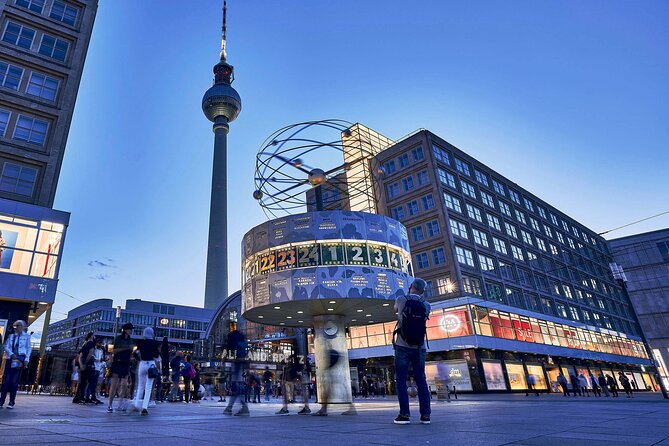
The walk ends at Alexanderplatz, one of Berlin’s major transport and commercial centers. The Television Tower rises above the square, and the Weltzeituhr, or world-time clock, is a familiar meeting point. Shops, cafés, and public transport make Alexanderplatz a practical place to finish.
You can also visit the Television Tower separately for panoramic views. That ticket is not part of this experience. The audio introduces the tower as a GDR-era landmark and a symbol of Berlin’s changing identity, while the square itself gives you a lively ending after the quieter memorial stops.
What the app does well, and where you should prepare
The app’s best feature is control. You can pause for food, replay a section, stop for photographs, and continue without waiting for a group. The GPS map makes the route easier to follow than a simple list of addresses, and the landmark illustrations help you match the recording with what you see.
The content is generally designed to answer the questions that arise while you walk. It covers the Berlin Wall, Checkpoint Charlie, political buildings, memorials, and smaller cultural signs such as Ampelmännchen. Some recordings may feel long, especially when you are eager to move on, but you can pause or return to them.
Technology is the weak spot. The app has frozen for some users and needed to be closed and reopened. GPS can also be inaccurate at times, and the map may rotate with your direction instead of remaining fixed north. Written turn-by-turn directions would be useful if the signal becomes confusing.
Before starting, download the app, activate your purchase, charge your phone, and bring headphones. Keep the route available offline, and do not assume that support will solve an urgent problem instantly if you have not prepared. The provider offers support through [email protected], which is worth saving before you begin.
Who should book this Berlin walk?
I would choose this tour if you want a cheap, flexible introduction to central Berlin and prefer exploring alone. It suits independent visitors, couples who dislike fixed group schedules, and anyone who wants to stop often for food, photos, or spontaneous sightseeing.
It is also useful if you already know the major landmarks but want historical prompts that point out smaller details. The Bebelplatz memorial and East German symbols are good examples of things you might otherwise overlook.
I would not choose it as your only source of information if you want a specialist guide, detailed architectural analysis, or help answering questions on the spot. It also is not ideal if your phone battery, data connection, or app skills are unreliable.
At $6.61, the risk is modest, especially with one year of access and free cancellation up to 24 hours before the scheduled start time. Book it for flexibility and orientation, not for the depth or personal exchange of a live walking tour.
FAQ
Is this a guided walking tour with a person?
No. It is a self-guided audio tour delivered through an iPhone or Android app. There is no human guide accompanying you.
How long does the Berlin audio tour take?
The advertised duration is about two hours. Plan for longer if you stop for lunch, coffee, photographs, museums, memorial displays, or extra sightseeing. Some people may take about four hours at a relaxed pace.
Where does the tour begin and end?
It begins at Pariser Platz, 10117 Berlin, and ends back at the meeting point according to the supplied tour information.
Do I need to bring anything?
You need your own smartphone and headphones. Food, drinks, transportation, and entrance tickets are not included.
Is the tour available offline?
The package includes an offline map with GPS route guidance. You still need to download the app and activate your purchase before following the route.
Can I cancel for a refund?
Yes. You can receive a full refund if you cancel at least 24 hours before the experience start time. Cancellations or changes made within 24 hours are not accepted for a refund.
More Audio Walking Tours in Berlin
- Sofia: City Monuments Guided Walking Tour with Audio Guide
★ 4.5 · 825 reviews - Florence: 2.5 hour Audio Guided Walking Tour led by Host
★ 4.6 · 293 reviews - Self Guided Classic Freedom Trail Location Aware (GPS) Walking Audio Tour
★ 4.5 · 258 reviews - Valletta: Self-Guided Historical Walking Tour (Audio Guide)
★ 3.7 · 251 reviews
More Smartphone Audio Tours in Berlin
- Rome: Colosseum & Forum with Audio Guide App -Optional Arena
★ 4.2 · 24,770 reviews - Florence: Timed Entry to Michelangelo’s David + Audio App
★ 4.6 · 19,496 reviews - Florence: Cathedral & Brunelleschi’s Dome Ticket & Audio App
★ 4.4 · 6,973 reviews - Florence: Michelangelo’s David Priority Ticket & Audio App
★ 4.4 · 6,812 reviews
New audio tours around Berlin
- Take the U Train: An Audio Story of Berlin’s Oldest Elevated Railway Line★ 4.0 · 2 reviews
- Self-Guided Audio Tour-The Fall of the wall: A light for humanity★ 4.5 · 8 reviews
- Hop-on Hop-off Berlin Tour with Audio Guide★ 3.0 · 11 reviews
- Self Guided Tours Berlin With 100 Captivating Audio Stories★ 5.0 · 2 reviews
- Berlin’s Museum Island: A Self-Guided Audio Tour★ 3.5 · 3 reviews
- Berlin Self-Guided Audio City Tour★ 4.5 · 2 reviews
- E-ticket to Berlin Botanical Garden with Audio Tour★ 5.0 · 2 reviews
- Berlin: Französischer Dom Viewing Platform with Audio Guide★ 4.1 · 43 reviews
Berlin Audio Tours, compared.
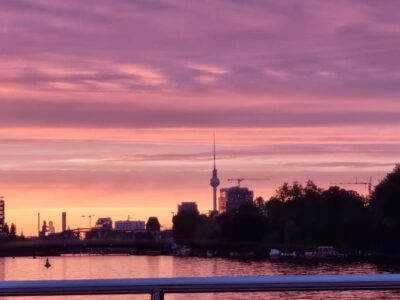
Berlin: Solar Powered Sunset Catamaran Cruise & Audio Guide
Read our review →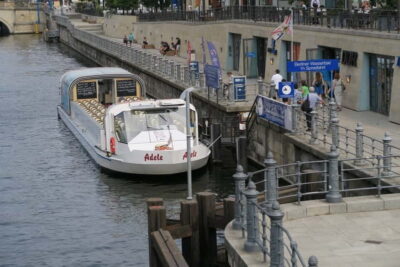
Berlin: Boat Sightseeing Cruise with Audioguide
Read our review →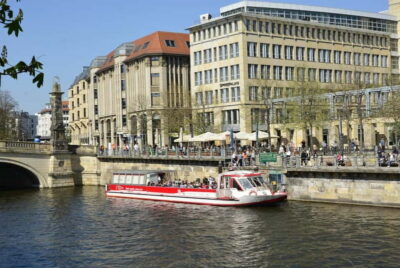
Berlin: Panoramic Boat Tour with Bilingual Audio Guide
Read our review →
Berlin: Französischer Dom Viewing Platform with Audio Guide
Read our review →
Berlin Cathedral Ticket & Audio Tour with a City Walk
Read our review →

Berlin: Charlottenburg Palace & Gardens Ticket & Audio Tour
Read our review →
Self-Guided Audio Tour-The Fall of the wall: A light for humanity
Read our review →Browse the lists this tour appears in