
Review · ERCOLANO
Herculaneum: Skip The Line Entrance ticket + Audioguide
Herculaneum is smaller than Pompeii, but its preserved houses, mosaics, and streets can feel even more personal. This self-guided ticket and audioguide lets you set the pace, skip the ticket line, and stop where your curiosity takes you.
I like the freedom to focus on the buildings that interest me, and I like having explanations for numbered areas when the site itself offers little information. The main drawback is the handheld audio device: you must collect it at the Audioguide Desk, bring valid ID, and use it without the convenience of your own phone or headphones.
Key points at a glance
- Herculaneum is compact but remarkably well preserved, making it easier to cover than Pompeii while still rewarding a slow visit.
- The handheld audioguide follows the site map and numbered areas, helping you connect explanations with specific buildings.
- You control the route and timing, with no guide group setting your pace or choosing your stops.
- The advertised visit lasts three hours, though some people finish in about two and a half hours, while others need longer to see everything.
- Audioguides are available in five languages: English, Italian, German, French, and Spanish.
- There is no café or restaurant inside the park, so plan food and drinks before you enter.
Why Herculaneum deserves time beyond Pompeii
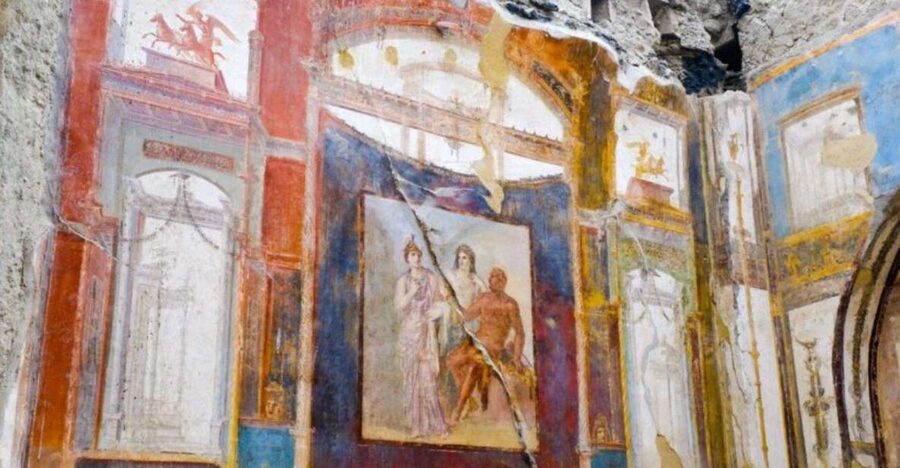
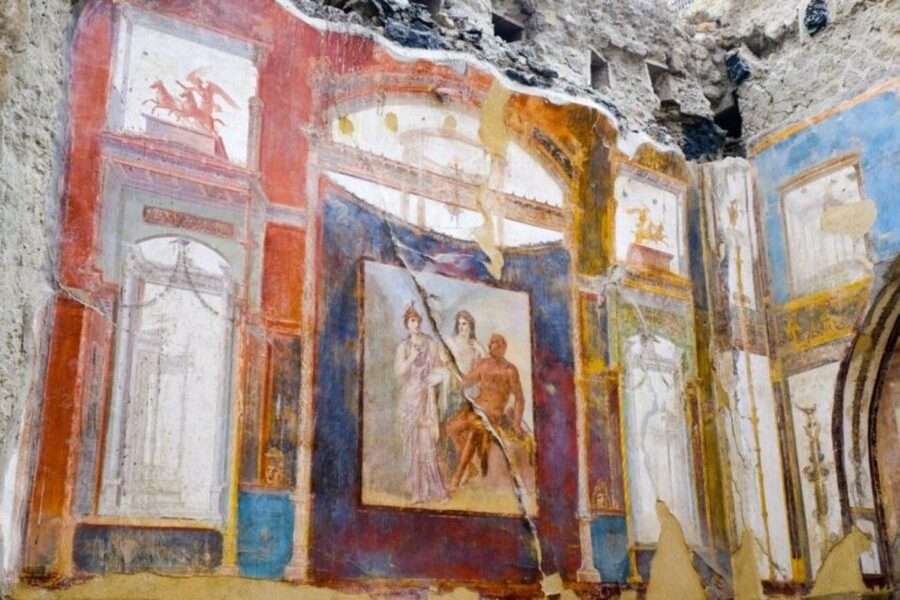
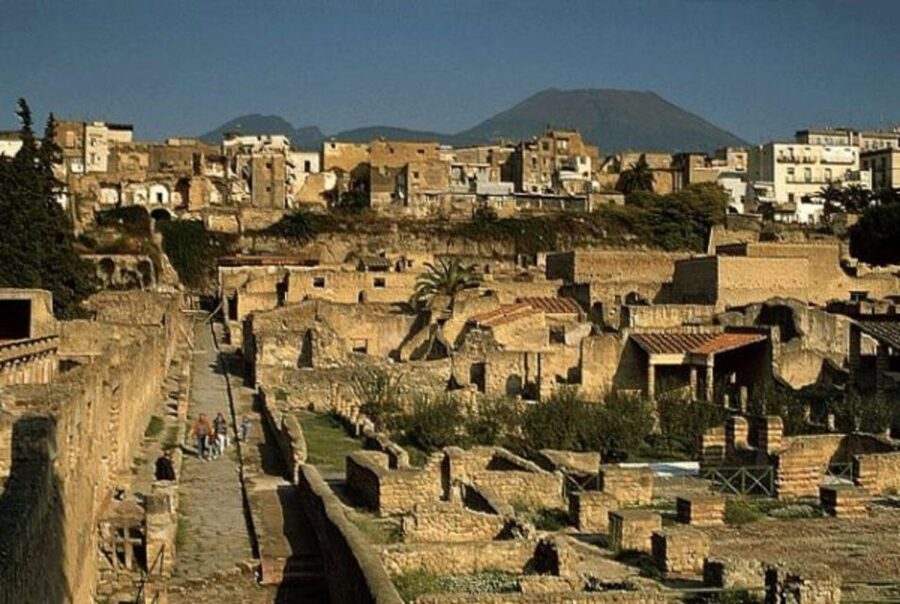
Herculaneum was an ancient Roman town buried by the eruption of Mount Vesuvius in AD 79. Today, its exposed streets lead past houses, villas, mosaics, and other remains that offer a close look at ordinary Roman life.
The site is more compact than Pompeii. That matters if you have only part of a day, or if you are combining Herculaneum with another Campania sight. A visit can fit into roughly two and a half to three hours, but do not mistake smaller for minor. If you want to inspect each area carefully, two hours may feel tight.
I especially like Herculaneum after Pompeii because the two places do not feel interchangeable. Pompeii gives you a larger town to roam. Herculaneum offers a more concentrated experience, with many buildings close enough together to compare without spending as much time walking between them.
The preserved remains are the main reason to come. Houses, villas, mosaics, streets, and architectural details give the town a strong sense of place. The setting is also sobering. The eruption was not a distant historical footnote here. The ruins make the human cost of AD 79 difficult to ignore.
More Skip-the-Line Audio Tours in Italy:
- Pantheon Reserved Entry Ticket with Audio Guide
★ 4.0 · 4,486 reviews - Rome: Borghese Gallery Skip-the-Line Ticket & Audioguide
★ 4.3 · 4,318 reviews - Skip the Line: Vatican & Sistine Chapel Ticket with Audio Guide
★ 4.0 · 3,271 reviews
Entering through the Audioguide Desk
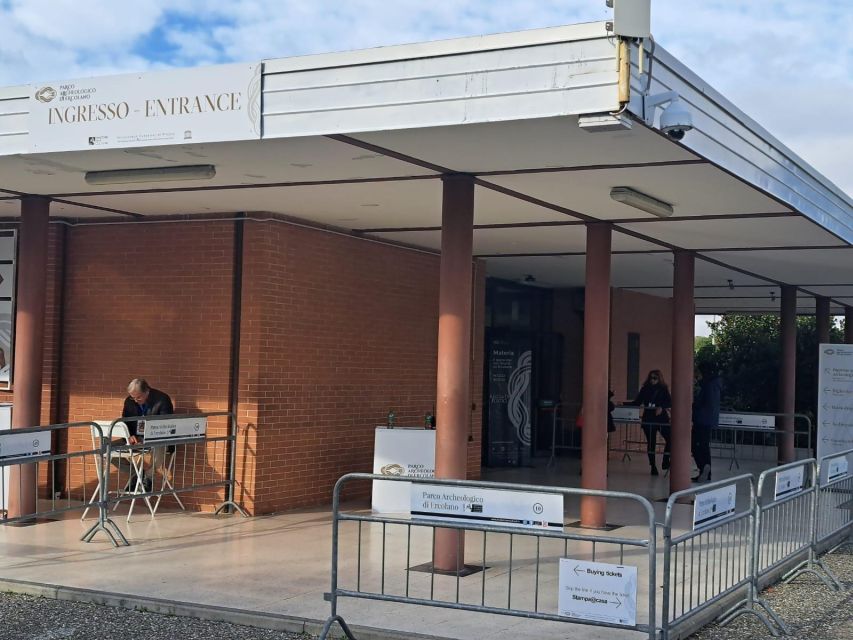
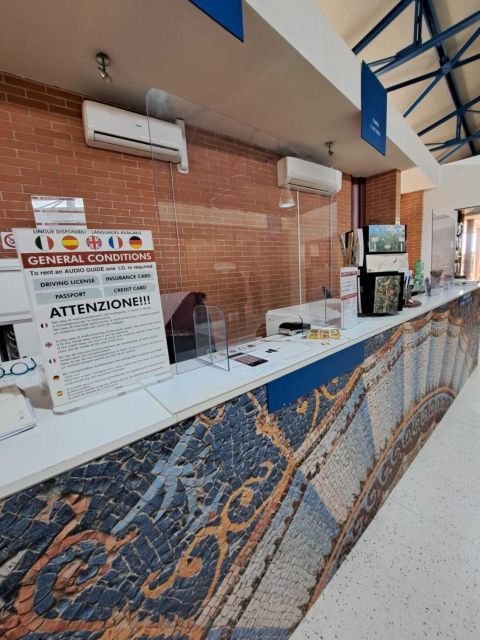
Your meeting point is not a separate city-center office. Go to the archaeological park entrance and look for the Audioguide Desk. This is where you handle the audio equipment and receive the site map.
The entrance process is intended to avoid the ticket line, but the audioguide desk can be less obvious than you expect. One visitor found the entrance signs confusing, with two signs pointing in opposite directions. Another had trouble locating the audioguide stand, which caused a short mix-up at the ticket office.
Give yourself a few extra minutes to find the correct desk. If you arrive early, the process may still be straightforward, and a scheduled start does not necessarily mean you must wait until that exact moment. The important thing is to go to the right place rather than joining a general line without checking.
You need a valid passport, identity card, or driving licence to hire the audioguide. Treat the device carefully. It must be returned before the office closes, and you are responsible for repair or replacement costs if it is damaged, lost, or stolen.
Following the map through the ancient town
Once inside, the map and numbered audio stops become your basic route-finding tools. The device gives background information for the buildings and areas, while the map helps you work out where you are.
This arrangement suits me better than a fixed walking tour when I want to linger. You can spend more time in a house with striking decoration, move quickly through an area that interests you less, or pause the commentary while you look closely at a mosaic or street.
The audio guide is available in English, Italian, German, French, and Spanish. It is informative, but it is not the same as having a person beside you. A live guide can answer questions, point out small details, and explain mysteries that a standard recording may skip. The audio commentary also includes language that some people may find a little formal or high-brow.
Still, the guide is particularly useful because the archaeological park has limited information at many points. The numbered stops help you know what you are looking at instead of walking past a building with no context.
Using the handheld audio device
Bring headphones if you have them, but note that the experience does not include earphones. The supplied device is designed to be held close to your ear. Some people find it awkward, especially when the device reacts to contact with your face or when you are trying to look at the ruins while listening.
You cannot assume that your Bluetooth headphones will pair with it. One practical complaint was that the device would have been easier to use with personal headphones, but the supplied equipment did not offer that option.
The system can take a little practice. Hold it carefully, use the map and building numbers, and check that the commentary is still playing before walking on. Once you understand how it works, the device becomes a useful companion rather than a distraction.
If comfortable listening matters greatly to you, a live guide may be the better choice. If you prefer independence and do not mind a basic handset, this option gives you plenty of control for less commitment than a private or group tour.
More audio tours around Italy:
- Rome: Pantheon Fast-Track Ticket and Official Audioguide
★ 4.5 · 27,353 reviews - Rome: Colosseum & Forum with Audio Guide App -Optional Arena
★ 4.2 · 24,770 reviews - Florence: Timed Entry to Michelangelo’s David + Audio App
★ 4.6 · 19,496 reviews - Rome: City Sightseeing Hop-on Hop-off Bus with Audioguide
★ 4.0 · 16,045 reviews
What three hours really allows
The stated duration is three hours, with starting times dependent on availability. In practice, you have flexibility to explore within the park’s opening hours, but the audioguide must be returned before the office closes.
About two and a half hours is enough for a good visit at a steady pace. It lets you follow the main route, listen to many of the audio stops, and pause for photographs or closer inspection. If you want to see everything carefully, read every explanation, and take your time in the houses and villas, plan on needing more than two hours.
Do not build a complicated transport schedule around an exact three-hour visit. Rail connections from Sorrento can be limited, with only two direct trains each way at certain times, so check your return options before setting off. A tight schedule can turn a relaxed archaeological visit into a race.
Herculaneum works well as part of a longer day, including a visit to Mount Vesuvius. One visitor combined the two and found the pairing worthwhile. That plan requires careful timing, but the smaller size of Herculaneum makes it more manageable than trying to cover Pompeii in the same window.
Food, walking, and practical comfort
Wear comfortable shoes. The site involves walking through ancient streets and across uneven archaeological ground, so sensible footwear matters more than dressing for photographs.
Bring water and food. There are vending machines, but no café, bar, or restaurant inside the park. This is an easy detail to overlook, especially if you arrive expecting a full visitor facility. A packed lunch or snack before entry will save you from leaving hungry.
The tour runs rain or shine. Pack accordingly, since the audio visit is not limited to a sheltered indoor route. If wet weather is forecast, shoes with a secure sole and a light waterproof layer will make the visit more comfortable.
The walk from the station to the site is downhill and roughly half a mile, according to one practical account. That may sound easy, but remember that the return journey is uphill if you use the station afterward. You should also save some energy for the archaeological park itself.
How the $35 price compares
At about $35 per person, this package charges for two things: access and independence. The audioguide adds useful context where signs are limited, and the skip-the-ticket-line feature can save time during busy periods.
The value depends heavily on your date. Herculaneum is free on Sundays, according to one booking experience, so check the official archaeological park information before paying for a ticket. A paid package may still offer convenience, but the savings calculation changes sharply if your visit falls on a free-entry day.
One visitor reported a partial refund issue after booking for a Sunday. I would not rely on a third-party refund to fix a price mismatch. Check the park’s own admission rules first, then compare the direct price with the convenience of booking this package.
The price is easier to justify if you want an audio explanation and a simple reservation process. It is harder to justify if you only need entry, are visiting on a free day, or prefer to explore without commentary.
Self-guided freedom versus a live guide
This experience is best for people who like to make their own route. You are not tied to a guide’s pace, a group’s interests, or a fixed explanation at every stop. You can spend extra time in the places that catch your eye and move on when you are ready.
That freedom also means you must manage the visit yourself. There is no guide to answer questions, point out overlooked details, or solve confusion about the route. The audio commentary gives structure, but not conversation.
I would choose this option if I had already visited Pompeii, wanted a calmer independent day, or needed to work around a train schedule. I would choose a live guide if Herculaneum were my main historical visit and I wanted stories, questions, and details beyond the standard audio stops.
The audio guide is particularly valuable for a first visit because the ruins do not explain themselves at every turn. The map and numbered commentary help you connect the remains with their former use. You still need to look closely and make your own observations, but you are not left entirely on your own.
The most common snags to avoid
A few small preparations can make the visit much easier:
- Find the Audioguide Desk before joining a queue.
- Bring a passport, identity card, or driving licence for the device hire.
- Take your own headphones if you prefer them, but do not assume Bluetooth pairing will work.
- Check your train times, especially when coming from Sorrento.
- Bring water and food because the park has vending machines but no café or restaurant.
- Allow enough time to return the device before the office closes.
- Check whether your date has free entry before paying the $35 package price.
- Wear comfortable shoes and prepare for rain.
These are not glamorous details, but they affect the day more than the headline promise of skip-the-line access.
Should you book this Herculaneum ticket?
Book it if you want a flexible independent visit with enough historical explanation to make sense of the ruins. It is a good fit for couples, families with older children, and anyone who dislikes being hurried through an archaeological site. The compact layout, map, and numbered audio stops make it easy to build your own route.
Think twice if you are visiting on a free-entry Sunday, need a fully personal commentary, or dislike handheld audio equipment. In those cases, direct admission or a live guide may offer better value.
For most visitors, the strongest reason to choose this package is control. You can see Herculaneum at your own speed, listen when you want, and spend your limited time on the houses, mosaics, and streets that matter most to you. Just check the date, bring your ID, and do not arrive expecting a café or a perfectly modern audio system.
FAQ
What does the Herculaneum ticket and audioguide include?
It includes entry to the Herculaneum Archaeological Park, a handheld audioguide, and a map of the site.
Is a live guide included?
No. This is a self-guided visit. A live guided tour is not included.
Which languages are available on the audioguide?
The audioguide is available in English, Italian, German, French, and Spanish.
Where do I collect the ticket and audioguide?
Go to the entrance of the archaeological park and look for the Audioguide Desk.
What identification do I need?
You need a valid passport, identity card, or driving licence to hire the audioguide.
Do I need to bring headphones?
Earphones are not included, so you may bring your own. The supplied device is used close to the ear, and Bluetooth headphones may not pair with it.
New audio tours around Italy
- Lecce Walking Tour with Audio and Written Guide by a Local★ 4.0 · 38 reviews
- Private Audio Guided Walking Tour in Lecce★ 4.0 · 7 reviews
- Private Audio Guided Walking Tour in Como★ 3.0 · 3 reviews
- Como Walking Tour with Audio and Written Guide by a Local★ 4.5 · 30 reviews
- Finance and Nobility: Explore medieval Genoa on a self-guided audio tour★ 4.5 · 7 reviews
- Genova Walking Tour with Audio and Written Guide by a Local★ 4.5 · 33 reviews
- Udine Walking Tour with Audio and Written Guide by a Local★ 4.0 · 2 reviews
- Florence: Uffizi Gallery Timed Entry Ticket with Audio★ 3.0 · 3 reviews
Ercolano Audio Tours, compared.

Ercolano: Herculaneum Entry Ticket with Optional Audio Guide
Read our review →
Vesuvio Skip The Line Ticket With Digital Audioguide
Read our review →

From Naples_ Vesuvius transfer+ticket and digital audioguide
Read our review →
Herculaneum: Skip-The-Line Entrance Tickets + Audioguide
Read our review →Browse the lists this tour appears in