
Review · SACRAMENTO
Historic Folsom: A Self-Guided Audio Tour
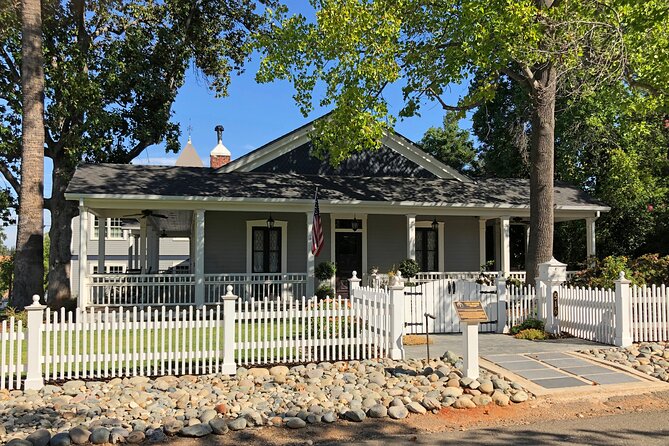
Folsom’s old commercial district makes a fine setting for a walking tour, and this one links Sutter Street’s Gold Rush story with local Native American history, railroads, hydroelectric power, and Lake Natoma. You follow the route with the VoiceMap app rather than a live guide, so the pace is yours.
I like the lifetime access and the fact that the audio, map, and route data work offline after download. I also like the freedom to pause for a museum, a photograph, or a break without holding up a group. The main concern is the start point: instructions have caused confusion, and the route includes steep, hilly sections that are not made clear enough at the outset.
Key points to know
- The route follows Sutter Street: Expect a historic town walk with stops near museums, theater, railroad history, and the Folsom Powerhouse.
- The story covers more than the Gold Rush: The narration also addresses local Native Americans and the area’s later industrial growth.
- Offline use is a real advantage: Download the tour before walking, then use it without cell reception.
- You control the timing: Start, pause, stop, and restart as you like, with no group schedule.
- The walk ends at Lake Natoma: The finish is at the Folsom Historic Truss Bridge, also called Rainbow Bridge.
- Plan for route-finding and hills: The app instructions have not always matched the spoken directions, and some of the walk is steep.
A self-guided walk through Folsom’s old town
This experience costs $9.99 per person and takes about one hour and 30 minutes to two hours. That is a modest price for a private tour of your own group, especially since the purchase includes lifetime access rather than one use on one day.
The value depends on how you like to sightsee. If you want a human guide answering questions as you walk, this is not that kind of tour. If you prefer stopping for coffee, browsing a shop, or replaying a section without asking permission, the audio format gives you much more control.
The tour is offered in English through the VoiceMap app for Android and iOS. You provide the smartphone and headphones, and you should download the route before setting off. Once the audio, maps, and geodata are stored on your phone, the tour does not require cell service.
That offline feature matters here. A walking tour is much easier when you are not trying to keep a signal, load a map, and listen to narration at the same time. I would still open the route before leaving the parking area, since the start directions have been the weak point for some users.
More History Audio Tours in the USA
- Santa Fe Historic Downtown Smart Phone Audio App Self Guided GPS Walking Tour
★ 4.5 · 112 reviews - Savannah’s Historical District: A Self-Guided Audio Tour
★ 4.5 · 69 reviews - Salida History Audio Tour l A Self-Guided Wild West Experience
★ 5.0 · 41 reviews
Getting to the correct starting point
The official start is listed at 609 Leidesdorff Street in Folsom, while the practical direction supplied by the operator places the beginning in the Historic Folsom parking area near the corner of Riley and Scott Streets. This difference is important. Do not simply arrive in central Folsom and expect the first audio prompt to guide you into position.
Past directions have referred to the Moose Lodge, a location near the historic power station, and another corner across the street. That has created an avoidable hunt for the opening point. Before you begin, compare the app’s map with the listed address and confirm that your blue location marker is near the Historic Folsom parking area.
The spoken narration may tell you to start from a slightly different corner than the written directions. If that happens, stop and sort it out before walking on. It is much easier to fix the issue at the beginning than to discover 20 minutes later that you are following the route backward.
The tour is available every day, around the clock, during the stated operating period. That does not mean every museum or attraction along the way will be open, so choose your starting time with those separate opening hours in mind.
Sutter Street and Folsom’s Gold Rush story
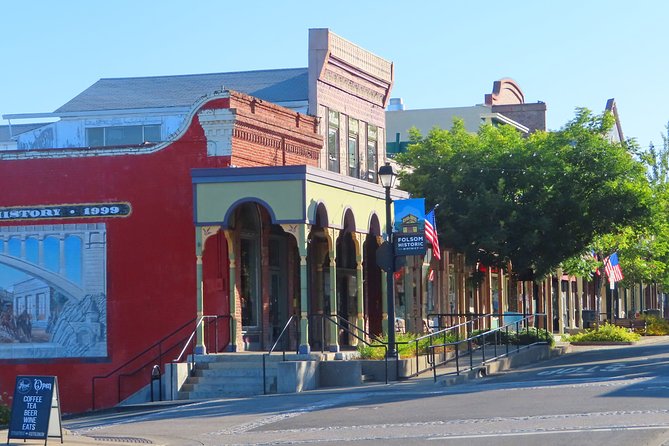
The walk takes you down Sutter Street, the natural spine of Historic Folsom. Here, the audio introduces the town’s Gold Rush past and connects the street to the people and activity that shaped early Folsom.
This section should appeal to you if you like history tied to actual streets and buildings rather than a long lecture removed from the place itself. The narration gives you a reason to look around as you walk, instead of treating the old district as a backdrop for photographs.
The tour also includes information about local Native Americans. That broadens the story beyond the familiar Gold Rush chapter and gives the walk a more useful sense of the area’s earlier human history. The amount of detail is limited by the supplied tour information, so you should think of this as an introduction rather than a full study of local communities.
The route is self-paced, but the audio directions need your attention. One user found the instructions unclear about when to stop and when to continue, which meant pressing buttons repeatedly to keep the route moving. I recommend listening for the next location cue before walking too far past a point of interest.
Folsom Historical Museum: add your own time
The route passes the Folsom Historical Museum. The audio can give you context from outside, but entrance to the museum is not included in the $9.99 fee.
That distinction is easy to miss with a self-guided walk. You are paying for the digital narration and route, not admission to museums or other attractions along the way. If the museum is open and you want a closer look at local objects and displays, budget extra time and any applicable admission separately.
The museum is also a useful place to pause the tour. Since you own lifetime access, there is no need to rush through an exhibit just to keep the narration on schedule. Pause the app, visit the museum, and restart when you are ready.
If you are trying to finish in 90 minutes, you will probably keep the stop to an exterior viewing. If you have closer to two hours, the museum gives you a natural reason to slow down.
More Self-Guided Audio Tours in the USA
- Gettysburg Battlefield Self-Guided Driving Audio Tour
★ 4.5 · 910 reviews - Joshua Tree National Park Self-Guided Driving Audio Tour
★ 4.5 · 762 reviews - Ultimate Acadia National Park Self-Guided Driving Audio Tour
★ 4.0 · 521 reviews - Ultimate Lake Tahoe Self-Guided Driving Audio Tour
★ 4.5 · 435 reviews
Sacramento Valley Railroad and the town’s working past
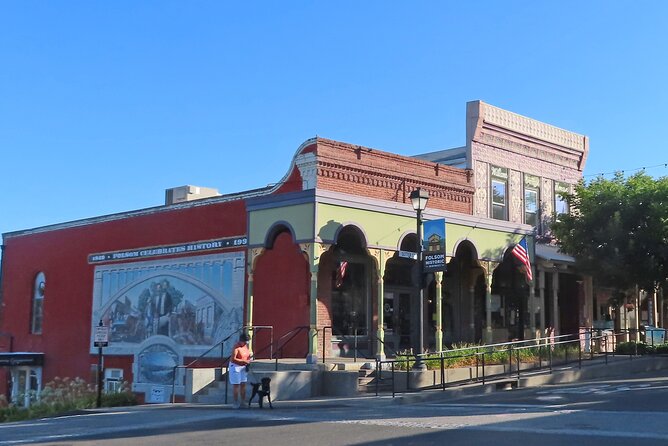
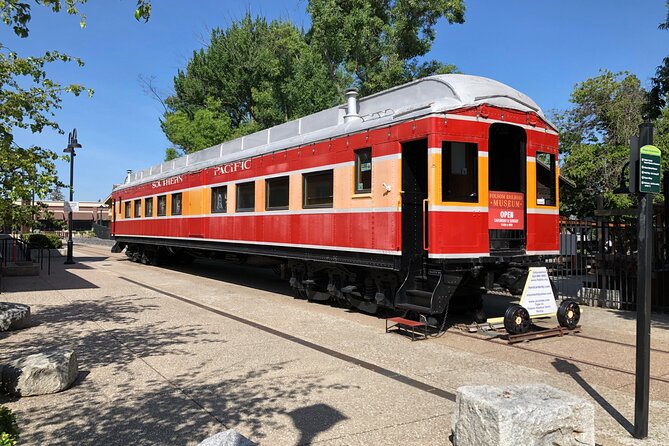
The tour passes by the Sacramento Valley Railroad, bringing transportation into the story. Railroad history helps explain why Folsom mattered beyond its early mining connections. The route does not simply list old buildings. It links the town’s commercial street with the systems that moved people, goods, and power through the area.
You will want to pay attention to the difference between passing a site and entering it. The tour takes you by the railroad location, but tickets or entrance fees for attractions are not included. The supplied details do not promise a train ride, a guided railroad visit, or a particular display inside.
This stop is most useful for people who enjoy seeing how a town functioned. The Gold Rush created an early reason for growth, while the railroad helped tie Folsom to a wider region. The audio format can make those connections easier to follow because you hear the explanation while standing near the relevant place.
Sutter Street Theatre and the changing old district
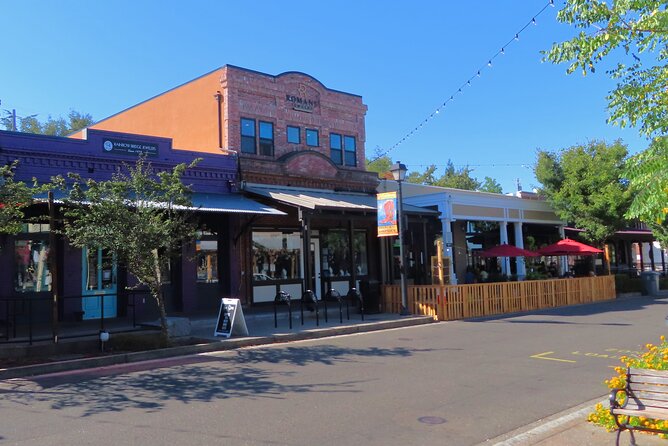
The route also passes the Sutter Street Theatre. This stop gives the walk a look at the district’s continuing public life, not only its historic buildings.
The theater is a pass-by point rather than an included performance. If you are curious about a show, you would need to arrange that separately. The tour price covers the audio experience, not theater tickets, food, or drinks.
One practical warning is worth taking seriously: some business references in the narration may no longer match what you see. Historic districts change, and the audio has included references to businesses that were no longer there. Treat those comments as part of the recorded snapshot, not as a current shopping guide.
That does not cancel the value of the route, but it changes how you use it. Focus on the historical setting and the street layout rather than expecting every commercial detail to be current.
Folsom Powerhouse and the shift to electric power
The walk passes the Folsom Powerhouse State Historic Park, one of the route’s most distinctive subjects. The power station connects Folsom’s local story to the development of electricity and industry.
This is where the tour moves beyond Gold Rush-era beginnings. You hear about a community that was not simply frozen in the nineteenth century, but also took part in later technological change. For many people, that shift will be one of the most interesting parts of the walk.
The power station is another place where you need to separate the tour from admission. The route takes you by the park, but entrance fees are not included. If you want to go inside or spend extra time on the site, check its current arrangements independently.
The power station area has also caused confusion about the starting location, so do not use it as your assumed meeting point unless the app clearly directs you there. Begin from the Historic Folsom parking area near Riley and Scott Streets, then follow the GPS route.
The finish at Lake Natoma and Rainbow Bridge
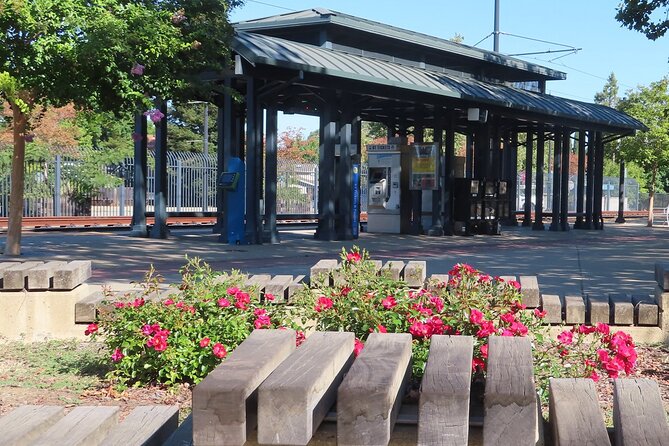
The route ends at the Folsom Historic Truss Bridge, also known as Rainbow Bridge, beside Lake Natoma. This gives the walk a clear finish rather than sending you back to the opening point.
The end point adds a change of setting after the older streets and buildings. You finish near the water, with the bridge as the final landmark named for the route. The supplied details do not promise a boat trip, swimming, food service, or transportation back to the beginning, so plan your return from the finish on your own.
This matters when you decide how much time to allow. The experience is described as 90 minutes to two hours, but pauses, museum visits, photographs, and route corrections can extend that. Since the tour is private and self-guided, you are responsible for knowing where you will go after reaching Rainbow Bridge.
The route’s point-to-point nature is useful if you want to see several parts of Folsom in one walk. It is less convenient if you need to end beside your car or prefer a short loop. The supplied information does not include return transportation.
Hills, app controls, and how to make the walk easier
The walk is not entirely flat. A user specifically found much of it steep and hilly, and that detail deserves more attention than it has received in the directions. Wear comfortable shoes and expect your pace to change on uphill or downhill sections.
You should also keep the phone easy to reach. The narration may tell you to continue without making the next stopping point clear. I would pause at each major landmark, glance at the map, and confirm the next direction before moving on.
The VoiceMap app can also cause frustration if it logs you out during pauses. One user had to return to the app, retrieve the access code, and enter it again each time the tour was stopped. This may not happen to you, but it is a good reason to keep your booking confirmation and access information available.
Download everything before beginning. Bring your own headphones and a fully charged smartphone, since neither is included. The audio works offline after download, but the tour still depends on your phone and the app behaving properly.
Who gets the most value from the $9.99 price
I see this tour as a good fit for independent sightseers who want historical background without joining a scheduled group. The low price is especially fair if you may return to Folsom, since lifetime access lets you use the route again.
It also suits couples, families with older children, and small private groups that do not all walk at the same speed. You can pause for a rest, split up briefly, or restart a section without affecting anyone outside your party.
The format is less suitable if you want a polished, hands-free walk with no route checking. It is also not the best match if hills are difficult for you, if you need a fully current account of every business on Sutter Street, or if you expect museum admission and transportation to be part of the price.
The tour has a rating of 4 out of 5 from 10 reviews. That points to a generally positive but not flawless experience. The strongest points are the interesting subject matter and the freedom of the self-guided format. The biggest concerns are start-point confusion, unclear stop instructions, outdated business references, and occasional app trouble.
Should you book Historic Folsom: A Self-Guided Audio Tour?
Book it if you want an inexpensive, flexible introduction to Folsom that combines Sutter Street, Gold Rush history, local Native American history, the railroad, the Powerhouse, and Lake Natoma. Download the route in advance, use the Historic Folsom parking area near Riley and Scott Streets as your starting reference, and allow closer to two hours if you plan to pause.
Skip it if you need a live guide, clear verbal directions at every turn, flat walking, or included entry to museums and historic sites. The $9.99 price is good for an audio route with lifetime offline access, but you are paying for independence, not a fully managed excursion.
FAQ
Where does the tour start?
The listed start is 609 Leidesdorff Street in Folsom. The operator’s clarification places the practical starting point in the Historic Folsom parking lot near the corner of Riley and Scott Streets.
Where does the tour end?
The tour ends at the Folsom Historic Truss Bridge, also called Rainbow Bridge, at Lake Natoma.
How long does the walking tour take?
The estimated duration is about one hour and 30 minutes to two hours.
What language is available?
The tour is offered in English.
Does the tour work without cell service?
Yes. After you download it, the audio, maps, and geodata are available offline.
What do I need to bring?
You need a smartphone and headphones. They are not included with the tour.
Are museum or attraction tickets included?
No. Tickets or entrance fees for museums and other attractions along the route are not included.
Can I pause and restart the tour?
Yes. You can start, pause, or restart the self-guided tour at your own pace. Lifetime access is included.
New audio tours around the USA
- Beaches, Bites and Bavaria in Leavenworth: A Self-Guided Audio Tour★ 3.5 · 3 reviews
- Welcome to Fabulous Las Vegas Sign Self-Guided Audio Tour★ 5.0 · 2 reviews
- Hoover Dam and Lake Mead Self-Guided Audio Tour★ 5.0 · 3 reviews
- Las Vegas Day Trips: 3-Day Self-Guided Audio Tour★ 5.0 · 2 reviews
- Driving Lake Tahoe: A Self-Guided Audio Tour From Tahoe City to Incline Village★ 5.0 · 10 reviews
- Las Vegas Neon and Secrets: Self-Guided Audio Tour★ 5.0 · 3 reviews
- Baton Rouge Historic Downtown Self-Guided Audio Walking Tour★ 4.0 · 19 reviews
- Ultimate La Jolla Self-Guided Driving & Walking Audio Tour Bundle★ 3.5 · 9 reviews
Sacramento Audio Tours, compared.
A Highway 49 Drive: A Self-Guided Audio Tour from Auburn to Placerville
Read our review →
A Highway 49 Drive: A Self-Guided Audio Tour from Jackson to Angels Camp
Read our review →
Browse the lists this tour appears in