
Review · PHILADELPHIA
Museum of the American Revolution Admission Ticket with Audio Guided Option
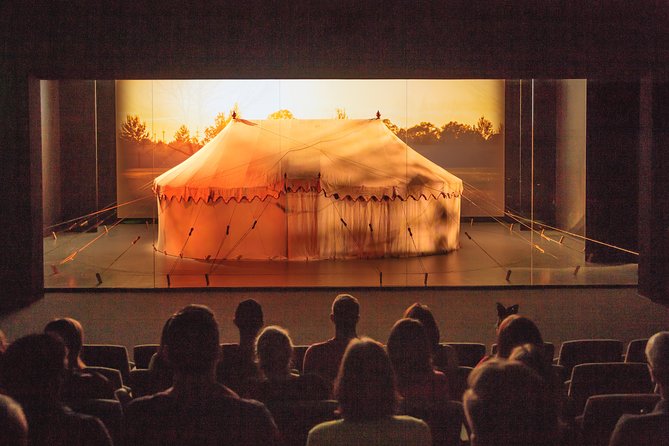
George Washington’s original Revolutionary War headquarters tent is the emotional center of this museum. It is not a grand ceremonial object. It connects you to the rough, mobile life of an army that spent years fighting, retreating, planning, and surviving. Around it, life-size scenes, films, artifacts, and interactive displays explain how the Revolution became a war rather than just a political quarrel.
I like the two consecutive days of admission, which gives you room to take in the museum without racing. I also like the audio guide option, especially for first-time visitors who want more context than display labels alone can provide. The main drawback is that school groups and large organized groups can make some galleries noisy or crowded, so a quieter visit may require patience and careful timing.
Key points to know before you go
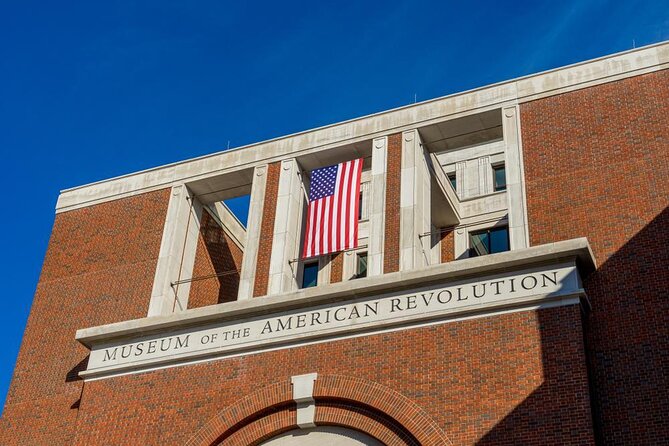
- Washington’s original headquarters tent is the museum’s most memorable object and receives its own powerful presentation.
- A two-day ticket lets you return the next day, a real benefit if you plan to spend three or four hours inside.
- The audio guide is optional and available in English, Spanish, or French when selected during checkout.
- Interactive scenes bring the war to life, including the Boston Liberty Tree, the Oneida Indian Nation debate, and a British charge at Brandywine.
- The museum is close to Independence Hall and the Liberty Bell, making it easy to add to a Historic District walking day.
- The exhibits cover more than July 4, 1776, including the tensions before independence and the difficult wartime years that followed.
Why Washington’s tent makes this museum different
Philadelphia has no shortage of Revolutionary sites. Independence Hall gives you the political setting. The Liberty Bell gives you a famous symbol. This museum adds something more personal: the physical world of the army and the people who carried the Revolution through years of danger.
The tent belonged to George Washington and served as his headquarters in the field. Seeing the actual canvas and structure gives the war a human scale. Washington did not lead from a permanent office with comfortable facilities. He moved with the army, made decisions under pressure, and lived with the practical limits of an eighteenth-century military campaign.
The museum places this object within a larger story rather than treating it as a lone relic. You follow Washington’s path and see how military leadership, political arguments, alliances, and ordinary hardship shaped the conflict. The presentation is designed to make the tent feel like more than a display behind glass. For many people, it becomes the moment they remember most.
If you have children or teenagers with you, the tent also gives the visit a clear focal point. Instead of asking them to absorb a long list of dates, you can begin with a simple question: what did it mean to command an army while living and working in a tent like this?
More Museum Audio Tours in the USA
- Medieval Torture Museum Ticket with Audio Guide and Ghost Hunting
★ 5.0 · 962 reviews - Hollywood Medieval Torture Museum Ticket with Ghost Hunting
★ 5.0 · 133 reviews - Pearl Harbor Aviation Museum Ticket with Audio Tour and Shuttle
★ 4.5 · 58 reviews
Start with the film, then get your bearings
The introductory film is a smart first stop. It sets out the drama of the American Revolution before you move through the galleries, so the objects and scenes have a clearer place in the story.
I recommend watching it even if you already know the broad outline of the war. The museum covers events before independence, the fighting itself, and the aftermath. Without an introduction, it would be easy to focus only on the Declaration of Independence and miss the longer chain of disputes and decisions that led there.
The film also helps you decide how much time you need. A quick visit might take about three hours, while a slower visit can last four hours or more. One family reported spending more than four hours inside, and the two-day ticket is useful if you want to return for sections you moved through too quickly.
A museum built around scenes, not just labels
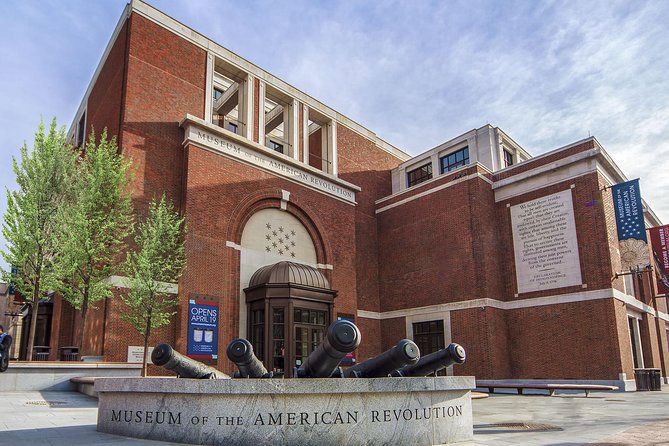
The galleries use artifacts, films, illustrations, models, and life-size figures. This makes the experience feel more like a guided historical story than a room-by-room collection of objects.
One early scene recreates the Boston Liberty Tree with full-size branches and lanterns. It helps explain how public protest became part of the colonial political world. You are not just reading that colonists organized against British authority. You are given a setting in which to picture the meetings, symbols, and public pressure that made the dispute visible.
Authentic printed material also gives weight to the political story. You can see the grievances directed at King George III in period printings of the Declaration of Independence. The display links the famous document to the complaints that shaped it, rather than treating it as a single inspirational page detached from events.
The museum’s life-size replicas are especially useful for younger visitors and anyone who prefers visual learning. They make arguments and decisions easier to follow. The tradeoff is that the presentation can feel highly produced. If you want long, quiet labels and a more traditional object-by-object museum, some galleries may feel more theatrical than expected.
The Oneida story adds needed perspective

One of the most interesting displays focuses on members of the Oneida Indian Nation. Life-size figures and recorded material present the debate over whether to break with the Iroquois Confederacy and support the American cause.
This is important because it shows the Revolution as a series of difficult choices, not a simple contest between two uniform sides. Native communities had their own political interests, internal arguments, and risks. The Oneida decision carried consequences for their relationships and future.
I appreciate that the museum uses a debate rather than a single label to present this history. You see that people did not all respond to the Revolution in the same way. The exhibit also helps you question the easy version of the story, in which colonists simply unite against Britain and proceed toward a settled national identity.
The museum cannot cover every person or community in equal detail. Some visitors may want more attention to figures such as Casimir Pulaski and Tadeusz Kosciuszko, both of whom contributed to the American cause. If military personalities from outside the usual Washington and Lafayette story are your main interest, you may want to supplement this visit elsewhere.
Same sights, a different narrator:
- Los Angeles: Hop-On Hop-Off Bus Tour with Audio Guide
★ 3.7 · 2,030 reviews - City Sightseeing Hop-On Hop-Off Bus Tour with Audio Guide
★ 3.0 · 1,083 reviews - Gettysburg Battlefield Self-Guided Driving Audio Tour
★ 4.5 · 910 reviews - Joshua Tree National Park Self-Guided Driving Audio Tour
★ 4.5 · 762 reviews
Feel the pressure of battle at Brandywine
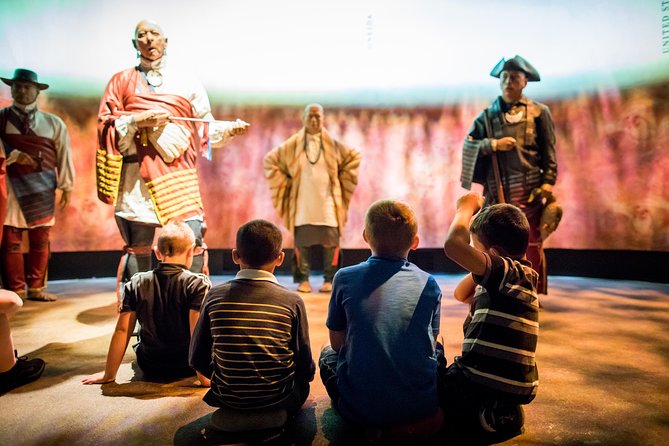
The Battle of Brandywine display is one of the museum’s most physical scenes. A British infantry charge comes toward you with noise, movement, and visual force. It conveys the fear and confusion of facing trained troops at close range.
This part works because it focuses on the experience of combat rather than only on troop movements. You get a sense of how quickly a battle could become confusing and frightening. It also reminds you that the Revolution was not just a debate in Philadelphia or a series of speeches in Congress.
If you are a serious battlefield enthusiast, you may find that the museum gives less detail than you want about individual battles and military operations. The emphasis is on helping a broad audience understand the human and political story. You get context and atmosphere, but not a full campaign-by-campaign study.
That balance makes the museum suitable for mixed groups. Someone interested in military history can appreciate the battlefield scenes, while a family member more interested in politics, culture, or personal stories still has plenty to see.
Take to the water aboard a privateer
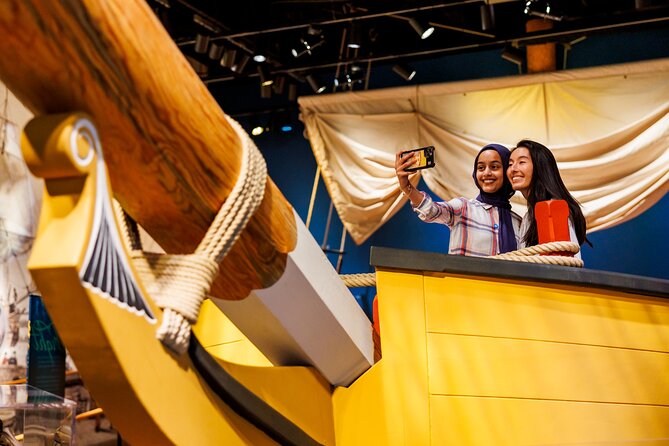
A replica privateer ship offers another change of pace. The exhibit introduces the war at sea and the role of privately operated vessels in the conflict.
The ship is a useful reminder that the Revolution was fought on more than land. Naval warfare, commerce, supply lines, and private ventures all shaped the struggle. Climbing aboard also gives the museum a hands-on feature that helps younger visitors stay engaged after several galleries of reading and watching.
The privateer section is not a replacement for a full naval museum. Instead, it broadens the story. You leave with a better sense that the war involved ships, ports, trade, and risk on the water as well as armies in the fields.
The audio guide is worth adding
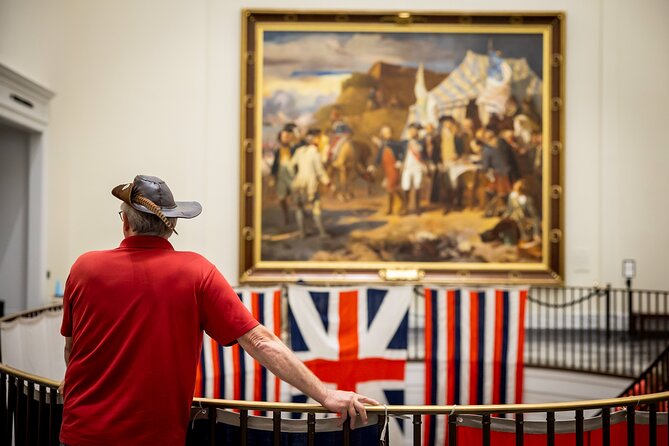
The audio guide is available in English, Spanish, or French. You select your language during checkout, and the guide provides commentary to use as you move through the exhibits.
I would choose it if you want a guided structure but prefer to set your own pace. It can point out why a particular artifact matters, add context to the life-size scenes, and connect separate galleries into one story. You can pause and continue rather than follow a group at a fixed speed.
The audio guide is also helpful if people in your party have different levels of interest. One person can listen closely while another moves ahead. That flexibility is a real advantage in a large museum.
It is less necessary if you prefer to read labels and explore freely. The displays already provide a clear route, and staff members are available at tables in the galleries to answer questions. Still, the audio option is one of the better ways to get more from the museum without hiring a private guide.
How much time should you allow?
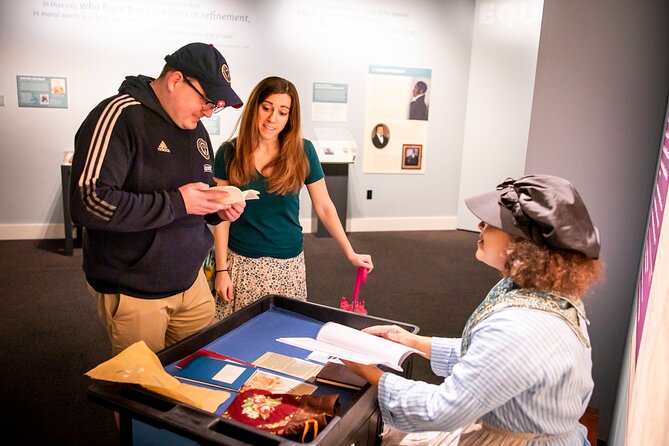
Plan on at least three hours. That gives you time for the introductory film, the main galleries, Washington’s tent, the interactive scenes, and a few pauses.
Four hours is more realistic if you listen to the audio guide, read carefully, and stop at the interactive displays. You could spend most of a day here, especially if you want to revisit sections or browse the bookstore.
The two-day ticket changes the way you can plan the visit. On day one, you can follow the main route and identify the galleries you want to study. On day two, you can return without paying again and take a slower look at the exhibits you rushed through.
This works well in Philadelphia because the museum sits within easy walking distance of the Liberty Bell and Independence Hall. You can combine it with other Historic District sites, but do not place the museum at the very end of an exhausting sightseeing day unless you are willing to shorten your visit.
Price, location, and practical value
Admission costs $25 per person. For a museum visit lasting three to four hours, that is a fair price, and the second day makes the ticket more useful than a standard single-entry admission.
The value is strongest if you plan to listen to the audio guide or return the next day. If you only have an hour between other attractions, you may not get enough from the museum to justify the full experience. The galleries reward time.
The mobile ticket is convenient, and advance booking is sensible because this experience is commonly reserved about 12 days ahead. The entry is described as skip-the-line, which can save time during busy periods.
The activity is listed with a maximum of 14 travelers, although the museum itself can still feel crowded when school groups or large organized groups are present. Children must be accompanied by an adult. Service animals are allowed, and the museum is near public transportation. Most people can participate.
Food and drinks are not included, so plan your meal around the museum rather than expecting refreshments as part of admission.
Who should visit, and who may want more?
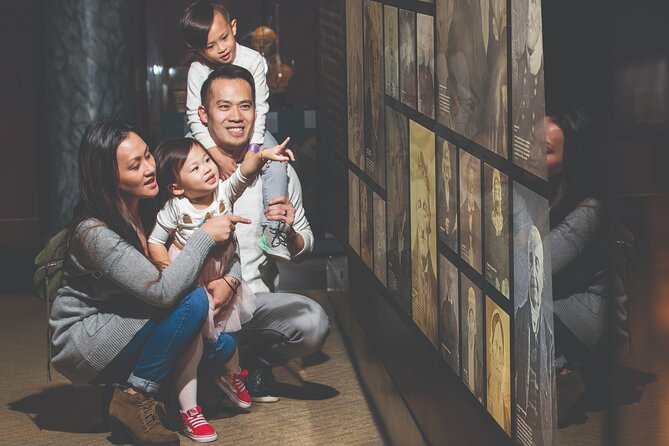
I recommend this museum to first-time Philadelphia visitors, families, history students, and anyone who wants more than a quick look at the Liberty Bell and Independence Hall. It is especially good for teenagers because the visual scenes and interactive sections give the story motion and tension.
The museum also suits adults who already know the basic chronology. The Oneida display, Washington’s tent, and the treatment of wartime hardship can add human detail to familiar events.
You may want to adjust your expectations if you are looking for a specialist military museum. The battle displays are vivid, but the museum does not give equal depth to every campaign or every foreign officer who helped the American cause. Its goal is a broad, accessible account of the Revolution, told through objects and scenes.
The audio guide is a strong choice for independent visitors. It is also useful for anyone who wants commentary in Spanish or French, since those options are available when reserved.
Should you book the Museum of the American Revolution?
Book it if you can spare three hours or more and want a clear, engaging account of how the Revolution developed. Washington’s original tent, the Oneida debate, and the Brandywine battle scene give the museum more substance than a collection of patriotic symbols.
The $25 price is reasonable, particularly because the ticket works for two consecutive days. I would add the audio guide unless you strongly prefer reading on your own. Try to avoid rushing in just before another timed attraction, and be prepared for school groups at busy times.
Skip it only if your Philadelphia schedule is extremely tight or if you want a narrowly focused military museum. For most people interested in the founding of the United States, this is one of the best uses of a half day in the Historic District.
FAQ
How much does admission cost?
Admission costs $25 per person.
How long does the museum visit take?
The expected duration is about three to four hours. Some people may spend longer, especially when using the audio guide or returning to exhibits.
Is the ticket valid for more than one day?
Yes. The ticket is valid for two consecutive days.
Is an audio guide included?
Audio guided options are available at checkout. The guide can be selected in English, Spanish, or French.
Does the museum offer an introductory film?
Yes. Admission includes an introductory film about the drama of the American Revolution.
What is the most notable object in the museum?
The museum displays George Washington’s original Revolutionary War headquarters tent.
Is the museum near other Philadelphia historic sites?
Yes. It is an easy walk from the Liberty Bell and Independence Hall.
Can children visit the museum?
Yes. Children can visit, but they must be accompanied by an adult.
What is the cancellation policy?
You can cancel at least 24 hours before the experience start time for a full refund. Cancellations or changes made within 24 hours are not refunded or accepted. If the experience is canceled because of poor weather, you will be offered another date or a full refund.
New audio tours around the USA
- Beaches, Bites and Bavaria in Leavenworth: A Self-Guided Audio Tour★ 3.5 · 3 reviews
- Welcome to Fabulous Las Vegas Sign Self-Guided Audio Tour★ 5.0 · 2 reviews
- Las Vegas Day Trips: 3-Day Self-Guided Audio Tour★ 5.0 · 2 reviews
- Hoover Dam and Lake Mead Self-Guided Audio Tour★ 5.0 · 3 reviews
- Driving Lake Tahoe: A Self-Guided Audio Tour From Tahoe City to Incline Village★ 5.0 · 10 reviews
- Las Vegas Neon and Secrets: Self-Guided Audio Tour★ 5.0 · 3 reviews
- Baton Rouge Historic Downtown Self-Guided Audio Walking Tour★ 4.0 · 19 reviews
- Ultimate La Jolla Self-Guided Driving & Walking Audio Tour Bundle★ 3.5 · 9 reviews
Philadelphia Audio Tours, compared.

Philadelphia Historic Sites Self-Guided Walking Tour
Read our review →
Art and Controversy: An audio tour of Philadelphia’s most infamous art scandals
Read our review →Browse the lists this tour appears in