

Review · BOSTON
Self-Guided Boston’s Beacon Hill Underground Railroad Audio Tour Walking Tour
Boston’s Beacon Hill hides an important part of American history in ordinary-looking streets and houses. This self-guided walk connects those places to the Underground Railroad, from John J. Smith’s home to Lewis Hayden’s station and the African American Meeting House. The history is tied to exact addresses, not just broad dates and names.
I like the freedom to start and stop when you choose, and I like the app’s extra information about the people behind the story. The dramatized narration uses several voices, which gives the walk more life than a plain audio lecture. The main drawback is practical: the app setup and walking directions can be confusing if you do not open the ticket instructions before arriving.
Key points to know before you go
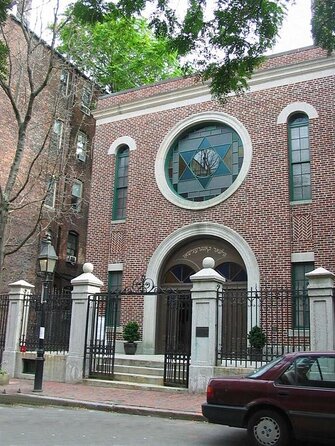
- A 45 to 55 minute route through Beacon Hill: Expect a steady walk with some hills and enough time outdoors to make comfortable shoes and water worthwhile.
- Nine historically important stops: The route includes homes, a school site, a boarding house, the Vilna Shul, Charles Sumner’s birthplace, and the African American Meeting House.
- A phone-based WalknTours experience: You use a mobile ticket and app rather than meeting a live guide.
- Dramatized voices and extra details: The narration tells stories, while the app offers additional information about key figures.
- Flexible timing: The tour is available every day from midnight to 11:30 p.m., so you choose your start time.
- A low-cost private activity: At $9.75 per person, it can be good value for a small group that wants control over its pace.
Starting at the Charles Street Meeting House

The tour begins at the Charles Street Meeting House, at 70 Charles Street. This puts you at the edge of Beacon Hill, close to public transportation and within easy reach of the neighborhood’s steep streets and brick sidewalks.
The opening section explains how the Underground Railroad worked. The name can create the wrong picture, especially for younger visitors. This was not a literal train under the ground. It was a loose network of people, homes, churches, boarding houses, and safe locations that helped freedom seekers move toward safety.
I like that the tour begins with this basic explanation before sending you up Beacon Hill. You get a framework for the stops ahead, and the homes become more than attractive old buildings. They become places where real decisions carried serious danger.
Because this is a phone tour, you are not tied to a group’s departure time. You can begin whenever you like during the listed operating hours, pause for a break, and continue at your own speed. That flexibility is useful for families, private groups, and anyone fitting the walk between other Boston plans.
More Audio Walking Tours in the USA
- Self Guided Classic Freedom Trail Location Aware (GPS) Walking Audio Tour
★ 4.5 · 258 reviews - Cape Cod & Provincetown Self-Guided Driving & Walking Audio Tour
★ 4.0 · 207 reviews - Santa Fe Historic Downtown Smart Phone Audio App Self Guided GPS Walking Tour
★ 4.5 · 112 reviews
John J. Smith and the work of a station
One early stop brings you to the John J. Smith House. Here, the narration explains Smith’s role as a station master and the people he helped.
The value of this stop is its focus on local action. Large national stories can make the Underground Railroad feel distant. Standing outside a particular Beacon Hill home helps you picture the quieter work involved: offering shelter, sharing information, and helping someone move from one safe place to the next.
The tour does not ask you to enter each private home. Instead, you listen while looking at the streets and buildings around you. That means the experience depends on the narration and your ability to follow the route. If you want a museum-style visit with objects behind glass, this is not that. If you like connecting historical events to city streets, the format works well.
Harriet Tubman and John Sweat Rock on Phillips Street
The route continues with more about Harriet Tubman before reaching 83 Phillips Street, the former home of John Sweat Rock. The audio explains Rock’s many firsts in American history.
This section broadens the story beyond people who secretly guided fugitives. It shows how education, professional achievement, and public leadership were part of the struggle for freedom and equal rights. The stop also gives the tour a useful change of pace. You are not hearing the same kind of safe-house story at every address.
The app’s extra-information feature is especially useful here. You can listen to the main account and then choose to learn more about the people involved. I would use that option if you have time, but I would not try to read every additional detail while walking. Stop at a safe spot, get your bearings, and then continue.
Lewis Hayden’s home and the risks of resistance
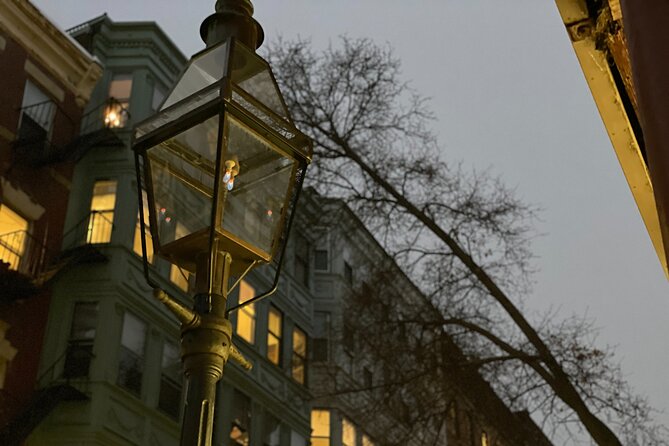
At Lewis Hayden’s former home, the tour tells the story of a station master who helped save many freedom seekers. This is one of the route’s most important stops because it brings the personal danger into focus.
A station master was not simply offering directions. A home could become a place of shelter, planning, and concealment. The narration explains Hayden’s courage and the role his house played in helping people escape slavery.
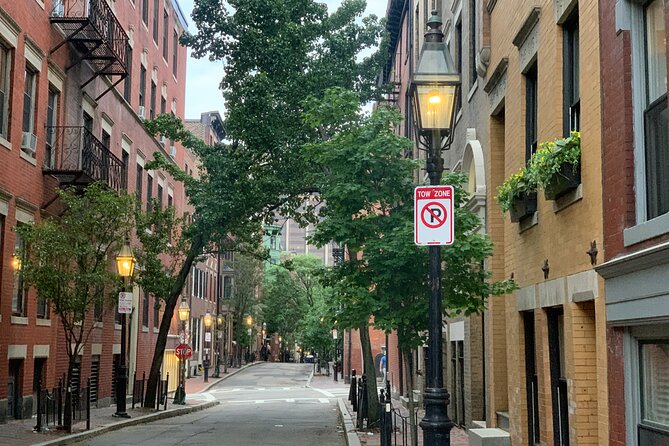
This stop also shows why walking through Beacon Hill matters. You are moving through the same neighborhood where abolitionists, Black residents, immigrants, and reformers lived close together. The tour presents that community through individual homes rather than treating the Underground Railroad as an abstract national story.
More Self-Guided Audio Tours in the USA
- Gettysburg Battlefield Self-Guided Driving Audio Tour
★ 4.5 · 910 reviews - Joshua Tree National Park Self-Guided Driving Audio Tour
★ 4.5 · 762 reviews - Ultimate Acadia National Park Self-Guided Driving Audio Tour
★ 4.0 · 521 reviews - Ultimate Lake Tahoe Self-Guided Driving Audio Tour
★ 4.5 · 435 reviews
Leonard Grime and the network of safe houses
The next stop was once the home of Leonard Grime, another conductor on the Underground Railroad. The word conductor referred to someone who helped guide freedom seekers along the network.
The stop adds another link to the chain. One person might offer shelter, another might provide transportation or directions, and someone else might help at the next station. The success of the network depended on many people taking risks, often without knowing exactly how events would end.
This is also a good point to watch your footing and pace. The walk includes hills, and the route is better enjoyed when you are not rushing to keep up with anyone else. Bring water, especially in warm weather, and allow more than the advertised time if you pause for the extra material.
The Old Temperance Boarding House
The Old Temperance Boarding House was another stop connected to the Underground Railroad. A boarding house offered a different kind of setting from a private family home. It could bring together people who needed a place to stay and those willing to help them.
The stop gives you a look at the practical side of movement through Boston. Freedom seekers needed food, rest, information, and a safe place to wait. Those ordinary needs could be difficult and dangerous to meet.
I appreciate this kind of location because it makes the story less theatrical in the usual sense. The Underground Railroad was built from everyday spaces. A home, a school, a boarding house, or a meeting place could take on a life-changing role.
The Phillips School and integrated education
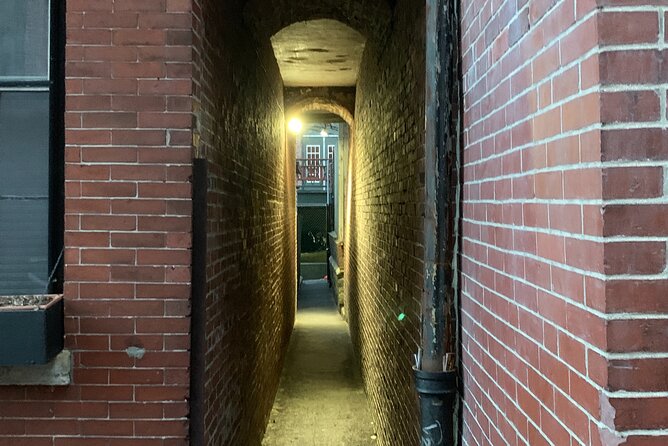
The route then passes the former site of the Phillips School. It was the first integrated school in Boston and had the first African American teacher to teach at an integrated school.
This stop shifts the focus from escape and concealment to education. It helps explain the broader fight for civil rights in Boston, where access to schools and the right to teach were central issues.
Since the original school is no longer operating as a school, you need to pay attention to the audio and location. The app helps connect the present street scene with what once stood there. This is one of those moments when a self-guided format can be useful: you can pause and picture the site without a guide moving the group along.
The Vilna Shul and Boston’s Jewish community
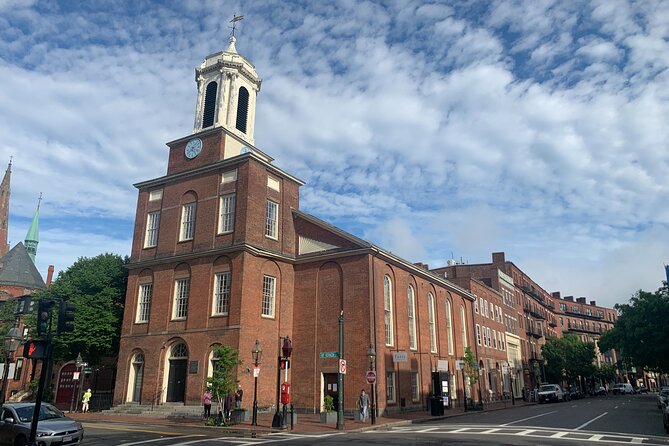
The tour passes the Vilna Shul, described as Boston’s oldest immigrant synagogue. Here, the narration tells how members of the Jewish community helped with the Underground Railroad.
This is an important part of the route because it widens the story beyond a simple division between abolitionists and enslavers. Different communities could take part in the effort to help people seeking freedom. The Vilna Shul stop makes that cooperation part of the walk.
The building also adds visual variety. You are not visiting only private homes. You are seeing a religious and community site with its own place in Boston’s immigrant history. The route uses that setting to show how several communities shared the neighborhood and, at times, worked toward the same cause.
John Coburn’s house and gaming room
At the former home of John Coburn, the narration explains his role as a station master and mentions his gaming house.
This is an unusual detail, and it helps the story feel grounded in real people rather than polished historical symbols. Coburn’s house was connected with a gaming room, yet he also played a role in helping freedom seekers. The contrast gives you a reminder that historical figures rarely fit into one neat label.
The stop also reinforces the importance of private businesses and social spaces in the Underground Railroad network. Assistance could come from places that did not look like official offices or public institutions.
Charles Sumner’s birthplace and the walk’s final stretch
The final historical stop is the birthplace of abolitionist Charles Sumner. His inclusion connects the neighborhood walk to the national abolitionist movement and to the political fight against slavery.
After hearing about station masters, conductors, teachers, community members, and abolitionists, you have a fuller picture of the forces at work. The tour is not only about dramatic escapes. It also covers education, public debate, political action, and cooperation across communities.
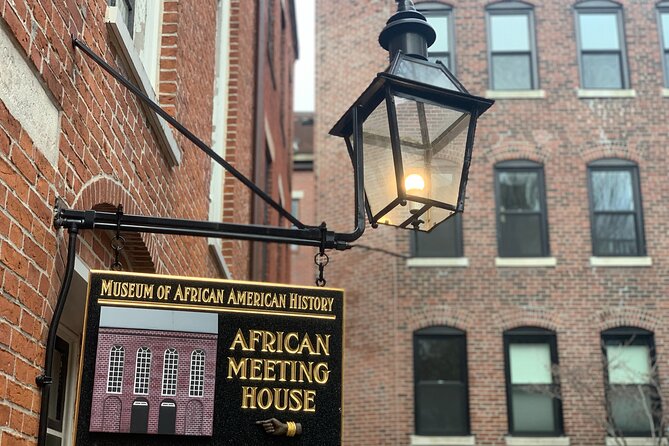
The route finishes at 46 Joy Street, at the African American Meeting House. This is the oldest surviving Black church building in the United States. Ending there gives the walk a fitting sense of place. The building represents faith, community, abolition, and Black civic life, all of which matter to the story you have been hearing.
How the WalknTours app works in practice
You need your mobile ticket and the WalknTours app to access the narration. The experience uses location-aware GPS guidance, and an arrow points toward the next stop. You can pause, rewind, and return to material you missed.
The flexible controls are one of the tour’s strongest features. You can stop to take a photo, wait for a member of your group, or listen again to a name or date. The extra information option also lets you choose how much history you want at each stop.
The weak point is the initial setup. Open the booking confirmation and select View Ticket before you reach Charles Street. That is where the instructions for downloading the app and using the experience code appear. Several codes or confirmation messages can be confusing if you are trying to activate the tour outdoors, so set it up in advance and make sure the narration plays before you start walking.
The walking directions have worked well for many people, but they are not foolproof. Keep the map and directional arrow available, and if you lose the route, use the arrow to locate the next stop rather than repeatedly rewinding the narration. The tour is private to your group, so there is no guide or larger party to show you the way.
Price, timing, and who will enjoy it
At $9.75 per person, this is a modest price for a private, location-based history walk. The value is strongest if you want an independent experience and plan to use the pause and extra-information features.
It is less useful if you expect a live guide to answer questions or correct your route in person. You are paying for the app, narration, research, and freedom to choose your pace, not for a traditional guided walk.
The listed duration is about 45 to 55 minutes. Hills and stops for additional content can stretch that time. Wear comfortable shoes and bring water or a snack, particularly in warm weather. Most people can take part, and service animals are allowed. The tour is near public transportation and is offered in English only.
You can book it for any day during the stated operating period, with opening hours from 12 a.m. to 11:30 p.m. Free cancellation is available up to 24 hours before the scheduled start time. Inside that window, the price is not refunded and changes are not accepted.
Should you book this Beacon Hill history walk?
Book it if you want a low-cost way to connect Boston streets with the people who challenged slavery and helped freedom seekers. It is a particularly good fit for families with older children, history-minded friends, and independent visitors who like to stop, pause, and listen at their own speed.
Prepare the app before you leave, use the route arrow, and allow for hills. If you need a live guide, French narration, or a fully hands-off experience, choose something else. If you are comfortable using your phone and want the freedom to explore Beacon Hill with powerful local stories in your ears, this tour offers solid value.
FAQ
Where does the tour begin?
It begins at the Charles Street Meeting House, 70 Charles Street, Boston, Massachusetts 02114.
Where does the tour end?
It ends at 46 Joy Street, at the African American Meeting House, the oldest surviving Black church building in the United States.
How long does the walking tour take?
The approximate duration is 45 to 55 minutes. Hills, pauses, and additional information may make your walk longer.
Is this a guided tour with a person?
No. It is a self-guided audio tour accessed through your phone and the WalknTours app. Only your group participates.
What language is available?
The tour is offered in English.
What should I bring?
Wear comfortable shoes and consider bringing water and snacks. The route includes walking and hills, and weather can affect your comfort.
Can I start the tour whenever I want?
Yes. The experience is listed as available Monday through Sunday from 12 a.m. to 11:30 p.m., so you choose when to begin during those hours.
Is the tour suitable for most people?
Yes. Most people can participate, and service animals are allowed. The tour is near public transportation.
What is the cancellation policy?
You can cancel at least 24 hours before the scheduled start time for a full refund. Cancellations and changes made less than 24 hours before the start time are not accepted or refunded.
New audio tours around the USA
- Beaches, Bites and Bavaria in Leavenworth: A Self-Guided Audio Tour★ 3.5 · 3 reviews
- Welcome to Fabulous Las Vegas Sign Self-Guided Audio Tour★ 5.0 · 2 reviews
- Hoover Dam and Lake Mead Self-Guided Audio Tour★ 5.0 · 3 reviews
- Las Vegas Day Trips: 3-Day Self-Guided Audio Tour★ 5.0 · 2 reviews
- Driving Lake Tahoe: A Self-Guided Audio Tour From Tahoe City to Incline Village★ 5.0 · 10 reviews
- Las Vegas Neon and Secrets: Self-Guided Audio Tour★ 5.0 · 3 reviews
- Baton Rouge Historic Downtown Self-Guided Audio Walking Tour★ 4.0 · 19 reviews
- Ultimate La Jolla Self-Guided Driving & Walking Audio Tour Bundle★ 3.5 · 9 reviews
Boston Audio Tours, compared.

Self Guided Classic Freedom Trail Location Aware (GPS) Walking Audio Tour
Read our review →
Boston Freedom Trail Self-Guided Tour with Audio Narration & Map
Read our review →
Self Guided “Historic Boston Downtown Freedom Trail” Audio/GPS Walking Tour
Read our review →
Boston’s Old North Church Admission with Self-Guided Audio Tour
Read our review →
Boston’s Freedom Trail: A Self-Guided Audio Tour
Read our review →
Boston Harborwalk & Tea Party Self-Guided Walking Audio Tour
Read our review →
Boston: City History and Highlights Audio App Walking Tour
Read our review →
Boston Self-Guided Audio Tour Bundle: Freedom Trail & More
Read our review →Browse the lists this tour appears in