
Review · USA
The Civil Rights Movement in Atlanta: A Self-Guided Audio Tour
Atlanta’s civil rights story comes alive along the sidewalks of Sweet Auburn and Edgewood, where churches, homes, plazas, murals, and memorials mark the work of Martin Luther King Jr., John Lewis, and other local leaders. This is not a museum tour. You move through the actual streets, with your phone providing the narration as you go.
I like the freedom to pause and restart, especially at the King Center or Municipal Market. I also like the offline access, since you can download the audio, map, and route before leaving. The main drawback is the technology: some users had trouble with the VoiceMap app, unclear directions, or GPS guidance, so you should be comfortable checking your position and using another map if needed.
Key points
- Sweet Auburn setting: Walk through one of Atlanta’s most important African American neighborhoods.
- King landmarks: Visit the exterior of Ebenezer Baptist Church, the King Center, Martin Luther King Jr.’s birth home, and the International Civil Rights Walk of Fame.
- Flexible format: Start, pause, or restart the tour whenever you like.
- Offline operation: Download the audio, maps, and route before you begin.
- Local stops: The route includes Sister Louisa’s Church of the Living Room & Ping Pong Emporium and the Municipal Market.
- Good value for independent walkers: At $11.99 per person, it costs far less than a private guided tour, but you give up live help and conversation.
Walking through Atlanta’s civil rights center
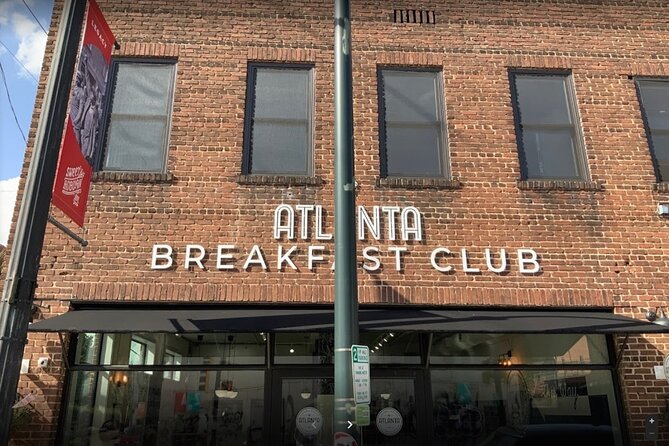
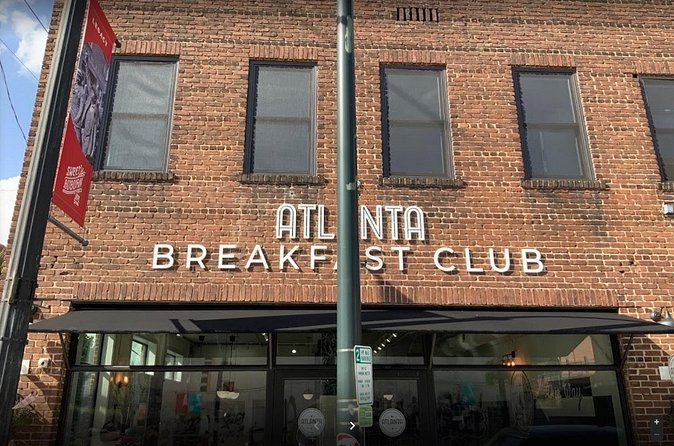
This tour begins at the Atlanta Breakfast Club Chicken and Waffle Nitro Coffee Counter at 340 Auburn Avenue NE. The start point puts you close to Sweet Auburn, a neighborhood closely tied to Atlanta’s African American business, religious, and civic life.
You should allow about one hour and 30 minutes to two hours. That estimate includes walking and listening, but your actual time can vary. The app lets you pause at places that catch your attention, so you can spend longer at the King Center, stop for food, or step inside a business along the route.
The walk is private in the sense that only your group participates. There is no scheduled guide and no fixed departure time. You can begin at any time during the activity period, which is listed as open every day, around the clock. That flexibility is useful if you are fitting the walk between museum visits, meals, or other Atlanta plans.
The route is best understood as an outdoor history lesson. You are not simply moving from one attraction to the next. The audio explains why these streets matter and points out people, buildings, and public spaces that help connect Atlanta’s civil rights past with its present.
More Self-Guided Audio Tours in the USA
- Gettysburg Battlefield Self-Guided Driving Audio Tour
★ 4.5 · 910 reviews - Joshua Tree National Park Self-Guided Driving Audio Tour
★ 4.5 · 762 reviews - Ultimate Acadia National Park Self-Guided Driving Audio Tour
★ 4.0 · 521 reviews
Churches that shaped Martin Luther King Jr.’s Atlanta

One early stop is Wheat Street Baptist Church. The tour pauses outside briefly, giving you background on the church before the narration continues as you walk. Since the stop is mainly exterior, you should not expect a church visit or an extended indoor presentation.
Ebenezer Baptist Church is the more direct Martin Luther King Jr. connection. The audio explains the church’s history and its relationship to King. The tour stops outside, so you can look at the building while listening, but entrance tickets are not part of the experience.
These church stops matter because Atlanta’s movement was organized through local institutions, not just speeches at famous national sites. Churches served as places for worship, meetings, leadership, and community action. The route gives you that setting in physical form, even though the commentary itself stays fairly concise.
If you want a long, detailed lecture on theology, civil rights strategy, or Atlanta’s church leadership, this tour may feel light. One person who enjoyed the route still wanted more depth after finishing. I would treat the audio as a clear introduction, then use the sites as a starting point for further learning.
The King Center and Martin Luther King Jr.’s birth home
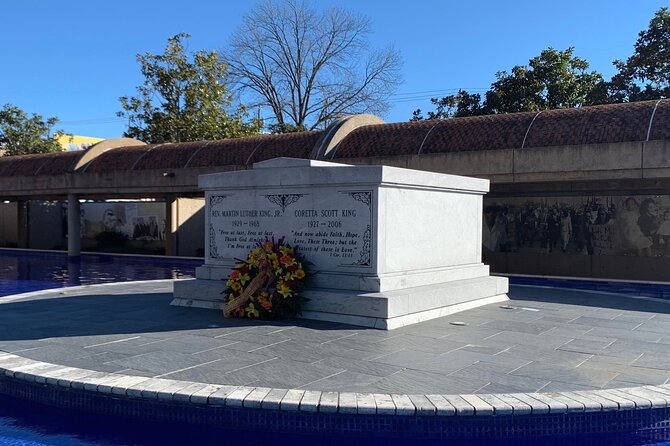
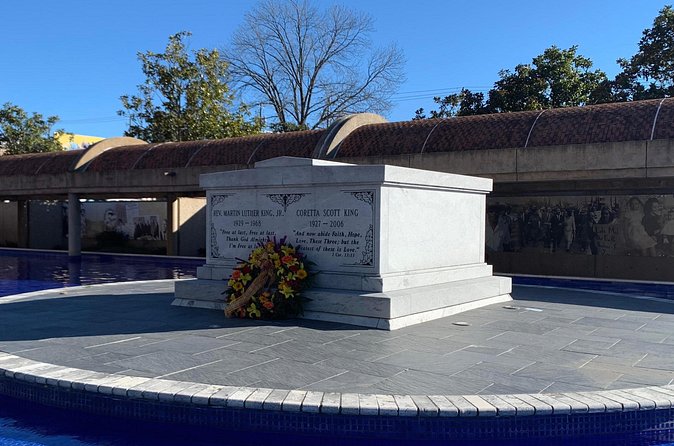
The King Center is one of the most important points on the route. The tour gives you time to look around while explaining what the center represents and why it was created.
This is where the self-guided format works well. You can pause the narration instead of hurrying past displays or memorial areas. You can also stop the tour if you want a break, then restart when you are ready. Any admission fees for museums or other attractions are separate, so check before planning to enter a paid site.
The route also pauses outside Martin Luther King Jr.’s birth home. You hear about the house while continuing to walk, rather than taking part in an included interior tour. That distinction is important. The experience lets you connect King’s early life to the neighborhood, but it does not promise entry into every historic building along the way.
For me, the combination of the King Center and birth home gives the tour its strongest personal thread. You move from public memory and national leadership to the streets and home connected with King’s early years. The audio keeps these sites connected instead of treating them as isolated photo stops.
The International Civil Rights Walk of Fame
The International Civil Rights Walk of Fame brings the tour back to the wider movement. As you follow the route, the audio points out some of the famous people represented along the walk.
This stop is useful for putting King’s work into a broader frame. The movement was never the work of one person, and a walk featuring multiple figures helps reinforce that point. The audio does not turn this into a long roster of names, but it gives you a reason to look down and pay attention to the markers.
You will get more from this section if you slow down enough to notice the names and faces. The tour is designed to keep you moving, but you can pause whenever something interests you. That simple control is one of the better parts of using an app instead of following a guide’s fixed pace.
Same sights, a different narrator:
- Los Angeles: Hop-On Hop-Off Bus Tour with Audio Guide
★ 3.7 · 2,030 reviews - City Sightseeing Hop-On Hop-Off Bus Tour with Audio Guide
★ 3.0 · 1,083 reviews - Medieval Torture Museum Ticket with Audio Guide and Ghost Hunting
★ 5.0 · 962 reviews - San Francisco: Alcatraz, Ferry & Audio Tour w/ Night Option
★ 4.4 · 617 reviews
Jackson Street Bridge and the city view
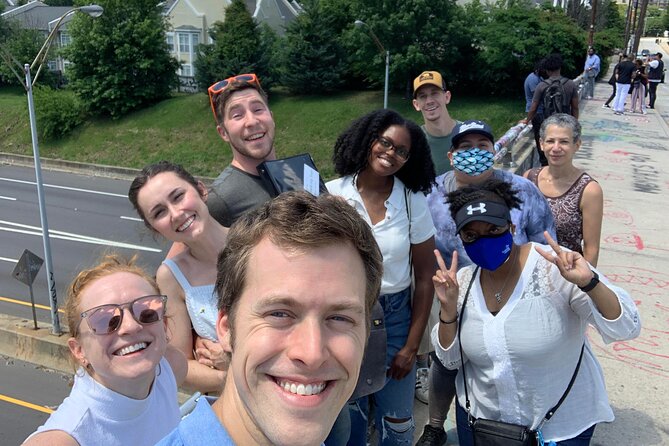
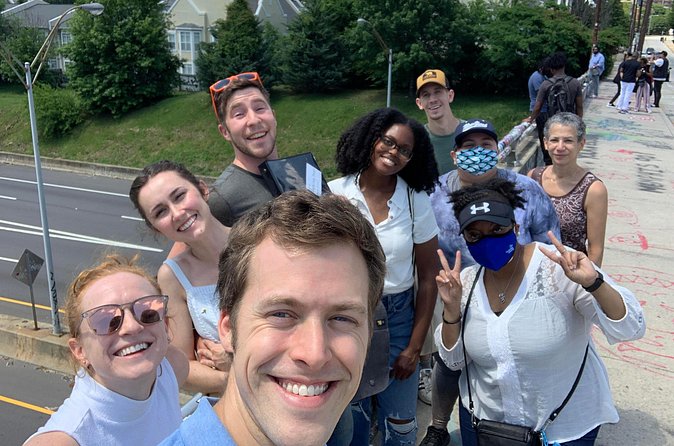
The tour briefly stops on Jackson Street Bridge. The narration explains the bridge, where it has appeared, and some of the Atlanta landmarks you can see from it.
This is a change of pace from the churches and memorials. Instead of focusing only on one building or person, you get a wider view of Atlanta. The bridge also gives the route a strong visual moment, so have your phone ready if you want photographs.
The stop is short, and the tour does not turn it into a long sightseeing break. If you want time to study the view, pause the audio and take it at your own speed. This is also one place where good orientation matters. Since GPS guidance caused problems for at least one person partway through the walk, check the map before moving on rather than assuming the app will always lead you perfectly.
Freedom Park Trail and Homage to King
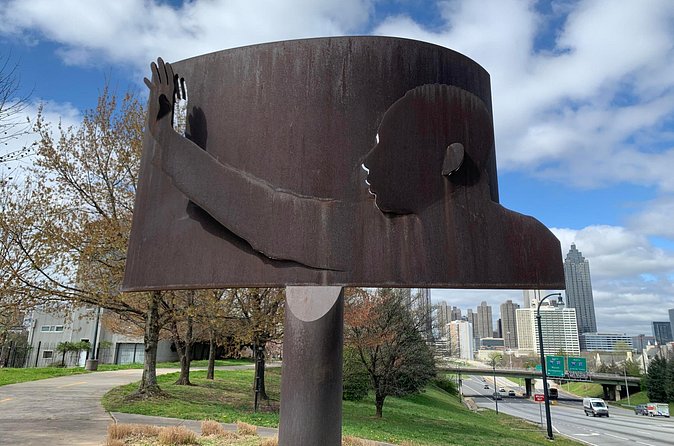
The route continues along part of the Freedom Park Trail. You hear about the trail’s history and what it represents, adding a public-space element to the walk.
The trail section helps link the separate stops. Churches, plazas, bridges, and memorials can otherwise feel scattered. Walking between them shows how the civil rights story is part of the neighborhood rather than confined to one museum.
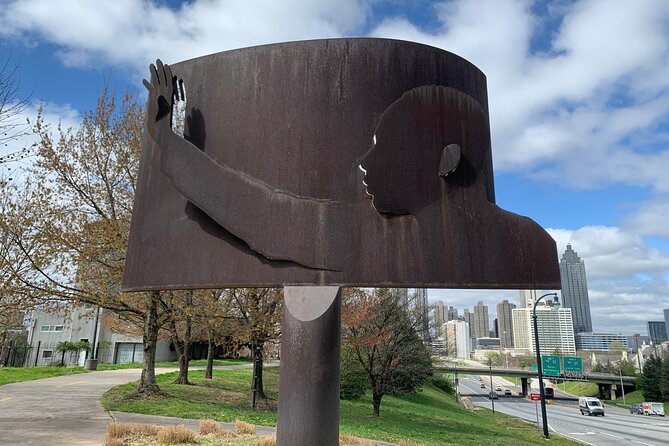
Next comes Homage to King, a sculpture where the tour pauses briefly to explain its origins. The stop is short, but it adds a visual symbol to the route. You can look at the sculpture while listening, then continue without waiting for a group.
The audio approach is especially practical at outdoor memorials. A live guide might need to keep a group moving, while you can stay as long as you like. The tradeoff is that nobody is beside you to answer a question or point out a detail beyond the recorded script.
Edgewood’s unexpected local character
Not every stop is a formal civil rights memorial. The tour visits Sister Louisa’s Church of the Living Room & Ping Pong Emporium, an unusual local business with its own story. You hear about the place from outside and have the option to go in.
This stop gives the walk some personality. It breaks up the sequence of churches, monuments, and plaques, and it shows a more contemporary side of the area. The experience does not include food, drinks, or purchases, so any visit inside is on your own.
The Municipal Market offers another chance to pause. The tour explains the market, then lets you stop for a treat if you wish. This is a useful practical feature because a two-hour walk is more enjoyable when you can take a food break instead of pushing through.
I would not plan the entire day around these optional stops. Their value is that they give you choices. You can keep moving if your schedule is tight, or pause the recording and explore if you have time.
John Lewis, John Wesley Dobbs, and Madame C. J. Walker
The John Lewis Mural is another brief outdoor stop. The audio introduces John Lewis before you continue walking. This gives the tour a strong connection between the civil rights era associated with King and the later public career of Lewis.
The mural is a reminder that the story did not end with the better-known events of the 1950s and 1960s. You are still following the work of an Atlanta leader through a public artwork in the neighborhood.
The route then passes John Wesley Dobbs Plaza. You learn about the person whose name the plaza carries, adding another local figure to the walk. This part of the tour rewards listeners who want to understand Atlanta through several leaders rather than through one famous name alone.
The final stop is Madame C. J. Walker’s, located around the corner from the starting point. The audio explains Madame C. J. Walker and the importance of the building. Ending near where you began makes the route easier to manage, especially if you left belongings nearby or want to return to the breakfast and coffee counter.
What $11.99 gets you
At $11.99 per person, this is inexpensive for a private activity. You receive lifetime access in English, plus the audio, map, and geodata through the VoiceMap app. There is no separate guide fee, and you can use the tour again after your first walk.
The price makes sense if you want structure without paying for a private guide. You get a planned route and narration at a fraction of the cost of a traditional private tour. You also get control over timing, which matters if you prefer stopping for photographs, food, or a longer look at the King Center.
The value is weaker if you expect live interpretation. The audio cannot answer questions, adjust its explanation to your interests, or rescue you quickly if you take a wrong turn. Entrance fees, transportation, food, drinks, a smartphone, and headphones are not included.
The overall rating attached to this experience is 3.4 out of 5 from seven reviews. The strongest praise centers on the emotional value of being in places connected with King and the pleasure of learning about Sweet Auburn at an easy pace. The sharpest criticism concerns the app, audio clarity, and directions.
That split tells you how to buy wisely. Download everything before you arrive, bring headphones, make sure your phone is charged, and keep another map app available. If the GPS route seems wrong, stop rather than continuing blindly. VoiceMap support can be contacted by phone or email, but getting help is easier before you are already lost.
Who should choose this walk
I would recommend it to independent walkers who want a flexible introduction to Atlanta’s civil rights sites. It suits solo visitors, couples, families with older children, and small private groups who prefer setting their own pace.
It is also a good choice if you have lived in Atlanta for only a short time and want context for the city. One benefit of the route is that it connects major names with neighborhood streets, public art, local businesses, and everyday gathering places.
I would be more cautious if you want a specialist historian, a detailed academic account, or guaranteed turn-by-turn support. The audio is useful, but it is not a substitute for a live guide. You should also allow extra time if you plan to enter attractions or stop for food, since those activities are not included in the listed duration.
The route is offered in English only. Most people can participate, and it is near public transportation, but no transportation is provided as part of the activity. The meeting and return point is the Atlanta Breakfast Club Chicken and Waffle Nitro Coffee Counter.
Should you book it?
Book this tour if you value low cost, private pacing, and outdoor history. The strongest parts are the sequence of King-related places, the connection to John Lewis and other Atlanta leaders, and the freedom to pause whenever you want.
Skip it if unreliable phone directions would ruin your day or if you need a live expert beside you. For everyone else, $11.99 is a fair price for a self-guided introduction, provided you download the route first and bring a backup map.
FAQ
How long does the Civil Rights Movement in Atlanta audio tour take?
The tour takes approximately one hour and 30 minutes to two hours. Your total time can be longer if you pause at the King Center, stop for food, or enter attractions along the route.
Where does the tour begin and end?
It begins at the Atlanta Breakfast Club Chicken and Waffle Nitro Coffee Counter, 340 Auburn Ave NE Suite-A, Atlanta, Georgia 30312. The activity ends back at the meeting point.
Is the tour guided by a person?
No. This is a self-guided audio tour using the VoiceMap app. Only your group participates, and there is no live guide.
Does the tour work without cell service?
Yes. After you download it, the audio, maps, and geodata are available offline.
What attractions are included in the route?
The route includes Wheat Street Baptist Church, Ebenezer Baptist Church, the King Center, Martin Luther King Jr.’s birth home, the International Civil Rights Walk of Fame, Jackson Street Bridge, part of the Freedom Park Trail, Homage to King, Sister Louisa’s Church of the Living Room & Ping Pong Emporium, Municipal Market, the John Lewis Mural, John Wesley Dobbs Plaza, and Madame C. J. Walker’s.
Are entrance fees, food, or transportation included?
No. Food, drinks, transportation, smartphone use, headphones, and tickets or entrance fees to museums and other attractions are not included.
Can I cancel or change the booking?
No. The experience is non-refundable and cannot be changed for any reason.
New audio tours around the USA
- Beaches, Bites and Bavaria in Leavenworth: A Self-Guided Audio Tour★ 3.5 · 3 reviews
- Welcome to Fabulous Las Vegas Sign Self-Guided Audio Tour★ 5.0 · 2 reviews
- Las Vegas Day Trips: 3-Day Self-Guided Audio Tour★ 5.0 · 2 reviews
- Hoover Dam and Lake Mead Self-Guided Audio Tour★ 5.0 · 3 reviews
- Driving Lake Tahoe: A Self-Guided Audio Tour From Tahoe City to Incline Village★ 5.0 · 10 reviews
- Las Vegas Neon and Secrets: Self-Guided Audio Tour★ 5.0 · 3 reviews
- Baton Rouge Historic Downtown Self-Guided Audio Walking Tour★ 4.0 · 19 reviews
- Ultimate La Jolla Self-Guided Driving & Walking Audio Tour Bundle★ 3.5 · 9 reviews
USA Audio Tours, compared.

Los Angeles: Hop-On Hop-Off Bus Tour with Audio Guide
Read our review →
City Sightseeing Hop-On Hop-Off Bus Tour with Audio Guide
Read our review →
Medieval Torture Museum Ticket with Audio Guide and Ghost Hunting
Read our review →


San Francisco: Alcatraz, Ferry & Audio Tour w/ Night Option
Read our review →
Ultimate Acadia National Park Self-Guided Driving Audio Tour
Read our review →
Browse the lists this tour appears in