
Review · JAPAN
Tokyo: Sumo Keiko Training Tour with Audio Guide & Photo
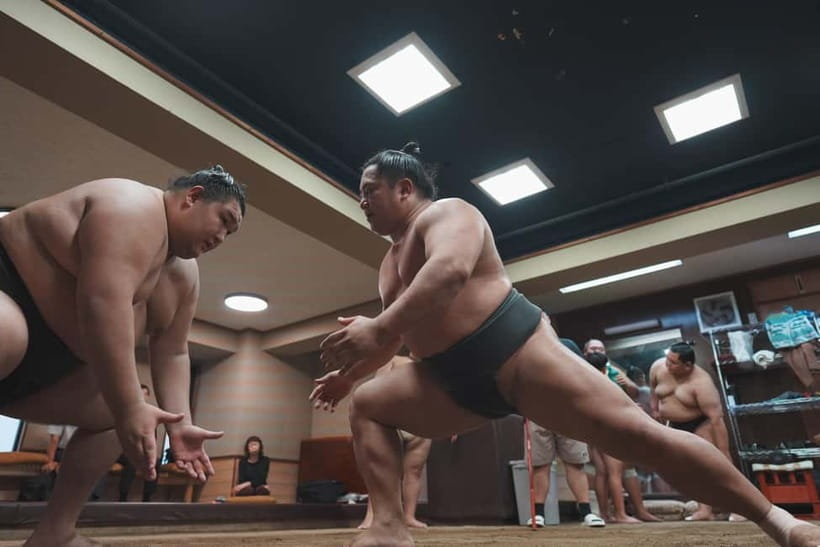
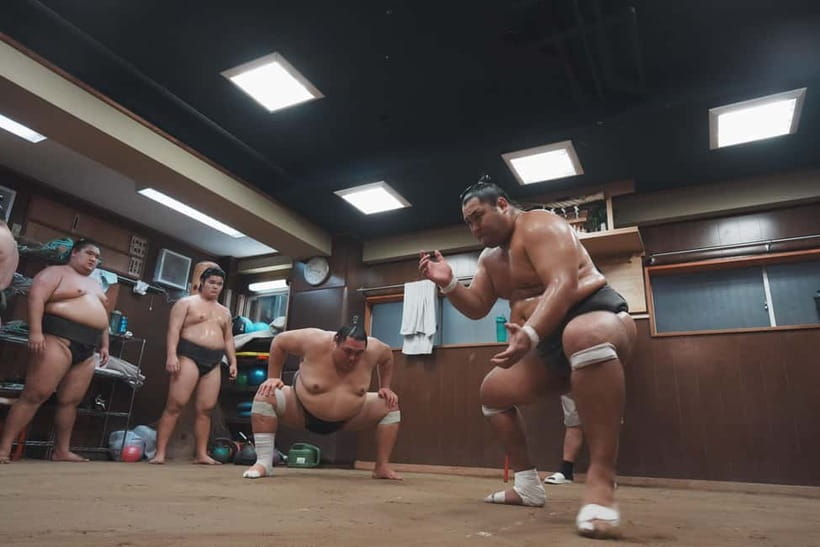
At Nakamura-beya Sumo Stable, you watch professional wrestlers practice at close range, not from the distant seats of a tournament arena. The quiet power of keiko, or sumo training, is the main event. You see the sport stripped of ceremony and focused on balance, force, repetition, and discipline.
I like the rare access to a real practice session, especially for anyone who already knows a bit about sumo and wants to understand the work behind a tournament bout. I also like the practical setup: air-conditioning, Wi-Fi, charging stations, a multilingual audio guide, and a photo with the wrestlers.
The main drawback is that you must watch quietly and remain seated for about 1.5 hours on a cushion unless you receive priority for a bench chair. This is not a lively, walk-around attraction. Late arrival cuts into your viewing time, and there are no extensions.
Key points to know before booking
- Watch real keiko at Nakamura-beya: The training stable is two minutes from JR Ryogoku Station and next to Ryogoku Kokugikan.
- See the sport up close: Training gives you a clearer sense of the wrestlers’ physical effort than a formal tournament match alone.
- Use your phone as a guide: Audio commentary covers sumo ranks, history, and training methods in several languages.
- Expect a quiet visit: Speaking during practice is discouraged, and flash photography is not allowed.
- Bring earphones and use the restroom first: Earphones are recommended for the audio guide, and restroom use during practice is restricted.
- Finish with a personal souvenir: A photo with sumo wrestlers is included in the price.
Why a practice session tells you more than a tournament match
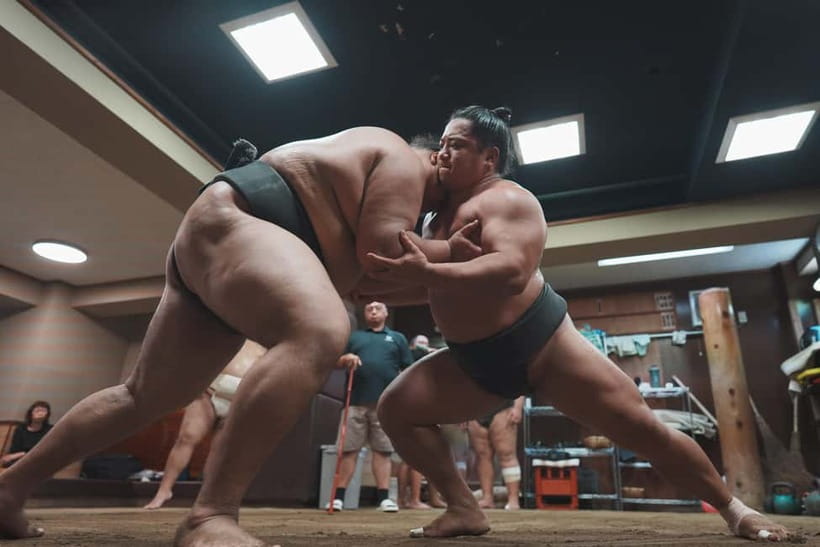
A tournament bout lasts only seconds or minutes. Keiko lets you watch the repeated work that makes those short bouts possible. You see wrestlers train their bodies and refine technique without the noise and spectacle of a full tournament day.
That difference matters. At a tournament, your attention goes to the winning move, the referee, the crowd, and the formal rituals. At a stable, the focus is on practice itself. You get a closer look at how sumo depends on control, strength, footwork, and stamina.
A previous booking described the experience as an authentic look at sumo, even for someone who already knew the sport well. That is the right way to think about this visit. It is not a substitute for a major tournament, but it gives you the background that makes a tournament bout easier to appreciate.
You should also adjust your expectations. This is not a staged demonstration designed around audience entertainment. The wrestlers are training. Your responsibility is to observe quietly and avoid interrupting their routine.
More audio tours around the world:
- Barcelona: Sagrada Familia Entry Ticket with Audio Guide
★ 4.6 · 105,312 reviews - Rome: Pantheon Fast-Track Ticket and Official Audioguide
★ 4.5 · 27,353 reviews - Barcelona: Casa Batlló Entry with Self-Audioguide Tour
★ 4.7 · 25,359 reviews
Arriving at Nakamura-beya near Ryogoku Kokugikan
The meeting point is Nakamura-beya Sumo Stable, only two minutes from JR Ryogoku Station. That short walk is a major advantage in Tokyo, where a distant venue can turn a simple activity into a half-day project.
The stable is next to Ryogoku Kokugikan National Sumo Arena, one of the city’s key places for sumo. You can combine the visit with the nearby Sumo Museum and other Ryogoku sights, then continue toward the Tokyo waterfront on foot.
You do not receive hotel pickup or drop-off, so plan your own route to the stable. The provided directions video can help you find the entrance quickly. Arrive on time. Late arrivals are allowed, but your viewing period becomes shorter and cannot be extended.
That rule is especially important here because the session depends on a fixed training schedule. Arriving late is not like missing the first few minutes of a museum tour. You may lose part of the most valuable portion of the visit.
What you actually watch during keiko
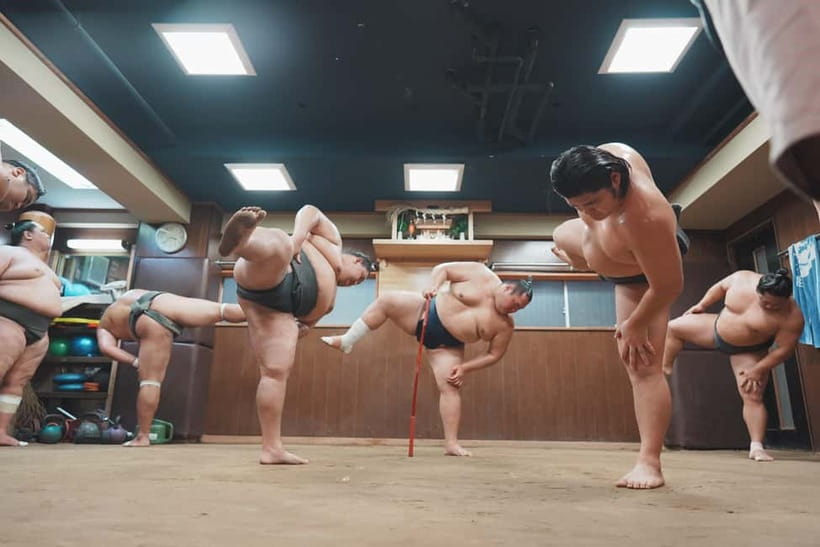
The session lasts between 40 and 90 minutes depending on the selected time, with the planned visit described as lasting about 1.5 hours. Check the available start times carefully when booking, since the length can vary.
Once practice begins, you watch from the seating area and follow the action at close range. The information provided does not promise a particular wrestler, match-up, or training sequence, so you should come for the chance to see a working stable rather than a fixed show.
That uncertainty is part of the value. A real practice session is not arranged to repeat the same scene for every group. The pace and content can change. You may find the quiet stretches just as useful as the louder physical moments because they show the concentration required in sumo.
Speaking is discouraged during practice. This may feel strict if you are used to chatty sightseeing tours, but it protects the wrestlers’ concentration and preserves the atmosphere of the stable. Turn off unnecessary phone sounds, keep conversation to a minimum, and follow the staff’s instructions.
Flash photography is prohibited. Photography is allowed, so you can record the visit, but use your phone or camera without flash. Sunglasses and bare feet are also not allowed. Wear clean, comfortable footwear and clothing that lets you sit on a cushion for an extended period.
The audio guide adds useful context
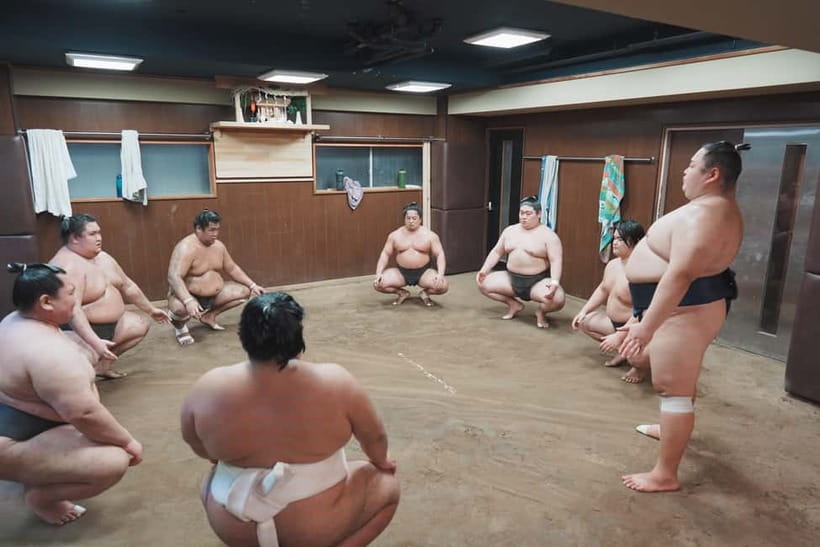
You receive a pamphlet explaining keiko, along with an audio guide that covers sumo history, ranks, and training techniques. The live guide speaks English, Japanese, and Korean. The audio guide is available in Chinese, English, French, German, Hindi, Italian, Japanese, Korean, Polish, Spanish, and Portuguese.
The audio guide is useful because sumo has its own vocabulary and ranking system. If you do not already know the difference between the major ranks or understand why a particular training drill matters, the commentary gives you a framework for watching.
Bring your own earphones so you can listen from your phone without disturbing the room. If you forget them, a pair can be lent to you. I would still bring your own if possible, since familiar earphones are more comfortable and save time at the start.
The audio format also lets you learn without constant live narration during practice. That is a good match for this setting. The room needs to stay quiet, and you can take in explanations while keeping your attention on the wrestlers.
The available languages make this a better choice for international visitors than a Japanese-only stable visit. Still, the information is an aid, not a private lecture. If you want a long personal discussion about sumo, this is probably not the right format.
Same sights, a different narrator:
- Rome: Colosseum & Forum with Audio Guide App -Optional Arena
★ 4.2 · 24,770 reviews - Amsterdam: 75 Minute City Canal Cruise with Audio Guide
★ 4.4 · 19,938 reviews - Florence: Timed Entry to Michelangelo’s David + Audio App
★ 4.6 · 19,496 reviews - Amsterdam: City Centre Canal Cruise including Audioguide
★ 4.3 · 16,901 reviews
Seating, comfort, and basic manners
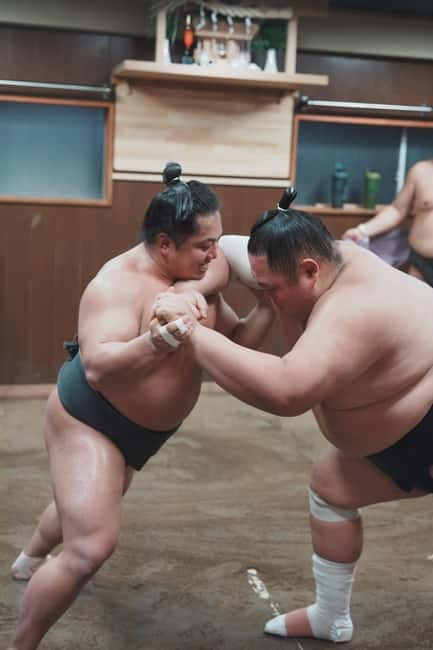
The venue is air-conditioned, with free Wi-Fi and charging stations. Those details may sound minor, but they matter during a quiet seated session, especially in Tokyo’s warm months or after a long day of sightseeing.
Bench chairs are limited. Priority goes to visitors with disabilities, while other visitors sit on cushions. You should be prepared to sit on the floor for about 1.5 hours. If floor sitting is difficult, contact the provider before booking rather than assuming a bench will be available.
Use the restroom before joining the session. Restroom access during practice is restricted, and leaving the room may mean missing part of the training.
Children must be at least six years old. Younger children are not suitable for this activity, and older children should understand that this is a quiet observation session rather than a hands-on sports class.
These rules are not decorative fine print. They shape the visit. You get a more respectful and focused look at sumo, but you give up the freedom to move around, talk freely, or come and go.
The photo with the wrestlers
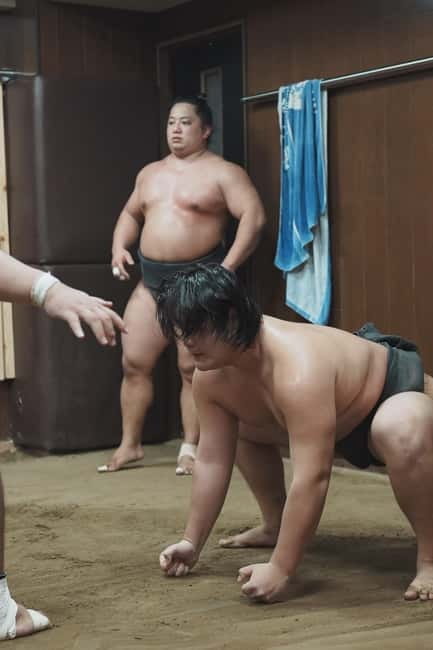
A photo with sumo wrestlers is included. It gives the visit a clear personal finish and provides something tangible beyond the training session itself.
The photo should not be confused with a meet-and-greet built around lengthy conversation. The supplied details do not promise private time with a particular wrestler, so treat it as a brief photo opportunity connected to your visit.
Photography rules still apply. No flash is allowed. Follow the staff’s instructions about where to stand and when to take the picture. The photo is likely to be most enjoyable if you treat it as a respectful souvenir, not as a chance to delay the group.
For many people, this will be the most memorable part of the visit. For serious sumo fans, the training itself is likely to be more important. The two parts work well together: you gain a close look at the sport, then take home a simple reminder of the stable.
Is $85 a fair price?
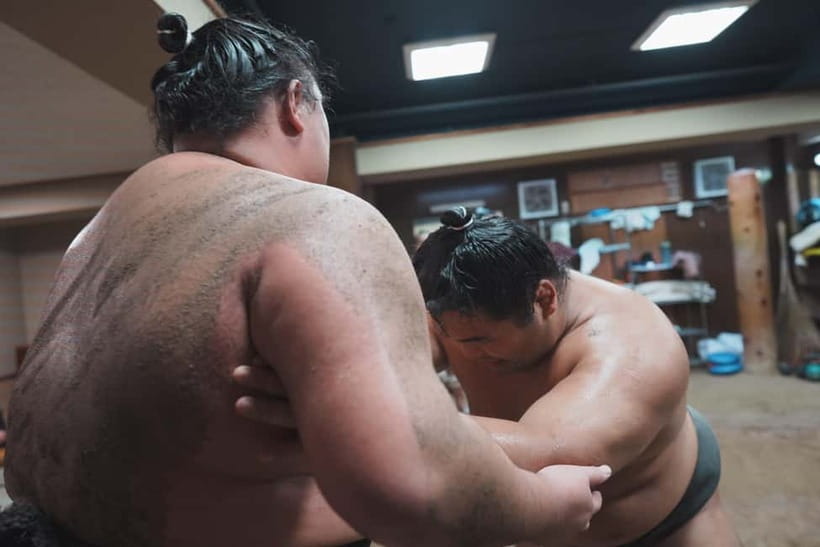
At $85 per person, this is not a cheap short attraction. The visit can last as little as 40 minutes, though the stated program may run up to 90 minutes and includes a roughly 1.5-hour seating period. Your value depends on how much you care about seeing authentic sumo practice rather than simply checking a Tokyo attraction off your list.
The price includes the audio guide, live language support in English, Japanese, and Korean, a keiko explanation pamphlet, Wi-Fi, charging access, and the wrestler photo. It does not include transportation, but the stable’s location reduces that cost and effort. From JR Ryogoku Station, you are only a short walk away.
I think the price makes the most sense for three types of people. First, it suits sumo fans who want a closer look at training. Second, it works for first-time visitors who cannot attend a tournament but still want to see the sport in a genuine setting. Third, it fits anyone building a Ryogoku day around the arena, Sumo Museum, and waterfront.
If you are mainly looking for a fast photo stop, $85 may feel high. The value is in the practice session, the setting, and the chance to see sumo outside the formal tournament schedule.
How to build a Ryogoku day around the visit
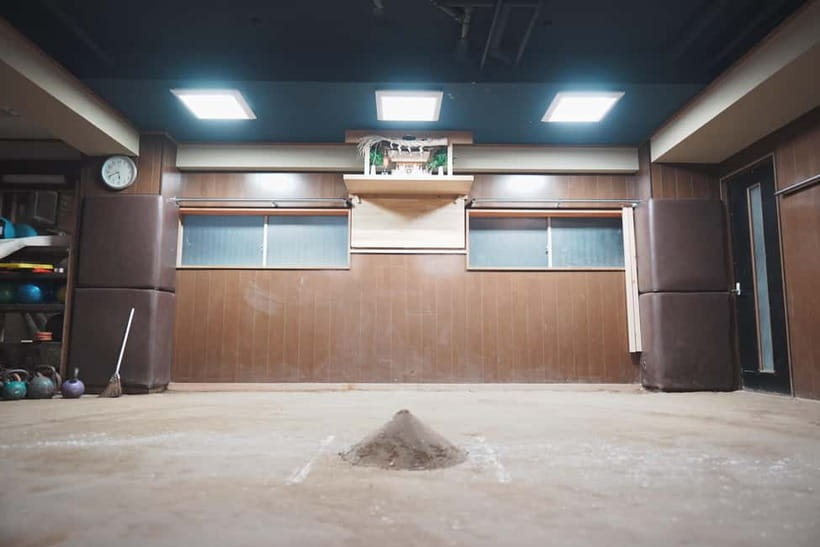
The stable’s location makes planning easy. Start with the training session, then walk to Ryogoku Kokugikan and the Sumo Museum. Continue around the nearby Tokyo waterfront if you have time and energy.
The order matters because the sumo session has a fixed start time, while the surrounding sights give you more freedom. Arrive at the stable first, then use the rest of the day for museums and walking.
Do not pack the schedule too tightly before the visit. Your exact viewing period may vary, and late arrival reduces the time you have inside. Allow enough time to find the stable, settle in, and use the restroom before practice begins.
The area is also convenient if you are staying elsewhere in Tokyo. Being next to a major sumo venue and close to JR Ryogoku Station means you spend less time transferring between distant neighborhoods.
Who will enjoy this most
This tour suits adults and children six or older who can sit quietly and follow strict behavior rules. It is a particularly good match for anyone who wants more than a quick look at sumo costumes, rituals, or tournament highlights.
It is also useful for visitors who need language support. The live guide speaks English, Japanese, and Korean, while the audio guide provides a broad range of language options. Bring earphones, and you can learn while keeping the room quiet.
I would choose this for a sumo fan before choosing it for someone who dislikes seated activities. The lack of movement, limited bench seating, and no-talking rule are central parts of the visit.
It may also be a good choice for repeat visitors to Tokyo. The activity offers a different angle on Ryogoku than simply visiting the arena or museum. One booking described the close access as something that increased appreciation for the wrestlers’ work. That is a useful measure of what this visit can do: it can change how you watch sumo afterward.
Booking flexibility and practical limits
You can cancel up to 24 hours before the activity for a full refund. You can also reserve now and pay later, which helps if your Tokyo schedule is still changing.
The minimum age is six. No hotel pickup or drop-off is included, so make your own way to Nakamura-beya. The meeting point is easy to reach from JR Ryogoku Station, but you still need to allow time for the short walk and check-in.
The provider is NexSpark Co., Ltd. The available live guide languages are English, Japanese, and Korean. The audio guide offers additional language choices, but you should bring earphones or ask to borrow a pair on arrival.
Should you book the Nakamura-beya sumo visit?
Book it if you want to see the working side of sumo and can accept a quiet, fixed-seating format. The close view of keiko, the stable location, the audio explanations, and the included photo make this more substantial than a simple photo stop.
Skip it if you need a highly interactive activity, dislike floor seating, or want the excitement of a tournament crowd. The training is authentic precisely because it is not staged for constant entertainment.
For most sumo fans, this is a worthwhile use of a morning or afternoon in Ryogoku. At $85, it asks you to care about the sport, but it gives you a rare look at the effort behind the brief bouts you see in the arena.
FAQ
Where does the sumo training tour meet?
It meets at Nakamura-beya Sumo Stable, about two minutes from JR Ryogoku Station and next to Ryogoku Kokugikan National Sumo Arena.
How long does the activity last?
The duration is listed as 40 to 90 minutes, depending on availability and the selected time. The planned visit is also described as lasting about 1.5 hours, so check the available starting time when booking.
Is transportation included?
No. Hotel pickup and drop-off are not included. You make your own way to the stable.
What languages are available?
The live guide speaks English, Japanese, and Korean. The audio guide is available in Chinese, English, French, German, Hindi, Italian, Japanese, Korean, Polish, Spanish, and Portuguese.
Do I need to bring earphones?
You should bring your own earphones to listen to the audio guide on your phone. A pair can be lent to you if you do not have one.
Can I take photographs during practice?
Yes, photography is allowed, but flash photography is not. Sunglasses are also not allowed.
Can I sit on a chair?
Only a limited number of bench chairs are available, with priority for visitors with disabilities. Other visitors sit on cushions for about 1.5 hours.
What is the minimum age?
The minimum age is six. Children under six cannot join the activity.
Can I cancel the booking?
You can cancel up to 24 hours in advance for a full refund. Reserve now and pay later is also available.
New audio tours around the world
- London Panoramic Open Top Bus Tour with Audio Guide★ 4.0 · 209 reviews
- London: British Museum Audio Guide & Small Group Entry★ 3.5 · 81 reviews
- London: National Gallery Audio Tour (No Entry Ticket)★ 3.5 · 11 reviews
- London’s Alternative History: A Self-Guided Audio Tour★ 5.0 · 4 reviews
- London: British Museum’s English Audio Tour with Free Reservation★ 3.0 · 15 reviews
- London: Churchill War Rooms Ticket & Political London Audio Tour★ 4.0 · 83 reviews
- London: British Museum Audio Tour with Free Guaranteed Entry★ 3.0 · 30 reviews
- Houses of Parliament Ticket & Political London Audio Guide★ 4.0 · 13 reviews
Japan Audio Tours, compared.
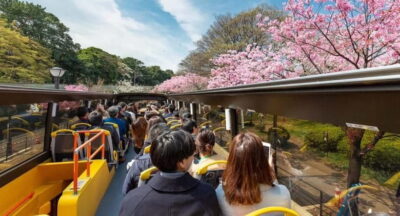
Tokyo: Open Top Panoramic Sightseeing Bus with Audio Guide
Read our review →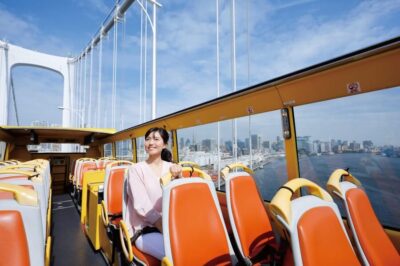
Tokyo: 60min Panoramic Open Top Bus Tour with Audio Guide
Read our review →
Fushimi Inari Shrine: Explore the 1,000 Torii Gates on an audio walking tour
Read our review →Browse the lists this tour appears in