

Review · BOSTON
Self Guided Classic Freedom Trail Location Aware (GPS) Walking Audio Tour
Boston’s Freedom Trail is easy to follow on foot, but it is much more rewarding when the brick path comes with stories. This self-guided tour takes you from Boston Common through the old center, the North End, Charlestown, Bunker Hill, and finally to the USS Constitution. You follow the route alone, with GPS directions and audio commentary in the WalknTours app.
I like the freedom to pause for lunch, a church visit, or a sweet in the North End. I also like the price: at $7.75, you get a full route that can take most of a day if you stop often. The main caution is the app itself. Some users have dealt with crashes, low volume, phone battery drain, or confusing playback.
Key points
- Boston Common to the USS Constitution: This is a long, full-route walk rather than a short downtown sampler.
- GPS guidance keeps you on the brick path: Arrows and location prompts help at busy intersections and less obvious turns.
- The North End gets proper attention: You hear about Paul Revere, immigrant families, Old North Church, Copp’s Hill, and local businesses.
- You set the schedule: Pause the audio for food, museums, photographs, or a rest without losing the tour’s basic structure.
- The content reaches beyond famous names: Stories cover the Boston Massacre, Sam Adams, the Tea Party, Bunker Hill, and the USS Constitution.
- Bring headphones and a power bank: Street noise, low volume, and battery use can affect the experience.
Boston Common gives you a gentle start
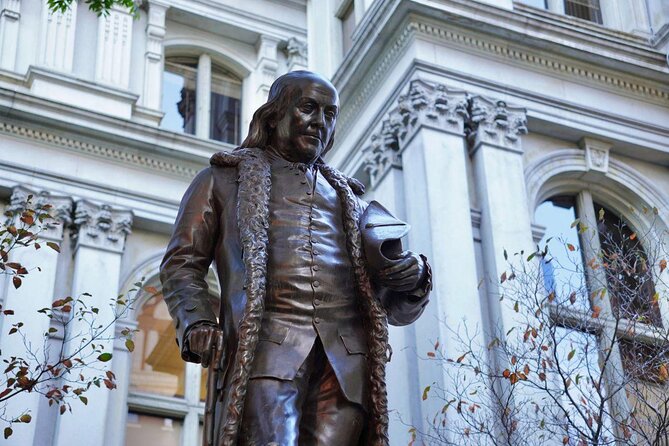
Begin at the Boston Common Visitors Center at 139 Tremont Street. The first stop takes about three minutes and introduces the oldest public park in the United States, along with nearby sights and the dome and statue across the street.
This opening works well because you are not thrown straight into a long history lecture. You get your bearings, start walking, and let the app guide you toward the Freedom Trail. The route uses the familiar double-brick line, which is helpful when downtown streets become crowded.
The trail itself is free to walk. Some buildings along the route may have their own admission arrangements, so the $7.75 covers the audio tour rather than entry to every historic site. You can still see a great deal from the street, including the exteriors and public spaces.
More Audio Walking Tours in the USA
- Cape Cod & Provincetown Self-Guided Driving & Walking Audio Tour
★ 4.0 · 207 reviews - Santa Fe Historic Downtown Smart Phone Audio App Self Guided GPS Walking Tour
★ 4.5 · 112 reviews - Lexington & Concord Self-Guided Driving & Walking Audio Tour
★ 4.0 · 62 reviews
Granary Burial Ground and the city’s revolutionary cast
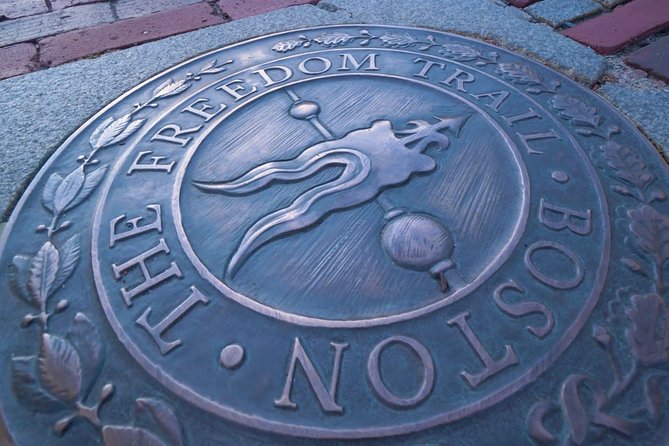
From Boston Common, the route leads into old Boston and toward Granary Burial Ground. Here, the audio explains who is buried there and points out the grave of Samuel Adams, along with other figures tied to the Revolution.
This is one of the places where an audio guide earns its small fee. A cemetery can look like a collection of weathered stones if you do not know who matters or how the people fit together. The narration gives you a reason to slow down and look.
The tour also covers a bell and its past, then points out the school attended by Benjamin Franklin. You hear about the revolutionary characters connected with the area, not just a list of dates. I would allow extra time here if you like old graveyards, carved stones, and small details that are easy to miss on a quick walk.
The Old State House and the Boston Massacre Site
The route continues past major downtown landmarks, including the Old State House and Old South. At the Boston Massacre Site, the audio pauses for about five minutes to explain how the confrontation happened.
The value here is the setting. You are not hearing about the Boston Massacre in a distant museum room. You are standing at the spot where the event took place, surrounded by modern streets and office buildings. That contrast helps you picture how cramped and tense the colonial city could feel.
The audio also covers the Green Dragon, a famous Revolutionary War tavern, and nearby sites connected to political organizing. At the Old State House, you hear about the building and the statue across the street. The route makes good use of short walking stretches between stops, so the story can continue without forcing you to stand in one place for long.
Faneuil Hall, Sam Adams, and the Union Oyster House
The next section reaches Faneuil Hall, often called the Cradle of Liberty. The audio gives you the story of Sam Adams, including his failures, rather than presenting him as a flawless hero. That extra context is useful. Historical figures make more sense when you hear about the setbacks as well as the victories.
You also pass the Union Oyster House, described as the oldest continually operating restaurant in the United States. The audio points out the JFK table and explains why this restaurant matters to Boston’s public life.
This is a good place to pause the tour. You can eat, rest, or look around Faneuil Hall before continuing. The app is designed for that kind of stop and start, although you should check that playback has paused before putting your phone away.
More Self-Guided Audio Tours in the USA
- Gettysburg Battlefield Self-Guided Driving Audio Tour
★ 4.5 · 910 reviews - Joshua Tree National Park Self-Guided Driving Audio Tour
★ 4.5 · 762 reviews - Ultimate Acadia National Park Self-Guided Driving Audio Tour
★ 4.0 · 521 reviews - Ultimate Lake Tahoe Self-Guided Driving Audio Tour
★ 4.5 · 435 reviews
Haymarket leads you toward the North End
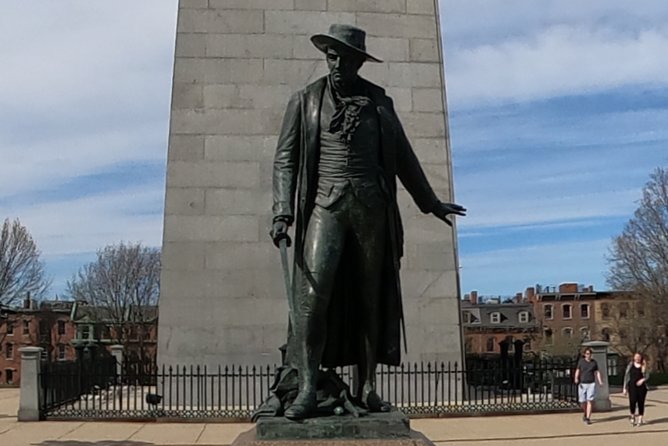
The route passes Haymarket and then moves into the North End, Boston’s Little Italy. This change in scenery is one of the best parts of the walk. The early stops focus on government, protest, and Revolution-era buildings. In the North End, the story turns toward homes, churches, immigrant communities, food, and neighborhood life.
One stop explains the origins of the Boston Tea Party. Another takes you past an Italian shop and tells the story of how the business began, along with the immigrant experience in the North End. If the shop is open, you can pause the audio and go inside.
That flexibility matters here. The North End is not a place to rush through with your eyes fixed on a phone. Give yourself time for a pastry, a meal, or a closer look at the narrow streets. The tour provides the framework, but your own wandering makes this part feel personal.
Paul Revere’s house and the Old North Church
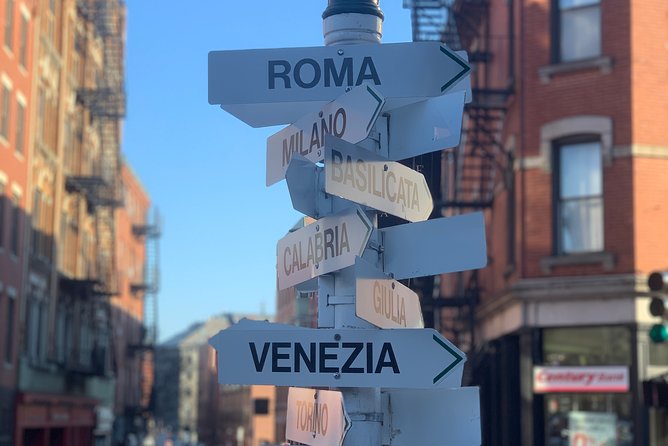
Paul Revere’s house is one of the key stops. You hear about his midnight ride and the larger story behind it, rather than simply receiving the familiar one-line version. The route also covers immigrants who settled in the North End, including the Irish community and the family background of John F. Kennedy.
The audio then brings you to the Paul Revere statue and the Prado, the small park area where the statue sits. It explains how the statue was built and adds some local background. This kind of detail is easy to miss if you are only following the trail from one famous building to the next.
At the Old North Church, you hear the familiar signal story, one lantern by land and two by sea, along with information about the church bells, crypt, and courtyard. The exact audio can be especially useful here because the church’s significance is tied to what happened outside its walls as much as to the building itself.
One particularly nice possibility is hearing the Old North Church bells ring on the hour. Timing is out of your control, but if it happens while you are nearby, it gives the stop a welcome connection to the living city.
Copp’s Hill and the North End’s darker stories
The walk continues to Copp’s Hill, where you see another graveyard and hear stories about people buried there. The audio also points out the spite house, a building associated with Boston’s tradition of narrow lots, strong personalities, and unusual architecture.
The route includes the site of a major heist and more stories tied to the neighborhood. These smaller episodes help break up the better-known Revolutionary War material. You are not hearing only about generals and speeches. You are getting a sense of the people, disputes, businesses, and odd corners that give old neighborhoods their character.
The walking directions are one of the tour’s stronger features. GPS arrows help you know when to turn, and the app can tell you to wait until you reach the next location. Still, keep your eyes up at crossings. Phone guidance is useful, but it should not replace normal street awareness.
Crossing to Charlestown and climbing Bunker Hill
The route eventually leaves Boston proper for Charlestown. You pass the site of the old Three Cranes Tavern and hear how events built toward the Battle of Bunker Hill. The tour then leads you up the hill, explaining the battle as you walk.
This is where the advertised two to three hours can become an underestimate. The route is long, and the climb adds effort. Several people have needed more than two hours, especially when stopping for food, photographs, historic sites, and breaks.
I would not schedule a tight appointment after this tour. If you walk quickly and keep moving, you may finish sooner, but the experience makes more sense at a slower pace. Wear comfortable shoes and treat it as a substantial city walk, not a quick audio loop around downtown.
The Bunker Hill section is meant to make you part of the movement through the site. Instead of only hearing about the battle at a single marker, you follow the guide up the hill and picture the ground where the fighting took place. The route is still self-guided, so there is no in-person historian to answer questions or manage the group.
The USS Constitution marks the finish

The final section takes you from the USS Constitution along Charlestown’s winding roads and back to the ship. The tour ends outside the USS Constitution, the oldest commissioned ship in the United States.
Ending here gives the walk a clear finish. You have moved from the Common, through colonial Boston and the North End, across to Charlestown, and up to Bunker Hill before reaching one of the city’s most important naval landmarks.
The tour ends just outside the ship, so the audio experience does not include a guided visit aboard. If you want to enter the ship, check its separate arrangements when you arrive. The listed tour price should be viewed as payment for the app and narration, not for additional site admissions.
How the app works in real use
You receive a mobile ticket and use the WalknTours app. There is no in-person guide, and only your group takes part. The tour is offered in English and does not expire, which gives you useful flexibility if your schedule changes.
The GPS feature is designed to trigger the right information as you reach each stop. Arrows help with route finding, and the app can wait for you if you are not yet in position. The directions are generally precise, which is important on a route with many city blocks and side streets.
The app has a second useful feature: a virtual tour that can be listened to later. According to the provider’s instructions, you need to be at the first stop to begin the location-based tour. After that, you can access the virtual version in the app and listen away from the trail.
That distinction matters because one user initially thought the audio had to be played only while standing at each location. If you want the virtual version, open the WalknTours app, select the Classic Freedom Trail tour, choose Start Tour, and look for the virtual tour option.
The weak point is reliability. The app has caused problems for some people, including crashes, playback restarting from the beginning, trouble moving between pages, and difficulty getting the tour to start. Users with different phones have also found that the audio does not always stay synchronized.
Audio quality deserves attention, too. Street noise can make the narration hard to hear, and some phones do not provide enough volume. Use earbuds or headphones, but stay aware of traffic and other pedestrians.
Battery use is another real concern. The GPS and audio can drain a phone quickly, and some people have run out of power before reaching the end. Start with a full charge and bring an external battery pack. If you are sharing the tour with someone else, make sure both phones are set up before you start, since Apple and Samsung devices may behave differently.
Is $7.75 good value?
At $7.75 per person, this is inexpensive for a two to three hour route that can stretch longer. You are paying less than you would for most live walking tours, while still getting directions, narration, and the ability to repeat the tour.
The tradeoff is clear. You do not get a person beside you to answer questions, change the route, or solve every technical problem. You also need your own phone, headphones, battery power, and patience with the app.
For a solo visitor, couple, or family that likes to stop when it wants, the price is easy to justify. Families may especially enjoy the GPS prompts, which turn the walk into a simple hunt for the next location. You can also pause for lunch or sweets without holding up a group.
For someone who wants a polished, no-fuss experience with guaranteed audio playback, a live guide may be the safer choice. The content is strong, but the technology is part of the tour, for better and worse.
Who should book this Freedom Trail walk?
I would choose this tour if you want to cover the full trail without joining a scheduled group. It suits independent visitors, families, couples, and solo walkers who like history in small portions and want the power to stop often.
It also works well if you have an uneven schedule. Because the tour never expires and includes a virtual option, you can split your planning around meals or other Boston activities. Just remember that the full route reaches Charlestown and Bunker Hill, so it is not a short downtown outing.
I would hesitate if your phone is older, your battery is unreliable, or you dislike troubleshooting apps. The route itself is well planned, but the technical side can affect the day.
FAQ
Where does the tour start?
It starts at the Boston Common Visitors Center, 139 Tremont Street, Boston, Massachusetts.
Where does the tour end?
It ends outside the USS Constitution in Charlestown.
How long does the tour take?
The estimated duration is two to three hours, but you may need longer if you stop for food, photographs, historic sites, or rest.
Is there an in-person guide?
No. This is a self-guided smartphone tour using the WalknTours app.
What language is available?
The tour is offered in English.
Does the tour include admission to historic buildings?
The Freedom Trail walk itself is free, but the tour price is for the app and audio guidance. Admission to individual sites is not included where a separate ticket is required.
Can I listen to the tour later?
Yes. The tour does not expire, and the provider says you can access a virtual tour after beginning the location-based tour at the first stop.
What should I bring?
Bring a fully charged phone, headphones or earbuds, and an external battery pack. Headphones help with street noise, while the battery pack helps with the app’s GPS and audio use.
Should you book it?
Book this tour if you want low-cost, flexible guidance across the full Freedom Trail and are comfortable using your own phone. The strongest parts are the accurate directions, the freedom to pause, and the broad route from Boston Common through the North End to Bunker Hill and the USS Constitution.
Skip it if you need a live guide or cannot spare battery and setup time. For most independent walkers, though, $7.75 is a fair price for a full day’s historical framework, provided you bring headphones, charge your phone, and leave room in your schedule.
New audio tours around the USA
- Beaches, Bites and Bavaria in Leavenworth: A Self-Guided Audio Tour★ 3.5 · 3 reviews
- Welcome to Fabulous Las Vegas Sign Self-Guided Audio Tour★ 5.0 · 2 reviews
- Las Vegas Day Trips: 3-Day Self-Guided Audio Tour★ 5.0 · 2 reviews
- Hoover Dam and Lake Mead Self-Guided Audio Tour★ 5.0 · 3 reviews
- Driving Lake Tahoe: A Self-Guided Audio Tour From Tahoe City to Incline Village★ 5.0 · 10 reviews
- Las Vegas Neon and Secrets: Self-Guided Audio Tour★ 5.0 · 3 reviews
- Baton Rouge Historic Downtown Self-Guided Audio Walking Tour★ 4.0 · 19 reviews
- Ultimate La Jolla Self-Guided Driving & Walking Audio Tour Bundle★ 3.5 · 9 reviews
Boston Audio Tours, compared.

Boston Freedom Trail Self-Guided Tour with Audio Narration & Map
Read our review →
Self-Guided Boston’s Beacon Hill Underground Railroad Audio Tour Walking Tour
Read our review →
Self Guided “Historic Boston Downtown Freedom Trail” Audio/GPS Walking Tour
Read our review →
Boston’s Old North Church Admission with Self-Guided Audio Tour
Read our review →
Boston’s Freedom Trail: A Self-Guided Audio Tour
Read our review →
Boston Harborwalk & Tea Party Self-Guided Walking Audio Tour
Read our review →
Boston: City History and Highlights Audio App Walking Tour
Read our review →
Boston Self-Guided Audio Tour Bundle: Freedom Trail & More
Read our review →Browse the lists this tour appears in