
Review · VERONA
Verona Walking Tour with Audio and Written Guide by a Local
Verona’s best sights fit neatly into a walk, but the city is more enjoyable when you are not tied to a guide’s clock. This self-guided route begins and ends at the Arena, leading you across old bridges, through Roman gateways, into elegant squares, and past Juliet’s famous balcony. You follow the route on your phone while Matteo’s guide supplies short stories and useful context.
I like the freedom to stop and start whenever you wish, especially at Castelvecchio Museum, the Duomo, the Arena, or a café. I also like the mix of written text and audio, since you can listen while walking or read quietly in a crowded square. The main consideration is technical: you need a working internet connection, enough phone battery, and headphones if you do not want to use your speaker.
Key points to know before booking
- The route covers Verona’s major sights: You visit Castelvecchio Bridge, Porta Borsari, Ponte Pietra, Piazza dei Signori, Piazza delle Erbe, Juliet’s House, and the Arena.
- You set the timetable: The stated walk takes about two to three hours, but stops for meals, gelato, museum visits, and extra churches can stretch it to a full day.
- The guide works through your browser: Bring a smartphone with internet access and read the voucher carefully for activation instructions.
- Both text and audio are available: The guide is offered in English, Spanish, Italian, German, and French.
- It is unusually inexpensive: At $7.86 per person, it costs far less than a conventional private or group tour, though you give up live commentary and on-the-spot explanations.
- The starting point is also the finish: Meet at Piazza Bra by the Arena, with no physical pickup or guide waiting there.
A flexible route through Verona’s old center
This experience is best understood as a digital walking companion, not a traditional guided tour. You do not meet Matteo in person, and there is no fixed group moving from stop to stop. Instead, you open the guide on your phone, follow the proposed route, and decide how long to spend at each place.
That distinction matters. A scheduled tour might keep you moving even when you want to take photographs, step inside a church, or pause for lunch. Here, you can stop the audio, reread a section, or search for more information before continuing. The route also gives you a clear first-day orientation to Verona without filling your afternoon with a large group.
The stated duration is two to three hours, based on the sightseeing stops. Plan on more time if you enter museums or churches, climb a tower, visit the Arena, or take a long meal break. One useful way to use it is as a morning introduction, then return to the places that deserve a longer look.
The route begins and ends at the Arena di Verona in Piazza Bra. The meeting point is simply the starting location, not a ticket pickup or staffed desk. Keep that in mind when planning: you need the voucher and access instructions before you arrive.
More Audio Walking Tours in Italy
- Florence: 2.5 hour Audio Guided Walking Tour led by Host
★ 4.6 · 293 reviews - Bologna Walking Tour with Audio and Written Guide
★ 4.5 · 132 reviews - Trieste Walking Tour with Audio and Written Guide by a Local
★ 4.5 · 73 reviews
Castelvecchio Bridge and Museum
The first stop is Castelvecchio Bridge, a handsome medieval crossing with views along the river and toward Verona’s old fortifications. The guide uses the bridge to introduce the city’s story, and it is an easy place to pause for photographs.
You have about 15 minutes here, though photographers will want longer. The bridge is also a useful opening stop because it feels different from the polished squares later in the route. Its stonework and river setting give you an immediate sense of Verona as a fortified medieval city.
Next comes the Museo di Castelvecchio, closely linked with one of Verona’s most important ruling families. The route allows about 15 minutes, with free access to the courtyard and garden. The supplied information also describes entering the museum, but it does not specify an interior admission arrangement, so check current museum details if you want a full visit rather than the free outdoor areas.
This is one of the places where the self-guided format works well. You can listen to the explanation, walk through the courtyard, and decide if the museum deserves a separate visit. If you are moving quickly, the outdoor stop still adds useful context without forcing you into a long indoor visit.
Roman Verona at Porta Borsari
Porta Borsari was the principal entrance into Roman Verona. Its surviving stone facade is a quick stop, listed at about 10 minutes, but it gives the route a strong link to the city’s ancient past.
The guide points out a curious story connected with the monument. That kind of short detail is helpful here because the gateway can be easy to pass without noticing its importance. You are not simply looking at an old wall. You are standing at a former threshold into the Roman city.
This stop also shows the practical strength of the route. Verona’s sights are not arranged as one enclosed attraction. They appear along ordinary streets and squares, sometimes with little formal explanation on site. Having a short audio or text section ready on your phone can make those brief stops more meaningful.
Bridges, churches, and a view toward San Pietro Hill
Ponte Garibaldi is another quick bridge stop, with about 10 minutes set aside. Verona has seven bridges, and the guide adds a special story about a trick once used to cross this one. It is a small detail, but it helps turn an ordinary crossing into part of the city’s character.
The route then includes an important church with interesting paintings. The supplied details do not name the church or give a visit time, so you should treat this as an additional religious-art stop rather than plan around a specific opening schedule. If church interiors matter to you, keep your timing flexible.
Ponte Pietra follows, with another 10-minute stop. This Roman bridge offers a view toward St. Peter’s Hill and makes a good contrast with the earlier Castelvecchio crossing. The visit is brief, but the setting gives you a chance to look beyond the central streets and see how the river and hills shape Verona.
Do not expect every stop to receive the same amount of explanation. The main squares and famous monuments get more attention, while some bridges and minor points work as short connecting chapters. That is fine for a first look, but people who want detailed architectural analysis may find some sections light.
Same sights, a different narrator:
- Rome: Pantheon Fast-Track Ticket and Official Audioguide
★ 4.5 · 27,353 reviews - Rome: Colosseum & Forum with Audio Guide App -Optional Arena
★ 4.2 · 24,770 reviews - Florence: Timed Entry to Michelangelo’s David + Audio App
★ 4.6 · 19,496 reviews - Rome: City Sightseeing Hop-on Hop-off Bus with Audioguide
★ 4.0 · 16,045 reviews
Piazza dei Signori and Verona’s tallest tower
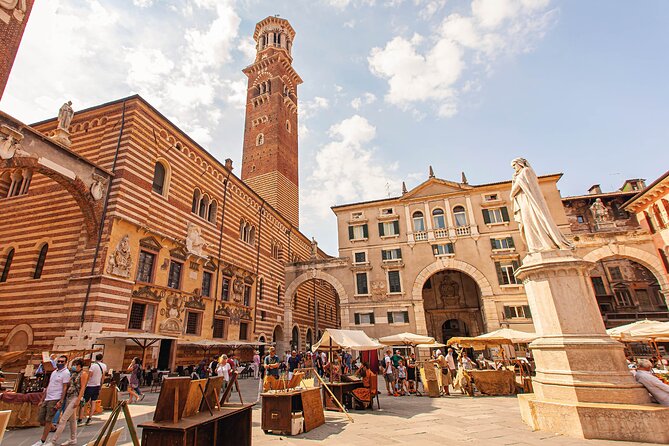
Piazza dei Signori is often called Verona’s drawing room. The square is surrounded by important buildings and is known for its formal beauty and changing perspectives. The guide allows about 10 minutes, enough for a quick explanation and photographs, though you may want to linger.
This is one of the route’s strongest urban spaces. Unlike a single monument, the piazza rewards slow looking. Notice the arrangement of the buildings around you, then use the guide’s commentary to understand why the square has such an important place in Verona’s civic life.
The next unnamed stop concerns the city’s tallest building, which rises 84 meters. The view from the top is described as stunning. The information does not identify the tower by name or confirm whether entry is included, so consider this an optional landmark and viewing point rather than assume a tower ticket is part of the $7.86 price.
That is an important value point. The digital guide itself is inexpensive, but entrance fees, tower visits, museum tickets, and food are separate expenses unless clearly stated otherwise. The route helps you choose what deserves those extra costs.
Piazza delle Erbe, the heart of the old city
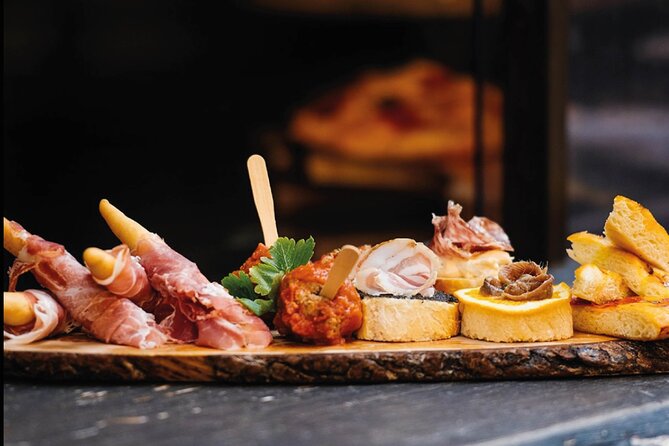
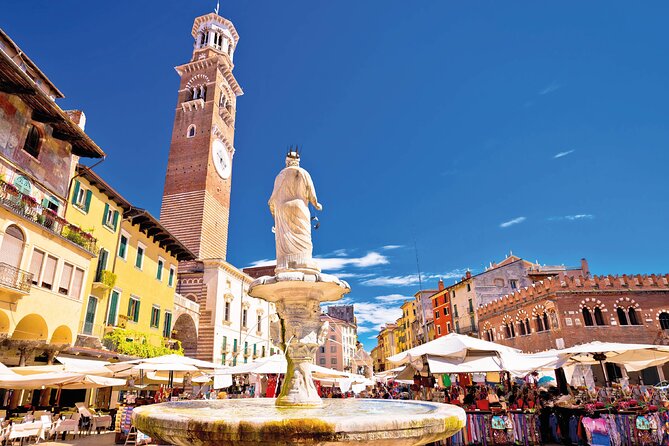
Piazza delle Erbe is Verona’s oldest square, built over the area of the Roman Forum. The route gives it about 20 minutes, making it one of the more substantial stops.
This is a good place to pause the audio and simply look around. The square brings together layers of Verona’s past, and the guide focuses on curiosities as well as basic history. You can use the written text if the square is noisy, then restart the audio when you move into a quieter street.
The square is also a practical break point. Since you control the route, you can pause here for a drink or food, then continue when ready. Several people have used the guide as a loose framework rather than a strict two-hour march, and that is probably the best approach if you have a full day in Verona.
The digital format gives you room to add your own research too. If a building catches your eye, you can look it up before moving on. The guide provides a starting point, not a rule that limits your curiosity.
Juliet’s House and the story behind the balcony
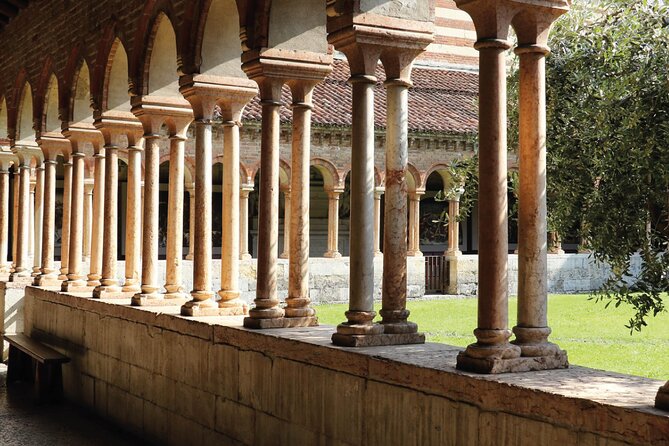
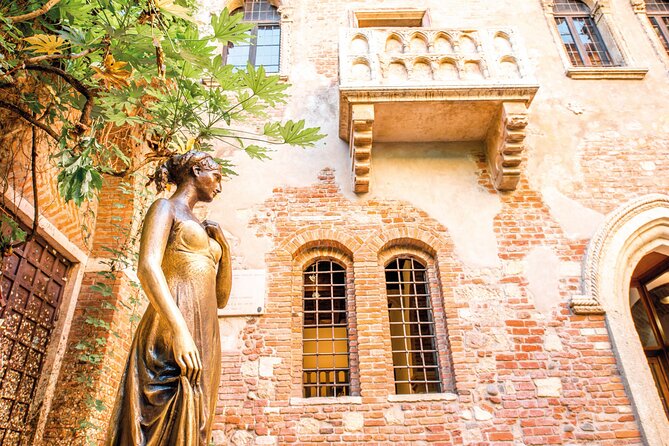
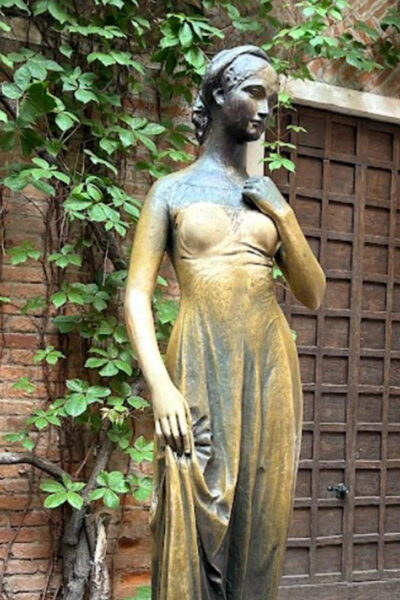
Casa di Giulietta is one of Verona’s most famous sights. The route allows about 20 minutes and explains the curious story behind the house, not just the familiar romantic legend.
The famous balcony can be seen from outside for free. That makes this stop easy to include even if you do not want to pay for entry or wait for an indoor visit. The guide is particularly useful here because the cultural story and the actual history behind the site are not quite the same thing.
Expect this to be one of the busier points on the route, although the supplied information does not give crowd levels or waiting times. Your advantage is flexibility. You can listen before arriving, pause near the entrance, take a quick look from outside, and move on without losing your place.
If you want a more personal experience, do not let the famous name force you into a long stop. The guide gives enough background to make the visit worthwhile, while the route allows you to spend more time at Verona’s less famous squares and bridges.
Ending at the Arena di Verona
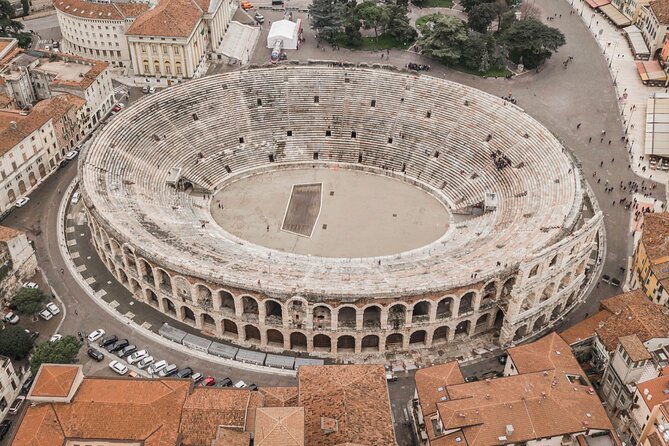
The final stop is the Arena di Verona, where the walk ends back in Piazza Bra. This Roman amphitheater is one of the city’s main symbols, and the guide closes with stories and legends connected with its construction.
Ending here is convenient. You finish where you began, and the Arena is easy to recognize. The stated opening hours are 12:00 AM to 11:30 PM from March 13, 2024 through February 7, 2027, but those hours do not confirm that admission is included or that every interior area will be available during your visit.
The Arena deserves more than a quick photo if you have time. The route’s stop is an introduction, not a substitute for a full monument visit. You can use the guide to understand what you are seeing, then decide if you want to enter separately.
This final stop also makes the experience useful on a day trip. You can follow the route in a compact session, finish at the Arena, and then continue with your own plans. If you have several days, spread the route out and add the museum, churches, tower, and Arena at a slower pace.
What the digital guide does well
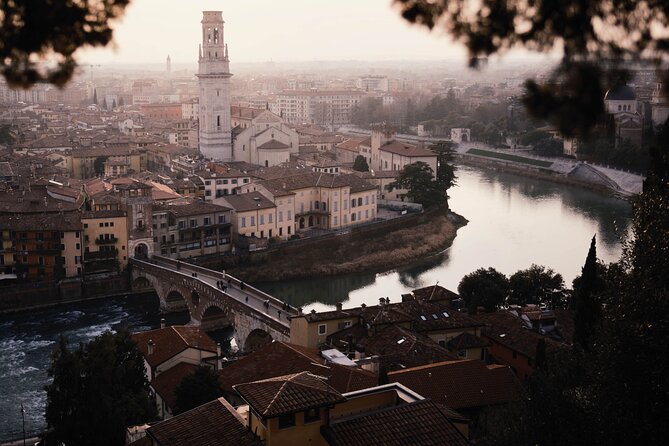
The strongest feature is control. You can pause for a photograph, replay a section, switch to written commentary, or skip a stop that does not interest you. That makes the experience a good fit for independent walkers who dislike being attached to a group.
The content is designed to be short enough for sightseeing. You get explanations, historical notes, and unusual stories without a long lecture at every corner. Some sections also include food recommendations and the option to extend the walk to other churches, which adds value if you want help beyond the central route.
The guide is offered in five languages: English, Spanish, Italian, German, and French. You receive both written and audio material, so you can read in a noisy place or listen while standing outside a monument.
The price is the other clear advantage. At $7.86 per person, it is a low-cost way to get structure and context. Even if you use it only for the main route, the price is modest compared with a conventional guided walk. Its value depends on your expectations: you are paying for organized information and navigation, not a live guide who can answer questions or change the story for your interests.
Phone setup, sound, and possible problems
The main weakness is the technology. You need a smartphone with an internet connection, and the activation details are in your voucher. Read those instructions before you start. Do not assume you can arrive at the Arena and sort everything out without checking the link.
Bring headphones if you have them. You can use your phone’s speaker, but public squares, traffic, and crowds may make audio hard to hear. Written text is available as a backup, and it is also the better choice inside quiet churches or busy public spaces.
There have been occasional problems opening the guide, loading audio, or using the map links. The operator, Matteo, has responded quickly through WhatsApp in such cases, and refreshing the page has solved some audio issues. Still, you should not begin with a nearly empty battery.
A portable charger is sensible. Map links and screen use can consume power over several hours, even though the platform is browser-based. The screen may also need to stay active for audio playback, so adjust your phone settings before leaving.
Audio quality is subjective. Some people find the synthetic voice easy to follow, while others dislike the pronunciation of Italian names and places. If you care strongly about natural narration, use the written version as your main tool.
Who will get the most from this Verona walk
I would choose this experience if you want a low-cost introduction to Verona and prefer to set your own rhythm. It suits solo visitors, couples, families, and anyone who actively avoids large group tours.
It is also useful for a short stay. You can cover the key route in two to three hours, then return to Castelvecchio, the Duomo, the Arena, or Juliet’s House for longer visits. With lunch and museum stops, the same route can fill much of a day.
I would look elsewhere if you want a live historian, detailed answers at each monument, or guaranteed technical simplicity. The guide cannot react to your questions, and a weak connection may interrupt the experience. It is also not a replacement for checking entry tickets and opening times at the places you plan to enter.
Free cancellation is available up to 24 hours before the start time. Cancellations made within 24 hours are not refunded, and changes in that period are not accepted.
Should you book this Verona audio walk?
Book it if you want a clear path through Verona, short historical explanations, and the freedom to stop whenever you like. The price makes it an easy choice for an independent visit, especially when you use the written guide, audio, map, and optional extra stops together.
Skip it if you do not want to rely on a phone, dislike computer-generated narration, or need a person beside you. For everyone else, this is a practical way to get oriented, see the major sights, and leave room for your own discoveries.
FAQ
Where does the Verona walking tour start?
It starts at the Arena di Verona, at Piazza Bra 1, 37121 Verona.
Where does the tour finish?
The route finishes at the Arena di Verona, the same place where it starts.
How long does the walking tour take?
The estimated duration is two to three hours. Longer stops for lunch, gelato, museums, churches, or the Arena can extend it to most of a day.
Is a live guide included?
No. This is a self-guided digital experience with audio and written commentary.
Which languages are available?
The audio and written guide are available in English, Spanish, Italian, German, and French.
Do I need a smartphone?
Yes. You need a smartphone with an internet connection to access the digital guide.
Are headphones provided?
No. Headphones are not included. You can listen through your phone’s speaker or bring your own headphones.
Are admission tickets included?
The listed stops are marked with free admission. The free areas specifically noted include the Castelvecchio courtyard and garden and the outside view of Juliet’s balcony. The supplied information does not confirm paid interior admission for museums, the tower, churches, or the Arena.
Can I cancel for a refund?
Yes, if you cancel at least 24 hours before the experience start time. Cancellations within 24 hours are not refunded.
New audio tours around Italy
- Lecce Walking Tour with Audio and Written Guide by a Local★ 4.0 · 38 reviews
- Private Audio Guided Walking Tour in Lecce★ 4.0 · 7 reviews
- Private Audio Guided Walking Tour in Como★ 3.0 · 3 reviews
- Como Walking Tour with Audio and Written Guide by a Local★ 4.5 · 30 reviews
- Finance and Nobility: Explore medieval Genoa on a self-guided audio tour★ 4.5 · 7 reviews
- Genova Walking Tour with Audio and Written Guide by a Local★ 4.5 · 33 reviews
- Udine Walking Tour with Audio and Written Guide by a Local★ 4.0 · 2 reviews
- Florence: Uffizi Gallery Timed Entry Ticket with Audio★ 3.0 · 3 reviews
Verona Audio Tours, compared.
Verona: Juliet’s House Fast-Track Entry Ticket & Audio Guide
Read our review →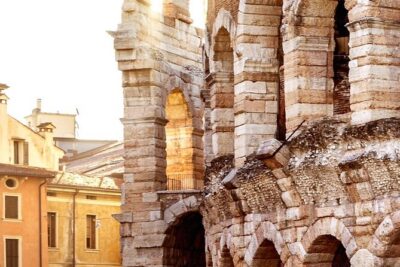
The city of Romeo and Juliet: A self-guided audio tour through Verona
Read our review →Browse the lists this tour appears in