
Review · MOAB
Arches and Canyonlands NP Self-Guided Driving Audio Bundle Tour
The best thing about this self-guided driving tour is the freedom. You get GPS-triggered stories, directions, hike details, and park history without having to match a bus schedule or keep your eyes on a guide. The bundle covers Arches and Canyonlands, with each route running more than 28 miles and offering more than 49 audio stories.
I like two things especially: the offline function matters in these remote parks, and the $24.99 price covers one car of up to four people. I also like that the audio can be paused, repeated, or revisited on another trip. The main caution is technical: you must download the app and tour while you have strong service, and a few users have reported cut-off audio or trouble with the setup.
Key points to know before you go
- More than 49 stories per park route: Hear geology, Indigenous traditions, settlement history, directions, and trail information as you drive.
- GPS-triggered audio: Stories start near their points of interest, so you can keep your hands free and focus on the road.
- Works offline: Download everything before entering the parks, where cellular service can be weak or absent.
- One price per car: At $24.99 for up to four people, this can cost far less than a conventional guided tour.
- Use it at your own pace: Pause for photos, skip stops, take a side trip, or return another day.
- Lifetime access is advertised: The tour information says there is no expiry, though other setup details refer to one year of access, so confirm the current terms when booking.
A low-cost guide for two very different Utah parks

Arches and Canyonlands sit near Moab, but they offer different kinds of scenery. Arches gives you a fairly direct park road lined with famous formations. Canyonlands is broader and more austere, with enormous canyon views and long sight lines across the Island in the Sky district.
This tour helps connect the scenery to the forces that shaped it. You hear about sandstone layers, collapsed domes, biological soil crust, rivers, Native communities, Spanish settlers, Mormon settlers, ranchers, and the people who helped protect these places as national parks.
That context is useful because the parks can otherwise feel like a parade of red rocks. The audio tells you what you are looking at and points out features that are easy to miss from the car. It also gives practical cues for turnoffs, viewpoints, trail distances, and access.
The two tours take about two to three hours each if you drive the routes without long stops. In real life, you will need much longer if you hike, take photos, eat lunch, or return to favorite viewpoints. The advertised total duration of seven to eight hours is a reasonable full-day estimate for both parks, but you should not treat it as a tight schedule.
More Self-Guided Audio Tours in the USA
- Gettysburg Battlefield Self-Guided Driving Audio Tour
★ 4.5 · 910 reviews - Joshua Tree National Park Self-Guided Driving Audio Tour
★ 4.5 · 762 reviews - Ultimate Acadia National Park Self-Guided Driving Audio Tour
★ 4.0 · 521 reviews
Getting the app ready before Moab
This is not a guided group outing. No one meets you at the entrance, and you use your own vehicle. After booking, you receive setup instructions and a password by email and text. Search for audio tour if the message is hard to find.
Download Action’s separate tour app, enter the password, and download the tour while you still have strong Wi-Fi or cellular service. This step is essential. Several poor experiences came from trying to install or access the tour after reaching the parks, where the signal can be intermittent.
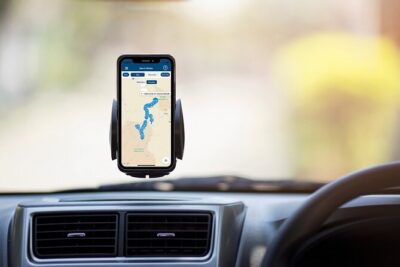
Connect your phone to the car stereo by Bluetooth, USB, or AUX. Apple CarPlay is supported for audio playback, while Android Auto support is described as forthcoming. An iPhone with iOS 15 or later, or an Android device with version 9 or later, is recommended. An iPad or tablet with GPS and cellular service can also be used.
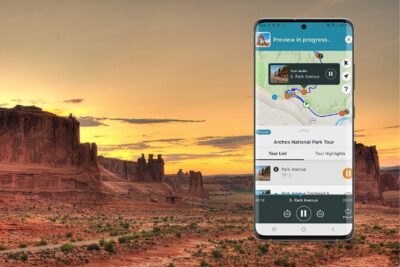
Before setting out, open the app and make sure both tour files load. If more than one version appears, choose the route matching your planned starting point and direction. The GPS should trigger the first story when you reach its starting point, then continue as you drive.
Arches begins with geology and giant stone figures
The Arches route starts near the park entrance and visitor center. This is a useful opening because you receive an introduction before the road begins filling with formations that can look similar at first glance.
Early audio explains Moab’s Fault, a crack in the earth’s crust formed about six million years ago. You also hear how geologic pressure helped create the red-rock scenery around Arches. The La Sal Mountains provide a striking contrast, rising toward nearly 13,000 feet and appearing beyond the desert floor.
The narration also addresses Spanish settlers and their displacement of the Ute and Paiute peoples. That is important context, though you should listen with care and remember that a short audio segment cannot cover every part of that history.
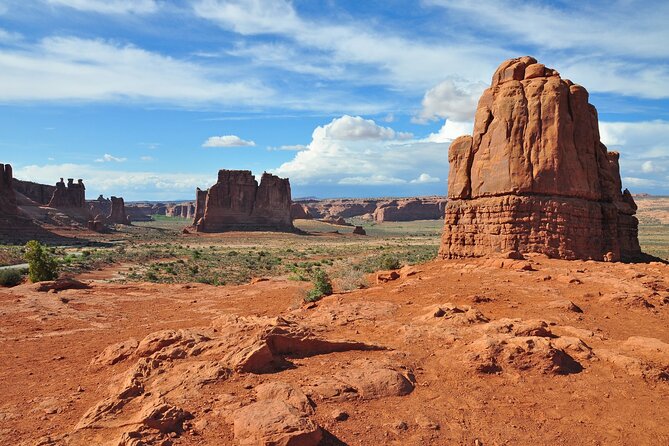
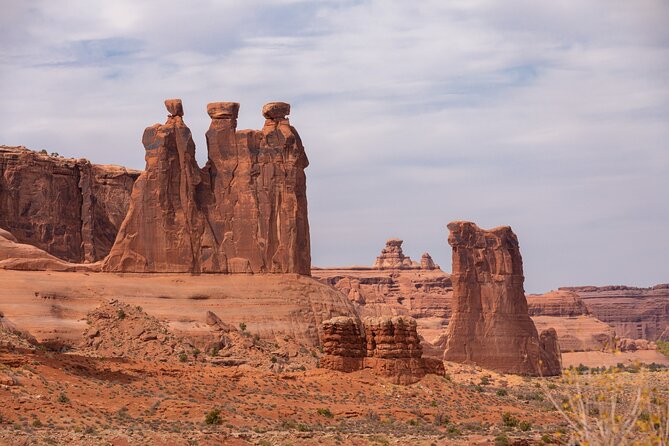
The Three Gossips is one of the first major formations. Its name comes from the way the rocks resemble three figures leaning together in conversation. The stop itself is brief, but the formation is easy to recognize from the road.
The next vista includes the Organ, Courthouse, and Sheep Rock. The tour keeps your attention moving from one formation to the next, explaining how erosion and exposed layers produced these improbable shapes.
The Windows, Cove of Caves, and Panorama Point

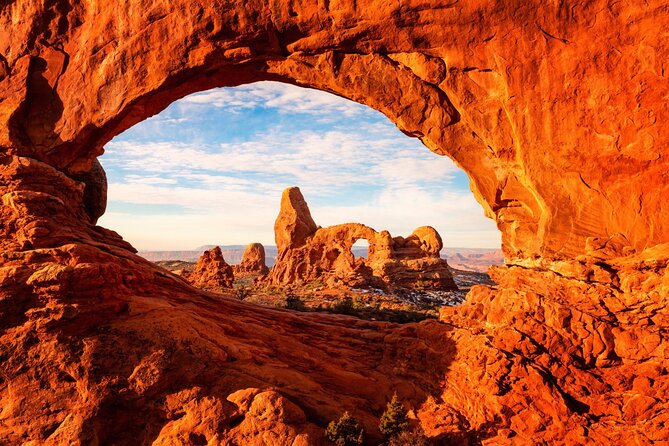
The Windows Road leads to one of Arches’ busiest and most memorable areas. The Windows are enormous openings cut into sandstone by erosion. You can use the audio to understand the formations before walking toward them, rather than arriving with only a name on a map.
The Cove of Caves appears as a group of arches and partial arches along the trail. It is a good example of why you should not rush through the park. Some features are famous because of their size, while others reward a slower look at the rock around the main attraction.
Panorama Point brings a change of mood. The audio points out the area as a possible place to revisit after dark for stargazing. Arches has very little light pollution, and the narration includes information about how the Paiute viewed the night sky.
Do not treat that suggestion as a promise of a particular stargazing event. Conditions depend on weather, moonlight, and the season. Still, the ability to use the tour again later makes this kind of optional return practical.
More Driving Audio Tours in the USA:
- Ultimate Lake Tahoe Self-Guided Driving Audio Tour
★ 4.5 · 435 reviews - Scenic Newport, RI Self-Guided Driving Audio Tour
★ 4.5 · 325 reviews - Arches National Park Self-Guided Driving Audio Tour
★ 4.5 · 288 reviews - Kauai Adventure Bundle: 4 Epic Audio Driving Tours
★ 4.5 · 211 reviews
Delicate Arch is the famous stop, but not the only one
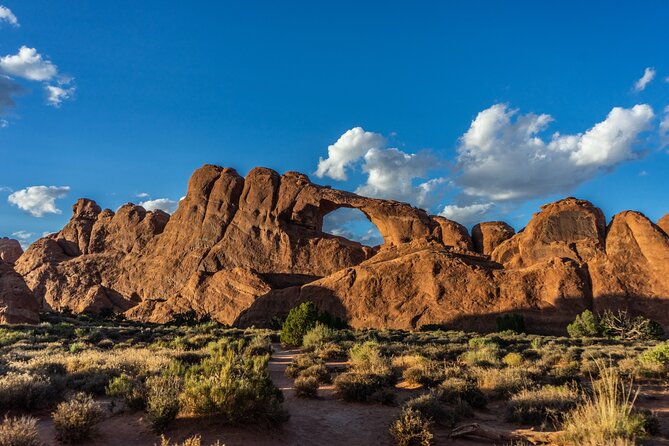
Delicate Arch is the symbol of Arches National Park, and the audio presents it as the major highlight. A hike is required to reach the closest view, so check the route and trail information before leaving the car.
One advantage of this format is that you can decide how much time to give the stop. You can hike, view it from an available overlook, or continue if your schedule or mobility makes a longer walk unsuitable. The app also allowed one family to keep a person with limited mobility involved from inside the car, which is a useful feature for mixed-ability groups.
The route continues through Salt Valley, where the collapse of sandstone domes left broken rock across the ground. It then passes the Fiery Furnace, a maze of narrow passages and tall red cliffs. The audio explains more about Paiute stories, Spanish and Mormon settlement, and the later effort to preserve the area.
The Arches portion ends at Devils Garden Trailhead. This is the place to consider a longer stop, since the trail leads toward Landscape Arch and beyond. If you plan to hike, build that time into your day instead of assuming the route’s two to three hours includes a full exploration.
Canyonlands changes the scale of the day
Canyonlands’ Island in the Sky route feels less like a string of individual formations and more like a series of huge openings in the earth. The road passes through Sevenmile Canyon before revealing the Merrimac and Monitor formations in the distance.
Big Mesa Viewpoint gives you a quick look at a massive mesa that seems oddly placed on the desert floor. This is a good moment to slow down and let the scale register. Canyonlands often works best when you stop trying to count attractions and simply look across the distance.
The White Rim Road section introduces biological soil crust. This fragile living surface helps stabilize desert soil, so stepping off established paths can cause lasting damage. That warning is practical and worth hearing before you wander around for a photograph.
The route also includes Dead Horse Point as a side trip. The name comes from a local story about mustangs being corralled there and unwanted horses being left behind. The park itself has a separate admission fee, and that cost is not always made clear in the audio, so check before turning in.
Viewpoints, water, and the Island in the Sky road
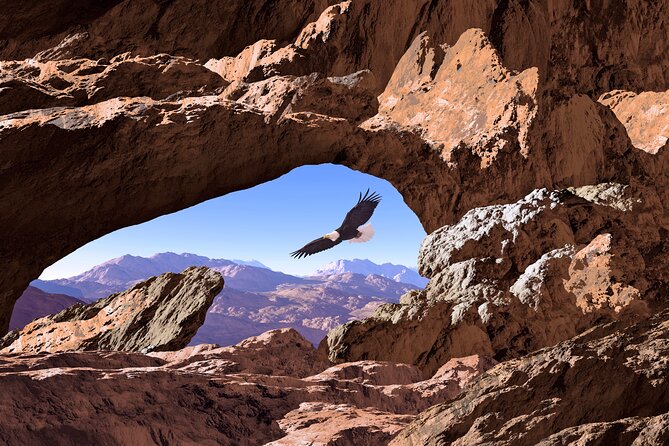
The Canyonlands visitor center is a sensible supply stop. Use the bathroom, fill water bottles, and restock before heading farther into the park. Infrastructure is limited, and dehydration in the desert is a serious concern.
One overlook offers views on three sides, with a direct drop toward the canyon. If heights bother you, take care near the edge. Another stop, Buck Canyon Overlook, is more comfortable for many people because its short trail is paved and a rail separates you from the canyon.
The route points out the cowboy and ranching names found throughout Canyonlands. It also explains the local naming of springs, including those connected with Ned Chaffin’s family. These small details give the place a human layer without taking attention away from the immense scenery.
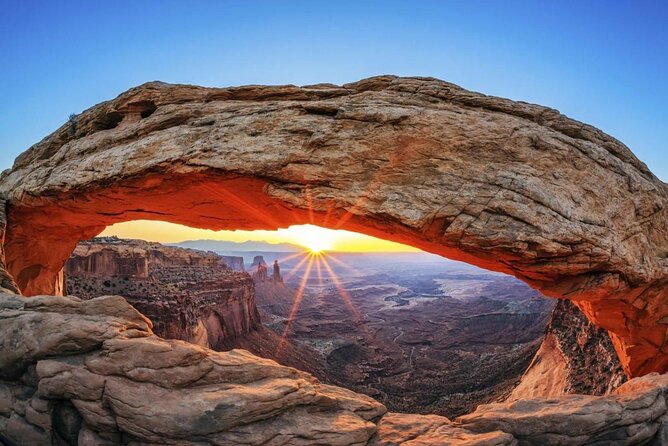
Mesa Arch is a must-do stop. The walk is short, and the trail passes juniper and pinyon trees before reaching the arch. You can use the audio while walking with headphones, then pause it when you want to concentrate on the view.
Green River Overlook shows the river cutting through the canyon system. The Green River runs about 730 miles and is Utah’s largest stream. The audio connects the river to the ongoing erosion beneath the layered rock.
The quieter stops reward patience
Some Canyonlands stops are less instantly famous but give you more time to look closely. One trail leads toward ancient granaries built by Native peoples. The remains are hundreds of years old, so keep your distance and avoid touching or climbing near them.
The narration also explains that many rock layers remain close to their original position. Those bands record deposits laid down hundreds of millions of years ago. Candlestick Tower makes the layers easy to picture, with pale, reddish-brown, and red sections that resemble a tiered cake topped with candles.
Murphy Point Overlook requires an easy trail of up to 3.5 miles roundtrip. The path itself may not offer constant scenery, but the view at the end reaches across Stillwater Canyon and toward the Green River. This is a good example of the app’s value: it helps you decide if a walk fits your interests before you spend the time.
There is also a picnic area with only eight tables. If you want to eat there, timing matters. Pack food and water, and do not assume every stop will offer services.
How well does the GPS audio work?
The strongest part of the experience is the combination of location tracking and narration. The app can tell you where you are even when the phone appears to have no cell service, provided the tour was downloaded correctly. Several users found the map accurate and appreciated hearing about upcoming turnoffs and trail lengths.
The system is not perfect. It may be based on older speed limits, so you can reach the next point before the narration expects you to. If you reverse direction, make an unscheduled turn, or return along the same road, a segment may replay or become confused.
You can usually manage this by pausing, repeating, or manually selecting the next story. Staying on the suggested route and following the park speed limit should give the best result. One useful habit is to glance at the map before pulling away from a stop, rather than relying on audio alone.
Audio quality has also varied. Most of the material is described as clear and interesting, but some people experienced odd-sounding or cut-off narration while offline. Technical support is available, but you should test the tour before leaving service.
Is $24.99 good value?
For one group of up to four people, yes, the price is attractive. A family or group can share one purchase instead of paying per person. At $24.99, you are paying for a flexible guide that can cover both parks and be used again.
The value is greatest if you want background information but do not need a live guide. You can spend ten minutes at Three Gossips or an hour at Devils Garden. You can skip a story, repeat it, or return another day without paying again.
The value is weaker if you dislike phone setup, expect perfect narration at every stop, or want someone to answer questions in real time. This is an app, not a ranger program or private guide. Park entrance fees, reservations, and attraction charges are separate.
The tour information advertises lifetime access with no expiry. Other details refer to access for a year, so I would confirm the current access period before purchase. Either way, the ability to use it across multiple days is more useful than a fixed three-hour recording.
Who should choose this tour?
I would recommend it most to independent drivers, families, couples, and anyone trying to see two parks without joining a group. It is also a practical choice when people in the same car want different hiking abilities, since some can walk while others continue listening from the vehicle.
It suits first-time visitors who want help identifying formations and choosing stops. It also works for repeat visitors who want a fresh layer of geology, stories, and local history.
I would be cautious if your phone is old, your operating system does not meet the recommendation, or you cannot download the files before entering the parks. The app is only as useful as the preparation behind it.
Should you book the Arches and Canyonlands audio bundle?
Book it if you want a low-cost guide that stays with your car, works offline, and lets you set the pace. The clearest strengths are the GPS-triggered narration, practical trail information, and one-price-per-car setup.
Skip it if you want a live person, guaranteed technical perfection, or a tightly managed schedule. Download the tours at home, test both routes, bring a park map, and treat the audio as a helpful companion rather than your only source of directions. With those limits in mind, this is a smart buy for a self-guided Moab day.
FAQ
How much does the Arches and Canyonlands audio bundle cost?
The price is $24.99 per group, covering up to four people in one car.
How long does the tour take?
The full experience is estimated at about seven to eight hours. Each park route is more than 28 miles and takes about two to three hours to drive without allowing much time for long hikes, meals, or extended stops.
Does the tour work without cell service?
Yes. You must download the app and tour files while you have strong Wi-Fi or cellular service. After that, the audio and offline maps are designed to work without a connection.
Is this a guided group tour?
No. It is a private, self-guided activity. No guide meets you at the starting point, and you explore in your own vehicle.
How does the audio start?
Open Action’s tour app at the park and go to the first story point. GPS triggers the audio as you reach each location, and later stories play as you continue along the route.
Are park entrance fees included?
No. Entrance tickets, attraction passes, and reservations are not included. You need to arrange admission to Arches and Canyonlands separately.
Can I pause or repeat the tour?
Yes. You can pause, skip sections, repeat stories, take breaks, and explore side trips at your own pace.
What devices are recommended?
An iPhone running iOS 15 or later, an Android device running version 9 or later, or an iPad or tablet with GPS and cellular connectivity is recommended. Audio can connect to your car through Bluetooth, USB, or AUX.
New audio tours around the USA
- Beaches, Bites and Bavaria in Leavenworth: A Self-Guided Audio Tour★ 3.5 · 3 reviews
- Welcome to Fabulous Las Vegas Sign Self-Guided Audio Tour★ 5.0 · 2 reviews
- Las Vegas Day Trips: 3-Day Self-Guided Audio Tour★ 5.0 · 2 reviews
- Hoover Dam and Lake Mead Self-Guided Audio Tour★ 5.0 · 3 reviews
- Driving Lake Tahoe: A Self-Guided Audio Tour From Tahoe City to Incline Village★ 5.0 · 10 reviews
- Las Vegas Neon and Secrets: Self-Guided Audio Tour★ 5.0 · 3 reviews
- Ultimate La Jolla Self-Guided Driving & Walking Audio Tour Bundle★ 3.5 · 9 reviews
- Baton Rouge Historic Downtown Self-Guided Audio Walking Tour★ 4.0 · 19 reviews
Moab Audio Tours, compared.

Browse the lists this tour appears in