

Review · POMPEII
Pompeii: Skip-the-Line Ticket with Audio Guide and Map
Pompeii gives you an entire Roman city to walk through, not just a single monument. Behind its walls you can enter frescoed homes, step into old shops and baths, and stand inside one of the best-preserved Roman amphitheaters. The casts of people caught in the eruption of Mount Vesuvius add a solemn human touch.
I like the freedom to choose your own route, and the one-day ticket gives you time to pause rather than race behind a group. The map and audio guide can also help explain odd places such as the thermopolia, ancient fast-food counters, and the city’s brothels.
The main concern is value. The ticket costs $44, while direct admission has been reported at roughly 18 to 22 euros, and the audio setup may not work equally well in every language. You must also exchange your voucher at Via Roma 32, which is not right at the main entrance.
Key points to know before you go
- The voucher exchange is off-site: Pick up the valid entrance ticket at Via Roma 32, beside Pasticceria De Vivo, about five minutes on foot from the amphitheater gate.
- Pompeii requires serious walking: Comfortable shoes, water, a hat, and sunscreen are not optional extras on a hot day.
- You set the pace: This is an independent visit, not a guided group tour with a person leading you from stop to stop.
- The map matters: Pompeii is large and easy to approach without a clear plan, so use the map before entering.
- Audio language details need checking: Eleven languages are advertised, but the supplied information indicates that some language options may provide a written guide and map rather than spoken audio.
- Small bags work best: Backpacks and large bags are not permitted inside the excavations, and flash photography is banned.
Pompeii begins with a city, not a single ruin
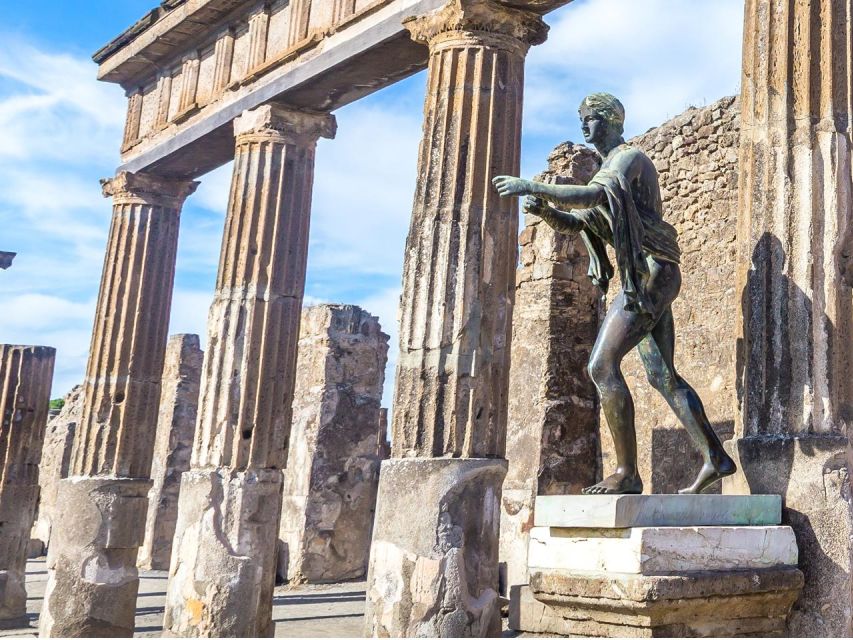
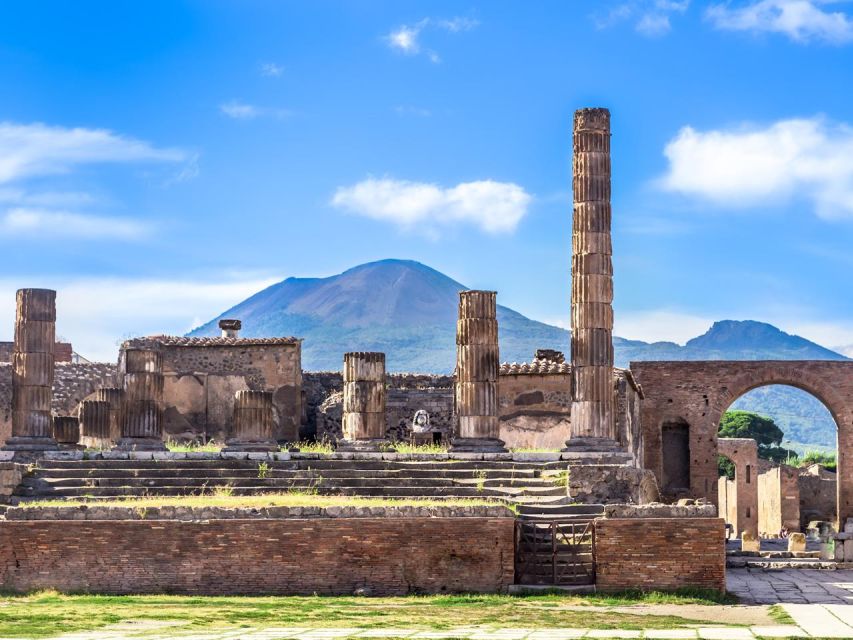
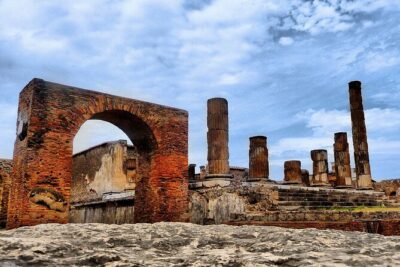
Pompeii is powerful because it feels like a place where daily life stopped in mid-sentence. You walk along ancient streets and find houses, shops, temples, public baths, theaters, food counters, and working spaces arranged as a real city.
The eruption of Mount Vesuvius buried Pompeii and preserved details that usually vanish from ancient sites. Wall paintings, household layouts, street plans, and shop counters help you picture how Romans lived, worked, worshiped, and entertained themselves.
That scale is also the challenge. You are not following a tidy museum route with every object labeled beside you. You are walking through an extensive archaeological area, and the next interesting building may be around a corner or down a street that looks much like the last one.
This ticket package tries to solve that problem with three tools: entry access, an audio guide, and an updated map. The idea is sound, but your experience will depend heavily on how clearly the map is marked and how well the audio device works.
More Skip-the-Line Audio Tours in Pompei Campania:
- Pompeii: Skip-the-line Entry Ticket with Audio Guide & Map
★ 3.9 · 3,153 reviews - Pompeii: Skip-the-Line Entry Ticket with Digital Guide App
★ 4.1 · 770 reviews - Pompeii: Skip-the-Line Entry & Audioguide
★ 3.8 · 225 reviews
Picking up your ticket near Via Roma 32
The meeting point is at Via Roma 32, next to Pasticceria De Vivo. You exchange your voucher there for the valid entrance ticket before heading to the ruins.
This location is about five minutes on foot from the amphitheater entrance, but it is not the same as walking directly from the railway station to the archaeological site. Plan a little extra time for the exchange, especially if you are arriving with a tight schedule.
The location can feel inconvenient because you still need to find the office before entering. It is worth saving the address on your phone and allowing enough time to walk from the station or town center. Do not assume that your digital voucher alone is the final admission ticket.
Once you have the entrance ticket, you walk toward the amphitheater gate. The package includes skip-the-line access, which is most useful when the ticket queue is long. It does not mean that you skip every security or entry check, so keep your ticket ready.
A self-guided route through ancient Pompeii
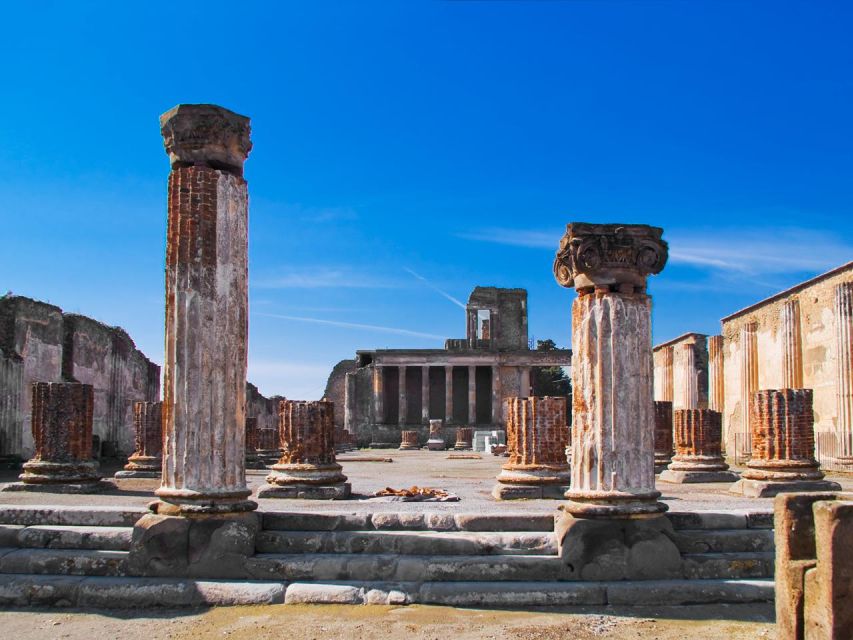
There is no personal guide leading this experience. You explore independently and decide how much time to spend in each building.
That freedom is valuable. You can stop for a closer look at a wall painting, linger inside a bath complex, or move quickly through a section that interests you less. Families and independent sightseers often prefer this rhythm to a fixed group schedule.
The drawback is that Pompeii can feel confusing without preparation. The printed map has been criticized as difficult to follow, and some sights may not be included clearly in the audio material. If you simply wander, you may miss important buildings or spend too much energy trying to work out where you are.
Before entering, look at the map and choose a few priorities. The exact open route can vary, so treat the map as a planning tool rather than a promise that every building will be available. A sensible approach is to mark the amphitheater, a theater, a bath complex, a major house, a temple, and one or two shops or thermopolia.
Frescoed houses and the Roman home

The domus, or private Roman houses, are among Pompeii’s most rewarding stops. Their rooms show how homes were organized around interior spaces, and their painted walls reveal the taste and status of the people who lived there.
You may see courtyards, reception rooms, small domestic spaces, and decorative frescoes. Even when a house is partly ruined, the surviving layout helps you understand how Roman homes worked as places for family life, business, display, and social visits.
The audio guide should give these rooms more meaning than a silent walk past old walls. Listen for explanations of how the spaces were used, then look closely at the transition from public-facing rooms to more private areas.
Do not rush through the houses simply because they can look similar from the street. A painted wall, mosaic detail, or unusual room plan can be the most memorable part of a visit. At the same time, not every house will be open, and the information system may not cover every building in equal detail.
More audio tours around Pompei Campania:
- Pompeii: Skip-the-Line Ticket with Audio Guide and Map
★ 4.0 · 117 reviews - From Pompeii: Vesuvius Entry with Transfer and Audioguide
★ 4.2 · 74 reviews - Pompeii & Herculaneum: Skip-the-line & Digital Guide App
★ 4.0 · 35 reviews - Herculaneum and Pompeii in one day: Audioguides + Tkts (art)
★ 3.7 · 22 reviews
Baths, temples, and public life
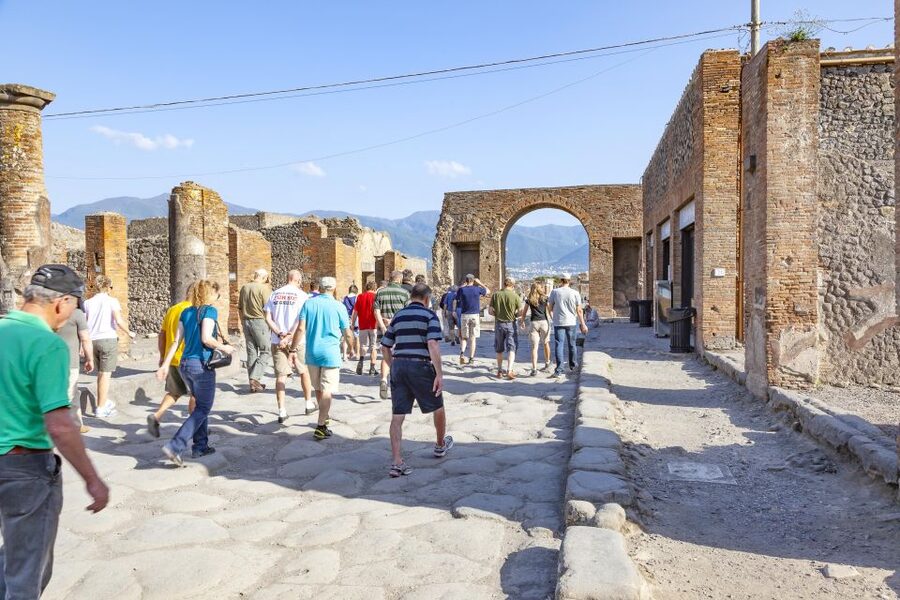
Pompeii’s spas reveal how much Roman public life centered on bathing. These were not simply places to wash. They were social settings with carefully arranged rooms and systems built around heat, water, and changing temperatures.
Temples show another side of the city. They help you see how religion was woven into ordinary urban life, alongside commerce and government. The remains may be fragmentary, but their position and design give the streets a larger civic shape.
The audio guide is most useful here when it explains function rather than just naming a structure. Without that context, a temple can look like a collection of columns, and a bath can look like a series of bare rooms. Use the commentary to connect the physical remains with the people who once used them.
Shops, thermopolia, and brothels
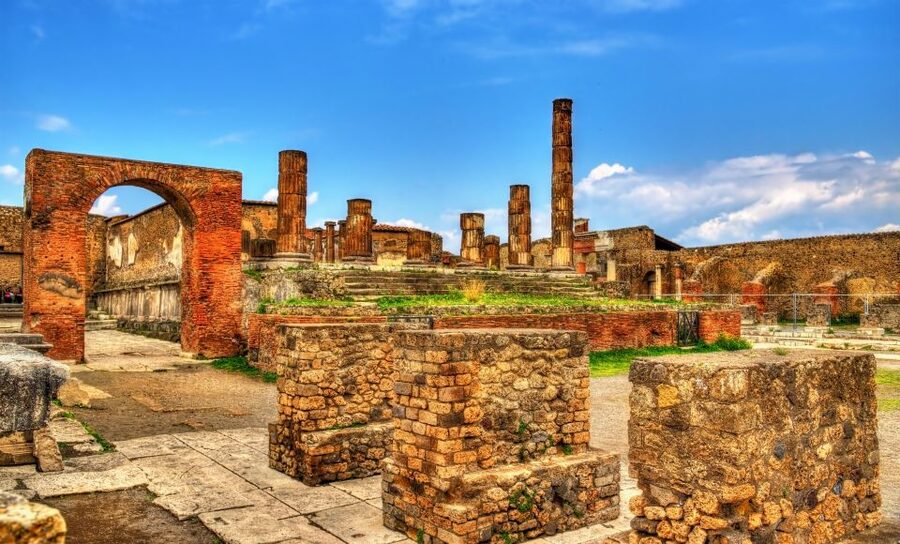
Pompeii is especially engaging when it moves away from grand monuments and shows ordinary business. Small shops line the streets, while thermopolia served hot food and drink from large clay containers set into counters.
These ancient food counters are a fine reminder that Roman city life included quick meals, trade, and street commerce. The word thermopolium is sometimes translated as a place selling hot drinks or food, so the modern comparison to fast food is useful, though the setting was distinctly Roman.
The brothels are another part of Pompeii’s public record. They are often discussed because of their preserved wall paintings and compact room arrangements. The subject may feel direct by modern standards, but it also shows that archaeology is not only about temples and wealthy houses. It records the less polished parts of city life too.
A short audio explanation can help you understand these places without reducing them to curiosities. Take time to look at the building layout and street position, since the surroundings explain how commercial life fitted into the city.
The theaters and Roman amphitheater
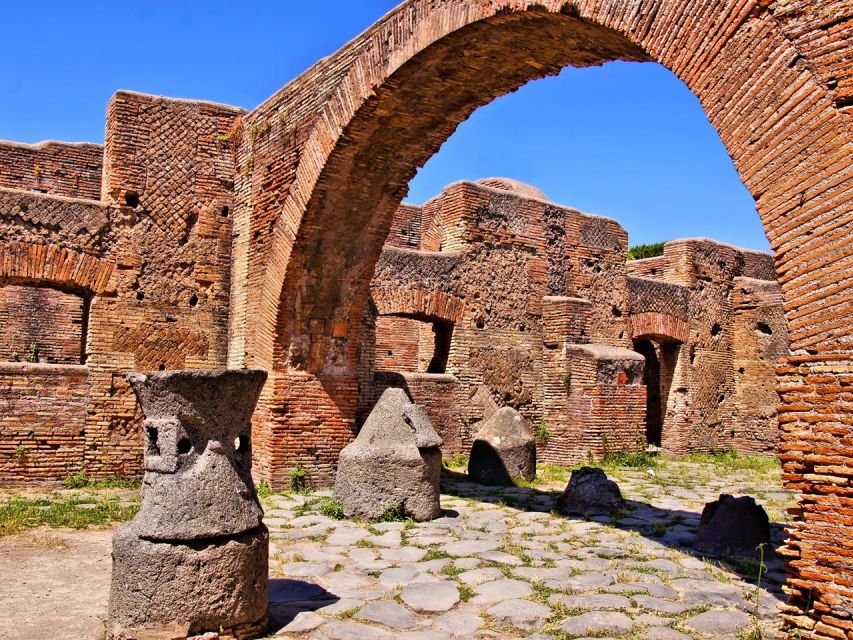
Pompeii had spaces for both theater and spectacle. The theaters show how performance formed part of public life, while the amphitheater demonstrates the scale of Roman entertainment.
The amphitheater is one of the strongest stops in the visit. Its preserved seating bowl and overall form make the size of the crowd easy to imagine. Because it is near the entrance used for this experience, it can work well as an early orientation point or a final major stop.
Theaters reward a slower look. Notice the relationship between the seating, stage area, and surrounding structures. Even in ruin, the design makes clear that these were purpose-built public buildings, not casual gathering places.
Crowds and open-air conditions can affect how long you want to stay. Pompeii offers little relief from the sun in many areas, so water and sun protection matter more here than they might at an indoor museum.
The casts of the eruption victims
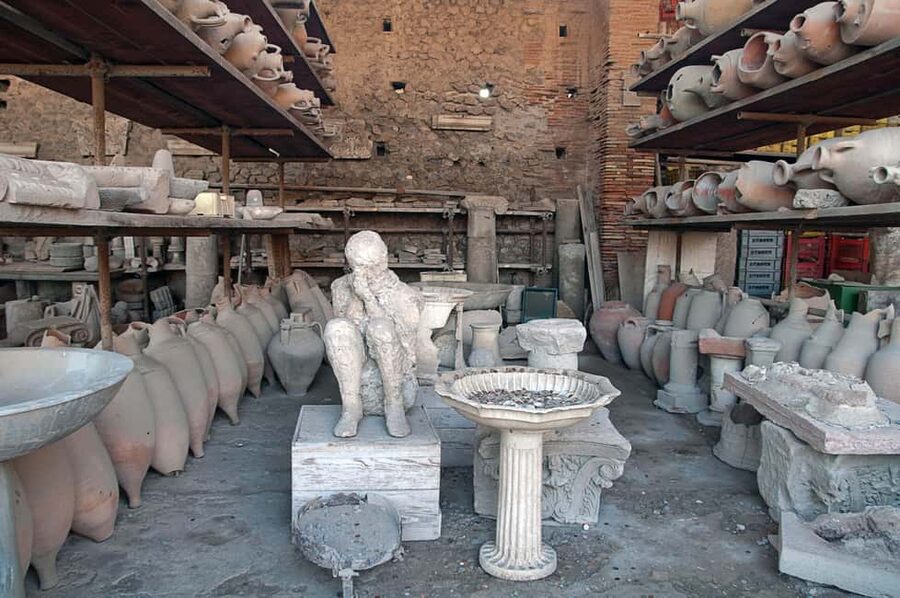
The casts are among Pompeii’s most emotional sights. They preserve the shapes of people caught in the eruption, turning a distant historical disaster into something immediate and human.
Approach this section respectfully. The figures are not just archaeological objects. They represent individuals who were trapped during the eruption of Vesuvius, and the sight can be difficult for some people, particularly younger children.
The audio guide may provide background on how the casts were created and what they tell us, but the exact level of explanation depends on the available language and device. Take a moment to absorb the scene rather than treating it as another quick photo stop.
Photography is permitted without flash, but flash photography is not allowed. More important, no image captures the full weight of seeing the casts in person.
How useful is the audio guide?
The audio guide is offered in English, French, Italian, German, Spanish, Russian, Polish, Hebrew, Chinese, Dutch, and Portuguese. That is a wide language range on paper.
There is an important catch. The supplied information indicates that the spoken audiobook may be available only in English, while other languages may provide a written book with a map. Confirm the exact format for your chosen language before paying, since the difference changes the value of the package.
The device itself has been described as working like a phone with an attached listening system. If the equipment performs poorly, the experience can become awkward, especially in a noisy outdoor setting. The commentary has also been criticized as less interesting than expected and incomplete for some monuments.
I would treat the audio guide as helpful support, not as a full substitute for planning. Read the map first, identify your priority stops, and keep your own phone available for orientation. If you need detailed interpretation of Roman art, architecture, and daily life, a live guide or a stronger independent guidebook may suit you better.
Is $44 a fair price?
At $44 per person, this package asks you to pay for convenience as well as admission. The skip-the-line feature, ticket exchange, map, and audio guide can be worthwhile when the entrance queue is long or when you want a ready-made way to approach a huge site.
The comparison with direct admission matters. Admission purchased at the park has been reported at about 18 to 22 euros, so the package can cost close to twice the basic ticket price. If the gate is quiet and you are comfortable planning your own route, buying directly may be better value.
The package makes more sense when you place a high value on avoiding a ticket line and having some guidance immediately available. It makes less sense if your chosen language receives only written material, if you already have a good guidebook, or if you expect a polished narrated tour.
The free cancellation option up to 24 hours before the visit and the reserve-now, pay-later arrangement add flexibility. They do not, however, solve the central value question: you are paying a marked-up price for convenience, not for a private archaeologist or a fully guided experience.
Practical preparation for a full day
Wear shoes with firm soles. Pompeii involves a great deal of walking on ancient streets and uneven ground, and light footwear can become uncomfortable well before you have seen the main sights.
Bring water, a hat, sunscreen, and a camera. The open-air setting can expose you to strong sun, and there are many details worth photographing, from painted walls to street counters and stonework.
Backpacks and large bags are not allowed inside the excavations. Pack light and use a small bag that meets the site’s rules. Flash photography is prohibited, so switch your camera or phone to a non-flash setting before entering.
The experience is not suitable for wheelchair users or people with mobility impairments. The scale, surfaces, and amount of walking make this a demanding visit even for people without mobility concerns.
Who should book this Pompeii experience?
I would recommend it to an independent visitor who wants to explore alone, prefers to set the pace, and values skip-the-line access enough to pay extra for it. It can also suit someone who wants a basic structure without committing to a fixed group tour.
You should think twice if your budget is tight or if you expect the audio guide to provide detailed, polished commentary in every listed language. The direct-entry price can be much lower, and the map and audio material may not cover the site as fully as you hope.
If you book, go in with a plan. Use the amphitheater, theaters, baths, domus, thermopolia, temples, shops, brothels, and victim casts as your main anchors. That approach will help you turn a sprawling archaeological area into a clear story about a Roman city interrupted by Vesuvius.
FAQ
How long is the Pompeii ticket valid?
The ticket is valid for one day. You can explore the excavations at your own pace during that visit.
Where do I exchange the voucher?
You exchange the voucher at Via Roma 32 in Pompeii, beside Pasticceria De Vivo. The location is about five minutes on foot from the amphitheater gate.
Is transportation included?
No. Hotel pickup and drop-off are not included, and you must make your own way to the meeting point and the archaeological site.
What languages are available for the audio guide?
The listed languages are English, French, Italian, German, Spanish, Russian, Polish, Hebrew, Chinese, Dutch, and Portuguese. Confirm the exact format before booking, because the supplied information indicates that some languages may offer written material and a map rather than spoken audio.
Can I bring a backpack into Pompeii?
No. Backpacks and large bags are not allowed inside the excavations. Bring only a small amount of gear that follows the site rules.
Is the site suitable for wheelchair users?
No. The experience is not suitable for wheelchair users or people with mobility impairments. There is also a great deal of walking on the site, so comfortable shoes are essential.
New audio tours around Pompei Campania
- Pompeii Tour_Skip the line ticket + audioguide★ 4.7 · 17 reviews
- Pompeii: Pre-reserved ticket with audio guide★ 3.2 · 15 reviews
- Pompeii, skip-the-line ticket with smartphone audio guide on App★ 3.0 · 4 reviews
- Pompeii: Skip-the-Line Ticket with Audio Guide and Map★ 4.0 · 117 reviews
- Pompeii: Skip-the-Line Ticket with Audio Guide and Map★ 4.0 · 14 reviews
- Pompeii: Skip the Line Ticket + Audioguide★ 3.3 · 13 reviews
- Pompeii Skip-the-Line Ticket and Audioguide★ 4.2 · 7 reviews
- Pompeii: Skip The Line Entrance Tickets + Audioguides★ 3.2 · 4 reviews
Pompeii Audio Tours, compared.

Pompeii: Skip-the-line Entry Ticket with Audio Guide & Map
Read our review →
Pompeii: Skip-the-Line Entry Ticket with Digital Guide App
Read our review →
Pompeii: Skip the line ticket (art) + audioguide + map
Read our review →
From Pompeii: Vesuvius Entry with Transfer and Audioguide
Read our review →
Pompeii & Herculaneum: Skip-the-line & Digital Guide App
Read our review →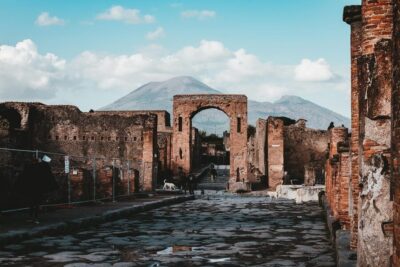
Herculaneum and Pompeii in one day: Audioguides + Tkts (art)
Read our review →
Browse the lists this tour appears in