
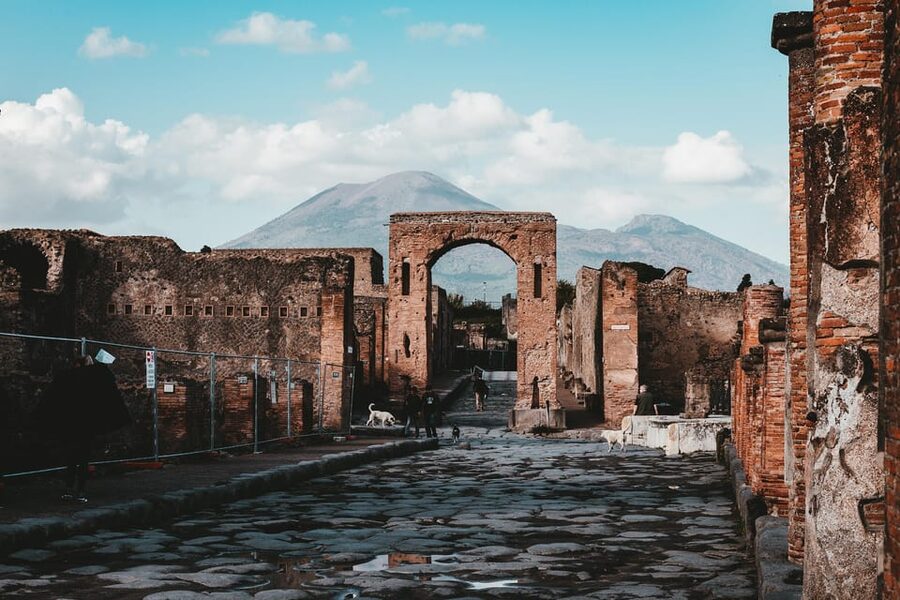
Review · POMPEII
Herculaneum and Pompeii in one day: Audioguides + Tkts (art)
Pompeii and Herculaneum tell the same volcanic story in very different ways. Pompeii gives you broad streets, forums, villas, and a full city plan, while Herculaneum brings you close to remarkably preserved houses, mosaics, frescoes, and even wooden features. This self-guided package lets you see both in one day without joining a fixed group.
I like the freedom to begin at either site, and I like having an authorized audioguide rather than relying on random online information. The main caution is time: six hours is a brisk schedule once you include the train ride and two device pickups. Also, the Pompeii ticket exchange can take longer than expected, so arrive prepared and do not treat the separate entrance as a guarantee of instant admission.
Key points to know before booking
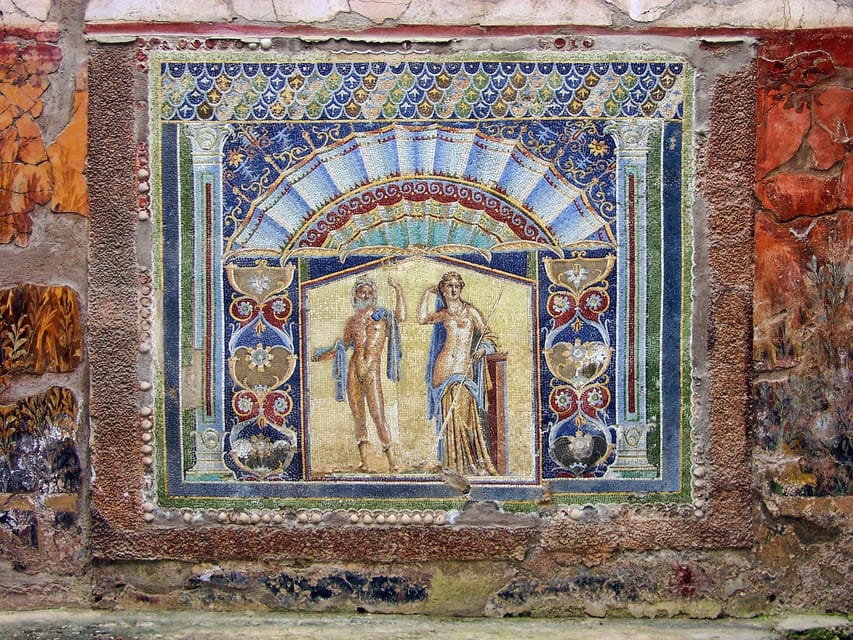
- Two ancient cities in one day: Compare Pompeii’s wide urban remains with Herculaneum’s smaller but more intimate houses.
- Start where you prefer: Pick Pompeii or Herculaneum first, depending on your transport plans and opening hours.
- Audioguides are official devices: Use the numbered explanations in English, Italian, French, Spanish, or German.
- Pompeii requires a voucher exchange: Collect your device and tickets at Tempio Travel near the Pompei Scavi station before walking to Porta Marina Inferiore.
- The train is not included: Circumvesuviana connects the sites, usually with a change at Torre Annunziata.
- Bring your own headphones and ID: Headphones are not supplied, and an identity document is held as a deposit for each device.
What this Pompeii and Herculaneum day actually involves
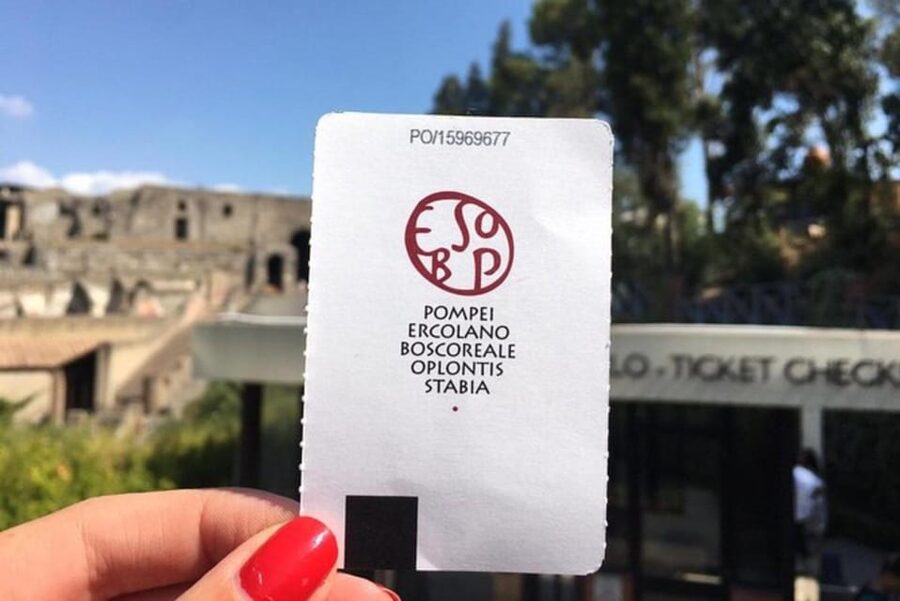
This is not a guided walking tour with a person leading you from house to house. It is a ticket and audioguide package designed for independent sightseeing. You get entrance to both archaeological parks, a site map, access assistance at the Pompeii office, and devices with recorded explanations.
The advertised duration is six hours. That is enough for a useful look at both parks, but it is not enough to inspect every street and building at a relaxed pace. Pompeii alone is large, and Herculaneum rewards slow attention to its wall paintings and domestic details. I would treat six hours as a focused highlights visit rather than a complete archaeological study.
Your choice of starting point matters. If you begin at Herculaneum, you collect the audioguide at the desk inside the park entrance. If you begin at Pompeii, you first visit the Tempio Travel office on the first floor of the Circumvesuviana station at Via Villa dei Misteri 1. After that, you walk several hundred metres to the dedicated entrance at Porta Marina Inferiore in Piazza Esedra.
That difference is easy to miss when planning. Herculaneum has a fairly direct collection point. Pompeii requires an extra stop before you enter the ruins, so allow time for the exchange, directions, and walk.
More one-day trips around Pompei Campania
- From Athens: Small-Group Delphi, Museum & Arachova Day Trip
★ 4.8 · 2,476 reviews - From Paris: Giverny Day Trip with Audio Guide or Live Guide
★ 4.3 · 2,372 reviews - Athens: Peloponnese Highlights Day Trip and V.R. Audio Guide
★ 4.5 · 1,425 reviews
Herculaneum: smaller scale, sharper details
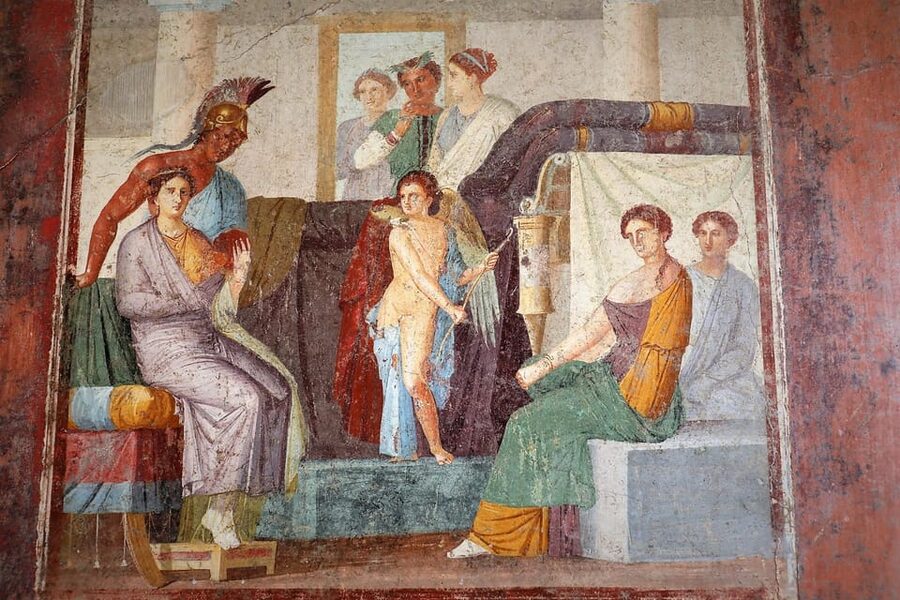
Herculaneum is often the more concentrated experience. Volcanic material covered the town, protecting an unusual amount of domestic architecture. You can expect to see houses, mosaics, frescoes, and wooden structures that give the site a close-up quality.
The audioguide is useful here because the remains can look like a maze of walls until you understand what each space did. The explanations help connect rooms and architectural features to daily Roman life. Still, the recordings use some technical terms, including architectural words that may not be familiar to everyone. I would keep the map in hand and pause the audio whenever you need to orient yourself.
Collect the device directly at the Herculaneum audioguide desk. You will need your booking confirmation and an identity document as a deposit. Standard jack headphones can be used, but you must bring them yourself. The devices also work hands-free, which is convenient when you want both hands free for the uneven paths and narrow routes through the site.
Herculaneum is a good first stop if you want to begin with a compact archaeological park before tackling Pompeii. It can also work well as your second stop if you prefer to finish with a more intimate look at Roman homes. The best order depends on opening hours, train timing, and how much energy you have left.
Pompeii: the bigger picture and the trickier arrival
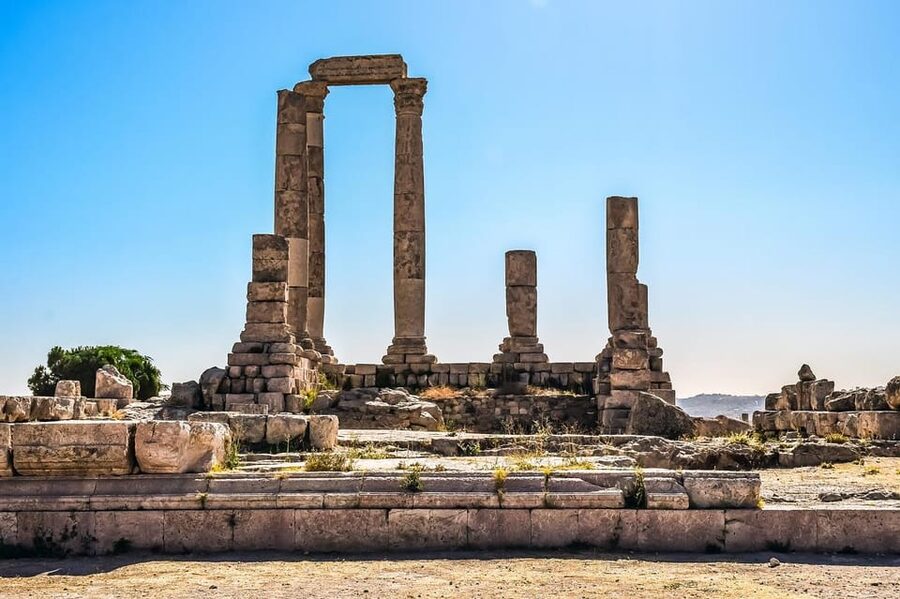
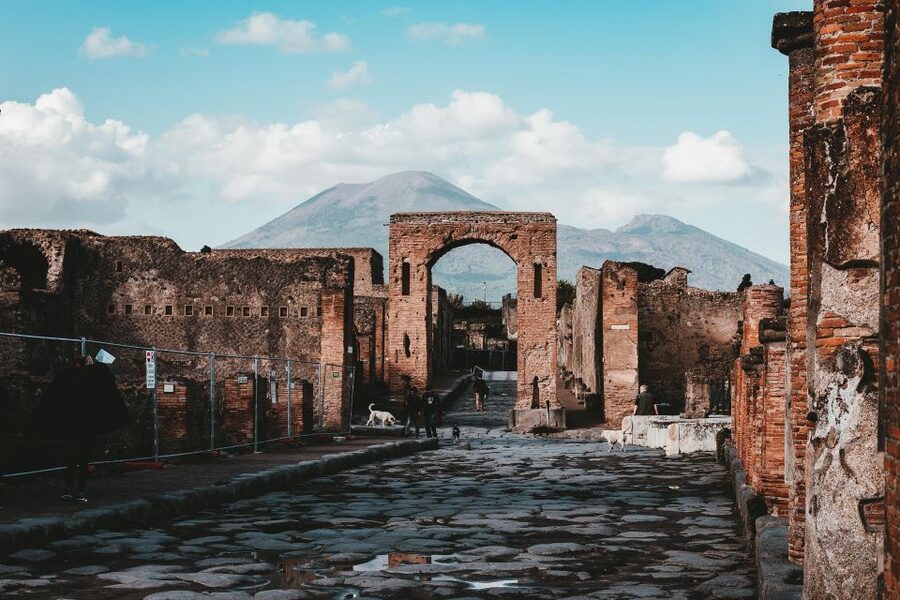
Pompeii gives you the wider civic picture. Its streets, villas, forums, and public spaces help you understand how a Roman town functioned as a whole. You can spend hours simply following the street plan and comparing private houses with public buildings.
The audioguide adds useful context, especially when a wall or courtyard looks bare at first glance. The device uses numbered points, so you follow the map and select the matching explanation. This format gives you control, but it also means you must manage your own route. If you walk past a numbered point, the experience will not automatically bring it to your attention.
The practical complication comes before you enter. At Pompeii, the voucher must be exchanged at the Tempio Travel office in the EAV station at Via Villa dei Misteri 1. You then use the dedicated line at Porta Marina Inferiore, located in Piazza Esedra. The separate access is helpful, but it should not be confused with walking straight from the train platform into the ruins.
One visitor lost time locating the Pompeii audioguide collection point, even though the Herculaneum instructions were easier to follow. My advice is simple: save the exact office address before you arrive, and do not head directly into the park assuming the device will be waiting at the main gate. The Pompeii site is large, and backtracking costs valuable visiting time.
There has also been an issue with some ticket exchanges taking about half an hour. That does not mean every visit will be slow, but it does mean you should build a buffer into your plan. If your train connection is tight, a delay at the office can make the day feel rushed.
How the audioguides work in practice
The devices are described as the authorized audioguides for the archaeological parks. You use the numbers on the device to access explanations tied to specific points in the ruins. Available languages are English, Italian, French, Spanish, and German.
I like this setup for people who want independence but still want more than a printed map. You can stop when something interests you, skip material that feels less important, and set your own pace. It is also a better choice than trying to read long descriptions on a phone while walking over ancient paving.
There are limits. The audio does not replace a live guide who can answer questions or adjust explanations to your interests. Some descriptions use technical architectural terms without explaining them fully. References to gates, barriers, or other site markers may also become confusing if conservation work changes the route or the feature is no longer in place.
Bring personal headphones if you prefer a private listening experience. Only standard jack headphones are specified, and they are not included. Before leaving either site, return the device before the office closes. The user is responsible for damage, loss, or theft, so keep it secure during the day.
More audio tours around Pompei Campania:
- Pompeii: Skip-the-line Entry Ticket with Audio Guide & Map
★ 3.9 · 3,153 reviews - Pompeii: Skip-the-Line Entry Ticket with Digital Guide App
★ 4.1 · 770 reviews - Pompeii: Skip-the-Line Entry & Audioguide
★ 3.8 · 225 reviews - Pompeii: Skip-the-Line Ticket with Audio Guide and Map
★ 4.0 · 117 reviews
Moving between the ruins by Circumvesuviana
Transportation between the parks is not included in the $88 price. The recommended connection is the local Circumvesuviana train between Pompei Scavi Villa dei Misteri and Ercolano Scavi, usually with a change at Torre Annunziata.
This is the main reason the six-hour schedule feels tight. You have two archaeological parks, two collection or return procedures, and a train journey. The package gives you the entry arrangements, but you must handle the transport yourself and buy the train tickets separately.
You can start at either site, which is a real advantage. That flexibility lets you fit the day around your arrival route and opening hours. It also gives you a way to avoid unnecessary backtracking. Check the site schedules on your date, then decide which park makes the better first stop.
Do not expect a private transfer. One can be requested separately, but it is not part of this experience. If you want a calm, door-to-door day, a private transfer or a traditional guided tour may suit you better. If you are comfortable with local trains and a little route planning, the Circumvesuviana option keeps the cost lower.
Opening hours and the best way to use six hours
Both parks generally open at 9:00. From October 15 to March 15, closing is listed as 17:00, with last entry at 15:30. During the longer season, Pompeii is listed until 19:00 with last entry at 17:30, while Herculaneum runs until 19:00 from March 16 to October 14.
The seasonal dates are not perfectly identical between the two parks, so check the schedule for your exact date. The important point is to protect your final entry time. Arriving late in the day can leave you with a ticket but not enough time to make the most of it.
I would plan the day around one substantial visit and one shorter, focused visit. Pompeii usually needs more route planning because of its size. Herculaneum can be covered more directly, though its preserved rooms reward careful looking. Use the map to choose priorities rather than trying to see everything.
Comfortable shoes and light, practical clothing matter. The parks require walking, and the day includes movement between a station, an office, an entrance, and a train. Food and drinks are not included, so plan for your own supplies around the site rules and your route.
Is $88 a fair price?
At $88 per person, this is not the cheapest way to enter the ruins. The value comes from combining two admission tickets, audioguides, a map, and assistance at the Pompeii office in one booking. If you were going to buy both tickets and arrange separate audio material anyway, the package may be reasonable.
The price is less attractive if you expect a fully guided experience or private transport. You still pay for the Circumvesuviana journey, provide your own headphones, and spend time handling the voucher exchange. The advertised skip-the-line benefit is also more useful at the actual park entrance than at the preliminary ticket collection point.
For me, the best value is the flexibility. You are not tied to a guide’s route, and you can choose the order of the sites. That suits independent visitors who already know how to pace themselves. If you want someone to explain the ruins in person, the self-guided format may feel thin. One person who upgraded to a guided Pompeii visit found that the live guide added real value after seeing Herculaneum independently.
Who should book this experience?
I would consider this package for an independent adult who wants both archaeological parks, speaks one of the five audio languages, and is comfortable using public transport. It also suits someone who prefers to pause, skip, and revisit explanations instead of following a group.
It is less suitable if you want a slow, deeply detailed visit to both sites. Six hours leaves little room for wrong turns, long ticket queues, or a delayed train. It is also not the best fit for anyone who wants a personal guide throughout the day.
The accessibility information needs clarification. The activity details describe the experience as wheelchair accessible, but the restrictions also say it is not suitable for wheelchair users. Because the archaeological surfaces, routes, and transport arrangements may affect access, contact the provider before booking if this is important for you.
The experience is also listed as unsuitable for people over 95 and for people with hearing impairments. The audio format depends on hearing the recorded explanations, and no sign-language option is provided.
Should you book Pompeii and Herculaneum in one day?
Book it if you want two major sites, flexible start times, and independent audio commentary in one package. The official devices and the choice of starting point are the strongest features. Herculaneum’s preserved houses and Pompeii’s broad city plan make a worthwhile pairing.
Skip it if you want a relaxed day, private transport, or a guide who can explain unfamiliar architecture on the spot. If you do book, save the Pompeii office address, bring ID and headphones, allow extra time for the voucher exchange, and accept that six hours means a highlights visit. With that plan, the package can give you a focused look at two of Campania’s most important ancient sites without locking you into a group schedule.
FAQ
Can I visit Pompeii and Herculaneum on the same day?
Yes. The package includes entrance tickets and audioguide devices for both archaeological parks, with a listed duration of six hours.
Can I choose which site to visit first?
Yes. You can begin at Pompeii or Herculaneum, depending on your schedule and transport plans.
Is transportation between Pompeii and Herculaneum included?
No. You arrange and pay for transportation separately. The recommended option is the Circumvesuviana train, usually with a change at Torre Annunziata.
Where do I collect the audioguide at Herculaneum?
Go to the entrance of the Archaeological Park of Herculaneum and look for the Audioguide Desk. Staff will have your reservation.
Where do I collect the Pompeii ticket and audioguide?
First visit the Tempio Travel office on the first floor of the EAV Circumvesuviana station at Via Villa dei Misteri 1. You then walk several hundred metres to the dedicated entrance at Porta Marina Inferiore in Piazza Esedra.
What languages are available on the audioguides?
The devices are available in English, Italian, French, Spanish, and German.
Do I need to bring headphones?
Headphones are not included. The devices can be used hands-free or with standard jack headphones, so bring your own if you prefer to listen privately.
Do I need identification?
Yes. A valid passport or ID card is required as a deposit for the audioguide devices.
What happens if I lose or damage an audioguide?
You are responsible for loss, theft, or damage and may have to pay repair or replacement costs.
Can I cancel the booking?
You can cancel up to 24 hours in advance for a full refund. The package also offers a reserve now and pay later option.
New audio tours around Pompei Campania
- Pompeii Tour_Skip the line ticket + audioguide★ 4.7 · 17 reviews
- Pompeii: Pre-reserved ticket with audio guide★ 3.2 · 15 reviews
- Pompeii: Skip-the-Line Ticket with Audio Guide and Map★ 3.9 · 5 reviews
- Pompeii, skip-the-line ticket with smartphone audio guide on App★ 3.0 · 4 reviews
- Pompeii: Skip-the-Line Ticket with Audio Guide and Map★ 4.0 · 117 reviews
- Pompeii: Skip-the-Line Ticket with Audio Guide and Map★ 4.0 · 14 reviews
- Pompeii: Skip the Line Ticket + Audioguide★ 3.3 · 13 reviews
- Pompeii Skip-the-Line Ticket and Audioguide★ 4.2 · 7 reviews
Pompeii Audio Tours, compared.

Pompeii: Skip-the-line Entry Ticket with Audio Guide & Map
Read our review →
Pompeii: Skip-the-Line Entry Ticket with Digital Guide App
Read our review →

Pompeii: Skip the line ticket (art) + audioguide + map
Read our review →
From Pompeii: Vesuvius Entry with Transfer and Audioguide
Read our review →
Pompeii & Herculaneum: Skip-the-line & Digital Guide App
Read our review →

Browse the lists this tour appears in