
Review · POMPEII
Pompei: Audio guide of the archeological site
Pompeii makes more sense when you hear the human stories behind its streets, villas, bathhouses, temples, markets, and household frescoes. This 50-minute audio guide gives you a compact narrative to use while walking through the archaeological site, rather than leaving you to read every sign on your own.
I like the low $5 price and the freedom to listen at your own speed. I also like that the audio file comes with a map and can be used offline for two days, which is handy when you want to pause, backtrack, or revisit the material later. The main caution is that the entrance ticket and earphones are not included, and one low rating described the directions as misguided, so you should study the map before setting off.
Key points at a glance
- A 50-minute route through Pompeii: Focus on daily life, architecture, public buildings, and the city’s final days.
- Map included: Use it to follow the path, though you may need to pay close attention to navigation.
- English and Italian audio: The guide is available in both languages, with an Italian or English host or greeter listed.
- Offline access for two days: Download the digital file so you are not dependent on a live connection inside the ruins.
- Very low-cost add-on: At $5 per person, it costs little beside the site admission, but you must buy entry separately.
- Bring your own earphones: Nothing is supplied for listening, so check your phone and headphones before arrival.
A short audio route through a very large ancient city
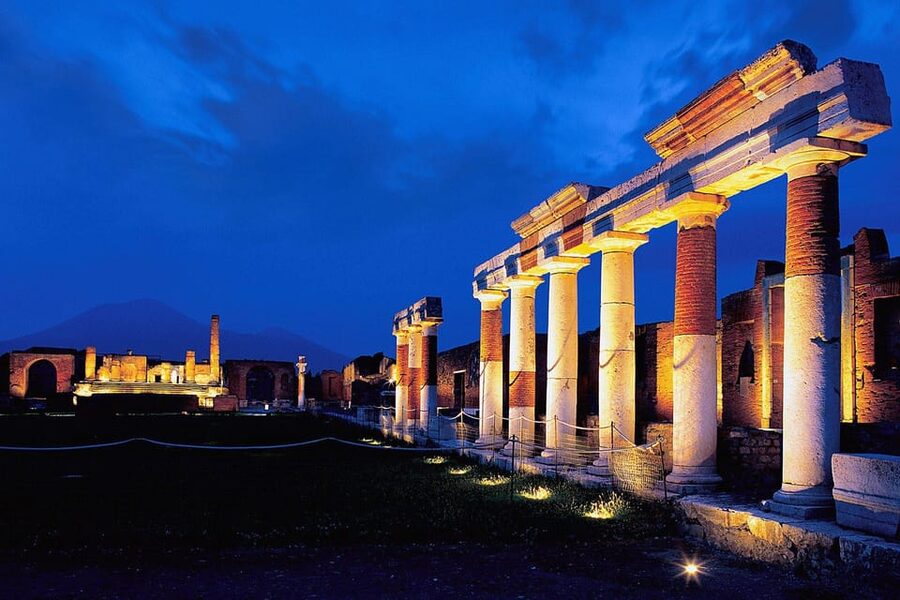
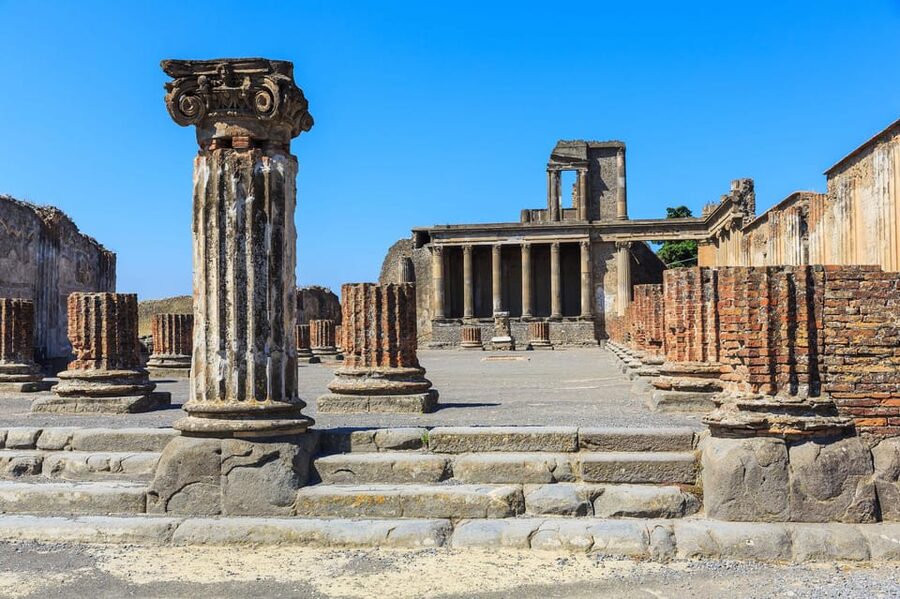
Pompeii is not a single monument that you see, photograph, and leave. It is a spread-out archaeological site, with roads, homes, public buildings, religious spaces, and commercial areas revealed one block at a time. The challenge is deciding what deserves your attention.
This audio guide gives you a 50-minute framework. Its focus is not simply on dates and names. It aims to explain how people used the city, how its buildings fit into Roman life, and what the volcanic disaster meant for the residents who lived there.
That format suits you if you want structure without joining a fixed walking group. You can move at your own pace, stop the audio when a fresco catches your eye, and continue when you are ready. You are not tied to a live guide’s timing or to a group waiting at the next corner.
The guide is described as covering markets, villas, temples, bathhouses, and household frescoes. Those subjects give you a useful mix of public and private Pompeii. You get a sense of civic life, religion, bathing, trade, domestic space, and the details that made an ancient home feel lived in.
There is no individual narrator’s name provided, so do not book this expecting a personal tour led by a named archaeologist. The experience is a digital audio file, supported by a map, photo, and documentation.
More audio tours around Pompei Campania:
- Pompeii: Skip-the-line Entry Ticket with Audio Guide & Map
★ 3.9 · 3,153 reviews - Pompeii: Skip-the-Line Entry Ticket with Digital Guide App
★ 4.1 · 770 reviews - Pompeii: Skip-the-Line Entry & Audioguide
★ 3.8 · 225 reviews
Following Pompeii’s streets with the included map
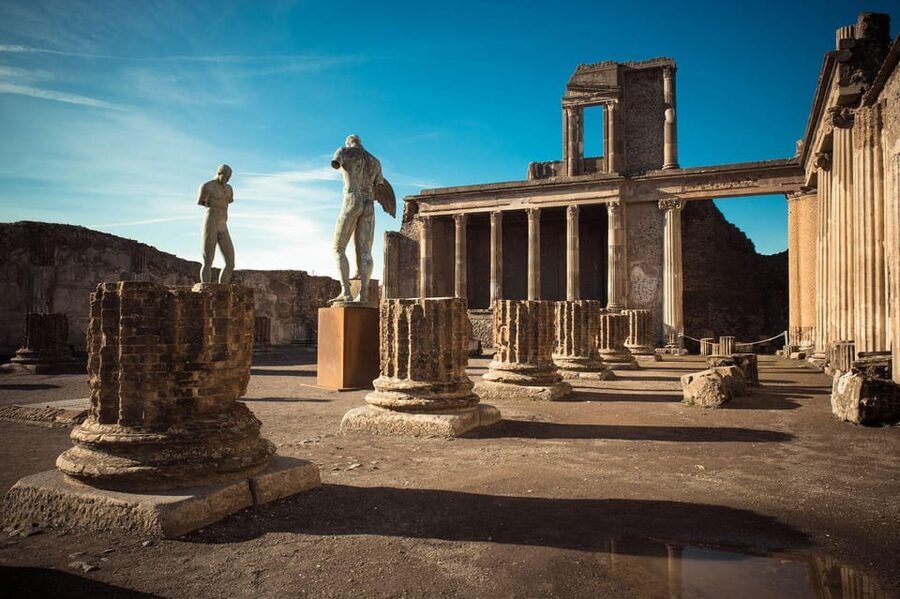
The map is one of the most useful parts of the package. Pompeii can be confusing, and a good route helps you connect separate buildings into one story rather than wandering from ruin to ruin with no context.
The map is also the area where you should set realistic expectations. A positive five-star comment specifically appreciated having a map to follow the path. At the same time, one one-star rating called the experience misguided. That suggests the map may not be perfectly intuitive for everyone.
My advice is simple: open the map before entering the archaeological site. Look at the route, identify the first point, and keep the file and map easy to reach on your phone. If you wait until you are already among the ruins, you may lose time figuring out where the audio wants you to go.
The guide’s 50-minute length is useful here. It gives you a manageable core route, but it does not mean you will see all of Pompeii in 50 minutes. The site is too broad for that. Think of the audio as a selected introduction, not a complete replacement for exploring the rest of the ruins.
If the audio points you toward a building that is temporarily closed or difficult to reach, use the map as a general guide rather than treating it as a rigid set of instructions. The information provided does not promise live updates, on-site staff assistance, or a route adjusted for closures.
Markets, villas, and ordinary Roman life
The most appealing part of the guide is its attention to daily life. Pompeii is famous for its destruction, but the city is more interesting when you picture it as a functioning place before the eruption.
The market areas can help you think about food, trade, and the movement of people through the city. A market is not just a row of ancient stones. It points to the practical business of feeding households and supplying a Roman town.
Villas offer a different view. Their rooms, decoration, and layout can tell you about wealth, privacy, social status, and how a household presented itself. The audio guide’s attention to villas should help you notice details that might otherwise blend into the walls and columns.
Household frescoes make the same point on a smaller scale. They bring the experience indoors, away from the grand public buildings. You might find that these intimate details are more memorable than a large ruin because they suggest how people shaped their personal surroundings.
The description does not give a named list of individual houses or market buildings, so I would not expect a building-by-building catalogue. Instead, you get a thematic walk through selected parts of the city, with the audio explaining what to look for and why it matters.
Temples and bathhouses, the public side of Pompeii

Temples and bathhouses show how much of Roman life took place outside the home. These were places connected to religion, public custom, hygiene, social contact, and civic identity.
A temple can seem quiet and bare today. With narration, you can place it within the city’s religious life and consider how public worship shaped the community. The audio guide is designed to add that missing layer of explanation.
Bathhouses are equally useful for understanding daily routines. Their remains can look like a collection of rooms unless you know how to read the arrangement. The guide’s discussion of grand bathhouses should help you connect architecture with practical use and social life.
You should not expect the file to turn every building into a long lecture. Fifty minutes requires selection. That is a strength if you want a clear first visit, but a limitation if you already know Pompeii well or want specialist detail about every structure.
For a first-time visit, I would listen closely at the main public buildings, then pause the audio when you want to study the architecture. The file is meant to support your walk, not force you to keep moving.
Same sights, a different narrator:
- Pompeii: Skip-the-Line Ticket with Audio Guide and Map
★ 4.0 · 117 reviews - From Pompeii: Vesuvius Entry with Transfer and Audioguide
★ 4.2 · 74 reviews - Pompeii & Herculaneum: Skip-the-line & Digital Guide App
★ 4.0 · 35 reviews - Herculaneum and Pompeii in one day: Audioguides + Tkts (art)
★ 3.7 · 22 reviews
Frescoes, homes, and the human scale
Pompeii’s household decoration can make the ruins feel less abstract. A wall painting or room layout gives you something specific to notice, and the guide promises attention to intimate household frescoes.
This is where the audio format can do good work. Written signs often tell you what a room is called, but narration can explain how the room fit into domestic life. You may begin to see the difference between a formal reception space, a private area, and a working part of the home.
The information supplied does not identify particular frescoes, their subjects, or their condition. That means you should treat the guide as an introduction rather than a specialist art commentary. If a particular painting matters to you, you may want to spend extra time with it after the 50-minute route ends.
The file remains available offline, so you can return to the discussion later. That is useful if the site is crowded, the weather is tiring, or you simply want to enjoy the buildings without listening constantly. You can revisit the audio after your visit and remember what you saw.
Pompeii’s final days without losing sight of its living city
The volcanic disaster is central to Pompeii, and the guide addresses the city’s tragic fate. Still, the best use of that subject is to place the eruption after the story of the living town, not to let disaster become the only thing you remember.
The audio guide connects Pompeii’s architecture and daily routines with its sudden end. That contrast gives the visit emotional weight. Streets, homes, bathhouses, and temples were not built as ruins. They were part of a working city whose residents expected ordinary life to continue.
The description does not specify how much time is devoted to the eruption or which archaeological discoveries are discussed. You should therefore expect a broad account rather than a detailed scientific presentation.
I like that the experience promises both ordinary life and the city’s fate. A guide that covers only the eruption can make Pompeii feel like a disaster site. A guide that covers only architecture can make it feel cold. This format aims for a more human balance.
What the $5 price really buys you
At $5 per person, this is an inexpensive way to add context to a Pompeii visit. The value is strongest if you would otherwise walk through the site without a guide and if you are comfortable using your phone for directions and listening.
The price does not include admission. You must purchase the entrance ticket separately, so add the audio cost to the total day’s budget rather than treating $5 as the full cost of visiting Pompeii.
Earphones are also not included. Bring your own pair and check that they work with the device receiving the digital file. Without them, listening may be awkward, especially if you want to hear the narration clearly while walking.
You receive a map, digital file, photo, and documentation. The audio file can be accessed offline and remains available for two days. That gives you flexibility that a single live talk often cannot provide.
The overall rating is 3.4 from 13 ratings. Several recent five-star responses praised the usefulness of the guide, the map, and the general experience. One five-star comment simply called it interesting, while another said it was very useful. The one-star comment about misleading directions matters because navigation is a central part of a self-guided route.
So the value depends on your expectations. For $5, this is a sensible add-on if you want a basic introduction. It is less attractive if you expect a polished, highly detailed route with perfect wayfinding or personal help on site.
Who will get the most from this audio guide
I would consider this guide a good fit for:
- First-time visitors who want a clear introduction to Pompeii.
- Independent sightseers who dislike fixed group schedules.
- Budget-conscious visitors who want context without paying for a private guide.
- History fans interested in Roman homes, public buildings, and daily routines.
- Couples or families who want to pause and move on their own schedule.
- People who may revisit the material after leaving, thanks to two-day access.
It may be less suitable if you want a live archaeologist, a named expert guide, or detailed answers to questions as you walk. It is also not ideal if you do not want to navigate with a phone and map.
The host or greeter information lists Italian and English, while the audio itself is available in Italian and English. Confirm your preferred language when booking.
How I would use it on the day
Before entering, download or open the audio file and review the map. Make sure your earphones are charged and that you know how to pause and restart the recording.
Begin with the route rather than pressing play at random. The map is meant to give the narration a logical order, and following it should make the 50-minute presentation easier to understand.
Listen carefully through the sections on markets, villas, temples, bathhouses, and homes. Pause whenever you want to inspect a wall, room, or architectural feature. You do not need to treat the audio like a timed race.
After the route, use the remaining time to revisit the places that interested you most. Since the file is available for two days, you can also listen again later, when you are no longer trying to watch your footing and read the site signs at the same time.
Free cancellation is available up to 24 hours before the scheduled time, and you can reserve now and pay later. The activity is valid for two days, with starting times subject to availability. Those terms are useful if your Campania plans are still shifting.
Should you book this Pompeii audio guide?
Book it if you want a low-cost, flexible introduction to Pompeii and you are happy to handle the map and your own earphones. The focus on daily life, public buildings, homes, and the eruption gives you a sensible way to read the ruins rather than simply walk past them.
Skip it if you want a live guide, a named specialist, or guaranteed flawless directions. The mixed score and the one complaint about being misguided suggest you should prepare before arrival and keep your expectations modest.
For $5, I think it is worth considering as an add-on to your admission ticket. Bring earphones, download the file, study the map, and treat the 50-minute route as a helpful core introduction. Then give yourself time to explore beyond the recording.
FAQ
How long is the Pompeii audio guide?
The audio guide lasts 50 minutes. The activity is valid for two days, allowing you to use the material with some flexibility.
Is the Pompeii entrance ticket included?
No. Admission to the archaeological site is not included and must be purchased separately.
Are earphones provided?
No. Earphones are not included, so you should bring your own.
What languages are available?
The audio guide is available in Italian and English. The host or greeter information also lists Italian and English.
What do I receive with the audio guide?
You receive a map, digital audio file, photo, and documentation. The audio file can be accessed offline.
Can I cancel the activity?
Yes. You can cancel up to 24 hours in advance for a full refund. You can also reserve now and pay later.
New audio tours around Pompei Campania
- Pompeii Tour_Skip the line ticket + audioguide★ 4.7 · 17 reviews
- Pompeii: Pre-reserved ticket with audio guide★ 3.2 · 15 reviews
- Pompeii: Skip-the-Line Ticket with Audio Guide and Map★ 3.9 · 5 reviews
- Pompeii, skip-the-line ticket with smartphone audio guide on App★ 3.0 · 4 reviews
- Pompeii: Skip-the-Line Ticket with Audio Guide and Map★ 4.0 · 14 reviews
- Pompeii: Skip-the-Line Ticket with Audio Guide and Map★ 4.0 · 117 reviews
- Pompeii: Skip the Line Ticket + Audioguide★ 3.3 · 13 reviews
- Pompeii Skip-the-Line Ticket and Audioguide★ 4.2 · 7 reviews
Pompeii Audio Tours, compared.

Pompeii: Skip-the-line Entry Ticket with Audio Guide & Map
Read our review →
Pompeii: Skip-the-Line Entry Ticket with Digital Guide App
Read our review →

Pompeii: Skip the line ticket (art) + audioguide + map
Read our review →
From Pompeii: Vesuvius Entry with Transfer and Audioguide
Read our review →
Pompeii & Herculaneum: Skip-the-line & Digital Guide App
Read our review →
Herculaneum and Pompeii in one day: Audioguides + Tkts (art)
Read our review →
Browse the lists this tour appears in