Review · BOSTON
Boston: City History and Highlights Audio App Walking Tour
Boston’s Revolution-era story comes alive on this self-guided walk from Copp’s Hill to the Boston Public Garden. You’ll pass Paul Revere’s house, the Old North Church, Faneuil Hall, and the graves of several Founding Fathers while the app explains how Boston helped push the colonies toward independence.
I like the GPS-triggered narration, which lets you keep your eyes on the streets instead of staring at a map. I also like the freedom to pause for a cannoli, a market snack, or a closer look at an old building. The main catch is that the audio is English only, and the app has not worked reliably for everyone.
Key points
- Copp’s Hill starting point: Begin in one of Boston’s oldest neighborhoods, beside the graves of Cotton Mather and other early city figures.
- Revolutionary Boston in sequence: Follow the route to the Old North Church, Paul Revere House, Faneuil Hall, the Old State House, and Granary Burying Ground.
- Big Al’s narration: The audio voice is described as entertaining and informative, giving the walk a friendly human touch.
- Immigration and city change: Hear about Boston’s Irish community, Little Italy, the Boston Irish Famine Memorial, and the engineering drama of the Big Dig.
- Flexible pacing: The listed two hours is a guide, not a stopwatch. You can stop, browse, eat, and resume the tour.
- Low price, limited support: At $7 per person, it costs little, but you must bring a charged phone, headphones, and enough patience to troubleshoot the app.
Start at Copp’s Hill and enter old Boston
The tour begins at the entrance to Copp’s Hill Burying Ground in the North End. You open the VoiceMap app on your phone, reach the starting point, and let the GPS trigger the first audio track.
This is a fitting place to begin. The North End is now known for Italian restaurants, pastry shops, and narrow streets, but its story reaches back to colonial Boston. The route takes you toward the grave of Cotton Mather, the minister linked to the Salem Witch Trials of 1692.
That stop gives the walk an early jolt. Boston’s past is not only about heroic speeches and polished statues. It also includes fear, religious pressure, and decisions that look troubling from a modern point of view.
The cemetery itself may require careful footing and attention to the ground. This tour is not a good choice for people with mobility impairments, and you should expect an outdoor walk rather than a smooth indoor museum visit.
More Audio Walking Tours in the USA
- Self Guided Classic Freedom Trail Location Aware (GPS) Walking Audio Tour
★ 4.5 · 258 reviews - Cape Cod & Provincetown Self-Guided Driving & Walking Audio Tour
★ 4.0 · 207 reviews - Santa Fe Historic Downtown Smart Phone Audio App Self Guided GPS Walking Tour
★ 4.5 · 112 reviews
The Old North Church and Paul Revere’s midnight ride
From Copp’s Hill, the audio leads you to the Old North Church. The church is one of the route’s major moments because its steeple connects directly to the warning system used before the Revolution.
You’ll hear how Paul Revere organized riders to alert the Minutemen that British troops were approaching. The story is more useful when you hear it in the setting where the signal was sent, rather than only reading about it in a textbook.
The route also asks who actually sent the signal from the church steeple. That small question is part of the fun. Boston’s famous stories often have more than one layer, and the audio encourages you to pay attention to the details behind the familiar version.
The Old North Church is closed on Mondays. On that day, you can see only the exterior, so plan your walk around that limitation if entering the church matters to you.
Little Italy, the Paul Revere House, and a useful pause
The walk then passes through the North End’s restaurant and bakery district. This is where the route’s food setting becomes part of the experience. You’ll smell baked goods and Italian cooking while hearing about the neighborhood’s later immigrant life.
I would treat this section as a natural pause point. The route is flexible, so you can stop for food or coffee without losing the tour. Just remember that eating will make the two-hour estimate longer, which is a good thing if you want to enjoy the neighborhood rather than rush through it.
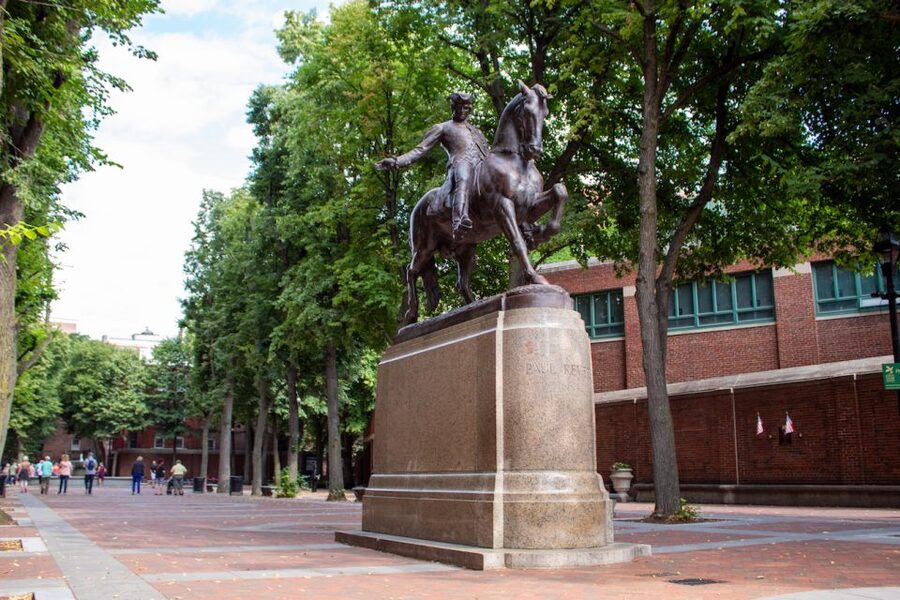
The Paul Revere House adds another layer to the famous rider’s story. You learn about Revere’s life and what he did after the Revolution, not just the midnight ride that made him famous.
The house is a useful reminder that historical figures had ordinary lives, work, families, and changing fortunes. The route does not leave Revere frozen in one dramatic night.
The Rose Kennedy Greenway and the Big Dig
After the North End, the route reaches the Rose Kennedy Greenway. This modern public space helps explain how Boston changed in recent decades.
The audio tells the story of the Big Dig, the huge road project that altered the center of the city. That topic breaks up the colonial material and shows you a Boston that is still being reshaped.
I like this change of focus. A city history walk can become predictable if every stop belongs to the eighteenth century. Here, the tour connects old buildings with modern transport, public space, and urban engineering.
The Greenway is also a practical point to slow down. You can listen while walking, take a break, or check the route without feeling trapped inside a group. Since no transportation is included, you make the entire route on foot.
More History Audio Tours in the USA
- Savannah’s Historical District: A Self-Guided Audio Tour
★ 4.5 · 69 reviews - Salida History Audio Tour l A Self-Guided Wild West Experience
★ 5.0 · 41 reviews - Historic Bar Harbor Self-Guided Walking Audio Tour Guide
★ 4.5 · 38 reviews - Key West’s Old Town Treasures: A Self-Guided Audio Tour
★ 4.5 · 29 reviews
Faneuil Hall, Quincy Market, and Samuel Adams
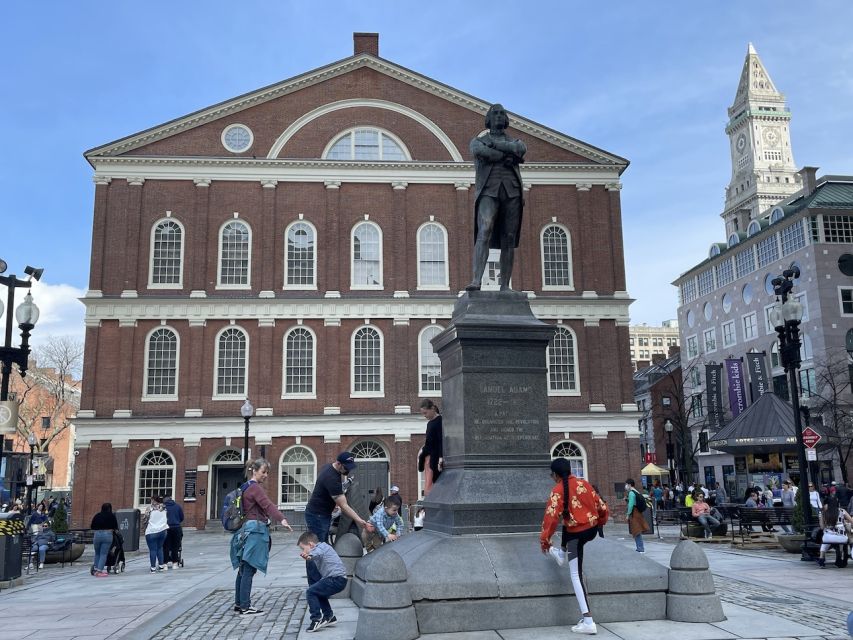
The route continues to Faneuil Hall and Quincy Market. This is one of Boston’s most active public areas, with shops, food stalls, and regular street performers.
The audio explains Faneuil Hall’s role in the political life of colonial Boston and introduces Samuel Adams, one of the strongest voices for liberty before independence. You’ll also hear the answer to the familiar question of whether Samuel Adams really brewed beer.
This part works best when you see Faneuil Hall as a meeting place, not simply as a pretty old building. The point is the public argument that happened there, with people hearing political ideas and deciding how strongly to resist British rule.
Quincy Market can also tempt you into spending more money than the tour itself costs. At $7, the audio walk is inexpensive, but snacks and shopping are entirely separate expenses. Plan time for the market if you enjoy people-watching, but do not let it crowd out the rest of the route.
The Old State House and the Boston Massacre

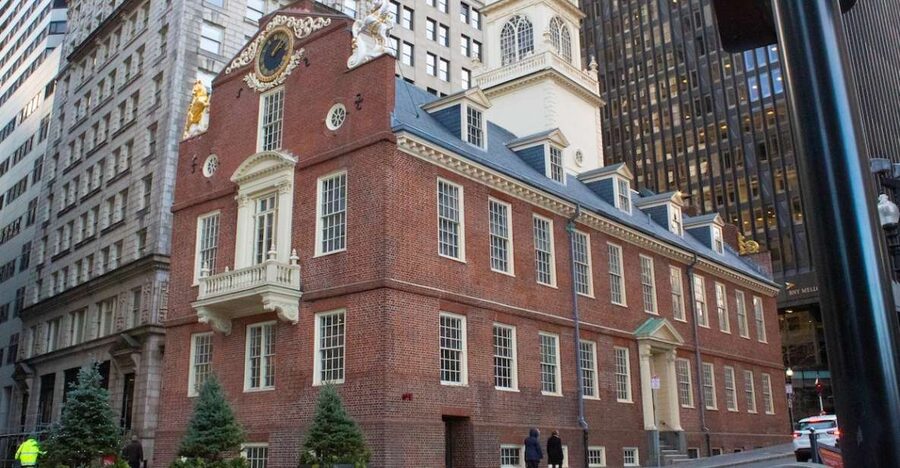
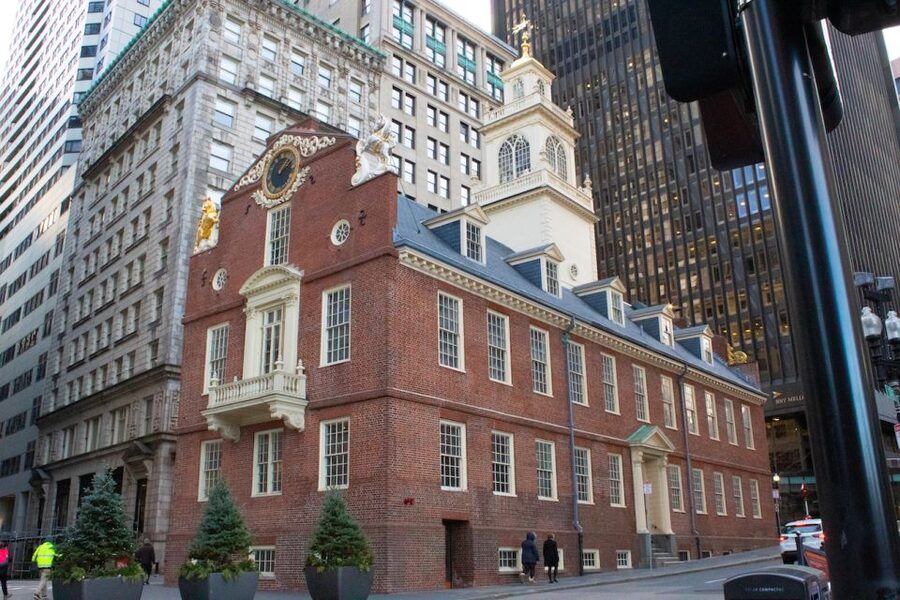
The Old State House brings the story closer to the political crisis that led to war. Here, you hear how John Adams defended the soldiers accused in the Boston Massacre.
That detail is especially valuable because it complicates the usual hero story. Adams opposed British policies, yet he still believed the accused deserved a proper defense. The stop shows how arguments about law and liberty were connected, even during a period of anger.
The audio does not require you to enter every building along the route. Much of the experience works from the sidewalks and exterior viewpoints. That keeps the price low, but it also means you should not expect a series of museum admissions.
If you enjoy looking closely at old facades, street corners, and public buildings, this section rewards a slower pace. If you prefer indoor exhibits with objects and labels, you may want to add separate museum visits.
The Irish Famine Memorial and Boston’s immigrant story
The walk then turns to Boston’s nineteenth-century Irish community at the Boston Irish Famine Memorial. You’ll hear about the difficult choices faced by Irish families during the famine years and their arrival in Boston.
This is one of the route’s most important shifts. Boston was shaped not only by colonial leaders, merchants, and rebels. It was also shaped by later arrivals who changed its neighborhoods, work, politics, and culture.
The tour also connects immigration to the North End’s Italian identity. That makes the walk more than a parade of famous men. You begin to see Boston as a city built in stages, with new communities adding their own streets, institutions, food, and traditions.
The audio is in English only. If you need another language, this experience is a poor fit. One French-speaking customer had to translate the written material into French and found the process too tiring to continue, so do not assume translation support is included.
Granary Burying Ground and the city’s Founding Fathers
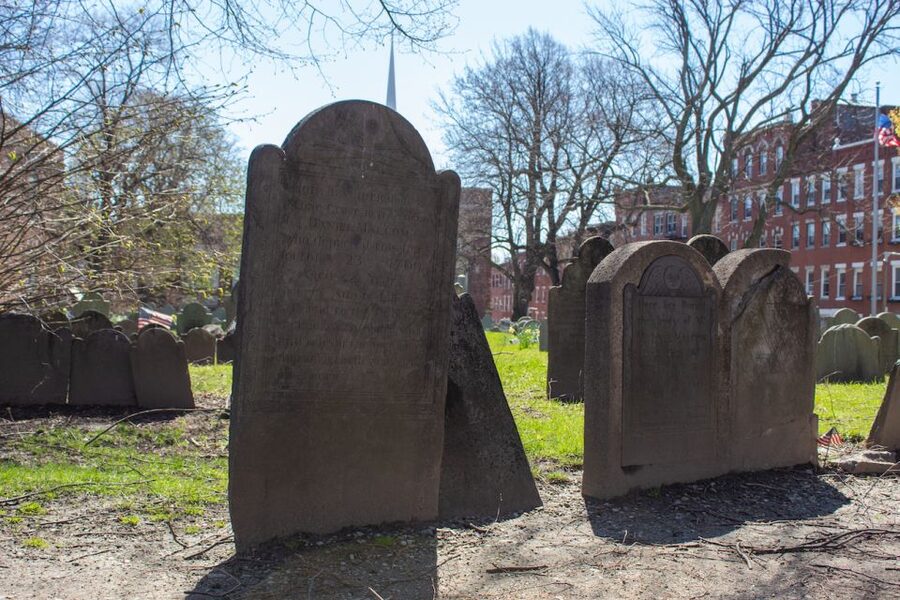
Granary Burying Ground is another major stop. John Adams, John Hancock, and Paul Revere are buried there, making it one of the clearest places to connect names from American history with the physical city.
The audio helps you sort out who is buried where and why these people matter. You can take your time at the gates and graves, though the exact amount of access may depend on opening conditions and the time of day.
This is also where the tour’s focus on Founding Fathers becomes most direct. You are not only hearing about speeches and battles. You are standing near the final resting places of people who shaped the new nation.
I would not rush this cemetery section. The stories are easier to remember when you pause and look around. A self-guided format gives you that option, but only if you resist the urge to treat the GPS route like a race.
The molasses flood and other local surprises
One of the strangest stories on the route is the North End molasses disaster of 1919. Two million gallons of molasses congealed in the neighborhood, creating a deadly and bizarre urban disaster.
This kind of story gives the walk character. Boston history is not only battle plans and government buildings. It includes industrial accidents, neighborhood memories, and events that sound almost unbelievable until you learn the scale.
The route also answers questions about what happened to Paul Revere after the Revolution and explains how Boston Common became America’s first public park. Those details help fill in the spaces between the better-known events.
I appreciate these side stories because they keep the narration from feeling like a list of dates. They also give you more to notice as you move through the streets.
Finish at the George Washington Statue in the Public Garden

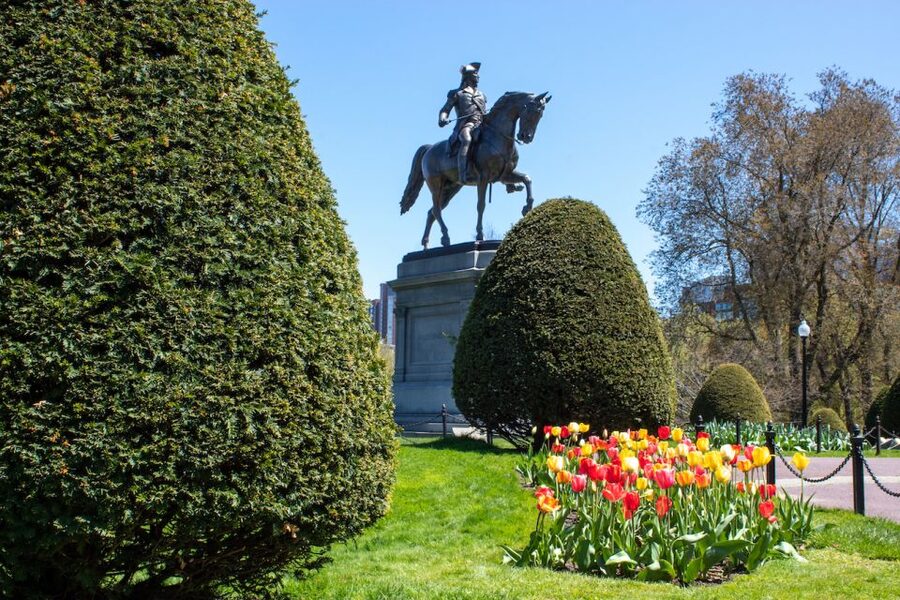
The walk ends at the George Washington Statue in the Boston Public Garden. That gives the route a calm final point after the crowded streets of the North End, Quincy Market, and the financial district.
The ending also returns you to the national story. You have followed Boston from colonial religious conflict through revolutionary resistance, immigration, urban change, and the creation of public spaces.
The stated duration is two hours, but treat that as a basic walking time. One family found the route took much longer, while still enjoying it. That makes sense if you stop for food, enter a site, take photos, or pause to hear a track again.
Because you can pause and resume, the tour fits well into a full day of sightseeing. You can stop the audio before lunch and continue later, as long as you keep track of where you left off.
How the GPS audio works in practice
The audio tracks are GPS enabled and designed to begin at the right place as you walk. In theory, this means you can keep your phone in your hand or pocket less often and pay attention to Boston itself.
That is a real advantage over a written route. You do not have to keep checking a map after every corner, and the narration can arrive as you reach a relevant building or monument.
Still, prepare properly. Bring a fully charged smartphone and headphones. Download or open the app before reaching Copp’s Hill if possible, and give yourself time to solve any phone or app problems before starting.
The technology has not been dependable for everyone. One booking failed to work at all, leaving the person to walk through the city without the audio. Since there is no live guide waiting at the starting point, you will need to handle technical problems yourself.
The average rating is 3.7 from 12 reviews, which tells you to keep expectations measured. The content can be entertaining and easy to follow, but the app experience is the weak link.
Is $7 a good price for two hours?
At $7 per person, this is an inexpensive way to get a planned route through central Boston. The price is especially reasonable if you want historical context but do not want to join a fixed group at a fixed time.
You are paying for the audio and route design, not for admissions, transportation, or personal help. That distinction matters. If you want to ask questions, change the route, or get a restaurant recommendation from a guide, this will not provide it.
The low cost also makes the tour useful as an introduction. You can follow the route first, then decide which places deserve a longer visit. It is less painful to skip a stop when the entire tour costs $7.
Who should choose this Boston walk?
I would choose this tour if you like history, want control over your timing, and are comfortable using an app. It suits independent visitors, couples, and families who may need to pause often.
It also works for people who want a broad first look at Boston. In two hours, you cover colonial history, the Revolution, Irish immigration, Italian neighborhood life, the Big Dig, public markets, cemeteries, and public parks.
I would be cautious if you dislike phone-based tours or want a live person to answer questions. The English-only audio also rules it out for anyone who needs a different language.
The route is not suitable for people with mobility impairments. You should also expect outdoor walking, uneven cemetery surfaces, busy public areas, and time on city sidewalks.
Should you book it?
Book this tour if you want a cheap, flexible introduction to Boston’s central historic area and you are prepared to use your own smartphone. The strongest parts are the sensible route, the mix of famous and odd stories, and the ability to stop whenever the North End’s food or Faneuil Hall’s activity catches your attention.
Skip it if reliable personal guidance matters more than price. The content may be enjoyable, but there is no live guide and the app has failed for some people. For the best chance of a smooth walk, bring headphones, charge your phone fully, avoid Monday if you want to see inside the Old North Church, and allow more than two hours if you plan to stop along the way.
FAQ
Where does the audio walking tour begin?
It begins at the entrance of Copp’s Hill Burying Ground in Boston’s North End. The audio starts automatically after you reach the starting location with the VoiceMap app open.
Where does the tour finish?
The route finishes at the George Washington Statue in the Boston Public Garden.
How long does the walking tour take?
The stated duration is two hours. You can pause and resume the tour, and stops for food, photos, shopping, or site visits may make the walk take longer.
Is there a live guide?
No. This is a self-guided audio tour through a smartphone app. Transportation is also not included.
What language is the audio tour in?
The audio guide is available in English only.
What should I bring?
Bring headphones and a charged smartphone. The GPS audio provides turn-by-turn directions, but you should still make sure your phone and app are ready before starting.
More Smartphone Audio Tours in the USA
- Self-Guided GPS Audio E-Bike Tour Hawaii Volcanoes National Park
★ 4.5 · 131 reviews - Ultimate Portland Self-Guided Driving GPS Audio Tour
★ 4.0 · 56 reviews - Birmingham Civil Rights Walk of Freedom Smartphone Audio App Tour
★ 5.0 · 40 reviews - Self Guided GPS Audio Driving Tour Acadia NP From Hulls Cove VC
★ 4.0 · 25 reviews
New audio tours around the USA
- Beaches, Bites and Bavaria in Leavenworth: A Self-Guided Audio Tour★ 3.5 · 3 reviews
- Welcome to Fabulous Las Vegas Sign Self-Guided Audio Tour★ 5.0 · 2 reviews
- Las Vegas Day Trips: 3-Day Self-Guided Audio Tour★ 5.0 · 2 reviews
- Hoover Dam and Lake Mead Self-Guided Audio Tour★ 5.0 · 3 reviews
- Driving Lake Tahoe: A Self-Guided Audio Tour From Tahoe City to Incline Village★ 5.0 · 10 reviews
- Las Vegas Neon and Secrets: Self-Guided Audio Tour★ 5.0 · 3 reviews
- Baton Rouge Historic Downtown Self-Guided Audio Walking Tour★ 4.0 · 19 reviews
- Ultimate La Jolla Self-Guided Driving & Walking Audio Tour Bundle★ 3.5 · 9 reviews
Boston Audio Tours, compared.
Self Guided Classic Freedom Trail Location Aware (GPS) Walking Audio Tour
Read our review →
Boston Freedom Trail Self-Guided Tour with Audio Narration & Map
Read our review →
Self-Guided Boston’s Beacon Hill Underground Railroad Audio Tour Walking Tour
Read our review →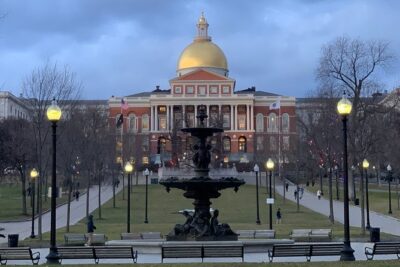
Self Guided “Historic Boston Downtown Freedom Trail” Audio/GPS Walking Tour
Read our review →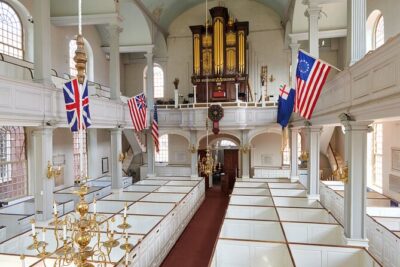
Boston’s Old North Church Admission with Self-Guided Audio Tour
Read our review →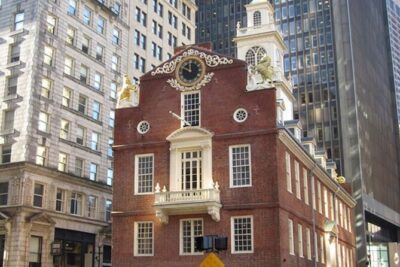
Boston’s Freedom Trail: A Self-Guided Audio Tour
Read our review →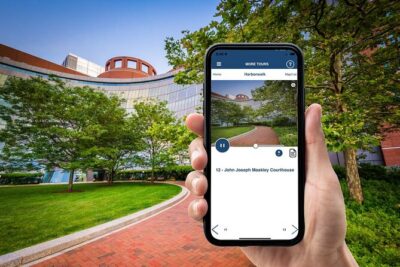
Boston Harborwalk & Tea Party Self-Guided Walking Audio Tour
Read our review →